
Georgia’s defence feasts as Bulldogs rout Florida 27–8 in Atlanta
No. 3 Georgia did not need a big day from its passing game to beat No. 17 Florida on Saturday. The Bulldogs’ defence took the ball away four times, the running game wore the Gators down, and Georgia walked out of Mercedes-Benz Stadium in Atlanta with a 27–8 win in one of college football’s oldest rivalries.
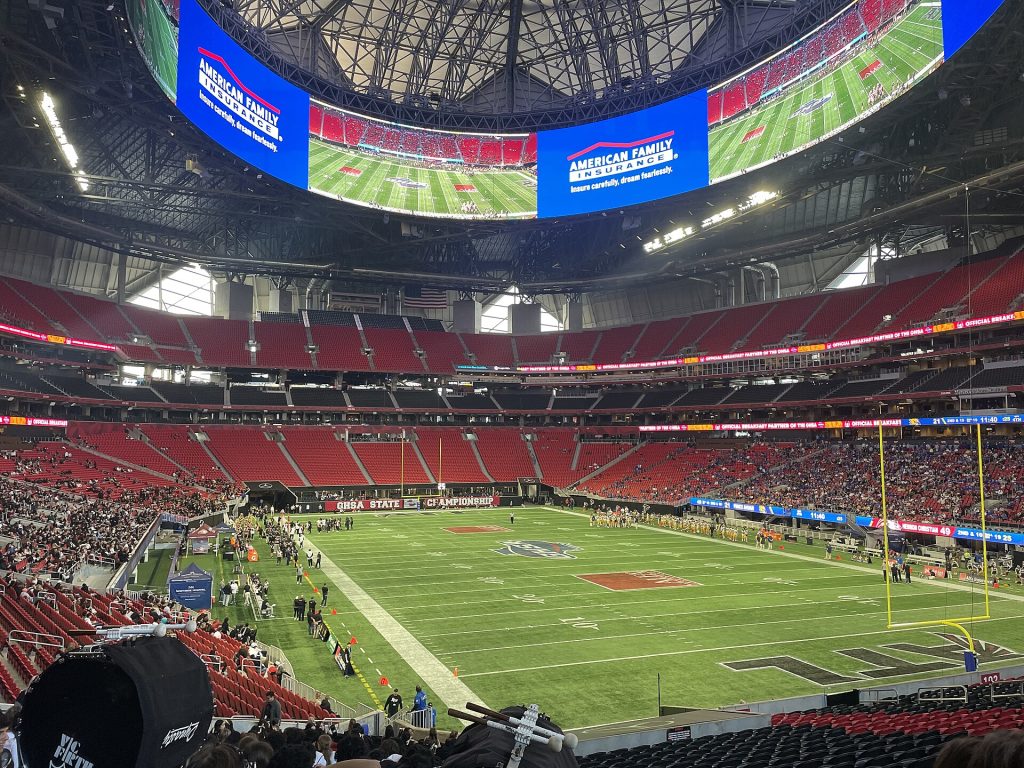
The game was played away from its usual home for the first time in more than 30 years. The annual meeting between Georgia and Florida is normally held in Jacksonville, Florida, but renovations at EverBank Stadium meant the 2026 game moved to Atlanta, under a closed roof. The change of scenery did not change the recent pattern of the rivalry: Georgia has now won six meetings in a row.
Georgia led 24–0 at half-time and never looked in danger. Florida finally scored with just under seven minutes left in the game, which at least kept alive a scoring run stretching back 38 years. But by then the result had been settled for a long time, and Georgia’s late field goal restored the 19-point margin.
At a glance
What happened: No. 3 Georgia beat No. 17 Florida 27–8 on Saturday, 31 October 2026, at Mercedes-Benz Stadium in Atlanta. Georgia forced four Florida turnovers and outrushed the Gators 217–48.
Why it matters: The win kept Georgia firmly in the race for the Southeastern Conference title and the College Football Playoff, and it extended Georgia’s winning run in the rivalry to six games. For Florida, the defeat ended hopes of a second straight win over a top-10 team and left the Gators in danger of dropping out of the national rankings.
What happens next: Georgia visits No. 12 Mississippi next Saturday, while Florida hosts Oklahoma. The rivalry returns to Tampa next year before going back to Jacksonville in 2028.
A first half decided by turnovers
Georgia set the tone on its very first drive. Head coach Kirby Smart kept the offence on the field on fourth-and-one from Georgia’s own 34-yard line, and running back Nate Frazier gained three yards to keep the drive alive. The drive still ended without points when Peyton Woodring missed a 43-yard field goal, but the message was clear: Georgia had come to attack.
Florida’s problems started soon after. Quarterback Aaron Philo was back as the starter after missing the win over Texas with a right shoulder injury, but he threw two interceptions in the first half. The first came on an underhanded throw made while he was under pressure, and it was picked off by Ellis Robinson IV. The second went high but through the hands of receiver Eric Singleton Jr., and Demello Jones took the catch.
Georgia turned those mistakes into points. Bo Walker and Frazier both scored on one-yard runs, and the Bulldogs built a 24–0 lead by half-time. According to 247Sports, Georgia turned three first-half Florida turnovers into 17 points.
The biggest play of the half came with only 29 seconds left before the break. Philo’s replacement, Tramell Jones Jr., was sacked by Quintavius Johnson and fumbled. Linebacker Chris Cole picked up the loose ball and ran it back 66 yards for a touchdown. It was Cole’s second long fumble return for a score this season: he also scored on an 85-yard return in Georgia’s 41–13 win over Oklahoma on 26 September.
Philo was benched after his second interception, and Jones took over for the rest of the game. But Jones had his own troubles. Early in the third quarter he led a long Florida drive to the Georgia three-yard line, only for his pass intended for Singleton to be intercepted in the end zone by cornerback Braylon Conley. The third quarter produced no points at all, which said a lot about both defences and about Florida’s attack. Jones moved the ball well enough on that long drive to the Georgia three-yard line, but the end-zone interception by Conley ended the threat, and Georgia’s defence held firm for the rest of the quarter. Florida had chances to make the game interesting before the fourth quarter. Each time, Georgia’s defence found a way to take the ball back or hold its ground, and the 24-point lead survived until Florida finally broke through late on.
Florida’s late reply — and Georgia’s answer
Georgia made its first mistake early in the fourth quarter. Receiver Talyn Taylor fumbled after a short catch when he was hit by DJ Coleman, and Myles Graham returned the recovery 42 yards to set Florida up in good field position.
Jones finally got Florida on the scoreboard. His 23-yard pass to Luke Harpring on a fourth-down play set up his own two-yard scoring run with 6:59 left in the game. Running back Jadan Baugh then passed to Dallas Wilson for the two-point conversion, making the score 24–8. The touchdown kept alive Florida’s run of scoring in every game for 38 years, a streak the Gators were desperate not to lose.
Georgia answered calmly. Woodring, who had missed from 43 yards on the opening drive, kicked a 21-yard field goal with 3:34 remaining to make the final score 27–8.
The closing minutes were a formality. Georgia’s defence had already done the hard work, and Florida’s late score was no more than a consolation.
Why the running game told the story
The clearest difference between the two teams was on the ground. Georgia ran for 217 yards. Florida managed only 48. Georgia’s quarterback, Gunner Stockton, threw for just 101 yards, completing 13 of 23 passes, but he did not need to do more. In the first half alone, Stockton ran for 40 yards — more than Florida’s whole team managed on the ground in the first half, when the Gators were held to 39 yards.
Frazier led the way with 67 yards on 12 carries, plus a catch for 10 yards, and Dwight Phillips Jr. also ran for 67 yards. Florida’s star running back, Jadan Baugh, had no room at all. Baugh, an Atlanta native who started the day leading the Southeastern Conference with 13 rushing touchdowns, was held to 38 yards on 17 carries.
Florida’s running game was also hurt by the absence of wide receiver Vernell Brown III, who missed a fourth straight game with a sprained right knee, and by five penalties for 60 yards in the first half. Too many mistakes, too little running room, and a defence that kept giving the ball away: that was the story of Florida’s afternoon.
Georgia was not at full strength either. Running back Chauncy Bowens missed the game with a foot injury, and wide receiver Thomas Blackshear was out with a collarbone injury. But Georgia’s depth showed. The Bulldogs kept running the ball, kept the clock moving, and let their defence decide the game.
A rivalry away from home
For supporters of both teams, the strangest part of the day was the setting. The Georgia–Florida game has been played in Jacksonville since the 1930s, apart from a short break in the mid-1990s when it was played on the two campuses while the Jacksonville stadium was rebuilt. This year the game moved again because of renovation work at EverBank Stadium, and it became an indoor game in Atlanta, with the roof closed at Mercedes-Benz Stadium.
The game was officially called the Atlanta Gridiron Classic, and it drew a sellout crowd of 72,541. Tickets were split evenly between the two schools, although Georgia appeared to have a slight edge in the stands, with scattered red shirts visible among the Florida sections.
The rivalry is known as the World’s Largest Outdoor Cocktail Party, a nickname that did not quite fit an indoor game. But the atmosphere was still loud, and the Halloween date added to the occasion, with supporters of both teams in fancy dress.
The rivalry itself dates back to 1915, and Jacksonville has hosted the great majority of the meetings since the 1930s. The only previous break in that run came in 1994 and 1995, when the games were played on the two campuses while the Jacksonville stadium was being rebuilt. This year’s move was different: it was not a rebuild of the same ground but a one-off relocation while EverBank Stadium undergoes renovation work, and it gave Atlanta a taste of a fixture that has belonged to Jacksonville for generations.
Next year the game moves to Tampa, and it is scheduled to return to Jacksonville in 2028. Georgia will be happy with the Atlanta trip: the Bulldogs now lead the all-time series 59–44–2, and they have won the last six meetings.
What it means for the playoff race
Georgia improved to 7–1 overall and 5–1 in the Southeastern Conference. The win was a strong recovery from the Bulldogs’ last-second 27–24 defeat at Auburn on 17 October, and it kept Georgia in control of its own path to the conference championship game and the College Football Playoff. It also continued a season in which Georgia’s defence has repeatedly made the decisive plays: Cole’s fumble return against Florida was his second long scoring return of the year, after his 85-yard effort in the 41–13 win over Oklahoma on 26 September.
The schedule does not get easier. Georgia’s next four games are a visit to No. 12 Mississippi, who beat Auburn 45–15 on Saturday, followed by Missouri at home, a trip to South Carolina, and the season-ending rivalry game against Georgia Tech. Winning those games would put Georgia in a strong position. Losing one would leave little room for error.
Florida fell to 5–3 overall and 3–3 in the conference. The Gators had arrived in Atlanta with real momentum after their 27–24 upset of No. 7 Texas, and a second straight win over a top-10 team would have changed the story of their season. Instead, the turnovers and the lack of a running game left them with a heavy defeat, and the Associated Press noted that the loss leaves Florida in danger of falling out of the Top 25.
Florida are in the first season under new head coach Jon Sumrall, and the rebuild is clearly still a work in progress. The Gators’ next game is at home against Oklahoma on Saturday, a chance to steady the season before the final stretch.
For Georgia, the lesson of the day was simple. A team does not need a spectacular passing game when its defence takes the ball away four times and its running game gains more than four times as many yards as the opposition. Florida learned the opposite lesson: against the best teams, mistakes are punished, and on Saturday every mistake was punished.
Frequently asked questions
What was the final score between Georgia and Florida?
Georgia won 27–8 on Saturday, 31 October 2026. Georgia led 7–0 after the first quarter and 24–0 at half-time. Florida scored its only touchdown with 6:59 left in the fourth quarter, and Georgia added a late field goal.
Where was the game played?
The game was played at Mercedes-Benz Stadium in Atlanta, Georgia, in front of a sellout crowd of 72,541. It was the first time the rivalry had been played away from Jacksonville since the 1994 and 1995 seasons, when the games were played on campus. The usual Jacksonville stadium, EverBank Stadium, is being renovated.
Who was the star player for Georgia?
Linebacker Chris Cole made the biggest play, returning a fumble 66 yards for a touchdown just before half-time. It was his second long fumble return for a touchdown this season. Running back Nate Frazier also stood out, running for 67 yards and scoring a one-yard touchdown.
Why did Florida change quarterbacks during the game?
Starter Aaron Philo threw two interceptions in the first half and was benched. He had returned to the team after missing the Texas game with a right shoulder injury. Tramell Jones Jr. replaced him and played the rest of the game, but he also lost a fumble that Georgia returned for a touchdown and threw an interception in the end zone.
What is the World’s Largest Outdoor Cocktail Party?
It is the long-standing nickname for the Georgia–Florida rivalry game, a reference to the huge crowds and the party atmosphere around the annual neutral-site meeting in Jacksonville. The 2026 game was played indoors in Atlanta, so the nickname did not quite fit this year.
How many times in a row has Georgia beaten Florida?
Georgia has now won six meetings in a row against Florida. Georgia leads the all-time series 59–44–2.
Who do Georgia and Florida play next?
Georgia visits No. 12 Mississippi next Saturday, and Florida hosts Oklahoma on the same day. Georgia’s remaining games after that are against Missouri, at South Carolina, and against Georgia Tech.
Conclusion
Georgia’s 27–8 win over Florida was not a classic. It was a hard, methodical victory built on defence, running, and Florida’s mistakes. The Bulldogs took the ball away four times, ran for 217 yards, and led 24–0 at half-time. Florida’s late touchdown saved a proud scoring record, but it did not change the result.
The win keeps Georgia firmly in the hunt for the Southeastern Conference title and a place in the College Football Playoff, with a testing trip to Mississippi next. For Florida, the defeat was a reminder of how far the rebuild under Jon Sumrall still has to go. The Gators beat Texas a week earlier, but against Georgia they were beaten in every part of the game that mattered.
The rivalry now takes a break from Jacksonville, with Tampa next year and a return in 2028. Georgia will not mind the travel. Wherever this game is played at the moment, the Bulldogs keep winning it.
This article is for general information and education only. It is not legal or financial advice.
Sources
- https://getty.pp.ua/p/a%3A8206511350889%3Ano-3-georgia-takes-advantage-231139000 (Associated Press, 31 October 2026)
- https://www.thescore.com/ncaaf/news/3640660/georgia-forces-4-turnovers-in-rout-of-florida (theScore, 31 October 2026)
- https://georgiadogs.com/news/2026/10/31/football-takeaways-power-bulldogs-past-gators (University of Georgia Athletics, 31 October 2026)
- https://www.saturdaydownsouth.com/news/college-football/georgia-suffocates-no-17-florida-to-win-6th-straight-cocktail-party/ (Saturday Down South, 31 October 2026)
- https://deadspin.com/no-3-georgia-forces-4-turnovers-routs-no-17-florida/ (Deadspin, 31 October 2026)
- https://247sports.com/college/georgia/longformarticle/instant-takeaways-from-georgia-footballs-victory-over-florida-292009548/ (247Sports, 31 October 2026)
- https://en.wikipedia.org/wiki/Florida%E2%80%93Georgia_football_rivalry (Wikipedia, accessed 1 November 2026)
