
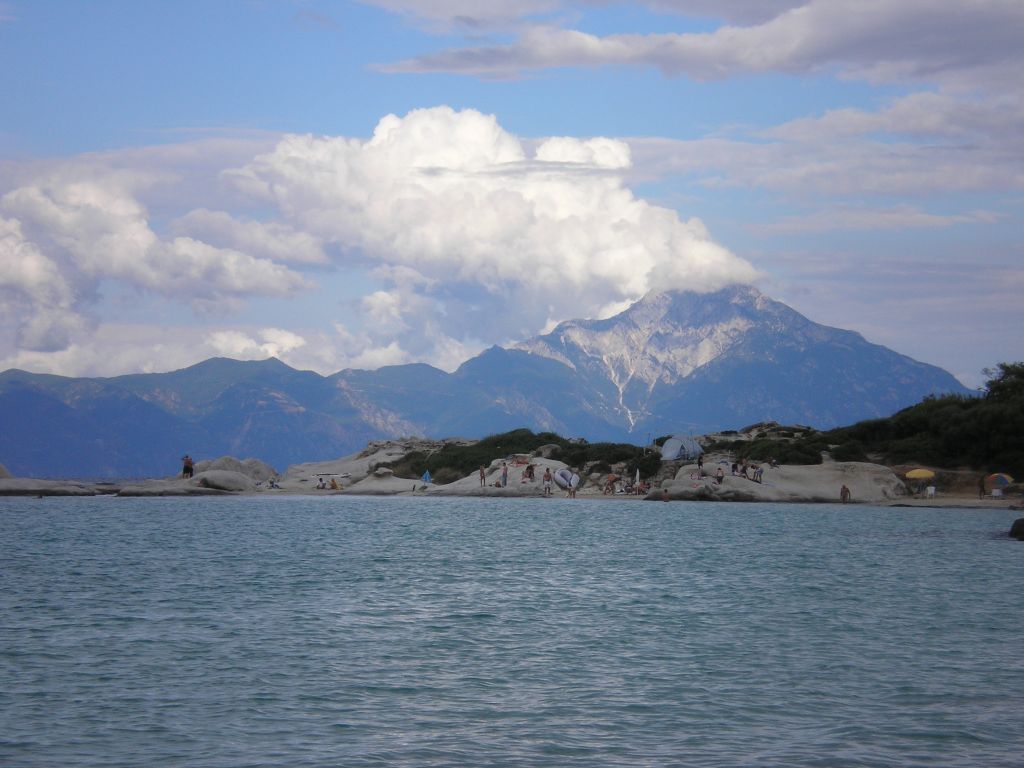
Earthquake swarm shakes the Aegean off northern Greece
A magnitude 4.7 earthquake struck the Aegean Sea off northern Greece just before lunchtime on Friday, 30 October, followed by a run of smaller tremors that kept the region on edge into Saturday. The quake hit at 12:45pm local time, about 42 kilometres south-east of Sykia, a village on the Sithonia peninsula in Halkidiki, at a depth of 10 kilometres, according to the US Geological Survey (USGS).
People reported feeling the shaking in Thessaloniki, about 150 kilometres away, and on the islands of Skiathos and Skopelos, as well as in Volos on the Greek mainland. Seismologists logged eight reports from people who felt the tremor, describing weak to moderate shaking, and said the quake should not have caused any significant damage. No injuries or damage had been reported by the time of writing.
Smaller tremors followed in the same patch of sea on Friday afternoon, including magnitudes 3.3 and 3.7, and a magnitude 4.2 aftershock struck in the early hours of Saturday, 31 October. Agencies disagreed slightly on the size of the biggest quake: the European-Mediterranean Seismological Centre first put it at 4.9, while Greek observatories reported between 4.5 and 4.7. No tsunami warning was issued.
Why it matters
Greece is one of the most earthquake-prone countries in Europe, and the Aegean Sea is one of its most active zones, where the African tectonic plate pushes beneath the Eurasian plate. Shallow offshore quakes like this one are often felt over a wide area, even when they cause little damage.
A swarm of tremors in the same place over two days is also a pattern seismologists watch closely, because it can sometimes be followed by a larger quake — though most swarms simply fade away. For residents and visitors in Halkidiki and the nearby islands, the main effect so far has been a scare rather than destruction.
What happens next
Seismologists in Greece and across Europe will keep monitoring the area for further aftershocks in the coming days. No tsunami warning is in force, and no official damage assessment has been announced.
People in the region are advised to follow guidance from Greece’s civil protection authorities and to stay alert for aftershocks, which are common after a quake of this size.
This article is for general information and education only. It is not legal or financial advice.
Sources
- https://www.volcanodiscovery.com/earthquakes/quake-info/23475420/info.html (VolcanoDiscovery, 30 October 2026)
- https://quakewire.com/quake/20261030-m4-7-sykia-greece-00tu7m (QuakeWire, 30 October 2026)
- https://quakewire.com/quake/20261031-m4-2-sykia-greece-00tugg (QuakeWire, 31 October 2026)
- https://liberaltr.com/en/magnitude-4-3-earthquake-strikes-greece/ (LiberalTR, 31 October 2026)
