
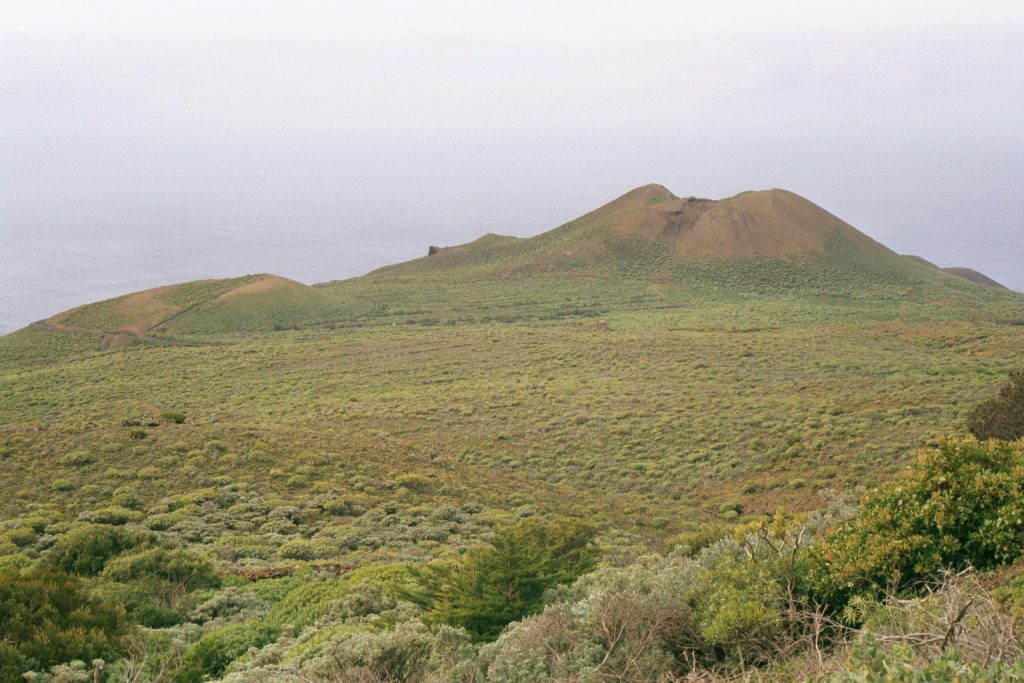
Four die as a boat from Gambia is rescued off El Hierro after eight days at sea
Four people are reported to have died aboard a small wooden boat that left The Gambia eight days earlier and was rescued in the dark off El Hierro, the smallest and most westerly of Spain’s Canary Islands, in the early hours of Friday 30 October 2026. The boat was found about 68 kilometres south of the island, and the 110 people still alive on board were brought ashore at the port of La Restinga before dawn.
It was the latest deadly crossing on the Atlantic route from West Africa to the Canary Islands, a journey that has become longer and more dangerous even as fewer people make it. The rescue came at the end of a month in which arrivals rose sharply, putting fresh strain on the smallest islands and the emergency services that meet the boats.
At a glance
What happened: A pirogue that left The Gambia eight days earlier was rescued about 68 kilometres south of El Hierro early on 30 October 2026; four people are reported to have died and 110 survivors were brought ashore at La Restinga.
Why it matters: The Atlantic route to the Canary Islands has grown deadlier even as arrivals have fallen, because tighter controls further north have pushed departures south, making crossings longer; October brought a sharp rise in arrivals on the smallest islands.
What happens next: The survivors will be received and processed on the islands while the Canary Islands government presses Madrid and the European Union for more rescue, reception and surveillance resources, and for more cooperation with West African countries.
The rescue in the dark
The operation began late on Thursday 29 October, when the Canary Islands emergency service, 112 Canarias, launched a rescue at about 10.55pm after Spain’s Maritime Rescue service reported two distress calls from a pirogue heading towards El Hierro.
The Maritime Rescue coordination centre in Santa Cruz de Tenerife sent the Helimer 204 helicopter and the rescue vessel Salvamar Navia. The Salvamar Navia found the boat at about 1am on Friday, roughly 68 kilometres south of La Restinga, the fishing port at the southern tip of El Hierro, and brought the survivors into port at about 4am, where Canary Islands Health Service staff and the Spanish Red Cross were waiting on the quay.
Two bodies were found on board. Early reports described the dead as two men and said a baby had been airlifted to hospital in a critical condition. Later reporting, based on the court in El Hierro and the Spanish news agency EFE, corrected that account: both bodies recovered were those of young adult men. Survivors said the other two people who died during the eight-day crossing had been thrown overboard, which is why only two bodies were recovered.
Six survivors were taken to hospital: five at the Hospital de El Hierro, and a girl aged around two who was evacuated by helicopter in a serious condition to the Hospital Universitario Nuestra Señora de Candelaria in Santa Cruz de Tenerife. She was travelling with her parents, and her father was one of the two men whose bodies were still on the boat, her mother told emergency services at La Restinga.
The boat had left The Gambia with 115 people on board, according to Maritime Rescue, emergency services and survivors. By the time it was located, 113 people were on it, and 110 survivors were brought ashore. The two who were no longer on board were the people who died during the crossing and whose bodies were put into the sea, according to the survivors.
Mostly children and teenagers on board
One of the most striking details was the age of the people on the boat. According to an assistance report compiled at the quay in La Restinga and obtained by EFE, 61 of the 113 people on board were minors: 54 boys and male adolescents and seven girls and female adolescents. Apart from three infants who survived and three other children, all of them had boarded without an adult responsible for their care.
That figure is very different from the first reports, which described eight women and eight minors among those brought ashore. The later count comes from the assistance report drawn up at the port, and it is the figure used here. The gap shows how confused the first hours after a rescue at sea can be, when exhausted people are being counted, treated and identified at the same time, often in the dark.
The presence of so many unaccompanied children and teenagers on a single boat underlines how the crossing has changed: with no safe and legal way to travel, young people are taking the sea route from further and further south, spending more days exposed to the weather, to thirst and to engine failure.
A route that has become longer and deadlier
The Atlantic route from West Africa to the Canary Islands is one of the world’s deadliest migration crossings: a long, open-ocean journey in small, overcrowded boats, with rough seas, strong currents and little rescue cover for much of the way. A boat that loses its engine or runs out of fuel or water can drift for days before it is found, if it is found at all.
The International Organization for Migration (IOM) reported on 13 October 2026 that fewer West Africans were reaching Europe by sea, but that the journey had not become safer. Arrivals in Europe from Mali, Senegal, Guinea and The Gambia fell by 59 per cent in the first half of 2026 compared with the same period in 2025, to 4,566 people. Yet the danger did not fall with them: on the Atlantic route, arrivals in the Canary Islands fell by 62 per cent between 2024 and 2025, while recorded deaths and disappearances fell by only 4 per cent, from 1,215 to 1,172. Far fewer boats were arriving, but almost as many people were dying.
One reason is that the starting point has moved. Increased controls in Morocco, Mauritania and Senegal have pushed departures south, towards The Gambia, Guinea and Guinea-Bissau. Those new departure points can add up to 750 kilometres to the crossing, stretching some journeys to about 2,200 kilometres and exposing people to longer periods at sea and greater risks of shipwreck, dehydration and disappearance. The boat rescued off El Hierro had left from The Gambia, one of those southern departure points, and had been at sea for eight days.
The IOM’s Displacement Tracking Matrix recorded that in the first six months of 2026, 3,708 people reached the Canary Islands by boat, down 67 per cent on the same period in 2025, when 11,321 arrived. In that same period, 59 boats failed to reach the islands, resulting in the death or disappearance of 168 people. The IOM stressed that those figures reflect only reported deaths and disappearances and are minimum estimates.
October brought a sharp rise in arrivals
The rescue came at the end of a month in which the pattern of the year suddenly changed. Arrivals had been falling for most of 2026: Frontex, the European Border and Coast Guard Agency, recorded 7,106 crossings on the Western Africa route between January and September, down 45 per cent on the same period in 2025, and attributed the fall to preventive measures by Mauritania, and more recently Senegal and The Gambia, in cooperation with Spain and the European Union.
But crossings increased sharply in October. At least 1,414 people arrived on El Hierro alone in about 20 small boats between 18 and 25 October, and at least 4,162 people arrived in the Canary Islands in the two months between 16 August and 15 October, compared with 1,608 in the same period in 2025. Arrivals typically pick up in the autumn, when sea conditions are generally calmer, and October 2026 followed that pattern.
By the end of the month, the Canary Islands government said more than 4,000 people had arrived in the archipelago during October, according to a provisional count. Its spokesperson, Alfonso Cabello, put the figure at 4,246, a 237 per cent increase on October 2025. He said the Atlantic route had “once again demonstrated its lethality”, and questioned what the central government in Madrid was doing to prevent further deaths.
For the year as a whole, arrivals were still down. The office of the Spanish government’s representative in the Canary Islands said arrivals had fallen by 18 per cent year on year, to 11,527 people so far in 2026. October’s surge came after months of decline, and it was concentrated on the smallest islands, where reception and medical services are thinnest.
The political argument over who should do more
The rise in arrivals has sharpened a political argument between the Canary Islands government and the Spanish central government. On 26 October, the Canary Islands president, Fernando Clavijo, wrote to Prime Minister Pedro Sánchez to demand urgent action, describing the situation on El Hierro as “dramatic” and conditions in the region’s centre for the temporary assistance of foreigners, known as a CATE, as “very undesirable”.
Clavijo’s letter called for six urgent measures, including an emergency meeting of the Canary Islands-State Security Board, a contingency plan with more resources for maritime rescue and first-response services, and more diplomatic work with Morocco, Mauritania, Senegal and The Gambia against human trafficking. The regional government has accused the central government of “negligence”, and its spokesperson said the regional authorities had no information about measures being taken.
The letter came less than two weeks after the Canary Islands parliament unanimously called for more resources for air and sea surveillance, coordinated action by the Civil Guard, National Police, armed forces and Frontex, and closer cooperation with countries of origin and transit to curb departures and dismantle trafficking networks.
The argument is not only about rescue at sea. When a boat reaches El Hierro, the survivors need medical care, food, shelter and identification, and children travelling alone need particular protection. The island’s hospital treated five survivors from the 30 October boat, and the two-year-old girl had to be flown to Tenerife. The reception centre at San Andrés, near the island’s capital, is where many arrivals are taken, and the regional government says it is under strain.
For the people on the boat, the next steps are the standard ones: medical checks, identification and reception while the authorities establish who they are and whether any of them are children travelling alone who need guardianship and care. What happens to each person after that depends on their circumstances, on Spanish and European law, and on whether they seek asylum or another form of protection.
Frequently asked questions
What happened off El Hierro on 30 October 2026?
A wooden pirogue that had left The Gambia eight days earlier was found by the Spanish rescue vessel Salvamar Navia at about 1am, roughly 68 kilometres south of El Hierro. Four people are reported to have died, and 110 survivors were brought ashore at the port of La Restinga at about 4am.
How many people died, and why did the first reports differ?
Four people are reported to have died. Two bodies were recovered from the boat, and survivors said two more died during the crossing and their bodies were put into the sea. Early reports said two men had been found dead and a baby had been airlifted to hospital in a critical condition. The court in El Hierro later confirmed to EFE that both bodies recovered were young adult men, not a baby. A girl aged around two was airlifted to hospital in Tenerife in a serious condition.
Who was on board the boat?
The boat left The Gambia with 115 people on board, and 113 were on it when it was found. According to an assistance report drawn up at the quay in La Restinga and obtained by EFE, 61 of the 113 were minors, including 54 boys and male adolescents and seven girls and female adolescents. Apart from three infants who survived and three other children, all of them had boarded without an adult responsible for their care.
Why is the Atlantic route to the Canary Islands so dangerous?
It is a long, open-ocean crossing in small, overcrowded boats, with rough seas, strong currents and little rescue cover for much of the way. Tighter controls in Morocco, Mauritania and Senegal have pushed departures south to The Gambia, Guinea and Guinea-Bissau, which can add up to 750 kilometres and stretch journeys to about 2,200 kilometres, meaning more days at sea and greater risks of shipwreck, dehydration and disappearance.
Are fewer people crossing to the Canary Islands in 2026?
Yes, for the year as a whole. Frontex recorded 7,106 crossings on the Western Africa route between January and September 2026, down 45 per cent on the same period in 2025, and arrivals in the archipelago were down 18 per cent year on year to 11,527 people. But 4,246 people reached the islands in October alone, a 237 per cent increase on October 2025, according to a provisional count from the Canary Islands government.
What are the authorities in the Canary Islands asking for?
The Canary Islands president, Fernando Clavijo, wrote to Prime Minister Pedro Sánchez on 26 October asking for urgent action, including an emergency security meeting, a contingency plan with more resources for rescue and first-response services, and more diplomatic work with Morocco, Mauritania, Senegal and The Gambia against human trafficking. The regional parliament has also called for more surveillance resources and coordinated action by the Civil Guard, National Police, armed forces and Frontex.
Conclusion
The rescue off El Hierro on 30 October saved 110 lives, but it also ended in four deaths. A boat that left The Gambia with 115 people, most of them children and teenagers travelling alone, spent eight days crossing open ocean before it was found, and two of the people who died were never brought ashore.
The numbers for 2026 show that fewer people are making the crossing, and that controls in West Africa and cooperation with Spain and the European Union have reduced arrivals. They also show that the crossing has not become safer. Deaths on the Atlantic route have fallen only slightly while arrivals have fallen sharply, and the journey has grown longer as departures have moved south.
October’s surge shows how quickly a quiet year can turn. El Hierro’s rescuers, doctors and Red Cross workers did their work in the dark and brought the survivors ashore. The question now is whether the rescue, reception and surveillance system will be given the resources to cope with the next boat, and whether more can be done with West African countries so that fewer people feel they have no choice but to take the sea route.
Sources
- https://srnnews.com/two-men-dead-baby-critically-ill-after-migrant-boat-reaches-spains-el-hierro-island/ (Reuters via SRN News, 30 October 2026)
- https://www.infomigrants.net/en/post/74487/four-dead-after-pirogue-carrying-113-people-mostly-minors-is-rescued-off-el-hierro (InfoMigrants, 30 October 2026)
- https://reliefweb.int/report/senegal/west-african-arrivals-europe-drop-59-cent-routes-turn-deadlier-new-iom-data (IOM via ReliefWeb, 13 October 2026)
- https://reliefweb.int/report/canary-islands-spain/west-and-central-africa-irregular-migration-routes-europe-west-african-atlantic-route-january-june-2026 (IOM Displacement Tracking Matrix via ReliefWeb, 7 October 2026)
- https://ecre.org/atlantic-route-and-spain-major-drop-in-irregular-crossings-so-far-in-2026-%E2%80%95-more-deaths-and-rescues-%E2%80%95-canary-islands-government-and-parliament-call-for-additional-support-from-spanish/ (European Council on Refugees and Exiles, October 2026)
This article is for general information and education only. It is not legal or financial advice.
