
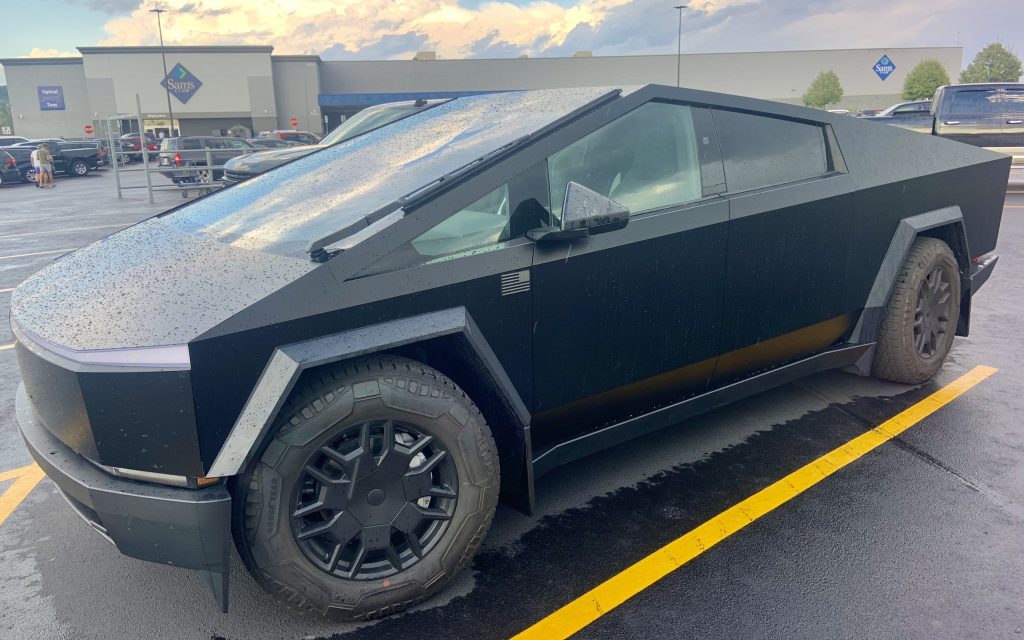
Tesla to Wind Down Cybertruck Production by Mid-2027 as Musk Bets the Texas Factory on the Cybercab
Tesla will wind down production of the Cybertruck at its Texas factory around the middle of 2027, chief executive Elon Musk has announced, ending the short life of one of the most talked-about vehicles of the decade and freeing up factory space for the company’s driverless Cybercab robotaxi.
Musk made the announcement in a short post on X on Friday, 6 November 2026. “Tesla will be winding down production of the Cybertruck at Gigafactory Texas around the middle of next year to make room for increased Cybercab production,” he wrote.
The announcement marks a sharp turn for a vehicle that Musk once said would change the pickup truck forever. The Cybertruck only went on sale in late 2023, which means it will have been in production for less than four years when the lines start to slow down.
What exactly did Musk announce?
The post was brief, and it left several big questions unanswered. Musk did not say whether Cybertruck production would move to another factory or stop altogether. He did not give an exact end date, a final production number, or any detail about what will happen to customers who have already ordered a truck.
What is clear is that the factory in Austin, Texas, will shift its focus. The Cybercab, Tesla’s purpose-built robotaxi, will take over the space now used to build the pickup.
There is a good reason the question of a move matters so much. The Austin plant is the only known Tesla factory equipped to build the Cybertruck’s specialised parts, according to Reuters. The truck’s stainless-steel body panels and unusual construction need tooling that no other Tesla plant has. If Tesla wanted to keep building the Cybertruck somewhere else, it would have to set up that equipment from scratch, and Musk gave no sign that it plans to do so.
Tesla did not immediately respond to a request for comment from Reuters, which was sent outside regular business hours.
The Cybertruck’s own engineer says the truck “lives on”
Within about half an hour of Musk’s post, Wes Morrill, the Cybertruck’s lead engineer, added his own message on X. His words suggest the decision is final, even if the details are still open.
“Cybertruck was an incredible technology development platform and lives on through Cybercab,” Morrill wrote.
Morrill also answered the question that matters most to people who already own one of the trucks. Asked whether existing Cybertrucks would still be supported, he replied: “Yes, of course! Tesla will maintain spare parts and service will continue support.”
That is an important promise. A pickup is a working vehicle for many owners, and they need to know that parts and repairs will still be available after the factory moves on.
Why the Cybertruck never took off
When Musk first showed the Cybertruck to the world in 2019, he promised a tough, futuristic pickup that would take on America’s best-selling trucks from Ford, General Motors and Ram. The angular, stainless-steel design made headlines around the world, and the launch event itself became famous when a steel ball cracked the truck’s supposedly unbreakable window on stage.
Tesla later said it had taken more than a million reservations for the truck. But the reality of sales has been very different from the early excitement.
Sales in the United States have been falling. According to data from Cox Automotive, published through Kelley Blue Book, Tesla sold 4,323 Cybertrucks in the US in the third quarter of 2026. That was down 19.7 percent from 5,385 in the same quarter a year earlier. Over the first nine months of 2026, US sales totalled 11,586, down 28 percent compared with the same period last year.
The truck has also had a troubled life on the road. It has faced multiple recalls and quality-control problems since its launch, and Tesla has repeatedly changed its prices. The truck went on sale at a price far above the $39,900 starting figure Musk had promised when he first revealed it in 2019.
At around the same time as Musk’s announcement on Friday, Tesla also stopped taking orders for the cheapest version of the truck, the Dual-Motor All-Wheel Drive model. Only the more expensive Premium and Cyberbeast versions remained available to order on Tesla’s website.
Tesla does not report Cybertruck sales separately in its own results, so the Cox Automotive estimates are the best public picture of how the truck has been selling. The picture they paint is of a vehicle that found a small, loyal group of buyers but never came close to the mass-market success Musk had predicted.
What is the Cybercab?
The Cybercab is the vehicle that will take the Cybertruck’s place on the factory floor. It is a small, two-seat car with no steering wheel and no pedals, built from the start to drive itself. Musk unveiled it in October 2024, and Tesla has said it aims to sell it for under $30,000.
The Cybercab is the centrepiece of Musk’s plan to turn Tesla from a carmaker into a robotics and self-driving company. Instead of selling cars to individual drivers, the idea is to run fleets of robotaxis that people can summon like a taxi, with no driver at all.
Tesla has already started down that road. Its robotaxi service began in Austin in June 2025 using Model Y cars, and Cybercabs joined the Austin fleet in September 2026. Tesla’s second-quarter update for 2026 said Cybercab production had already begun at Gigafactory Texas.
The company’s third-quarter shareholder update listed installed annual capacity of more than 125,000 vehicles each for the Cybertruck and the Cybercab in Texas. That is the capacity of the factory lines, not the number of vehicles actually built, but it shows how much of the plant the Cybercab is expected to fill.
On Tesla’s third-quarter earnings call, Lars Moravy, the company’s vice president of vehicle engineering, gave a sense of how fast the Cybercab line is already running. “We’ve definitely been bursting the Cybercab line to see how fast we can run it,” he said.
A rough week for Tesla’s shares
Musk’s announcement came at the end of a bruising week for Tesla and for technology shares in general. Tesla’s stock closed on Thursday at $343.69, down 10.77 percent, as part of a broad sell-off in technology stocks. The Nasdaq index fell 5.52 percent on Thursday, entering correction territory, and the wider market rout has also spread to cryptocurrencies.
The Cybertruck news is part of a much bigger change at Tesla. In January 2026, on the company’s fourth-quarter earnings call, Musk said it was time to bring the Model S and Model X programmes to an end with an “honourable discharge”, and told anyone interested to order while they still could. Tesla’s second-quarter update for 2026 confirmed that the Model S and Model X production lines at the Fremont factory in California had been taken out, and that the space was being fitted with the first production lines for Optimus, Tesla’s humanoid robot.
In other words, the Cybertruck is not the first Tesla model to be wound down this year. The company is clearing factory space for robots and robotaxis, and older car models are making way.
Tesla has also quietly pulled back from selling the Cybertruck in new markets. The company has told reservation holders in Australia and New Zealand that plans to build the truck for those markets have been discontinued.
What this means if you own, or wanted, a Cybertruck
For current owners, the most important facts are the ones Morrill has already confirmed: spare parts will be kept available, and service will continue. Owners should not expect their trucks to become unusable, but they should expect the model to become a rare sight. Once production winds down, no new Cybertrucks will be built at the only factory that can make them, unless Tesla announces a new home for the line.
For buyers who were still thinking about ordering one, the clock is now ticking. Production is due to wind down around the middle of 2027, and the cheapest version is already gone from Tesla’s website. Anyone who wants a new Cybertruck will need to order one of the remaining versions while they are still being built.
For investors, the announcement is a clear statement of where Musk thinks Tesla’s future lies. The company is betting that driverless cars, not pickups, will drive its growth. That bet carries risks. The robotaxi business is still small, it faces safety questions and rules that differ from place to place, and rivals such as Waymo are already running large driverless fleets. But Musk has made his choice, and the Texas factory will now be organised around it.
What happens next?
Several questions remain open, and Tesla will need to answer them in the coming months.
First, will the Cybertruck be built anywhere else, or is this the end of the model? Musk’s post does not say, and the fact that only Austin can build the truck’s special parts makes a move unlikely.
Second, how many Cybercabs will the freed-up factory space actually produce? Tesla has not given a number, and Moravy’s comment about testing how fast the line can run suggests the company is still learning what the line can do.
Third, what happens to the workers and suppliers who build the Cybertruck today? Tesla has not said whether they will move to Cybercab production or to other parts of the business.
Finally, will the Cybercab itself succeed where the Cybertruck struggled? The robotaxi has a much simpler job than a pickup: carry two people across a city without a driver. But it has to do that safely, cheaply and at a large scale, and it has to win the trust of passengers and regulators. The Cybertruck showed that a bold design and a famous name are not enough on their own. The Cybercab will have to prove itself on the road.
Frequently asked questions
When will Tesla stop building the Cybertruck?
Elon Musk said production will wind down at Gigafactory Texas around the middle of 2027. He has not given an exact final date, and it is not yet clear whether production will stop completely or continue at a low level.
Will Tesla still service my Cybertruck?
Yes. Cybertruck lead engineer Wes Morrill has said Tesla will keep spare parts available and service support will continue for existing trucks.
Why is Tesla ending Cybertruck production?
Musk said the factory space is needed to build more Cybercabs, Tesla’s driverless robotaxi. Sales of the Cybertruck have also been falling, with US sales down 28 percent in the first nine months of 2026 compared with a year earlier, according to Cox Automotive data.
What is the Cybercab?
The Cybercab is a two-seat, self-driving car with no steering wheel or pedals. Tesla unveiled it in October 2024 and has said it aims to sell it for under $30,000. Cybercabs are already running in Tesla’s robotaxi fleet in Austin, Texas.
Can I still buy a new Cybertruck?
For now, yes, but the choice is shrinking. Tesla has stopped taking orders for the entry-level Dual-Motor All-Wheel Drive version, leaving only the Premium and Cyberbeast versions. Production is due to wind down around mid-2027.
Conclusion
The Cybertruck was one of the boldest vehicles ever put on sale: a stainless-steel pickup that looked like it had driven out of a science-fiction film. It drew huge crowds, more than a million reservations, and endless argument. But bold design was not enough. Sales fell, recalls mounted, and the truck never became the mass-market success Musk had promised.
Now Tesla is moving on. The same factory that built the Cybertruck will build the Cybercab instead, and the company’s future is being bet on cars with no drivers at all. The Cybertruck will not disappear overnight, and existing owners will still be looked after. But its time as a vehicle in production is nearly over. In less than four years, it has gone from the future of the pickup truck to a lesson in how hard it is to turn excitement into sales.
Sources
- Reuters, via Devdiscourse — https://www.devdiscourse.com/article/international/4002572-tesla-to-wind-down-cybertruck-production-at-texas-factory-musk-says
- Reuters, via TradingView — https://www.tradingview.com/news/reuters.com,2026:newsml_L3N46N0J2:0-tesla-to-wind-down-cybertruck-production-at-texas-gigafactory-next-year-musk-says/
- InsideEVs — https://insideevs.com/news/814618/tesla-cybertruck-production-ending-official/
- Invezz — https://invezz.com/news/2026/11/06/tesla-cybertruck-texas-production-cybercab/
- EVWire — https://evwire.com/p/tesla-cybertruck-production-ends-mid-2027
- TeslaNorth — https://teslanorth.com/2026/11/06/tesla-cybertruck-wind-down-cybercab-2027/
This article is for general information and education only. It is not legal or financial advice.
