
Pakistan Unveils New Auto Policy to Make Cars Cheaper and Push Electric Vehicles
Pakistan has unveiled a new auto policy that promises cheaper cars for the middle class, a big push for electric vehicles, and a thirty-fold increase in car exports. The government announced the policy on Saturday, 7 November 2026, saying it would make vehicles more affordable, raise quality, and cut the country’s heavy bill for imported fuel.
Information Minister Attaullah Tarar and the Prime Minister’s Adviser on Industries and Production, Haroon Akhtar Khan, announced the policy at a joint press conference in Islamabad. They said it had been prepared after long consultations and that Prime Minister Shehbaz Sharif had devoted considerable time to getting it right.
Here is what the new auto policy contains, what it means for car buyers, and what still has to happen before it makes a real difference.
What was announced
The new policy is built around six pillars, according to Haroon Akhtar Khan. They are:
- Affordable vehicles, especially for the middle and lower-middle classes
- Exports of vehicles and auto parts
- Localisation — making more parts inside Pakistan instead of importing them
- Vehicle safety
- Promotion of electric vehicles (EVs)
- Transparency in how the industry is regulated
Attaullah Tarar said the policy had been awaited with great anticipation. He said it would promote local vehicle manufacturing and exports while ensuring “affordable, high-quality and environment-friendly vehicles for the common man.”
He added that Prime Minister Shehbaz Sharif had directed that facilities be created for the middle class in the auto sector, and that the policy was designed to make the automobile industry more accessible to ordinary families.
The government said the policy was prepared after extensive consultations with all stakeholders, analysis of technical data, and a review of automotive models adopted in different countries. Tarar wrote on X that innovation, value addition and localisation would be promoted to create jobs and enable vehicle exports.
Cheaper cars: how prices are supposed to fall
The headline promise of the policy is lower car prices — but the government is clear that prices will not fall overnight.
Prices will come down gradually, as duties on completely built units (CBUs) — fully assembled cars imported from abroad — and on assembly plants are reduced each year. After five years, tariffs should reach competitive levels, according to Haroon Akhtar Khan.
“The prices of all vehicles, except luxury vehicles, will come down,” Akhtar said at the press conference.
The government says lower prices will mainly benefit middle- and upper-income buyers. Reducing the prices of vehicles below 1300cc — the small and mid-sized cars that most Pakistani families buy — is a special priority of the prime minister.
The government has also introduced a tariff policy to lower production costs and the import bill for raw materials used in making cars. Import duties have been cut to bring down manufacturing costs, which the government expects will make locally built vehicles easier for low-income buyers to afford.
There is also a new protection for buyers. Under the policy, no carmaker will be allowed to collect an advance payment of more than 20 percent of a vehicle’s total price from a customer. For years, buyers in Pakistan have complained about paying large advances and then waiting months for delivery. The 20 percent cap is meant to end that practice.
Quality is part of the promise too. A total of 45 new standards have been added to bring locally assembled vehicles up to international quality levels. Pakistani car buyers have long complained that locally assembled cars are expensive yet poorly built compared with the same models sold abroad. The new standards are meant to close that gap.
The big push for electric vehicles
Electric vehicles get special attention in the new policy. The government says EVs matter more than ever following recent regional tensions, which pushed up fuel prices and exposed how much Pakistan depends on imported oil.
The incentives for EVs include:
- Cheaper loans. The financing limit for buying an electric vehicle has been raised from Rs2 million to Rs10 million, making it much easier to borrow enough to buy one.
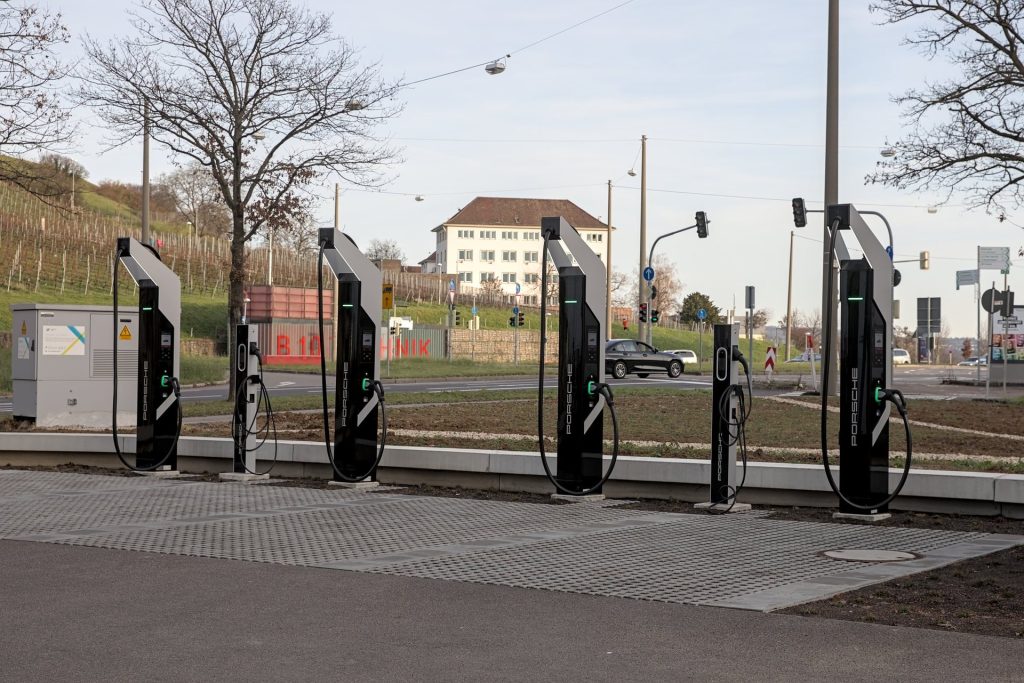
- Cheaper charging. Import duties on EV charging stations have been reduced. Customs duty has been exempted on the equipment needed to set up charging stations, and sales tax on that equipment has also been reduced.
- Tax breaks. Electric vehicles have been exempted from various taxes. However, discussions with the International Monetary Fund (IMF) are continuing about a 1 percent tax on electric vehicles, so that part of the picture is not yet final.
- A big target. The government has set a target of shifting 30 percent of the country’s vehicles to electric power within the next five years — and Haroon Akhtar Khan said the target was expected to be achieved ahead of schedule.
Tarar said the policy offers benefits in three major areas: environmental protection, reduction in the import bill, and economic improvement. Electric vehicles produce no exhaust fumes, so they can help clean up the air in Pakistan’s cities. And because they run on electricity instead of petrol or diesel, they can cut the amount of fuel Pakistan has to import.
He also pointed to a social change already under way: women and girls are increasingly using electric scooters to travel to schools, colleges and workplaces. Tarar described the expansion of electric motorcycles and scooters as an important development, and the policy’s incentives apply to two-wheelers as well as cars.
Tarar called the policy “a significant step toward providing Pakistani citizens with affordable, high-quality, and environmentally friendly transportation.”
Exports: from $200 million to $6 billion
The most ambitious number in the policy is the export target. Pakistan’s auto-sector exports currently stand at about $200 million. The new policy aims to raise them to $6 billion over the next five years — a thirty-fold increase.
Haroon Akhtar Khan was blunt about why such a big target is needed. He said policies for the auto sector have been framed for the past decade without any rise in exports, and that the auto industry is a major contributor to large-scale manufacturing — yet it barely sells anything abroad.
This time, the government says it will enforce the target. Manufacturers that fail to meet their export targets will face fines. The idea is to force carmakers, which have long enjoyed a protected home market, to compete internationally.
The policy also pushes localisation: making more parts inside Pakistan instead of importing them. Localisation creates jobs, reduces the need for foreign currency, and — if done well — can bring down production costs over time.
What stays the same: small petrol cars
Not everything changes under the new policy. The government has been careful to reassure owners of small petrol cars, which are the most common vehicles on Pakistan’s roads.
No additional tax will be imposed on vehicles with engines below 1,000cc. And petrol-driven vehicles of up to 800cc — the small cars used by ordinary citizens — will continue under the existing facilities, with no changes to their treatment.
The message is that the policy targets the middle and upper segments of the market, where prices have risen fastest, while leaving the cheapest cars untouched.
Why this matters for ordinary Pakistanis
For most Pakistanis, a car is not a luxury. It is the difference between a long, unreliable commute and a manageable one. But car prices have risen far faster than incomes, putting even a small new car out of reach for many middle-class families. At the same time, buyers complain about poor quality, long waiting times, and large advance payments demanded by dealers.
If the new policy works, three things should change for buyers. First, prices should fall gradually as duties come down. Second, quality should improve as the 45 new standards take effect. Third, buying should become fairer, with advance payments capped at 20 percent.
Electric vehicles could matter even more in the long run. Pakistan spends a large share of its foreign currency on importing petroleum. Every driver who switches to an electric vehicle reduces that bill. And for individual families, an EV can be far cheaper to run than a petrol car, because electricity costs less per kilometre than fuel — although the higher purchase price remains a barrier, which is why the government has raised the financing limit to Rs10 million.
There is also a jobs angle. A bigger, more export-focused auto industry needs workers: not just on assembly lines, but in parts manufacturing, charging infrastructure, and servicing. The government says the policy will create employment, and the export target is the main driver of that promise.
The challenges ahead
A policy announcement is not the same as a result, and this one faces several tests.
The first is delivery. Pakistan has announced auto policies before. Haroon Akhtar Khan himself noted that the sector’s policies have been framed for a decade without any rise in exports. The new policy’s fines for missed export targets are meant to show this time is different — but fines only work if they are actually enforced.
The second is the IMF question. The government says EVs have been exempted from various taxes, but discussions with the IMF are continuing about a 1 percent tax on EVs. The IMF’s view matters because Pakistan’s economic programme depends on its agreement with the Fund. If the tax is imposed, it would slightly reduce the incentive to buy an electric vehicle.
The third is charging infrastructure. An electric vehicle is only useful if it can be charged. The policy cuts duties on charging station equipment, but building a national network of chargers — in cities, on motorways, and in smaller towns — will take investment and time. Without chargers, most buyers will stick with petrol.
The fourth is electricity itself. Pakistan’s power sector has its own problems, including high prices and unreliable supply in many areas. Running many more electric vehicles will add demand to the grid, and the government will need to make sure the power system can handle it.
The fifth is affordability. Even with cheaper loans and lower duties, a new car — electric or petrol — remains out of reach for most Pakistanis. The policy’s promise is real but gradual: prices fall over five years, not five weeks.
What happens next
Several things are worth watching in the weeks and months ahead.
The first is the detailed notification. The press conference set out the policy’s main points, but the formal rules — the exact duty cuts, the export targets for each company, and the fines — will come in official notifications. Those details will show how serious the government is.
The second is the IMF discussion. Whether the proposed 1 percent tax on EVs goes ahead will be an early signal of how much room the government has to offer incentives.
The third is the market response. Carmakers will need to announce new models, new prices, and new investment in local parts and EV charging. Their response will show whether the industry believes the policy will last.
The fourth is the export numbers. The $6 billion target is the policy’s boldest promise. The first signs of progress — or the lack of it — will appear in export figures over the coming year.
For now, the government has set out its plan: cheaper cars, better quality, more electric vehicles, and an industry that sells to the world instead of only to Pakistanis. The next five years will show whether the plan survives contact with reality.
Frequently asked questions
What is Pakistan’s new auto policy?
It is a new government policy for the automobile industry, announced on 7 November 2026. It aims to make cars cheaper, promote electric vehicles, raise quality, and increase auto exports from about $200 million to $6 billion over five years.
Who announced the policy?
Information Minister Attaullah Tarar and the Prime Minister’s Adviser on Industries and Production, Haroon Akhtar Khan, announced it at a press conference in Islamabad on Saturday, 7 November 2026.
What are the six pillars of the policy?
Affordable vehicles (especially for the middle and lower-middle classes), exports, localisation, vehicle safety, electric vehicle promotion, and transparency.
How much will car prices fall?
The government has not given an exact figure. Prices will fall gradually as duties are reduced each year, with competitive tariffs after five years. The prime minister has made reducing the prices of vehicles below 1300cc a special priority.
What incentives are there for electric vehicles?
The financing limit for buying an EV has risen from Rs2 million to Rs10 million. Import duties on charging stations have been cut, customs duty on charging equipment has been exempted, and sales tax on it has been reduced. EVs have also been exempted from various taxes, although a 1 percent EV tax is still under discussion with the IMF.
What is the target for electric vehicles?
The government aims to shift 30 percent of the country’s vehicles to electric power within five years, and says the target could be achieved ahead of schedule.
Will small petrol cars become more expensive?
No. No additional tax will be imposed on vehicles below 1,000cc, and petrol vehicles up to 800cc will continue under the existing facilities.
What is the export target?
Auto-sector exports are to rise from about $200 million now to $6 billion over five years. Carmakers that miss their export targets will be fined, and advance payments from buyers are capped at 20 percent of a vehicle’s price.
Conclusion
Pakistan’s new auto policy is the government’s most ambitious attempt yet to fix an industry that Pakistanis have complained about for years: cars that are too expensive, of poor quality, and sold with large advance payments and long waits.
The promises are big. Cheaper cars within five years. A 30 percent shift to electric vehicles. Exports rising thirty-fold to $6 billion. Better quality through 45 new standards. Fairer buying through a 20 percent cap on advance payments.
But the history of auto policy in Pakistan is a warning. As the government’s own adviser admitted, a decade of policies produced no rise in exports at all. This policy will be judged not by its press conference, but by its results: by the price of a small car in a showroom, by the number of chargers on the road, and by the export figures at the end of each year.
For Pakistan’s car buyers, the wait begins now — and the clock the government has set for itself runs for five years.
Sources
- TechJuice, “Govt Unveils New Auto Policy to Cut Car Prices and Lift Vehicle Exports to $6 Billion”, 7 November 2026: https://www.techjuice.pk/govt-unveils-new-auto-policy-to-cut-car-prices-and-lift-vehicle-exports-to-6-billion/
- Islamabad Post, “Govt unveils new auto policy to promote EVs, make cars affordable for middle class”, 7 November 2026: https://islamabadpost.com.pk/govt-unveils-new-auto-policy-to-promote-evs-make-cars-affordable-for-middle-class/
- Pakistan Point, “New Auto Policy Approved In Pakistan, Car Prices For Middle And Upper Classes To Gradually Decline”, 7 November 2026: https://www.pakistanpoint.com/en/story/2285829/new-auto-policy-approved-in-pakistan-car-prices-for-mi.html
- Daily Imroz (Radio Pakistan), “Pakistan unveils new auto policy focusing on cheaper, electric cars”, 7 November 2026: https://dailyimroz.com/news/pakistan-unveils-new-auto-policy-focusing-on-cheaper-electric-cars
This article is for general information and education only. It is not legal or financial advice.

Pingback: EU Waters Down 2035 Petrol and Diesel Car Ban: What the Vote Means for Drivers, Carmakers and Electric Cars - Findivoza