
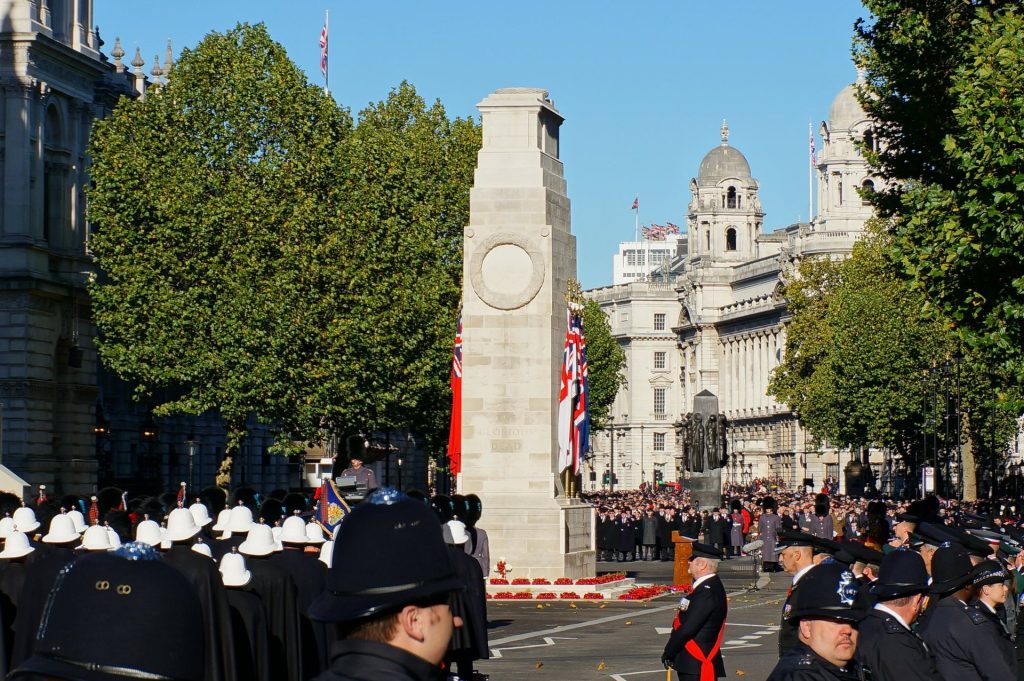
Remembrance Sunday 2026: King Charles Leads the Nation in Silence at the Cenotaph
Remembrance Sunday 2026 was marked across the United Kingdom on Sunday, 8 November, as King Charles III led the nation in a two-minute silence at the Cenotaph in London and laid the first wreath in memory of those who died in conflict.
At 11am, as Big Ben struck the hour, the country fell silent. Traffic paused, crowds bowed their heads, and a bugler sounded the Last Post before wreaths were laid at the foot of the white stone monument in Whitehall. Around 10,000 veterans then marched past the Cenotaph in the traditional march-past, watched by thousands of people who had gathered in central London.
This year’s service had several moments that made it stand out. It was Prime Minister Andy Burnham’s first Remembrance Sunday in office, and a record nine former prime ministers stood together at the ceremony. The prayers were led by Dame Sarah Mullally, the first woman to serve as Archbishop of Canterbury. And among the veterans marching past were a small number who served in the Second World War, more than 80 years after that war ended.
What happened at the Cenotaph
The National Service of Remembrance began at 11am on Sunday. The service is held every year at the Cenotaph, the tall stone memorial in the middle of Whitehall, a short walk from the Houses of Parliament and Downing Street.
The King led the silence and laid the first wreath. He wore the uniform of a Marshal of the Royal Air Force, with a greatcoat, cap and sword, and a red poppy on his chest. His wreath was made of 41 open-style poppy petals mounted on black leaves, with a ribbon and bow in scarlet, purple and gold — the colours of his racing silks. After laying it, he stepped back and saluted at the foot of the monument, beneath the words carved into its stone: “The Glorious Dead”.
The Prince of Wales stood beside the King at ground level and laid his own wreath. Queen Camilla and the Princess of Wales watched the ceremony from a balcony nearby, as they have in previous years.
Prime Minister Andy Burnham laid a wreath, marking his first Remembrance Sunday as prime minister. He was followed by the leader of the opposition, Kemi Badenoch, and the leaders of the other political parties, along with representatives of the Commonwealth and faith communities.
One striking feature of this year’s gathering was the presence of nine former prime ministers: Keir Starmer, Rishi Sunak, Liz Truss, Boris Johnson, Theresa May, David Cameron, Gordon Brown, Tony Blair and John Major. According to the BBC, that is the largest number of former prime ministers ever to attend the service together. When Tony Blair left office in 2007, only two former prime ministers were still alive: John Major and Margaret Thatcher. Today there are nine.
The service itself was led in prayer by the Archbishop of Canterbury, Dame Sarah Mullally. She is the first woman to hold the most senior job in the Church of England, and this was her first time leading the prayers at the national service.
After the service ended at about 11.25am, the march-past began. Around 10,000 armed forces veterans walked past the Cenotaph, many wearing their medals and poppies. They were followed by detachments from the Royal British Legion and other veterans’ groups. Among them were veterans of the Second World War, now in their late 90s and older, some in wheelchairs, cheered by the crowds.
Services were also held at the same time in Edinburgh, Belfast and Cardiff, and in towns and cities across the whole of the United Kingdom. People gathered at war memorials, churches and village greens for their own two-minute silences.
Why Britain falls silent in November
Remembrance Sunday is held on the second Sunday in November, the Sunday closest to 11 November. That date marks the Armistice of 11 November 1918, when the fighting on the Western Front in the First World War came to an end at 11am — the eleventh hour of the eleventh day of the eleventh month.
The two-minute silence is held at 11am in memory of that moment. It was first observed widely in 1919, a year after the war ended, and it has been kept ever since. During the silence, people stop what they are doing and stand still, in public places, workplaces, schools and homes.
The Cenotaph itself has stood at the centre of the ceremony for more than a century. It was designed by the architect Sir Edwin Lutyens and unveiled on 11 November 1920 by King George V. The word “cenotaph” comes from Greek and means “empty tomb” — the monument is a tomb with no body in it, standing for all those who died and have no known grave. The words “The Glorious Dead” are carved on its sides.
The red poppy became the symbol of remembrance because of a poem, “In Flanders Fields”, written in 1915 by the Canadian military doctor John McCrae. He wrote about the poppies growing between the graves of soldiers in Flanders, in Belgium, where some of the fiercest fighting of the First World War took place. The Royal British Legion, the charity that supports veterans and their families, adopted the poppy as its symbol in 1921. Every year, millions of people in Britain and the Commonwealth wear a paper poppy in the weeks leading up to Remembrance Sunday, and the money raised goes to help veterans.
A ceremony that keeps changing
Remembrance Sunday is more than a hundred years old, but it is not frozen in time. Each year it reflects the country as it is now — and this year was a clear example.
The presence of nine former prime ministers, from five different decades of British politics, showed how much the country’s leadership has changed in a short space of time. The first woman Archbishop of Canterbury leading the prayers marked another change in an institution that is nearly 500 years old. And the sight of Second World War veterans, fewer each year, marching past the Cenotaph was a reminder that living memory of that war is now almost gone. The youngest people who served in the Second World War are now in their late 90s.
The BBC’s coverage of Remembrance Week this year was built around the theme “Places of Remembrance” — the memorials, churches, village greens and cemeteries where people gather each November, not just the big ceremony in London. The Royal British Legion’s Festival of Remembrance was held at the Royal Albert Hall in London on Saturday evening, the night before the Cenotaph service, as it is every year.
The ceremony also takes place at a time when war is not only history. Fighting continues in Ukraine, where Russia has stepped up attacks on the country’s power grid in recent days, and the war in Yemen has flared up again after years of relative calm. Russia’s latest strikes on Ukraine’s power grid are a reminder that the conflicts the Cenotaph honours are not all in the past. That is part of why the day still matters: it is not only about remembering the dead, but about the cost of war in the present.
How the day is marked around the world
Britain is not the only country that remembers its war dead in November. Across the Commonwealth, 11 November is also observed as Remembrance Day, and in many countries people wear poppies and hold silences at 11am.
In the United States, 11 November is Veterans Day, a public holiday honouring all military veterans. In France and Belgium, 11 November is Armistice Day, marking the same 1918 armistice, and ceremonies are held at war memorials and cemeteries. In Canada and Australia, Remembrance Day services are held at memorials in every city and town.
In Britain, the national act of remembrance is always on the Sunday, so that the largest number of people can take part. Armistice Day itself — Wednesday, 11 November this year — is marked more quietly, with a two-minute silence at 11am and small ceremonies at memorials.
What happens next
Remembrance Week continues through to Armistice Day on Wednesday, 11 November, when a two-minute silence will be held at 11am across the country. The Royal British Legion’s Poppy Appeal continues to raise money for veterans and their families, and poppies will be worn until Armistice Day itself.
For the veterans who marched past the Cenotaph on Sunday, the day was both personal and public. Many were remembering friends they served with, some of whom never came home. For the crowds watching, it was a chance to stop for two minutes, in the middle of ordinary life, and think about what those names on the memorials mean.
That is what the Cenotaph was built for. More than a century after it was unveiled, on a grey November morning in London, it still does its job.
Frequently asked questions
What is Remembrance Sunday?
Remembrance Sunday is the day in Britain when people remember those who died in war. It is held on the second Sunday in November, the Sunday closest to 11 November, the date of the Armistice that ended the First World War in 1918. The main ceremony is the National Service of Remembrance at the Cenotaph in London.
Why is the silence held at 11am?
The silence is held at 11am because the Armistice that ended the fighting in the First World War took effect at 11am on 11 November 1918 — the eleventh hour of the eleventh day of the eleventh month.
What is the Cenotaph?
The Cenotaph is a stone memorial in Whitehall, in central London. It was designed by Sir Edwin Lutyens and unveiled in 1920. It is an “empty tomb” — a monument to all those who died in war and have no known grave. The words “The Glorious Dead” are carved into it.
Why do people wear red poppies?
The red poppy became a symbol of remembrance after the poem “In Flanders Fields”, written in 1915, described poppies growing between soldiers’ graves in Belgium. The Royal British Legion adopted the poppy in 1921, and money from poppy sales supports veterans and their families.
What is the difference between Remembrance Sunday and Armistice Day?
Remembrance Sunday is the Sunday closest to 11 November, when the big national ceremony takes place at the Cenotaph. Armistice Day is 11 November itself, the anniversary of the 1918 Armistice, marked with a two-minute silence at 11am.
Who led this year’s service?
King Charles III led the 2026 service, laying the first wreath at the Cenotaph. He was joined by the Prince of Wales, Queen Camilla, the Princess of Wales, Prime Minister Andy Burnham, opposition leader Kemi Badenoch, and a record nine former prime ministers. The Archbishop of Canterbury, Dame Sarah Mullally, led the prayers.
Sources
- BBC News, via Azat TV: “King Charles Leads UK Remembrance Service at Whitehall Cenotaph” — https://azat.tv/en/king-charles-leads-remembrance-sunday-cenotaph/
- Nexus Europa: “Remembrance Sunday 2026: King Charles Leads Cenotaph Service in London” — https://nexuseuropa.eu/en/article/remembrance-sunday-2026-king-charles-leads-cenotaph-service-in-london
- Royal Central: “King Charles leads nation in Remembrance Sunday commemorations at the Cenotaph” — https://royalcentral.co.uk/royal-news/king-charles-leads-nation-in-remembrance-sunday-commemorations-at-the-cenotaph-219709/
- Glasgow Times (PA): “King leads nation in honouring the fallen at Cenotaph on Remembrance Sunday” — https://www.glasgowtimes.co.uk/news/national/26709551.king-leads-nation-honouring-fallen-cenotaph-remembrance-sunday/
- GOV.UK: “National Service of Remembrance: Sunday 8 November 2026” — https://www.gov.uk/guidance/national-service-of-remembrance-sunday-8-november-2026
- BBC (via La Vie Zine): “Remembrance Sunday 2026 — How to follow the National Service of Remembrance at The Cenotaph” — https://www.laviezine.com/1678336/remembrance-sunday-2026-how-to-follow-the-national-service-of-remembrance-at-the-cenotaph-and-the-royal-british-legion-festival-of-remembrance-on-the-bbc/
This article is for general information and education only. It is not legal or financial advice.
