
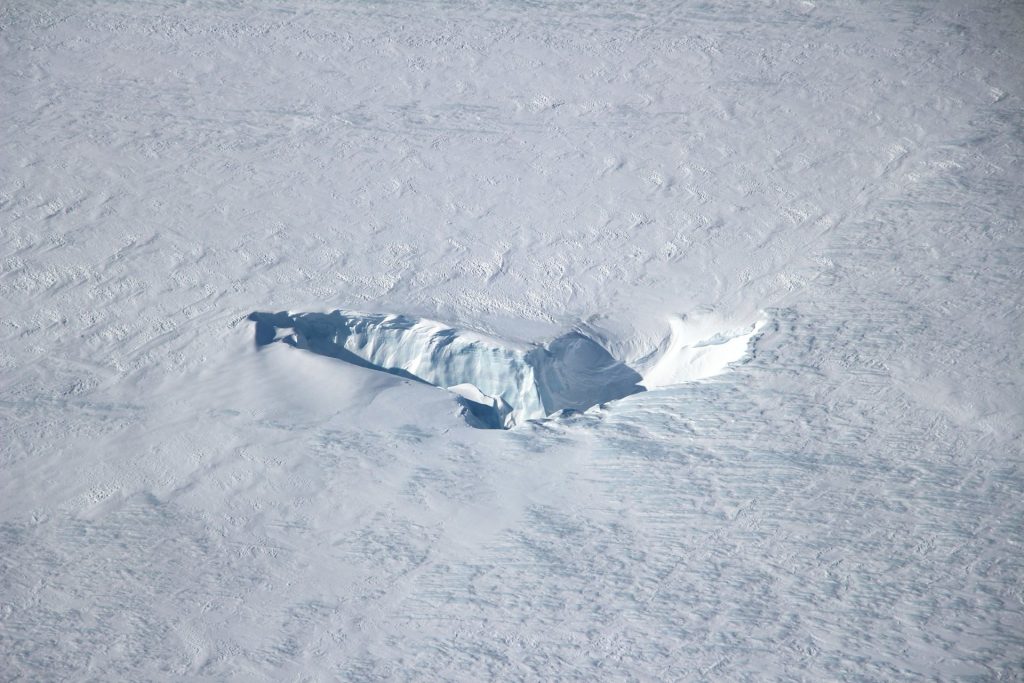
Greenland’s Ice Sheet Once Retreated 60 Miles — and Ancient Sediment Shows What That Means for Our Future
About 416,000 years ago, a patch of ground in northwestern Greenland lay open to the sky. There was no ice above it — only soil, plants, and warm summer air. Today, that same spot sits buried under the Greenland ice sheet, one of the largest bodies of ice on Earth.
Scientists now know just how warm it was back then. A new study has found that summers at the site were 4.7 degrees Celsius (8.5 degrees Fahrenheit) warmer than they are today. For the ground to have been ice-free at all, the edge of the Greenland ice sheet must have pulled back more than 60 miles (97 kilometres) from where it stands now.
The discovery comes from an unlikely source: mud drilled from beneath a secret Cold War military base in the 1960s, forgotten in a freezer for decades, and rediscovered by chance in 2018. It arrives on the same day world leaders gather in Antalya, Turkey, for the COP31 climate summit — a reminder that the ice sheet’s past may hold clues to its future.
What the scientists found
The study, led by researchers at the University at Buffalo and published in the journal Climate of the Past, looked at sediment recovered from beneath Camp Century, a former United States military base built into the Greenland ice sheet in 1959.
The headline findings are simple, and striking:
- Around 416,000 years ago, the ground at Camp Century was free of ice.
- Summers there were about 4.7°C warmer than modern summers, with an uncertainty of plus or minus 3.2°C.
- For the site to be ice-free, the Greenland ice sheet’s edge in that region must have retreated more than 60 miles from its present position.
- The warm period, known to geologists as Marine Isotope Stage 11, may have lasted tens of thousands of years.
“It’s striking that a period of moderately warmer temperatures coincided with such a substantial retreat of the ice sheet,” says lead author John Michael Aguilar, a postdoctoral fellow at the University at Buffalo’s RENEW Institute.
The researchers believe this is the first quantitative estimate of summer temperatures on land anywhere in Greenland during that ancient warm period. Such records are exceptionally hard to find, because later advances of the ice sheet scraped away most of the sediment from that time.
A secret Cold War base under the ice
Camp Century has one of the strangest histories of any research site on Earth. The U.S. Army built the base in 1959 by digging tunnels into the ice sheet in northwestern Greenland. It housed a secret programme called Project Iceworm — a plan to hide nuclear missiles beneath Greenland’s ice. The plan was eventually abandoned, and the base was left to be slowly buried and crushed by the moving ice.
But before the base was abandoned, scientists drilled deep into the ice. In the 1960s, they pulled up sediment from nearly a mile (1.6 kilometres) below the surface — material that had been sitting at the bottom of the ice sheet since before the ice arrived.
Earlier research on that same sediment had already shown something remarkable: the ground at Camp Century last saw sunlight approximately 416,000 years ago. The new study goes further. Instead of only proving the ice had disappeared, the team worked out how warm the summers were while it was gone.
The forgotten sediment
The samples nearly slipped out of science altogether. Chester Langway, the scientist who led the Camp Century ice-core drilling, brought the sediment to the University at Buffalo in 1975. It stayed in the university’s Central Ice Core Storage Facility until his retirement in the mid-1990s. Then it spent more than two decades largely forgotten at the University of Copenhagen in Denmark.
A chance freezer cleanout in 2018 brought the sediment back to researchers’ attention. Elizabeth Thomas, an associate professor of Earth sciences at the University at Buffalo and the study’s corresponding author, has studied it with collaborators at the University of Vermont ever since. The sediment’s remarkable journey even became the subject of an Emmy Award-winning documentary.
For Thomas, the latest study is the result of years of work with Aguilar. Measuring the molecules in the sediment was familiar work for her laboratory. Turning those measurements into a reliable temperature estimate was much harder. The team had to account for how the land’s height changed as the ice sheet grew and melted, because elevation affects how temperatures can be compared across time.
“What may look like a routine analysis actually took years to figure out,” Thomas says. “It’s been quite a journey, not unlike the journey these sediment samples took to get here.”
How do you measure a 416,000-year-old summer?
Nobody was there with a thermometer 416,000 years ago. So the researchers used a natural record instead: tiny fatty molecules left behind by bacteria and preserved in the ancient sediment.
“The types and proportions of these molecules change depending on the temperature,” Aguilar explains. “By comparing them with similar molecules found in modern Arctic lakes, we were able to estimate how warm it was at Camp Century.”
These molecules are known as biomarkers. Bacteria produce different mixtures of them in warm conditions than in cold ones, and the mixtures survive in soil and sediment for hundreds of thousands of years. By matching the ancient mixture against the mixtures found in today’s Arctic lakes, the team could estimate the summer temperature at Camp Century during the ice-free period.
The result — 4.7°C warmer than today — is the first direct measurement of summer temperatures at the site during that ancient warm period.
Why the length of warming matters
Perhaps the most surprising part of the study is not the temperature itself, but what it reveals about time.
Greenland experienced similarly warm summers roughly 5,000 to 10,000 years ago, after the last Ice Age. Yet Camp Century stayed covered in ice through that period. So why did the ice retreat 416,000 years ago but not then?
One possible explanation is that the earlier warm period lasted much longer — potentially tens of thousands of years. Sustained warmth would have given the ice sheet more time to melt. In other words, peak temperature alone cannot explain how far the ice retreats. How long the warmth lasts matters just as much.
“This work gives us a better understanding of how the ice sheet responds to sustained warming and what may be possible in the future,” Thomas says.
That distinction matters for the world today. The warming happening now is driven by human activity, and it is not a brief warm spell. Climate projections suggest that higher temperatures could persist for hundreds or thousands of years — the kind of long, sustained warmth that, in the ancient past, pushed Greenland’s ice back by more than 60 miles.
What it means for Greenland’s future
The findings arrive as scientists expect substantial warming across the Arctic in the coming decades. Depending on how much greenhouse gas the world emits, average annual Arctic temperatures could rise by 3.3 to 10 degrees Celsius (5.9 to 18 degrees Fahrenheit) by the end of this century, according to the Intergovernmental Panel on Climate Change (IPCC).
Thomas cautions against assuming Greenland’s ice will respond slowly, as it did during the ancient warm period.
“Today’s human-caused warming is more intense than the warm period 400,000 years ago,” she says. “And climate projections suggest that this warmth could persist for hundreds or thousands of years. Both the magnitude and duration of warming are important to understanding how the ice sheet will respond.”
The warning is not abstract. Greenland is already losing around 270 billion tons of ice a year, according to NASA satellite data gathered since 2002. That meltwater flows into the oceans, contributing to sea-level rise that affects coastal cities and low-lying land around the world — including Pakistan’s coastline, where Karachi and the Indus delta sit close to sea level.
The study does not predict exactly how much ice Greenland will lose, or how fast. What it does show is that the ice sheet has retreated dramatically before, under warming that was moderate by today’s standards — and that the longer warmth lasts, the further the ice can go.
Why this matters for Pakistan and the world
It is easy to see Greenland as far away — a frozen island in the far north, thousands of kilometres from Pakistan. But the ice sheet is connected to daily life in South Asia in ways that are easy to miss.
First, sea level. When Greenland’s ice melts, the water ends up in the oceans. Rising seas threaten ports, farmland and homes along every coastline, including Pakistan’s Arabian Sea coast. Karachi, the country’s largest city and its main port, is built on low-lying land near the sea.
Second, the same physics applies closer to home. Pakistan’s northern mountains hold some of the largest glaciers outside the polar regions. Those glaciers feed the Indus River, which waters farms and fills reservoirs across the country. The lesson from Greenland — that sustained warmth, not just a hot summer or two, decides how much ice survives — applies to mountain glaciers too.
Third, the timing. The study was published as delegates gather for COP31, the United Nations climate summit opening in Antalya, Turkey, on 9 November 2026. The summit is where countries negotiate how fast to cut the emissions that are warming the planet. Ancient sediment from beneath a Cold War base is now part of that conversation: it shows what sustained warmth has already done to the world’s ice — and what it could do again.
Frequently asked questions
What is Camp Century?
Camp Century was a United States military base built in 1959 by digging tunnels into the Greenland ice sheet in northwestern Greenland. It housed a secret programme called Project Iceworm, a plan to hide nuclear missiles under the ice. The plan failed and the base was abandoned, but sediment drilled there in the 1960s has become a valuable record of Greenland’s ancient climate.
How warm was Greenland 416,000 years ago?
At Camp Century, summers were about 4.7 degrees Celsius (8.5 degrees Fahrenheit) warmer than today, according to the new study. The estimate has an uncertainty of plus or minus 3.2 degrees Celsius. The period is known to geologists as Marine Isotope Stage 11.
How far did the ice sheet retreat?
For Camp Century to have been free of ice, the edge of the Greenland ice sheet in that region must have retreated more than 60 miles (97 kilometres) from its present position.
How did scientists measure the temperature?
They analysed fatty molecules produced by bacteria and preserved in ancient sediment drilled from beneath the ice in the 1960s. The types and proportions of these molecules change with temperature, so by comparing them with molecules from modern Arctic lakes, the team could estimate how warm the summers were.
Does this mean Greenland’s ice will disappear soon?
No. The study does not predict a timeline for future ice loss. It shows that the ice sheet retreated a long way in the past under moderate but long-lasting warmth — and that today’s warming is more intense and could persist for centuries. Scientists say both the size of the warming and how long it lasts will decide how the ice sheet responds.
Why was the sediment forgotten?
The samples were brought to the University at Buffalo in 1975, then spent more than two decades largely forgotten at the University of Copenhagen in Denmark. They were rediscovered during a freezer cleanout in 2018.
Conclusion
A handful of mud, drilled from beneath a secret nuclear missile base in the 1960s and forgotten in a freezer for decades, has given scientists their clearest picture yet of a warm Greenland 416,000 years ago. Summers were nearly 5 degrees warmer than today, and the ice sheet’s edge had pulled back more than 60 miles.
The most important lesson is not the temperature — it is the time. The ice retreated because the warmth lasted, possibly for tens of thousands of years. Today, human-caused warming is more intense, and it could persist for centuries. As climate negotiators meet at COP31, the ancient sediment from Camp Century offers a plain warning from the deep past: give the ice enough warm years, and it will go.
Sources
- SciTechDaily: https://scitechdaily.com/scientists-discover-greenlands-ice-sheet-once-retreated-60-miles/
- Phys.org: https://phys.org/news/2026-10-forgotten-samples-greenland-cold-war.html
- Earth.com: https://www.earth.com/climate/greenlands-ice-vanished-416000-years-ago-and-ancient-sediment-reveals-why/
- Scientific Inquirer: https://scientificinquirer.com/2026/10/26/greenlands-camp-century-was-ice-free-when-summers-were-4-7-c-warmer/
- Climate of the Past (DOI): https://doi.org/10.5194/cp-22-1757-2026
This article is for general information and education only. It is not legal or financial advice.
