
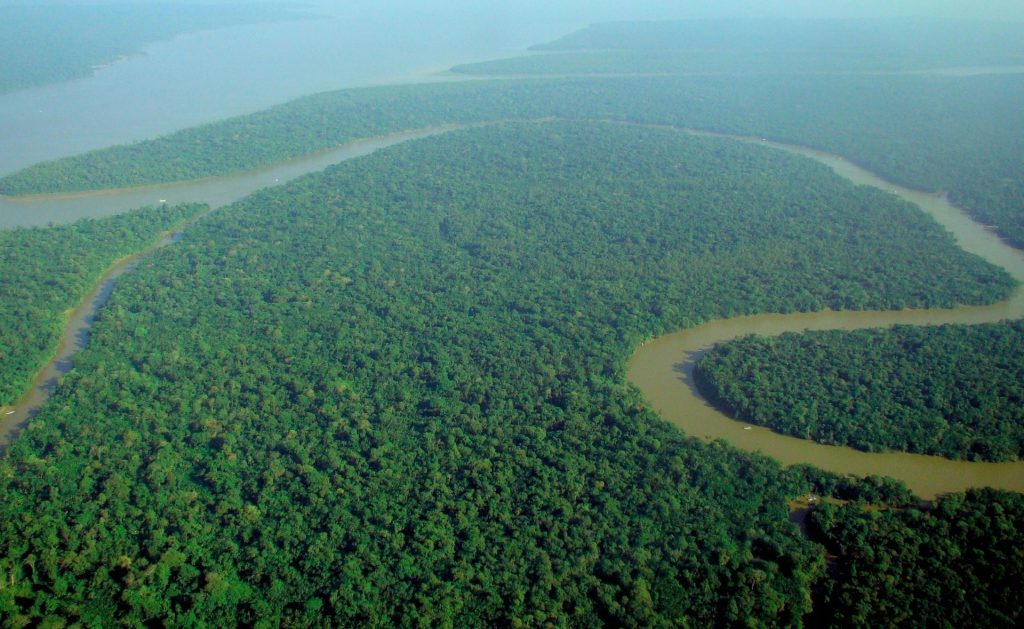
Norway Gives Brazil $64 Million for the Amazon Fund as Deforestation Falls to Its Lowest Level Since 1988
Norway has announced a new donation of about $64 million to Brazil’s Amazon Fund, rewarding Brazil for cutting deforestation in the Amazon rainforest to the lowest level since records began in 1988.
The Norwegian embassy in Brasilia announced the payment of around 350 million reais (about $63.58 million) on Monday, 9 November 2026, as world leaders gathered in Antalya, Turkey, for the COP31 climate summit. The donation is a direct reward for results: Brazil’s official satellite data shows forest clearing in the Amazon fell by 41.8 percent in a single year.
“Brazil’s results are impressive and important not just for the country, but for the whole world,” said Sigrun Aasland, Norway’s Minister of Climate and Environment, in the embassy’s statement.
For a rainforest that stores vast amounts of carbon and helps regulate the planet’s climate, the news is a rare bright spot at a climate summit that opened with warnings that the world is entering a new age of climate extremes.
What Norway announced
Norway’s new donation of about 350 million reais — roughly 600 million Norwegian kroner, or $63.58 million — goes to the Amazon Fund, a Brazilian programme that pays for work to stop deforestation, monitor the forest, fight fires, protect conservation areas and support sustainable livelihoods for people who live in and around the forest.
The money is not a gift with no strings attached. It is a payment for results. Under the fund’s rules, donor money is released only when Brazil can show, with satellite data, that deforestation has actually fallen. Norway’s embassy said the new payment was “based on the positive results” and reinforced the long-term partnership between the two countries.
The embassy did not say when the money will be paid out or which projects it will fund. That detail is still to come.
Norway is by far the Amazon Fund’s biggest supporter. It has given about 3.8 billion reais to the fund since it was created in 2008. Germany, the United States, the United Kingdom, Denmark, Switzerland, Japan and Ireland are also donors.
Deforestation at its lowest level in 38 years
The figures behind the donation are striking. Brazil’s National Institute for Space Research, known as INPE, reported last month that 3,335 square kilometres of Amazon forest were cleared between August 2025 and July 2026. That is the lowest annual total since satellite monitoring began in 1988.
To put the number in perspective:
- The previous year, 5,731 square kilometres were cleared. The new figure is 41.8 percent lower.
- The old record low was 4,571 square kilometres, set in 2011–12. The new figure beats it by more than a quarter.
- In the mid-1990s, annual clearing peaked at nearly 30,000 square kilometres — almost nine times the current level.
- During the presidency of Jair Bolsonaro, from 2019 to 2022, the Amazon lost an average of about 11,600 square kilometres a year, nearly 60 percent more than the average in the four years before that.
The improvement is not limited to the Amazon. In the Cerrado, Brazil’s vast tropical savanna, deforestation fell 23.8 percent to about 5,517 square kilometres — also the lowest since records for that region began in 2001.
One note of caution: the 3,335 square kilometre figure is a preliminary estimate, based on priority satellite images. INPE will publish a final, consolidated figure in the first half of 2027. The final number could move a little, but the direction of travel is clear — and the fall is far too large to be a rounding error.
Why the Amazon matters to everyone
The Amazon is the world’s largest rainforest, covering about 60 percent of Brazil and stretching into eight other South American countries. It is home to around 10 percent of the world’s known species, and about 30 million people live in the region, including hundreds of Indigenous groups.
But its global importance goes beyond wildlife. The Science Panel for the Amazon estimates that the region’s trees, plants and soils store between 150 billion and 200 billion tonnes of carbon. When forest is cut down or burned, that carbon escapes into the atmosphere as carbon dioxide, warming the planet. When the forest stays standing, the carbon stays locked away.
That is why falling deforestation in Brazil matters far beyond Brazil’s borders. Every square kilometre of forest saved is carbon that does not enter the atmosphere, at a time when the world is struggling to cut emissions fast enough to keep global warming in check.
The Amazon also makes its own rain. Trees release huge amounts of water vapour into the air, which falls as rain across South America, watering farms as far away as Argentina. Scientists warn that if too much forest is lost, parts of the Amazon could dry out and turn into savanna — a change that would be very hard to reverse.
How Brazil turned the numbers around
The fall in deforestation did not happen by accident. Since President Luiz Inacio Lula da Silva returned to office in 2023, his government has rebuilt the environmental enforcement system that was weakened under his predecessor.
The centrepiece is a programme called PPCDAm — the Action Plan for the Prevention and Control of Deforestation in the Legal Amazon. It brings together satellite monitoring, police raids on illegal logging and mining operations, fines, and the seizure of cattle raised on illegally cleared land. Brazil’s environment agency, Ibama, has stepped up inspections, and the government has created new protected areas.
Lula, who was re-elected last month, has promised to end illegal deforestation in Brazil by 2030. The new figures suggest that target is now within reach — although stopping illegal clearing entirely will be harder than reducing it.
Norway’s own history with the fund shows how closely the money follows the results. Norway suspended its payments in 2019, at the start of Bolsonaro’s presidency, when deforestation was rising sharply. The payments resumed in 2023, when Lula returned and deforestation began to fall again.
What the Amazon Fund actually does
The Amazon Fund was created by the Brazilian government in 2008 and began operating in 2009. It is managed by Brazil’s national development bank, BNDES, which raises donations, chooses projects, and tracks the results.
The money goes to projects that prevent, monitor and fight deforestation, protect conservation areas, and support sustainable economic activity in the forest. So far, the fund’s money has supported 200 conservation areas and 100 Indigenous lands, and helped finance more than 2,000 operations to fight fires in the Amazon.
The model is simple: donors pay only for results that satellites can verify. That is why the fund has become a model for other forest-protection programmes around the world — and why Norway’s announcement is as much a signal to other countries as it is a payment to Brazil.
The COP31 connection
The timing of Norway’s announcement was no accident. It came on the opening day of COP31, the United Nations climate summit, which is being held in Antalya, Turkey, from 9 to 20 November 2026.
Lula travelled to the summit on Monday, the same day Norway made its announcement. He arrives at a meeting where the main questions are about how fast countries will cut emissions and who will pay for the transition to clean energy.
The summit opened with a warning from the United Nations that the world has entered a new age of climate extremes. A report from the World Meteorological Organization, released on the same day, said 2026 is on track to become the hottest year on record, with record ocean heat and accelerating sea level rise.
Against that background, a success story from the world’s largest rainforest carries real weight. It shows that deforestation can be cut quickly when a government enforces the law — and that rich countries are willing to pay for the results.
Brazil will also be watching what happens next. The country hosted last year’s climate summit, COP30, and has positioned itself as a leader on forest protection. A continued fall in deforestation strengthens its hand in climate negotiations, where it is pushing for more international money for forest protection.
What happens next
Three things will decide whether this good news lasts.
First, the final figures. INPE’s consolidated deforestation rate, due in the first half of 2027, will confirm whether the record low holds. The preliminary number is already the lowest in 38 years, so a small revision would not change the story.
Second, the fires. The August-to-July measurement period ended before the fires reported since September, which fall outside it. Fire damage does not count as deforestation in the same way as clear-cutting, but it still damages the forest and releases carbon. The next set of figures will show how much of the forest survived the fire season.
Third, the money. Norway has not said when the $64 million will be paid or which projects it will support. The Amazon Fund’s track record suggests the money will go to enforcement, monitoring and firefighting — the work that produced these results in the first place. But until the projects are named, the announcement is a promise, not yet a payment.
For now, though, the message from Brasilia is clear: protect the forest, and the world will pay for it. After nearly four decades of satellite records, Brazil has just posted its best result ever — and Norway has put $64 million behind it.
Frequently Asked Questions
What is the Amazon Fund?
The Amazon Fund is a Brazilian programme created in 2008 that collects donations from other countries and spends them on stopping deforestation, monitoring the forest, fighting fires and supporting sustainable livelihoods in the Amazon. It is managed by Brazil’s national development bank, BNDES, and donors only pay when satellite data proves deforestation has fallen.
How much has Norway given to the Amazon Fund?
Norway has given about 3.8 billion reais since the fund was created in 2008, making it by far the largest donor. The new donation of about 350 million reais ($63.58 million), announced on 9 November 2026, adds to that total.
How much Amazon forest was cut down last year?
Brazil’s space research agency, INPE, recorded 3,335 square kilometres of forest cleared between August 2025 and July 2026 — the lowest annual total since satellite monitoring began in 1988, and 41.8 percent less than the 5,731 square kilometres cleared the year before.
Why does Amazon deforestation matter for the climate?
The Amazon’s trees and soils store an estimated 150 to 200 billion tonnes of carbon. When forest is cut or burned, that carbon is released as carbon dioxide, which warms the planet. Keeping the forest standing keeps the carbon locked away, which is why cutting deforestation is one of the fastest ways to slow climate change.
What is COP31?
COP31 is the 31st United Nations climate change conference, held in Antalya, Turkey, from 9 to 20 November 2026. Nearly 200 countries are taking part, negotiating how fast to cut greenhouse gas emissions and how to pay for the shift to clean energy.
Sources
- Reuters — “Norway announces $64 million for Brazil’s Amazon Fund after record deforestation decline” — https://www.reuters.com/business/environment/norway-announces-64-million-brazils-amazon-fund-after-record-deforestation-2026-11-09/
- ESG News — “Norway Amazon Fund Donation” — https://esgnews.com/norway-amazon-fund-donation/
- NGN97 — “Norway Gives $64m to Amazon Fund” — https://www.ngn97.com/2026/11/09/norway-gives-64m-to-amazon-fund-ngn-news/
- Times of India — “Brazil’s Amazon deforestation hits record low: Why it matters amid election battle” — https://timesofindia.indiatimes.com/world/rest-of-world/brazils-amazon-deforestation-hits-record-low-why-it-matters-amid-election-battle/articleshow/135007751.cms
- EconoTimes — “Brazil Estimates Amazon Deforestation Fell 41.8% to a Record Low” — https://econotimes.com/Brazil-Estimates-Amazon-Deforestation-Fell-41-8-to-a-Record-Low-1756470
This article is for general information and education only. It is not legal or financial advice.
