
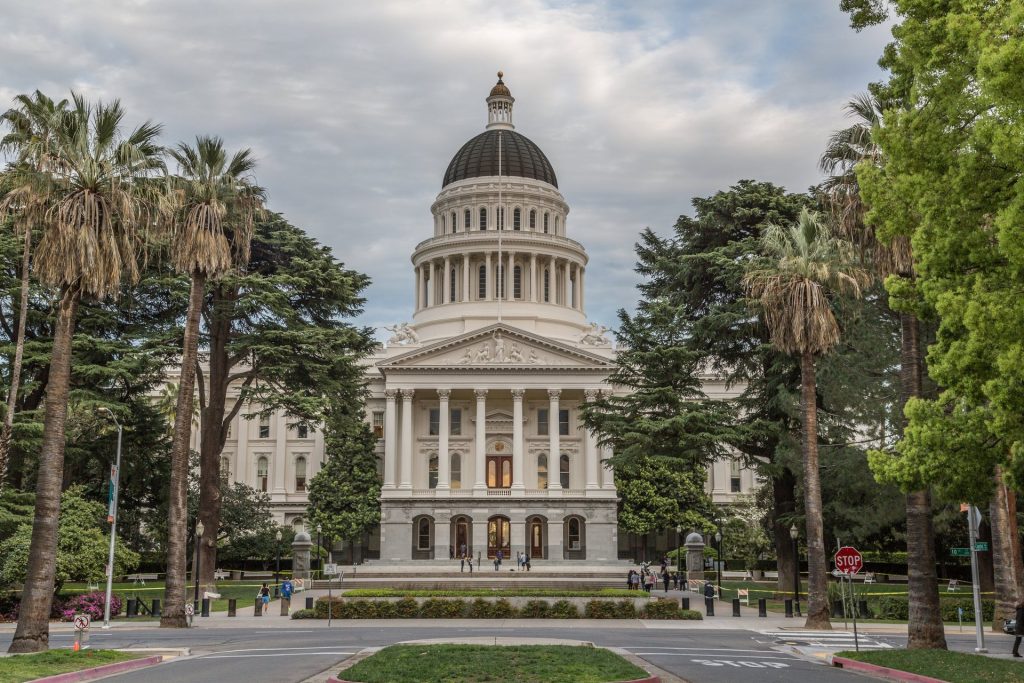
California Voters Reject Billionaire Tax as Proposition 40 Fails
California voters have said no to a one-time tax on billionaires. Proposition 40, which would have taken 5 percent of the wealth of the state’s richest residents, was rejected in the US midterm elections, with 52.8 percent voting against it and 47.2 percent in favour, according to The Associated Press, which called the result on Monday, 9 November 2026.
The result ends one of the most expensive ballot fights in American history. Silicon Valley’s billionaires spent hundreds of millions of dollars to defeat a measure that could have cost some of them billions each. Supporters of the tax, led by a powerful healthcare workers’ union, say they will try again in 2028.
California would have become the first US state to tax wealth itself, rather than income. That is what made this vote matter far beyond California: lawmakers, economists and campaigners across America and around the world were watching to see whether voters in one of the world’s richest places would agree to tax billionaires on what they own.
What happened
Proposition 40 was on the ballot in California’s midterm elections on Tuesday, 3 November 2026. The result stayed too close to call for days as mail-in ballots were counted, but on Monday the Associated Press confirmed that voters had rejected it.
The result was called the same week that Democrats celebrated major wins in the midterm elections across the country. That contrast is part of the story. Even in a strong year for Democrats, and even in one of the most Democratic states in America, a tax aimed squarely at billionaires could not win a majority.
Leaders of the Service Employees International Union-United Healthcare Workers West, the union that put the measure on the ballot, appeared to concede the race minutes before the polls closed on election night. But they also made a promise: they will try again in 2028 if California’s legislature does not find another way to pay for healthcare.
What Proposition 40 would have done
Proposition 40 was simple in design, even if its effects would have been enormous.
It would have imposed a one-time tax of 5 percent on the total wealth of anyone worth more than $1 billion who was a California resident on 1 January 2026. Wealth would have been measured on 31 December 2026. Real estate and pension and retirement savings would have been excluded, so the tax would have fallen mainly on shares, bonds, business stakes and other financial assets.
The tax would have been due in 2027, with an option to spread payments over five years at an extra cost. About 200 billionaires would have had to pay, according to the Yes on 40 campaign.
Supporters estimated the tax would have raised about $100 billion over five years. Ninety percent of that money would have gone to healthcare, mainly to protect or improve California’s Medicaid programme, which provides health cover to low-income residents. The remaining 10 percent would have gone to a new fund for public schools, two years of community college, food assistance and administration.
California’s nonpartisan Legislative Analyst’s Office was more cautious. It projected revenue of “tens of billions of dollars” over several years and warned the measure could reduce annual income-tax revenue by up to $1 billion, because some wealthy residents might leave the state.
The most expensive ballot fight in California history
No ballot measure in California has ever attracted as much money as Proposition 40. Opponents of the tax, led by Silicon Valley’s billionaires, poured in hundreds of millions of dollars. Supporters were outspent many times over.
Google co-founder Sergey Brin led the campaign against the tax. He publicly moved out of California and donated $102 million to Building a Better California, a political committee he founded to oppose the measure. The group acted as a channel for other billionaire donors, and it also funded the two counter-measures, Propositions 41 and 42, that were designed to cancel out the wealth tax.
In total, ultra-wealthy opponents donated $378.4 million to defeat the billionaire tax, according to CalMatters. Supporters of the measure raised about $33.5 million. That means opponents outspent supporters by more than eleven to one.
Supporters of Proposition 40 blamed their defeat on that spending gap. “That is incredibly corrosive and corrupting to our democracy and our political system, and that’s been dominating the discussion here in California,” Regan said.
But money alone does not explain the result. Polling before the election showed support for the tax falling. An October survey by the University of California, Berkeley’s Institute of Governmental Studies found 50 percent of likely voters opposed the measure and 42 percent in favour, compared with 48 percent opposed in August. A separate October poll by the Public Policy Institute of California found 52 percent opposed and 46 percent in favour.
John Matsusaka, an economist and expert on direct democracy at the University of Southern California, said before the election that money rarely changes people’s core values, but it can exploit uncertainty when voters are divided.
A Democratic Party divided
One of the most striking features of the campaign was that it split the Democratic Party, which dominates California politics.
On one side were Senator Bernie Sanders, Representative Ro Khanna and the California Democratic Party, all of whom supported the tax. The California Federation of Labor Unions also backed it, arguing the state needed more revenue to protect workers and ordinary Californians from dramatic federal healthcare cuts that are expected to remove about 2 million residents from health insurance.
On the other side was Governor Gavin Newsom, one of the earliest and loudest opponents of the measure. Newsom tried through backroom negotiations to keep Proposition 40 off the ballot altogether. When that failed, he endorsed the counter-measure, Proposition 42, which was designed to ban wealth taxes in California and kill Proposition 40.
Newsom argued that a one-time tax would not solve the state’s budget problems and would drive wealthy residents out of California. In January, he warned that the tax “actually will reduce investments in education. It will reduce investment in teachers and librarians, childcare. It will reduce investments in firefighting and police,” and that “a one-time tax does not solve an ongoing structural challenge.”
Democratic allies including Planned Parenthood of California and the California Teachers Association joined him in opposing the measure.
A poll by UC Berkeley and Politico captured the tension: 45 percent of voters believed in taxing billionaires more to fund public services, compared with 35 percent who believed the state should prioritise keeping billionaires in California. Yet only 46 percent actually favoured Proposition 40 itself. Many voters liked the idea of taxing billionaires in general, but not this particular tax.
The case against the tax
Opponents of Proposition 40 made three main arguments: that billionaires would leave, that the tax would cost the state money in the long run, and that it was the wrong way to fund public services.
The departures had already begun before the vote. At least seven billionaires, including film director Steven Spielberg, Google co-founders Larry Page and Sergey Brin, Uber co-founder Travis Kalanick and PayPal co-founder Peter Thiel, have left California, according to reports cited during the campaign.
That matters because California depends heavily on its richest residents for tax revenue. The state’s top earners pay a large share of its income tax, so if even a few of them leave, the state loses far more in annual income tax than it gains from a one-time wealth tax.
Two Stanford economists, Benjamin Jaros and Joshua Rauh, put numbers to that fear in a working paper published by the National Bureau of Economic Research. They ran 100,000 simulations of how the tax might play out. In 85 percent of those simulations, the tax ended up costing California more revenue than it raised. They estimated a potential net loss of $38.9 billion, and said departing billionaires had already wiped out nearly 30 percent of California’s potential tax base.
Industry groups also opposed the measure. The California Medical Association, the California Primary Care Association and the California School Boards Association all campaigned against it. “It relies on an unstable revenue source, provides no clear accountability for how the money would be spent, and does not offer the long-term funding solution that patients and health care professionals need,” said Dr Rene Bravo, president of the California Medical Association.
Opponents also pointed to the experience of other countries. In the early 1990s, roughly half of Western European countries imposed wealth taxes. Since then, all but three have repealed them, citing capital flight, high administrative costs and disappointing revenue.
The case for the tax
Supporters of Proposition 40 argued that California’s billionaires could afford it, and that the state urgently needed the money.
The 200 or so billionaires covered by the tax hold vast fortunes built in California, much of it from technology companies based in Silicon Valley. A one-time 5 percent tax, supporters said, would barely dent those fortunes while raising tens of billions of dollars for healthcare and schools.
The timing mattered. Federal healthcare cuts are expected to remove about 2 million Californians from health insurance. Supporters said the state needed new revenue to shield ordinary people from those cuts. Lorena Gonzalez, a former state assembly member and president of the California Federation of Labor Unions, said the failure of Proposition 40 puts even more pressure on state and federal lawmakers to find money to replace the lost federal funding for Medicaid.
Supporters also argued that the tax was carefully targeted. By excluding real estate and retirement savings, and by applying only to people worth more than $1 billion, the measure would have affected only the very richest residents, not ordinary homeowners or small business owners. They also pointed out that in the same election, about 60 percent of voters approved another measure making existing higher income tax rates permanent for high earners, including people making more than roughly $371,000 a year. Californians, supporters said, were not opposed to taxing the rich in general, only to this particular wealth tax.
What about Proposition 42?
Proposition 40 was not the only wealth-tax measure on the ballot. Opponents placed two competing measures before voters, Propositions 41 and 42, which were designed to cancel out Proposition 40 if they received more votes than it did.
Proposition 42 would prohibit new state taxes based simply on owning financial assets and personal property, and would in most cases block retroactive taxation. Governor Newsom endorsed it as a way of banning wealth taxes in California for good.
On Monday, Proposition 42 was still trailing in the vote count, with 51.6 percent of voters opposing it, according to CalMatters. Its fate could matter for the union’s promise to try again in 2028: if Proposition 42 eventually passes, it could stand in the way of any future attempt to tax wealth in California.
Voters also defeated Proposition 44, another union-backed measure that would have controlled how clinics spend money. Election night was projected to be an all-around defeat for the union.
What happens next
The defeat of Proposition 40 does not end the debate about taxing billionaires. It moves it to a new stage.
First, the union behind the measure has promised to return in 2028. If California’s legislature does not deliver what the union calls “a real solution” to fund healthcare hit by federal cuts, the union says it will put another wealth tax on the ballot.
Second, the argument about billionaires leaving California will continue. Supporters of the tax say the departures are exaggerated and that billionaires will stay where the talent, the universities and the investment are. Opponents say the departures prove the tax was already doing damage before a single dollar was collected. Both sides will watch the numbers closely in the coming months.
Finally, the result is a reminder that even popular ideas can fail when the details are contested. More Californians wanted billionaires to pay more than wanted to keep them happy, but when voters looked at Proposition 40 itself, a majority said no.
The billionaires have won this round. The question now is whether California’s legislature can find another way to pay for the healthcare and schools that Proposition 40 was meant to fund. If it cannot, the union says it will be back in 2028, and the most expensive ballot fight in California history may be fought all over again.
Frequently asked questions
What was Proposition 40?
Proposition 40 was a ballot measure in California that would have imposed a one-time 5 percent tax on the wealth of people worth more than $1 billion who were California residents on 1 January 2026. About 200 billionaires would have had to pay.
What was the result?
Voters rejected it. The Associated Press called the result on Monday, 9 November 2026: 52.8 percent voted against the measure and 47.2 percent voted in favour.
How much money would the tax have raised?
Supporters estimated about $100 billion over five years. California’s nonpartisan Legislative Analyst’s Office was more cautious, projecting “tens of billions of dollars” and warning the tax could reduce annual income-tax revenue by up to $1 billion.
What would the money have been spent on?
Ninety percent would have gone to healthcare, mainly California’s Medicaid programme, and the rest to public schools, community college, food assistance and administration.
Who spent the most to defeat it?
Google co-founder Sergey Brin donated $102 million to oppose the tax. In total, ultra-wealthy opponents donated $378.4 million, according to CalMatters, while supporters raised about $33.5 million.
Why did Governor Gavin Newsom oppose it?
Newsom argued that a one-time tax would not solve California’s long-term budget problems and would drive wealthy residents out of the state. He endorsed Proposition 42, a counter-measure designed to ban wealth taxes.
Will the tax come back?
The union behind the measure, SEIU-United Healthcare Workers West, says it will try again in 2028 if California’s legislature does not find another way to fund healthcare.
Conclusion
California’s vote on Proposition 40 was one of the most closely watched elections of the year, and not only in America. It asked a simple question that governments around the world are struggling with: should the very richest people pay a tax on what they own, not just on what they earn?
Voters said no. The defeat was driven by an unprecedented flood of money from Silicon Valley’s billionaires, by a Democratic governor who opposed his own party’s measure, and by genuine fears that the tax would drive wealth out of California and cost the state more than it gained.
But the result was close, and the problems the tax was meant to solve have not gone away. Federal healthcare cuts are coming, California’s budget still depends on a small number of very wealthy taxpayers, and the union that sponsored the measure has promised to return in 2028. The billionaires have won this battle. The argument over how to tax them is far from over.
Sources
- CalMatters via Palo Alto Online, “It’s official: California voters reject Prop. 40 billionaire tax”, 10 November 2026: https://www.paloaltoonline.com/calmatters/2026/11/09/its-official-california-voters-reject-prop-40-billionaire-tax/
- Reason, “California voters reject 5% billionaire wealth tax”, 10 November 2026: https://reason.com/2026/11/09/california-voters-reject-5-billionaire-wealth-tax/
- Ynet, “The ‘Avengers’ won: California billionaire tax defeated”, 7 November 2026: https://www.ynetnews.com/article/rkynketafx
- The Times of India, “California shuts door on the billionaire wealth tax”, 8 November 2026: https://timesofindia.indiatimes.com/technology/tech-news/california-shuts-door-on-the-billionaire-wealth-tax-for-which-google-co-founder-sergey-brin-spent-millions-but-voters-in-two-ai-capitals-wanted-it/articleshow/135659288.cms
This article is for general information and education only. It is not legal or financial advice.
