
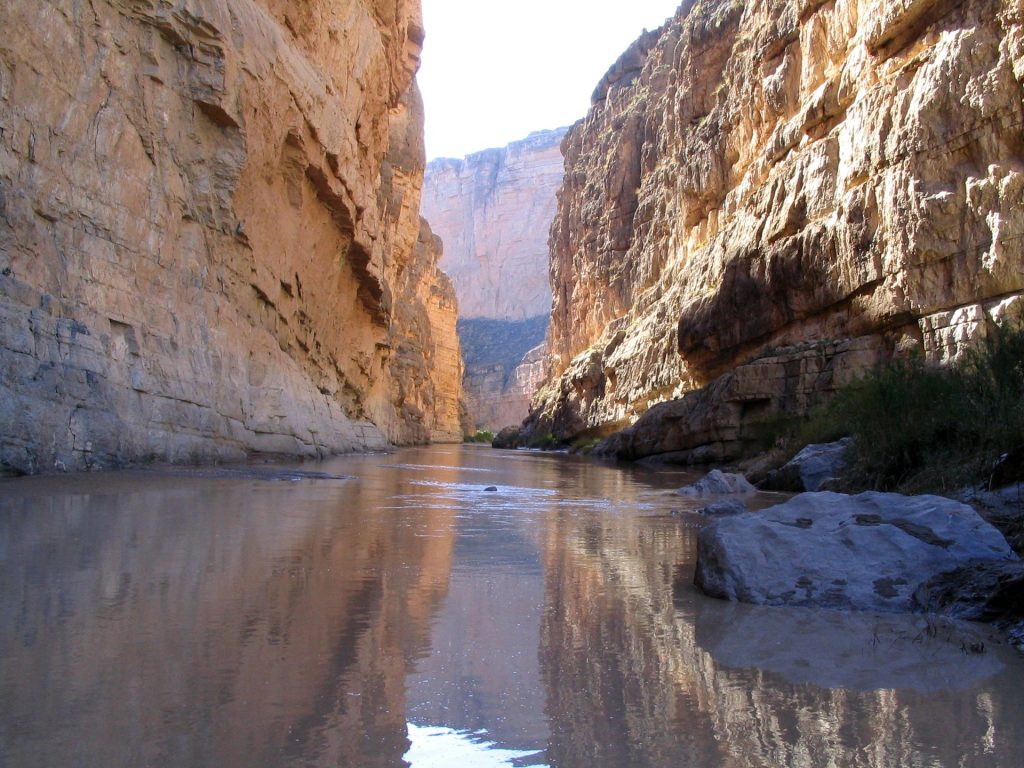
US Supreme Court Clears Trump to Build Border Wall Through Big Bend National Park
The US Supreme Court has cleared the way for President Donald Trump’s administration to resume building border barriers through Big Bend National Park in Texas, one of the most remote landscapes in the United States.
In a brief unsigned order on Monday, 9 November 2026, the court lifted a lower court’s injunction that had halted construction across the region for the past month. The ruling means bulldozers can return to the park and to more than 500 miles of the Rio Grande border while the legal challenge continues.
The decision is a significant win for the Trump administration — and a blow to the environmental groups, local businesses and Texas Republicans who have fought the project. But it is not the end of the legal fight: the court did not decide whether the wall is legal, only that construction can go ahead while the courts work that question out.
What the Supreme Court decided
The Supreme Court granted the Trump administration’s emergency request to lift a preliminary injunction issued on 2 October by US District Judge Kathleen Cardone in El Paso. Her order had stopped border barrier and road construction across the Big Bend region while a lawsuit against the project moved through the courts.
The court’s five-page order was unsigned, as is common for emergency rulings. In it, the justices said: “The government’s interest outweighs any aesthetic, recreational and environmental harm alleged by respondents.”
Liberal Justice Ketanji Brown Jackson was the only member of the nine-justice court to publicly dissent from the decision. The court has a 6-3 conservative majority.
The ruling suspends the injunction while the lawsuit proceeds. It is not a final decision on whether the administration acted lawfully. The government must now ask the Supreme Court to take up the case in full. If the justices refuse, the stay ends automatically and the injunction comes back into force.
The Justice Department had told the court that Judge Cardone’s ruling was baseless. “The secretary’s waiver authority reflects a crystal-clear, indisputably valid express delegation from Congress that the executive has used for decades to expedite border-wall construction,” the administration said in its filing.
What will be built in Big Bend
Big Bend is the stretch of the US-Mexico border in far west Texas where the Rio Grande bends sharply south, giving the region its name. The sector covers 517 miles — more than a quarter of the entire border — and includes Big Bend National Park, around 250 miles (400 km) south-east of El Paso, and Big Bend Ranch State Park.
According to Customs and Border Protection’s own description of the project, the plans include:
- A 17-mile (27 km) vehicle barrier system inside Big Bend National Park, built in separate sections rather than as one continuous wall.
- More than 200 miles of patrol roads across the region.
- Barriers and roads on privately owned land along most of the sector, which spans more than 300 miles (480 km).
The barrier planned for the park is a vehicle barrier — designed to stop cars and trucks — rather than the 30-foot (9-metre) pedestrian barrier planned for other sections of the border. Even so, building it in the park’s rugged canyon country would require extensive work, including dynamite blasting in places such as Mariscal Mountain, according to the challengers and the agency’s own maps.
Congress funded the wider border barrier effort with $46 billion last summer. Customs and Border Protection has not said when crews will return, but contractors have already stockpiled heavy equipment across the region and cleared staging yards.
Why Big Bend is different from the rest of the border
The fight over Big Bend is not like the fight over border walls in cities such as El Paso or San Diego. Big Bend is one of the most remote places in the United States. The national park, established in 1944, protects a vast stretch of Chihuahuan Desert, river canyons and mountains along the Rio Grande, where the National Park Service and Customs and Border Protection have long carried out border enforcement while preserving the park for hiking, rafting and camping.
It is also, by the government’s own numbers, the quietest part of the border. The Big Bend sector saw just 1.3% of total border apprehensions in 2025. Within Big Bend National Park itself, apprehensions accounted for 0.045% of the national total, according to the Center for Biological Diversity, one of the groups suing the government.
That fact sits at the heart of the legal case. The waivers were issued under a 1996 federal law that allows the government to bypass certain legal requirements to speed up border barrier construction in “areas of high illegal entry”. Judge Cardone found that Big Bend has, by far, the lowest rate of migrant apprehensions along the entire border.
“Therefore, if the Big Bend Sector is an area of high illegal entry, so is every other sector, and the waiver authority would apply to the entire US-Mexico border,” she wrote.
The administration disagrees. It says border officials have seized large quantities of drugs in the region and that cartels operate south of the border in Mexico. Homeland Security Secretary Markwayne Mullin and his predecessor Kristi Noem, who issued the waivers between February and July, both found the region to be an area of high illegal entry that needs additional barriers.
The dispute has also divided Texas politics. Republican Senator John Cornyn of Texas has opposed wall construction through Big Bend, and more than 140 outfitters, local businesses and recreation groups have urged Texas leaders to protect public access to the Rio Grande, warning that closing river access and building permanent barriers and roads through the canyon corridor would put river outfitters out of business and damage the regional economy.
The waivers that set aside environmental law
At the centre of the case are a series of waivers issued by the Department of Homeland Security. The waivers sweep aside dozens of environmental and conservation laws that would otherwise apply to the construction — including the Endangered Species Act, the National Environmental Policy Act, the National Historic Preservation Act, the National Wild and Scenic Rivers Act and the National Park Service Organic Act.
According to the Center for Biological Diversity, the waivers marked the first time in US history that the federal government had set aside such a broad slate of environmental laws inside a national park.
Without the waivers, the project would have to comply with those laws before altering the landscape in what the challengers describe as “one of the most remote and ecologically and culturally significant landscapes in the United States”. The waivers let the government skip environmental reviews and protections for endangered species, historic sites and the river itself.
The lawsuit was brought by the Center for Biological Diversity, a Big Bend-area river guide and landowner, and Friends of the Ruidosa Church, a group seeking to preserve a historic church in Ruidosa, Texas, which says its fragile adobe structure is threatened by the construction. The plaintiffs are represented by lawyers from the Center for Biological Diversity and the Texas Civil Rights Project.
“The Trump administration and its contractors are hellbent on destroying one of America’s greatest national parks, and the Supreme Court just gave them the green light,” said Laiken Jordahl, the Center for Biological Diversity’s national public lands advocate. “This horrific decision clears the way for contractors to bulldoze pristine desert and dynamite canyon walls before the courts have even decided whether this destruction is legal.”
The legal fight: the major questions doctrine
The lawsuit turns on a legal idea called the “major questions” doctrine. The Supreme Court has used this doctrine to strike down executive branch actions of “vast economic and political significance” unless Congress clearly authorised them. It used the doctrine to block some of former President Joe Biden’s key policies — and in February 2026, to strike down Trump’s global tariffs.
The challengers argued that the Homeland Security secretary exceeded his authority in issuing the waivers, including by running foul of the major questions doctrine. Judge Cardone agreed, finding that the waivers lacked clear congressional authorisation.
The Supreme Court rejected that framing. In its order, the court said the law at issue likely prevents judges from reviewing the claims brought in the lawsuit at all, and that the lower court was “exceedingly likely” to have lacked jurisdiction to hear the challengers’ central claim. The justices also rejected the idea that the major questions doctrine could create a constitutional claim where Congress had limited judicial review, saying: “There is no such thing as a ‘constitutional’ major-questions claim.”
The ruling does not settle the doctrine’s future. Because it came on the court’s emergency docket, the order is short and gives little reasoning. The full case — including whether the waiver law really does block the courts from hearing challenges — is still to be decided if the Supreme Court agrees to take it up.
A summer of bulldozers, protests and pauses
The fight over Big Bend has been building all year. Bulldozers first moved into Big Bend National Park near the iconic Santa Elena Canyon on 6 August, and were documented cutting new routes for vehicle barriers into both the east and west sides of Mariscal Mountain.
The work drew swift and unusually broad criticism. Local officials, conservationists and even some Texas Republicans objected to building through the park. On 17 August, responding to what the Center for Biological Diversity called widespread nonpartisan outrage, Customs and Border Protection announced a pause in construction.
That pause lapsed on 30 September. Without a court order or action from Congress, work could have resumed at any moment. Two days later, on 2 October, Judge Cardone issued her preliminary injunction, halting the project again.
In late October, the federal government filed an emergency application asking the Supreme Court to intervene. On 9 November, the court agreed.
“The destruction we’ve already seen in Big Bend unleashed a firestorm of outrage so severe that the administration was forced to pause its plans,” Jordahl said. “If the bulldozers return now, public opposition will only grow.”
What happens next
Construction can now resume in Big Bend National Park, Big Bend Ranch State Park and along more than 500 miles of the Rio Grande while the lawsuit continues. The key questions are how quickly crews return, and what they build first.
The government’s next legal step is to ask the Supreme Court to hear the case in full. If the court declines, the stay ends and Judge Cardone’s injunction returns, halting construction again. If the court takes the case, building can continue until a final judgment — a process that could take many months. Meanwhile, the challengers say they will keep fighting in the lower courts and in public.
The case is also being watched well beyond Texas. The Supreme Court’s view of the waiver law and the major questions doctrine could shape how much power future administrations have to fast-track infrastructure by setting aside environmental laws — not just at the border, but anywhere the government claims an urgent need.
Why this matters beyond Texas
For the Trump administration, the ruling is a green light for one of the president’s signature promises: building or reinforcing barriers along the entire US-Mexico border as part of a sweeping crackdown on immigration. The administration has made border enforcement a central part of its agenda, and the Big Bend decision removes a legal obstacle that had stalled work in the most sensitive part of the project. It is the latest step in a wider immigration crackdown that has already seen the administration expand deportations — including the first deportation flight of Afghan refugees to Pakistan.
For conservationists, the case is about something bigger than one wall. If the government can waive dozens of environmental laws inside a national park — a place Congress set aside for protection — they argue it can do so anywhere. The waivers, they say, remove the checks that normally force the government to study the damage before it builds.
For the people who live and work along the Rio Grande, the stakes are immediate and practical. River guides, outfitters and small businesses depend on access to the river and the canyons, and a vehicle barrier and patrol roads through the canyon corridor could close off stretches of river that have been open to the public for generations.
And for the courts, the case tests the limits of a law written nearly 30 years ago. Congress gave the Homeland Security secretary sweeping power to waive laws for border barriers — but did it mean to give that power in a place where almost no one crosses, inside a national park? That is the question the courts still have to answer.
Frequently asked questions
What did the Supreme Court actually decide?
The court lifted a lower court’s order that had stopped border wall construction in the Big Bend region of Texas. It did not rule on whether the wall is legal. The case continues, and the government must ask the Supreme Court to hear it in full.
Where is Big Bend?
Big Bend is a remote region of far west Texas along the Rio Grande, about 250 miles south-east of El Paso. It includes Big Bend National Park and Big Bend Ranch State Park. The Big Bend sector covers 517 miles of the US-Mexico border.
What is being built?
A 17-mile vehicle barrier system inside the national park, more than 200 miles of patrol roads, and barriers on privately owned land across a sector spanning more than 300 miles. The park barrier is for vehicles, not the 30-foot pedestrian wall planned elsewhere.
Why do critics say the wall is not needed there?
Big Bend has the lowest rate of migrant apprehensions of any border sector — 1.3% of the national total in 2025, and 0.045% inside the national park. Critics say that makes it hard to call the area one of “high illegal entry”, which is what the waiver law requires.
Which laws were waived?
Dozens, including the Endangered Species Act, the National Environmental Policy Act, the National Historic Preservation Act, the National Wild and Scenic Rivers Act and the National Park Service Organic Act. The waivers were issued by Homeland Security Secretaries Kristi Noem and Markwayne Mullin between February and July 2026.
Can construction start immediately?
Yes. The Supreme Court’s order allows work to resume while the case continues. Customs and Border Protection has not said when crews will return, but equipment is already staged in the region.
Conclusion
The Supreme Court’s decision on 9 November clears the way for border wall construction through one of America’s wildest places — but it does not end the argument. The court has not decided whether the government acted lawfully when it waived dozens of environmental laws to build through a national park. That question is still open, and the bulldozers may return before it is answered.
Sources
- Reuters (via Duke FM): https://duke.fm/2026/11/09/supreme-court-allows-trump-border-wall-at-big-bend-national-park-in-texas/
- Center for Biological Diversity: https://biologicaldiversity.org/w/news/press-releases/supreme-court-clears-way-for-border-wall-construction-across-big-bend-2026-11-09/
- KSFR (NPR): https://www.ksfr.org/npr-news/2026-11-09/supreme-court-says-border-wall-construction-can-continue-in-west-texas
- El Paso Times: https://www.elpasotimes.com/story/news/texasregion/2026/11/09/supreme-court-trump-big-bend-national-park-border-wall-trump/92695866007/
- Times Now News: https://www.timesnownews.com/world/us/us-news/us-supreme-court-clears-trump-to-build-border-wall-near-big-bend-national-park-in-texas-article-156486979
This article is for general information and education only. It is not legal or financial advice.
