
Kennedy Family Sues to Block Trump’s 250-Foot Washington Arch Over JFK Gravesite
Nine members of the Kennedy family have gone to court to stop President Donald Trump from building a giant triumphal arch in Washington, arguing that the 250-foot monument would block views of — and cast a permanent shadow over — the grave of former President John F. Kennedy.
The family filed its case on Tuesday, 10 November 2026, in a federal court in Washington, D.C., joining a lawsuit that is already trying to halt the project. The move puts one of America’s most famous political families directly against a president who has said he wants the arch finished before he leaves office.
At the heart of the row is a simple question: should a huge new monument be allowed to rise between the Lincoln Memorial and Arlington National Cemetery, right next to the graves of fallen American soldiers and one of the country’s most visited presidential memorials?
What happened
The nine Kennedys filed a motion on Tuesday to join an existing court case that aims to stop the arch from being built. The case is being heard by US District Judge Tanya Chutkan in Washington, D.C.
In their filing, the family said the arch would “permanently cast shadows over and damage historically significant sightlines to the existing gravesites and memorials established in the Kennedy family’s honor at Arlington National Cemetery, as well as to the memorials of hundreds of thousands of fallen American heroes.”
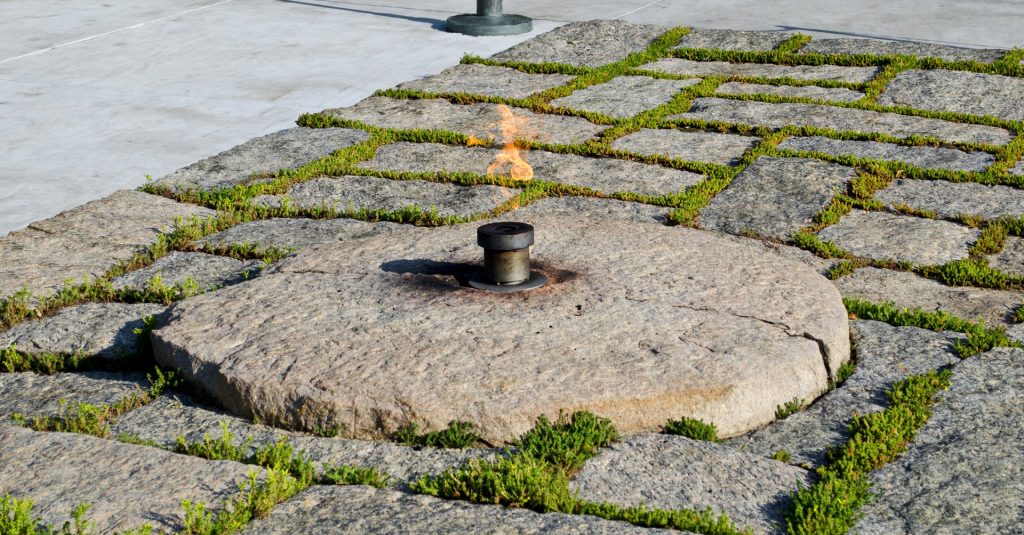
Their main complaint is about the view. The Kennedys say the arch would block the clear sightline to the John F. Kennedy Eternal Flame — the flame that has burned at the former president’s grave since his funeral in 1963 — when seen from the Arlington Memorial Bridge. They say that would “destroy an essential element” of the gravesite’s design.
The filing also says the arch would block a direct line of sight between the Lincoln Memorial and Arlington National Cemetery that was designed to represent the coming together of the nation after the Civil War, and that has existed for nearly a century.
The arch at the centre of the row
The proposed arch is modelled on the Arc de Triomphe in Paris, but it would be much bigger. Here are the key facts:
- Height: 250 feet (76 metres) — about the same as a 25-storey office building, and more than double the size of the Lincoln Memorial.
- Design: A rendering shows a flame held by a 60-foot gold winged female figure, flanked by gold flying eagles.
- Location: Memorial Circle, on the Virginia side of the Potomac River, on a highway roundabout near the entrance to Arlington National Cemetery — directly between the Lincoln Memorial and the cemetery.
- Status: No construction has started. A judge has temporarily blocked any building work.
If built, it would be the largest structure of its kind in the world, according to reports of the project.
The arch is one of several building projects President Trump is pushing to put his personal stamp on Washington. He has previously said he intends to complete it before he leaves office in two years.
Why the Kennedys say it matters
For the Kennedy family, this is personal. Seven members of the family are buried at Arlington National Cemetery, including:
- President John F. Kennedy, assassinated in Dallas, Texas, on 22 November 1963
- His wife, Jacqueline Kennedy Onassis
- Two of their children
- His brothers, former Senators Robert F. Kennedy and Edward M. Kennedy, who are buried near him
- Ethel Kennedy, the widow of Robert F. Kennedy
The Eternal Flame at President Kennedy’s grave was lit at his funeral on 25 November 1963. The permanent gravesite, designed by architect John Carl Warnecke, a longtime friend of Kennedy, was opened to the public on 15 March 1967. It is one of the most visited sites in the cemetery, which has been the resting place of American service members since the Civil War.
The nine people who filed the case are the children and grandchildren of Robert F. Kennedy and Edward M. Kennedy. Among those named are Kerry Kennedy, the daughter of Robert F. Kennedy and president of the Robert F. Kennedy Human Rights Center; Edward M. Kennedy Jr.; Rory Kennedy; and Maxwell Kennedy.
The family argues that it has a particularly strong right to challenge the arch because courts in the past have recognised that families have an interest in protecting their relatives’ gravesites.
One notable name is missing from the list of plaintiffs: Robert F. Kennedy Jr., the nephew of the assassinated former president, who currently serves as President Trump’s Health Secretary. He was not named as one of the nine plaintiffs.
The family is represented by lawyers Norman Eisen and Steve Jonas of the Democracy Defenders Fund. In a statement, they described the arch as “an illegal interference with Arlington National Cemetery and the heroes remembered there, including at the grave sites and memorials of the Kennedy brothers and Ethel Kennedy.”
The legal fight so far
The Kennedy family is not the first to challenge the arch in court. They are joining a lawsuit filed last month by the governments of Washington, D.C., and Virginia. Veterans groups, preservationists, and Arlington County have also sued to block the project.
The legal battle has already produced one win for the project’s opponents. On 5 November, Judge Chutkan issued a 33-page opinion temporarily blocking construction for 14 days. Her order, which runs through 19 November, bars the Trump administration from starting or carrying out any construction-related activity near the proposed site while she considers whether to issue a longer preliminary injunction.
In her ruling, Judge Chutkan said the arch required approval from Congress, and that construction could prove costly for both Virginia and the District of Columbia while disrupting traffic at the cemetery, one of the region’s most-visited sites.
The temporary block came after a final vote approving the structure passed late on a Thursday, despite fierce opposition from members of the public who spoke at a marathon hearing. The approval board was led by people appointed by the president.
There are also questions about the project’s environmental impact. In a review released by the National Park Service in August, the administration acknowledged that the arch would have “adverse” effects.
What the Trump administration says
The White House did not immediately respond to a request for comment from Reuters after the Kennedy family filed its case.
The Trump administration has argued that Congress approved the arch more than 100 years ago, when it also authorised the building of a bridge across the Potomac River. It has also said the arch would honour American veterans.
The arch is not the only project of its kind facing a political fight. Democrats in Congress have vowed to block construction once they take control in January, after winning November’s midterm elections — in which they won at least 54 seats in the Senate.
What happens next
The immediate question is what Judge Chutkan decides before the temporary block expires on 19 November. She is considering whether to issue a preliminary injunction, which would keep construction on hold for much longer while the full case is heard.
If she grants it, the arch project could be frozen for months, or even years, as the lawsuits work their way through the courts. If she refuses, the administration could move quickly to start building — although the other lawsuits, and the threat of action by the new Congress in January, would still stand in its way.
The Kennedy family’s involvement adds a new dimension to the challenge. Until now, the case has largely been about planning law, congressional approval, and the powers of the presidency. Now it is also about a family defending the grave of a president — and about the memory of hundreds of thousands of fallen service members buried at Arlington.
Why this story matters beyond Washington
This dispute is about more than one monument. It raises three bigger questions that reach far beyond the American capital.
First, who gets to decide what is built on America’s most sacred ground? Arlington National Cemetery is not ordinary land. It is where the country buries its war dead, and the sightline from the Lincoln Memorial across the Potomac to the cemetery was deliberately designed as a symbol of national unity after the Civil War. Changing that landscape, even with a monument meant to honour veterans, is a decision with deep symbolic weight.
Second, the case tests the limits of presidential power over public land. The administration says Congress approved the arch a century ago. The courts, so far, have not agreed — Judge Chutkan’s ruling said the project needs congressional approval. How that argument is resolved could shape what future presidents can build without going back to Congress.
Third, the timing matters. With a new Congress taking office in January and Democrats vowing to block the project, the arch could become one of the first big political fights of the new year — a test of whether the courts, Congress, or the White House has the final say.
For now, the flame at John F. Kennedy’s grave burns on, undisturbed. Whether it will one day burn in the shadow of a 250-foot golden arch is now a question for the courts.
Frequently asked questions
How tall is Trump’s proposed arch?
The arch would be 250 feet (76 metres) tall — about the same as a 25-storey building, and more than double the size of the Lincoln Memorial. A rendering shows a flame held by a 60-foot gold winged female figure, flanked by gold flying eagles.
Where would the arch be built?
At Memorial Circle, on the Virginia side of the Potomac River, on a highway roundabout near the entrance to Arlington National Cemetery — directly between the Lincoln Memorial and the cemetery.
Why is the Kennedy family suing?
The family says the arch would block views of the John F. Kennedy Eternal Flame and other Kennedy gravesites, and permanently cast shadows over them, “destroying an essential element” of the gravesite’s design. They also say it would block a historic sightline between the Lincoln Memorial and Arlington that symbolises national unity after the Civil War.
Who are the nine plaintiffs?
They are children and grandchildren of Senators Robert F. Kennedy and Edward M. Kennedy, the brothers of President John F. Kennedy. Those named include Kerry Kennedy, Edward M. Kennedy Jr., Rory Kennedy and Maxwell Kennedy. Robert F. Kennedy Jr., the current Health Secretary, is not among them.
Has construction started?
No. Judge Tanya Chutkan temporarily blocked construction for 14 days on 5 November, and her order runs through 19 November while she considers a longer preliminary injunction.
What does the Trump administration say?
The administration contends Congress approved the arch more than 100 years ago, when it authorised a bridge across the Potomac River, and says the arch would honour veterans. The White House did not immediately respond to Reuters’ request for comment on the Kennedy filing.
Conclusion
Nine members of the Kennedy family have joined the court battle to stop President Trump’s 250-foot triumphal arch, arguing it would overshadow the grave of John F. Kennedy and the memorials of hundreds of thousands of fallen American heroes at Arlington National Cemetery.
With construction already paused by a judge until 19 November, and a new Congress set to take office in January with Democrats vowing to block the project, the arch now faces legal and political hurdles on several fronts. The next decision — whether Judge Chutkan extends the block — will show whether the project moves forward, or stalls for good.
For the Kennedy family, the case is about protecting a gravesite and a view that has meant something to the nation for more than 60 years. For Washington, it is about who decides what gets built on America’s most hallowed ground.
Sources
- Reuters: https://www.reuters.com/world/us/kennedy-family-tries-stop-trumps-washington-arch-2026-11-11/
- CNN: https://www.cnn.com/2026/11/10/politics/kennedy-family-moves-to-block-trumps-arch?cid=external-feeds_iluminar_meta
- USA Today: https://www.usatoday.com/story/news/politics/2026/11/10/valor-over-vanity-jfk-heirs-sue-trump-over-plans-to-build-arch/92716131007/
- The Straits Times: https://www.straitstimes.com/world/united-states/kennedys-move-to-block-trumps-arch-saying-it-would-disturb-jfk-gravesite?ref=latest-headlines
- Free Malaysia Today: https://www.freemalaysiatoday.com/category/world/2026/11/11/kennedy-family-asks-court-to-block-trump-arch-construction
This article is for general information and education only. It is not legal or financial advice.
