
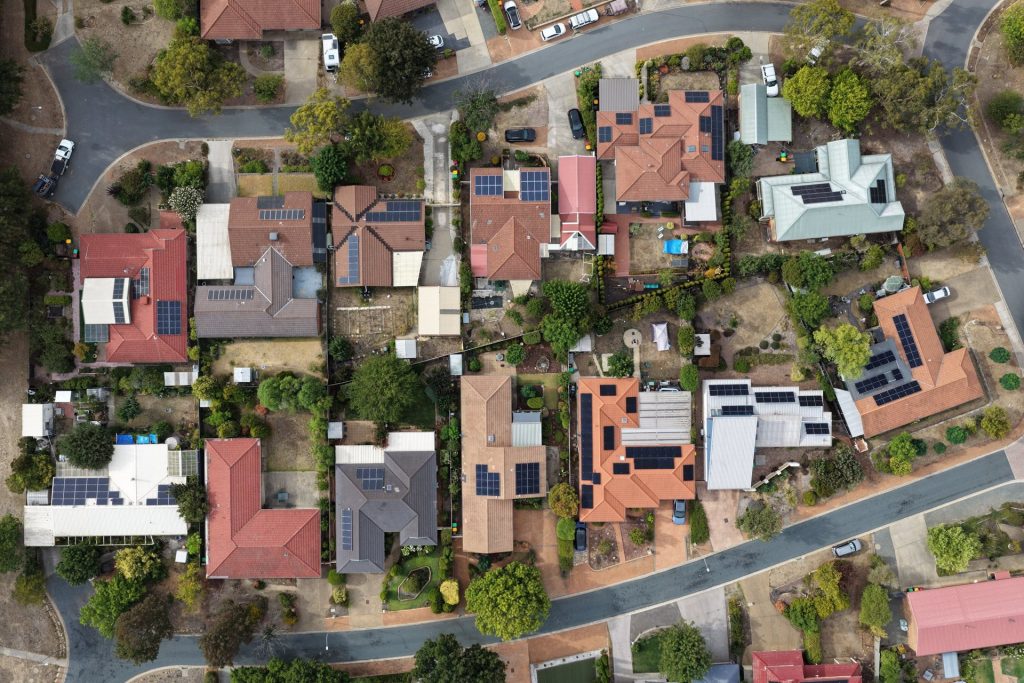
COP31: Countries Back Plan to Put Rooftop Solar on 300 Million Homes by 2030
The world could soon have twice as many homes powered by the sun. At the COP31 climate talks in Antalya, Türkiye, a group of countries has backed a new plan to put rooftop solar panels on at least 300 million homes by 2030 – double the number today.
The Global Rooftop Solar Declaration was launched on Tuesday, 10 November 2026, on the second day of the United Nations climate conference. It is one of the first concrete pledges of a summit that organisers have billed as an “implementation COP” — a meeting judged not by new promises, but by whether old ones finally turn into action.
For ordinary families, the idea is simple. A solar panel on your own roof can cut your electricity bill, protect you from rising energy prices, and give you power even when the grid fails. For governments, rooftop solar is one of the fastest and cheapest ways to add clean energy without building a single power station.
But the declaration is voluntary and non-binding. No country is forced to do anything, and no money has been promised to pay for it. Whether the plan becomes real change — or just another climate pledge that fades — will depend on what governments do next.
What was announced
The declaration sets a single clear target: double the number of homes worldwide with rooftop solar panels from about 150 million today to at least 300 million by 2030.
That means adding roughly 150 million new rooftop systems in four years. The Global Solar Council, the industry body behind the initiative, estimates that reaching 300 million solar homes could unlock around 2 terawatts of affordable electricity capacity — enough to make a real difference to the lives of more than one billion people.
The launch took place on Energy Day at COP31, when the summit turned its attention to electricity and transport. It came alongside a second big energy push from the Turkish hosts: a plan to raise electricity’s share of the world’s total energy use from around 20 per cent today to 35 per cent by 2035. The idea, known as “35 by 35”, is that more of the energy we use — for heating, cooking, driving and industry — should come from electricity, and that electricity should increasingly come from clean sources such as solar and wind.
“Electrification by itself is incredibly beneficial because of the efficiency gains. Renewables by themselves, again, very beneficial. Put the two together and it is really a killer combination,” said Bruce Douglas, chief executive of the Global Renewables Alliance.
Who has signed up
Australia was the first government to endorse the declaration, signing on through its Climate Change and Energy Minister, Chris Bowen, at a meeting in Fiji in early October. By the time of the launch in Antalya, five more governments had joined: Bangladesh, Kenya, Nigeria, Palau and Vanuatu.
Thirty-four members of parliament from 21 countries have also endorsed the initiative, including lawmakers from the United Kingdom, South Africa and Sri Lanka. Indonesia’s state-owned electricity company, PT PLN, has added its support too.
Australia is a natural champion for the cause. It has the highest uptake of rooftop solar in the world, with one in three homes now equipped with solar panels. Bowen, who is also serving as president of negotiations for COP31, said the declaration aims to take Australia’s experience to the rest of the world.
He noted that many countries have abundant sunshine, available roof space and strong demand for electricity, but lack the finance, infrastructure and skilled workers to unlock the opportunity.
Nigeria’s experience shows what rooftop solar can do in a country where the grid does not reach everyone. The country’s decentralised solar programmes have already expanded electricity access to 5.3 million people, according to the United Nations. Ibrahim A Shelleng, a senior special assistant to Nigeria’s president on climate finance, said investment in solar infrastructure supports economic stability, creates local jobs, lowers long-term infrastructure costs and strengthens energy independence.
Bangladesh offered one of the most specific national commitments attached to the declaration. The country has set a target of 5,500 megawatts of rooftop solar capacity by 2030, across around 870,000 rooftops. But it will need international help to get there: about four-fifths of the planned investment is expected to come from abroad.
Why rooftop solar, and why now
Rooftop solar has become the cheapest form of new electricity in many parts of the world. The price of panels has fallen sharply over the past decade, and a system that once took years to pay for itself can now pay back its cost much faster.
For households, the appeal is direct and personal. “This is the future of affordable energy,” said Sonia Dunlop, chief executive of the Global Solar Council. “This is the way we can help average working people insure themselves from future price rises to come.”
“We know the world is currently facing the greatest energy cost of living crisis the world has ever seen,” Dunlop added. “We know that families all over the world are struggling to pay their bills and what we are saying with the Global Rooftop Solar Declaration is that we have a solution that will bring down your bills.”
The timing matters. Energy prices have been shaken by the Russia-Ukraine war and the Iran war, which have pushed up the cost of oil and gas and made governments think harder about energy security. A home that makes its own electricity is less exposed to those shocks.
Rooftop solar also helps in places where the grid is weak or unreliable. In parts of Africa and South Asia, millions of people live with power cuts or no grid connection at all. A panel on the roof, often paired with a battery, can keep lights on, phones charged and small businesses running.
And there is a climate reason too. Every home that runs on sunshine is a home that needs less electricity from coal or gas power stations. If 150 million more homes go solar, the avoided emissions add up to something significant — though exactly how much depends on how dirty the electricity being replaced is in each country.
What the declaration asks governments to do
The declaration does not tell countries how many panels to install. Instead, it calls on national, state and local governments to remove the obstacles that slow rooftop solar down.
The first obstacle is paperwork. In many countries, getting permission to install panels on your own roof is slow and complicated. The declaration calls for simpler, faster permitting.
The second is money. Even though panels have become cheaper, the upfront cost is still too high for many families. The declaration calls for affordable finance — loans, subsidies and payment plans that spread the cost over time.
The third is the grid itself. Power networks were built for a world where electricity flowed one way, from big power stations to homes. Rooftop solar turns that upside down: homes now send power back into the grid. Grids need to be modernised to handle that, and rules need to change so households are fairly paid for the electricity they export.
The declaration also calls for support for batteries and other storage, stronger consumer protection, fair access so that poorer households are not left behind, and training for the workers who will install and maintain millions of new systems.
The catch: a pledge is not a plan
For all the enthusiasm, the declaration has an obvious weakness. It is voluntary, it sets no binding targets for individual countries, and it comes with no agreed funding.
“The pledge is a pledge,” said Bruce Douglas of the Global Renewables Alliance. “We now need to see national policies and frameworks in place.”
Experts say the same. For rooftop solar goals to actually cut emissions, policies to upgrade power grids and subsidise panels and batteries must follow quickly. Without those, the declaration risks becoming another climate promise that sounds good in a conference hall and changes little on the ground.
The United Nations climate talks have been criticised in the past for exactly that — making promises that later fall flat. COP31’s organisers know it, which is why they have framed this summit as the “implementation COP”. The test will be whether the pledges made in Antalya turn into laws, budgets and installations back home.
There is also an awkward fact about the two countries leading the energy push. Both Turkey and Australia still rely heavily on fossil fuels. In Turkey, solar and wind make up nearly 23 per cent of energy generation, but coal was still the country’s largest source of electricity last year, accounting for 33 per cent of generation, according to Turkey’s Ministry of Energy and Natural Resources. Australia, for all its rooftop solar success, remains one of the world’s biggest exporters of coal and gas.
What it means for Pakistan
Pakistan has not yet endorsed the declaration, but the story matters here more than in most countries. Pakistan is going through one of the fastest rooftop solar booms anywhere in the world, as households and businesses install panels to escape expensive grid electricity and daily power cuts.
Prime Minister Shehbaz Sharif is in Antalya this week for the COP31 leaders’ summit, where he is presenting Pakistan’s climate case to world leaders. Pakistan contributes less than one per cent of global greenhouse gas emissions, yet it is among the countries hit hardest by climate change — a point the prime minister and his climate minister, Musadik Malik, have been making at the summit. Pakistan takes its climate case to COP31
For Pakistan, the declaration’s ideas — simpler permits, cheaper finance, stronger grids — are exactly the policies that would help its own solar boom reach more people. The country has around 13,500 glaciers, and the growing threat of glacial lake floods puts thousands of people, homes and livelihoods at risk. Solar power will not stop the glaciers melting, but cheaper, more reliable electricity can help communities adapt — powering early warning systems, water pumps and cold storage for food.
The challenge for Pakistan, as for Bangladesh, is money. Rooftop solar needs upfront investment, and international climate finance — one of the central fights at COP31 — is meant to help countries like Pakistan pay for it.
What happens next
The declaration is now open for more countries to join. The real test will come in the months after COP31 ends on 20 November, when governments return home and decide whether to turn the pledge into policy.
Three things will show whether the plan is serious. First, whether more large countries sign up — so far the endorsers are mostly smaller nations, plus Australia. Second, whether governments announce concrete policies: simpler permits, subsidies, and grid upgrades. Third, whether money follows — from governments, development banks and private investors — to pay for panels in the countries that need them most.
COP31’s leaders’ summit, running on 11 and 12 November, is the moment when heads of government can give the declaration political weight. UN Secretary-General Antonio Guterres has already warned leaders that the world has entered what he calls a “new age of climate extremes”, and that the slow pace of action has put the planet on a dangerous path. We have entered a new age of climate extremes, UN chief warns
The rooftop solar declaration will not solve the climate crisis on its own. But it is a reminder that some of the most useful climate action does not happen in conference halls at all. It happens on rooftops, one home at a time.
Frequently asked questions
What is the Global Rooftop Solar Declaration?
It is a voluntary declaration launched at COP31 in Antalya on 10 November 2026. It aims to double the number of homes worldwide with rooftop solar panels from about 150 million today to at least 300 million by 2030.
Which countries have endorsed it?
Australia, Bangladesh, Kenya, Nigeria, Palau and Vanuatu have endorsed it so far. Thirty-four members of parliament from 21 countries and Indonesia’s state-owned electricity company, PT PLN, have also backed it.
Is the declaration legally binding?
No. It is voluntary and non-binding. It does not set compulsory installation quotas for any country and does not guarantee funding for household systems.
Why is rooftop solar important?
Rooftop solar lets households generate their own electricity, cutting bills and protecting them from energy price rises and power cuts. It also reduces demand for electricity from coal and gas power stations, which helps cut greenhouse gas emissions.
What is “35 by 35”?
It is Turkey’s electrification push at COP31: raising electricity’s share of global energy consumption from around 20 per cent today to 35 per cent by 2035, with that electricity increasingly coming from clean sources such as solar and wind.
What does the declaration mean for Pakistan?
Pakistan has not endorsed the declaration, but it is going through a rapid rooftop solar boom of its own. The policies the declaration calls for — simpler permits, affordable finance and stronger grids — would help more Pakistani households go solar, and international climate finance could help pay for it.
Conclusion
The Global Rooftop Solar Declaration is one of the most practical pledges to come out of COP31 so far. It does not promise a distant technology or a complicated new market. It promises something people can see from their own street: panels on roofs, bills going down, and power that keeps working when the grid does not.
The target is ambitious — 150 million more solar homes in four years — and the declaration’s voluntary nature means nobody is forced to deliver. But the coalition behind it spans continents, from Australia to Bangladesh to Nigeria, and it is backed by the countries and communities that have the most to gain.
Whether it becomes a turning point or another forgotten pledge will be decided not in Antalya, but in the months that follow — in parliaments, in budgets, and on rooftops around the world. For the families already struggling with energy bills, the sooner the better.
Sources
- Associated Press, “Nations promise to install more rooftop solar at UN climate talks”, 10 November 2026 (via Millennium Post)
- Global Solar Council / Green Building Africa, “Global coalition backs rooftop solar push to reach 300 million homes by 2030”, 11 November 2026
- The Business Standard (tob.news), “Bangladesh joins global drive to power 300m homes with solar”, 10 November 2026
- MVA Pulse, “300 Million Rooftop Solar Homes by 2030 Global Target”, 11 November 2026
This article is for general information and education only. It is not legal or financial advice.

Pingback: ADB Approves $500 Million to Help Pakistan Prepare for the Next Disaster Before It Strikes - Findivoza