
Pakistan’s Exports Fall by $1 Billion as the Afghan Trade Suspension Bites
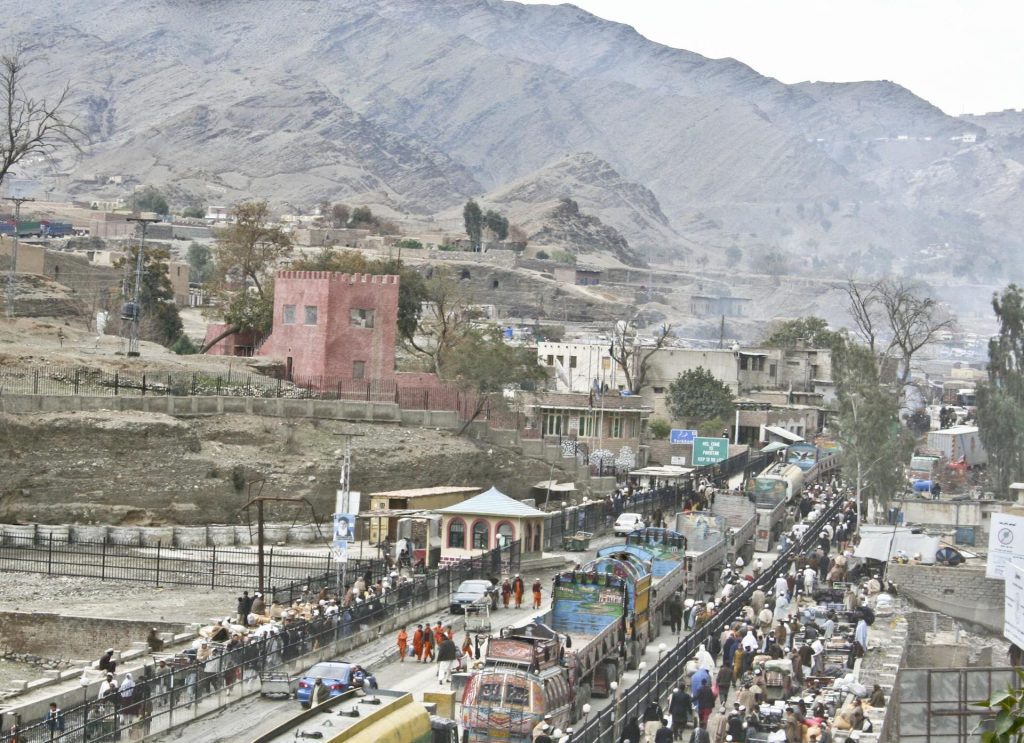
Pakistan has lost around $1 billion in exports since trade with Afghanistan was suspended, the government told parliament this week — a bill that is still growing as the border closure enters its second year. The Pakistan-Afghanistan trade suspension has cut off one of Pakistan’s closest export markets, blocked its shortest road to Central Asia, and left traders in Khyber Pakhtunkhwa counting heavy losses, even as the government insists national security comes first.
Commerce Secretary Jawad Paul gave the figure while briefing the National Assembly’s Standing Committee on Commerce on Wednesday, 11 November. He told lawmakers the suspension of bilateral and transit trade with Afghanistan had cost Pakistan about $1 billion in exports — and that the government was not prepared to reopen trade at the cost of more lives.
Paul told the committee the government could not afford further loss of human lives in the name of trade.
What the Government Told Parliament
The briefing, chaired by committee chairman Javed Hanif Khan, was the government’s clearest admission yet of what the Afghan trade suspension is costing the economy.
Paul told the committee that the suspension had hit Pakistan’s exports to Afghanistan directly and had also disrupted access to Central Asian markets. Farm exports were among the worst affected, particularly oranges and potatoes, which used to travel through Afghanistan to buyers further north.
The committee chairman questioned the logic of the suspension, pointing to the lost export opportunities and the disruption of trade routes linking Pakistan with Central Asia. Paul replied that the restrictions had been imposed on national security grounds, and that security remained the government’s foremost priority.
The discussion also touched on Pakistan’s trade suspension with India, which has been in place since 2019. Paul acknowledged that some trade with India continued indirectly through third countries, including the United Arab Emirates. Hanif noted that China and India had continued trading with each other despite their own tensions — a comparison that underlined the cost Pakistan is paying for its closed borders.
A Year of Closed Borders
The trade suspension began in October 2025. Pakistan stopped customs processing at the Torkham, Ghulam Khan, Kharlachi and Angoor Adda crossings in mid-October, and the Chaman border was closed days later. Afghanistan then declared its own ban on trade with Pakistan in November 2025.
The result has been a near-total collapse of a trading relationship that was once worth billions. Trade between the two countries fell from about $2.46 billion in 2024 to $1.77 billion in 2025, a drop of around 28 per cent, according to figures from Afghanistan’s Ministry of Industry and Commerce. Exports from Pakistan to Afghanistan fell from $1.64 billion to $1.26 billion over the same period, while Afghan exports to Pakistan dropped from $817 million to $505 million.
A Dawn editorial in October 2026 put it more starkly: bilateral trade had collapsed by more than 72 per cent, from $1.3 billion in fiscal year 2025 to $358 million in fiscal year 2026. Khyber Pakhtunkhwa, the province that borders Afghanistan, has carried the heaviest cost.
The damage goes beyond the two countries. Afghanistan is Pakistan’s land bridge to Central Asia, and the closure has severed the shortest overland route for Pakistani goods heading to Uzbekistan, Kazakhstan and beyond. The alternatives — longer routes through Iran or by sea — mean higher freight costs, longer journeys and thinner profit margins for exporters.
The Numbers Behind the $1 Billion Loss
The $1 billion figure given to parliament is not the only estimate. Separate documents from the Ministry of Commerce, reported by 24NewsHD on 11 November, put the export fall at $1.3 billion over the past 13 months — and add that Pakistan has also lost $200 million in transit revenue, the fees earned from Afghan cargo passing through Pakistani ports and roads.
The difference between the two figures comes down to what is being counted and over which period. The $1 billion figure covers the export losses linked directly to the suspension, while the $1.3 billion figure covers a longer 13-month window and the wider disruption. Either way, the scale is the same: roughly a billion dollars gone.
Other figures show how deep the damage runs:
- Transit cargo has collapsed. Customs data cited by Dawn showed transit cargo falling from 42,959 containers worth $1.36 billion in fiscal year 2024-25 to just 11,592 containers worth $367 million in fiscal year 2025-26.
- Exports to Afghanistan have almost stopped. In the first quarter of fiscal year 2026-27, exports to Afghanistan fell by 88.34 per cent to just $18.86 million, according to State Bank of Pakistan data reported by Dawn. Imports from Afghanistan fell 94.4 per cent to $0.25 million.
- The regional trade gap is widening. Pakistan’s trade deficit with its nine neighbouring countries widened by 26.62 per cent to $4.97 billion in the first quarter of fiscal year 2026-27, up from $3.93 billion a year earlier.
- Afghanistan has moved on. Kabul has shifted most of its trade and transit business to Iran and Central Asian countries, turning increasingly to Uzbekistan and Kazakhstan and expanding commercial ties with India, China and the United Arab Emirates, according to the Commerce Ministry documents.
Business groups had been warning about the scale of the losses for months. In August 2026, the Pak-Afghan Joint Chamber of Commerce and Industry said the blockade had already cost Pakistani exporters around $1 billion over ten months, with annual exports to Afghanistan previously worth about $1.5 billion. The chamber said millions of people had been left unemployed, directly and indirectly, by the closure.
Who Is Hurting Most
The pain is not spread evenly. It falls hardest on the traders, truckers, farmers and shopkeepers of Khyber Pakhtunkhwa and Balochistan, whose livelihoods depended on the cross-border trade.
Fruit and vegetable growers are among the worst hit. Oranges and potatoes — two of Pakistan’s main farm exports to Afghanistan and Central Asia — have lost their main route to market. The government introduced an electronic form facility to help exporters send goods to Central Asia through Iran instead, and last year it relaxed rules for orange and potato shipments through Iran, but the workaround is slower and more expensive than the direct road through Afghanistan.
Pharmaceutical exporters have also been hit hard. Pakistan’s pharmaceutical exports to Afghanistan were worth $155.68 million in fiscal year 2024-25 — about 34 per cent of the country’s total pharmaceutical exports that year. Overall pharmaceutical exports then fell from $457.46 million in fiscal year 2024-25 to $319.01 million in fiscal year 2025-26, a drop of more than 30 per cent, according to data from the Trade Development Authority of Pakistan.
Small traders have suffered in ways the national figures do not capture. In August 2026, Dawn reported the case of Rehman Gul, a commission agent with 21 years of experience, who lost Rs110 million when trucks loaded with farm produce were stuck at the border. Thousands of similar stories have played out along the frontier over the past year.
The Wider Regional Picture
The Afghan trade suspension is not the only pressure on Pakistan’s exports. Paul told the committee that Pakistan had lost an estimated $387 million in trade during July to October 2026 alone because of disruptions linked to the regional conflict.
The conflict between Iran and the United States has affected Pakistan’s commercial exchanges with Gulf countries, although trade flows are gradually recovering. Shipping disruptions and higher port charges have raised costs for exporters, particularly those supplying farm produce and perishable goods to Gulf markets. To keep meat and other goods moving to the Gulf, the government arranged cargo vessels, though freight and port costs remain high.
Trade with Iran has also run into difficulty because of international sanctions, with banks reluctant to process transactions for fear of penalties. The government closed the Gabd-Rimdan border crossing over sanctions-related concerns, although partial bilateral trade with Iran continues. Some liquefied petroleum gas (LPG) consignments have arrived from Iran, and Pakistan’s LPG imports increased during July to October.
Restrictions on maritime shipping with Russia have also affected trade through land corridors, further complicating Pakistan’s regional commercial links, according to the Commerce Ministry documents.
The Government’s Plan to Recover
Despite the losses, the Commerce Ministry told the committee it still expects Pakistan’s merchandise exports to reach $35 billion in fiscal year 2026-27. Total exports, including services, stood at about $40 billion in fiscal year 2025-26, with merchandise exports at around $32 billion. Average monthly merchandise exports are currently estimated at $2.9 billion.
Remittances — the money sent home by Pakistanis working abroad — are also expected to grow, reaching $55 billion after discussions with the State Bank of Pakistan, Paul told lawmakers.
The committee was also briefed on Pakistan’s position under the European Union’s Generalised Scheme of Preferences Plus (GSP+), which gives Pakistani goods preferential access to European markets. The EU’s revised mechanism takes effect in 2029, and Pakistan will have to apply under the new framework. Paul said the EU’s report on Pakistan was satisfactory and expressed confidence that the existing preferential arrangements would remain secure until 2029 — but Pakistan will have to comply with five additional international conventions, on top of the existing 27, to keep benefiting from the scheme.
There is also untapped potential. Lawmakers were told of an estimated $5.9 billion in untapped export potential across 20 product categories, identified through analysis by the International Trade Centre. The committee called for targeted strategies to improve competitiveness in these areas and expand Pakistan’s presence in international markets.
One bright spot: exports to Central Asian countries actually rose slightly, from $380 million in fiscal year 2024-25 to $392 million in fiscal year 2025-26, suggesting that some trade is finding its way around the closed Afghan route, even if the volumes remain small.
An Argument Over the Figures
The committee meeting also exposed a disagreement inside the government itself. The Ministry of Commerce and the Ministry of Industries and Production gave different figures for industrial output and exports, prompting a clash between officials.
Trade Development Authority of Pakistan chief executive Faiz Ahmed Chadhar argued that the industries ministry should concentrate on reporting industrial performance rather than intervening in trade matters. The commerce minister and secretary questioned figures presented by Additional Secretary Industries Humaira Zia Mufti, who said her data came from the Pakistan Bureau of Statistics.
Committee members raised concerns about the inconsistencies and directed both ministries to reconcile their statistics. They called for better coordination and a single reporting system, so that industrial production figures match export performance and the actual goods available for export.
What Happens Next
The $1 billion question now is whether the border reopens — and when. So far, there is no sign of a breakthrough. The closure has held for more than a year, and the Dawn editorial in October 2026 judged reopening unlikely in the near term, with the most probable path being that the closure holds and Pakistan shifts its Central Asia trade onto more expensive routes.
For exporters, that means the workarounds matter more than ever: the electronic form facility for shipping through Iran, the cargo vessels keeping Gulf trade moving, and the search for new markets in the 20 product categories where $5.9 billion of potential sits untapped.
For the government, the challenge is to prove that the $35 billion export target for this fiscal year is still reachable — and that the security gains from the suspension are worth the economic price. The committee will be watching the monthly export figures closely. If exports keep falling, the pressure to find a way back to trade with Afghanistan — with proper security guarantees, as Dawn’s editorial suggested — will only grow.
For now, the message from parliament is clear: Pakistan has paid about $1 billion for its Afghanistan policy, and the bill is still rising.
Frequently Asked Questions
How much has Pakistan lost in exports because of the Afghan trade suspension?
The Commerce Ministry told parliament on 11 November 2026 that exports had fallen by around $1 billion since the suspension. Separate ministry documents cited by 24NewsHD put the fall at $1.3 billion over 13 months, with a further $200 million lost in transit revenue.
When was trade with Afghanistan suspended?
Pakistan stopped customs processing at the Torkham, Ghulam Khan, Kharlachi and Angoor Adda border crossings in October 2025, and the Chaman crossing was closed days later. Afghanistan declared its own ban on trade with Pakistan in November 2025.
Which Pakistani exports have been hit hardest?
Farm products such as oranges and potatoes lost their main route to Afghanistan and Central Asia. Pharmaceutical exports also fell sharply — overall pharma exports dropped by more than 30 per cent, from $457.46 million in fiscal year 2024-25 to $319.01 million in fiscal year 2025-26.
What is Pakistan’s export target for this fiscal year?
The Commerce Ministry expects merchandise exports to reach $35 billion in fiscal year 2026-27, up from about $32 billion in fiscal year 2025-26. Average monthly merchandise exports are currently estimated at $2.9 billion.
Is Pakistan finding other routes to Central Asia?
Yes, partly. The government has introduced an electronic form facility for exporters shipping to Central Asia through Iran, and exports to Central Asian countries rose from $380 million to $392 million. But the Iran route is longer and more expensive than the road through Afghanistan, and volumes remain small.
Conclusion
Pakistan’s trade suspension with Afghanistan was a security decision, and the government has made clear it does not regret it. But the economic cost is now impossible to ignore: around $1 billion in lost exports, $200 million in lost transit revenue, a collapsed transit trade, and thousands of traders and farmers in Khyber Pakhtunkhwa out of work.
The government’s answer is to push exports elsewhere — towards a $35 billion target, new markets, and $5.9 billion of untapped potential. Whether that is enough to replace what the Afghan route provided will be decided by the export figures in the months ahead. Until the border reopens, Pakistan’s exporters will keep paying the price of a closed frontier, one shipment at a time.
Sources
- Pakistan Today (Profit) — Pakistan loses $1 billion in exports as Afghanistan trade suspension disrupts regional commerce
- 24NewsHD — Pakistan’s exports fall $1.3b amid tensions with Afghanistan
- CGN Today — The economic cost of the Pakistan–Afghanistan border closure
- Paradigm Shift — The Economic Cost of the Pakistan–Afghanistan Border Closure
- Beflaz — Regional trade deficit widens sharply
This article is for general information and education only. It is not legal or financial advice.
