
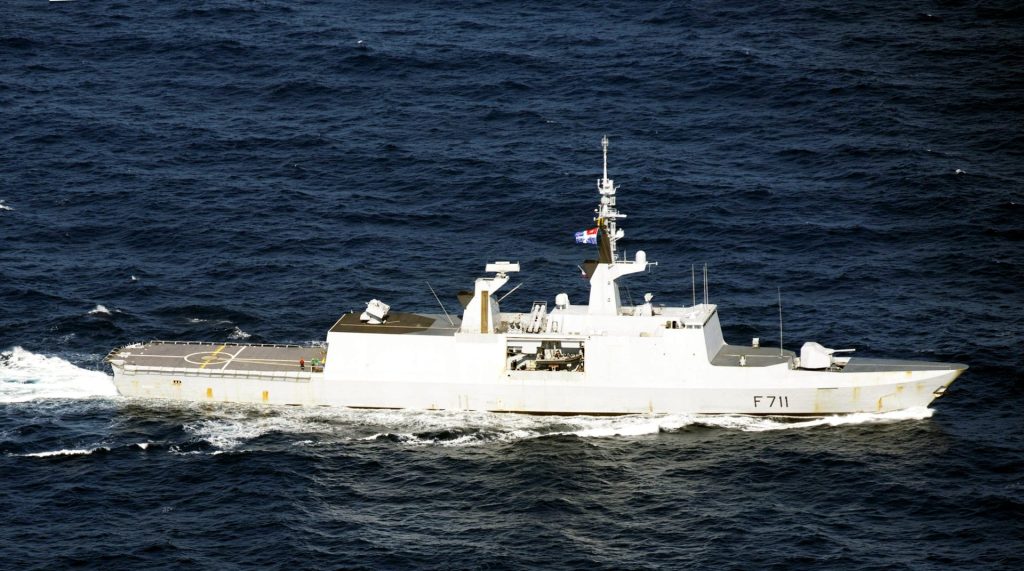
French Warship Docks in Syria for the First Time as Paris and Damascus Deepen Military Ties
A French warship has docked in Syria for the first time, in the clearest sign yet that Paris and Damascus are rebuilding a military relationship that was broken for more than a decade.
The French frigate Surcouf sailed into the Mediterranean port of Latakia on Wednesday, 11 November 2026. The next day, Syrian and French naval officers met aboard the ship to talk about working together at sea — the first meeting of its kind between the two navies.
Syrian state media described it as the first visit by a French warship to Syria. The visit comes four months after French President Emmanuel Macron travelled to Damascus and signed a framework agreement on military cooperation with Syria’s new government.
What happened in Latakia
The Surcouf, hull number F711, docked at Latakia, Syria’s main port on the Mediterranean coast, on Wednesday, 11 November. On Thursday, 12 November, officers from both countries held talks aboard the frigate.
The Syrian side was led by Brigadier General Mohammad al-Saud, commander of the Syrian Arab Army’s naval forces and coastal defence. The French delegation was led by Admiral Mackara Ouk.
According to Syria’s state news agency SANA, the two sides discussed “strengthening maritime military cooperation and bilateral relations”. The Syrian Defence Ministry said the talks covered expanding naval cooperation and developing military ties, including training and capacity building for Syria’s navy.
France’s chargé d’affaires in Syria, Jean-Baptiste Faivre, said the visit showed France’s support for Syria’s stability and sovereignty. He praised the quality of the discussions between the frigate’s crew and the Syrian naval forces, saying they were aimed at laying the groundwork for naval cooperation between the two sides.
A French diplomat told the Syrian news outlet Enab Baladi that the visit was the first step in putting the July military cooperation agreement into practice, opening the way for direct contact between the Syrian and French navies. The diplomat added that France wants to support Syria during the current period and help its efforts to achieve stability, because Syria’s success would have a positive effect on security across the region.
The ship: the frigate Surcouf
The Surcouf is a La Fayette-class light multipurpose frigate — a warship designed for patrols, surveillance, escorting other vessels and taking part in international operations.
Here are the key facts about the ship:
- Hull number: F711
- Entered service: 7 February 1997
- Length: about 125 metres
- Width: about 15.4 metres
- Displacement: around 3,700 tonnes
- Top speed: 25 knots (about 46 kilometres per hour)
- Crew: about 150 sailors
The ship is named after Robert Surcouf, a French seafarer who lived from 1773 to 1827 and became famous for his naval raids during the late 18th and early 19th centuries.
La Fayette-class frigates were designed to protect French interests in waters far from France and to respond to crises outside Europe. Their missions include maritime surveillance and intelligence gathering, patrols, escorting merchant ships, taking part in operations against illegal activity at sea, and supporting humanitarian operations.
The Surcouf has most recently been deployed as part of an international coalition tackling threats in waters around the Middle East, according to Arab News. That is the same stretch of sea where the ship is now operating — only this time, it has sailed into a Syrian port as a guest rather than patrolling past it.
Why this visit matters
A warship visit might sound like a small, routine event. Navies around the world make port calls all the time. But this one is different, because of who is visiting, where, and after what history.
For France, the visit is a public show of support for Syria’s new government. Paris is telling Damascus — and the wider region — that it sees Syria as a partner again, not a pariah state. A warship is a particularly visible way of sending that message: it cannot be missed, and it shows a level of trust that goes beyond words on paper.
For Syria, the visit is another step back into the international community. After years of isolation under the rule of Bashar al-Assad, whose regime collapsed in 2024, Damascus has been working to rebuild ties with Western countries. A French frigate docking at Latakia, with Syrian officers welcomed aboard, is a powerful symbol of that return.
There is a practical side too. Syria’s navy is small and was badly damaged during the country’s long civil war. It needs training, equipment and expertise to patrol its own coastline, protect its ports and deal with threats such as smuggling. France, with one of the strongest navies in Europe, can offer that help. The talks in Latakia focused on exactly that: training and capacity building.
The visit also matters for the Mediterranean. The sea is one of the busiest shipping routes in the world, carrying trade between Europe, the Middle East and Asia. France has long seen the Mediterranean as an area where its security interests are directly involved. Working with Syria’s navy gives France another partner in keeping those waters safe.
A relationship rebuilt in two years
The Surcouf’s visit did not come out of nowhere. It is the latest step in a fast-moving rebuilding of ties between France and Syria.
France ruled Syria from 1919 until 1946 under a League of Nations mandate, so the two countries share a long and complicated history. That history took a sharp turn in 2012, when France cut official contacts with the Assad regime and closed its embassy in Damascus in March of that year.
For more than a decade after that, there were no official relations at all. Then, after the Assad regime fell, the door opened again:
- January 2025: French Foreign Minister Jean-Noël Barrot travelled to Damascus with his German counterpart — the first visit by a French foreign minister since the embassy closed in 2012.
- February 2025: France hosted an international conference in Paris to coordinate support for Syria’s transition.
- May 2025: President Emmanuel Macron received Syria’s President Ahmed al-Sharaa at the Élysée Palace in Paris.
- July 2026: Macron visited Damascus on 6 and 7 July, the first visit by a French president to Syria in decades. During the visit, the two countries signed a comprehensive partnership agreement and a framework agreement on military cooperation.
- September 2026: Syria’s Defence Minister Murhaf Abu Qasra met a delegation from France’s Directorate General of Armaments to discuss expanding defence cooperation.
- November 2026: The Surcouf docks at Latakia — the first concrete naval step under the July agreement.
France has also backed the gradual lifting of European sanctions on Syria as the country becomes more stable, linking the removal of sanctions to rebuilding infrastructure and economic recovery.
The speed of this turnaround is striking. In less than two years, the relationship has gone from no contact at all to a presidential visit, a military cooperation agreement and now a warship in a Syrian port.
What the two navies discussed
The talks aboard the Surcouf were about practical cooperation, not ceremony. According to SANA and the Syrian Defence Ministry, the officers discussed:
- Expanding naval cooperation between the French and Syrian navies
- Training for Syrian naval personnel
- Capacity building — helping Syria rebuild its ability to operate at sea
- Developing military ties more broadly between the two countries
A French diplomat described the visit as the first step in this process, opening the way for cooperation between the two navies. That suggests more could follow: joint exercises, further port visits, or French help with training Syrian sailors.
Port visits like this one also serve a quieter purpose. They let officers from two navies meet face to face, exchange experience and build working relationships. When ships from different countries operate in the same waters, those personal contacts can matter — for example, when coordinating a rescue at sea or avoiding misunderstandings between warships.
The wider picture: Syria opens up to Western militaries
France is not the only Western country deepening military contacts with Syria’s new government. On the same day the Surcouf hosted its talks in Latakia, Syria’s Defence Minister received a United States military delegation led by Rear Admiral Liam Hulin, commander of the Combined Joint Task Force for Operation Inherent Resolve — the US-led mission against the Islamic State group.
That meeting, reported by Syrian media, was about regional developments and coordination on issues of mutual interest.
Taken together, the two meetings paint a clear picture: Syria’s new government is opening its doors to Western militaries, and Western countries are responding. For Damascus, these contacts bring training, legitimacy and a way to rebuild armed forces that were shattered by years of war. For Paris and Washington, they bring a partner in a region where security threats — from smuggling to extremist groups — cross borders easily.
There are still open questions. It is not yet clear whether France will sell or supply equipment to Syria’s navy, or whether joint exercises are planned. The French and Syrian sides have not announced any timetable for the next steps. And Syria still faces enormous challenges, from rebuilding its economy to bringing its territory fully under government control.
But the direction of travel is clear. As Syria rebuilds after years of war, even its schoolbooks are being rewritten — and its navy, like the rest of the country, is looking outward again.
Why France cares about the Mediterranean
France has always seen the Mediterranean as its home sea. It has a long southern coastline, island territories such as Corsica, and close ties with countries across North Africa and the Levant. Keeping shipping lanes open and safe in the Mediterranean is a core French interest.
That is why France has warships in the region and why it takes part in international naval missions there. Working with Syria adds another piece to that picture: a partner on the eastern shore of the Mediterranean, where the sea meets some of the world’s most volatile politics.
For France, the visit also shows that its diplomacy in Syria is moving from words to action. The July agreement promised military cooperation. Four months later, a frigate has arrived to start it. That is a pace France will want other countries in the region to notice.
What happens next
The visit itself is over, but its effects will play out over the coming months. Here is what to watch for:
- More port visits: If the Latakia visit goes well, French warships may return, and Syrian officers may visit French ports.
- Training programmes: The talks focused on training and capacity building. Announcements about courses or exchanges for Syrian naval personnel would be the next concrete step.
- Joint exercises: Navies that cooperate often train together. Any announcement of a joint French-Syrian exercise would be a major step.
- Equipment: Syria’s navy needs ships, spare parts and systems. Whether France supplies any of these is a question for the future.
- Other Western partners: The US delegation’s visit on the same day suggests more countries may follow France’s lead.
The Surcouf’s arrival in Latakia was a first. What matters now is whether it becomes the start of something regular — or remains a one-off symbol.
Frequently asked questions
Which French warship visited Syria?
The French frigate Surcouf, hull number F711. It is a La Fayette-class multipurpose frigate that has been in service with the French Navy since 7 February 1997.
When did the Surcouf dock in Latakia?
The frigate docked at the port of Latakia on Wednesday, 11 November 2026. Syrian and French naval officers met aboard the ship the following day, Thursday, 12 November.
Why is this visit historic?
Syrian state media described it as the first visit by a French warship to Syria. France had cut official contacts with the Assad regime in 2012 and closed its embassy in Damascus, so no French warship had visited during more than a decade of broken relations.
What did the two sides discuss?
The officers discussed expanding naval cooperation, training and capacity building for Syria’s navy, and developing military ties between the two countries.
What agreement made this visit possible?
A framework agreement on military cooperation signed during French President Emmanuel Macron’s visit to Damascus on 6 and 7 July 2026. The agreement covers training and capacity building, and the Surcouf’s visit is the first naval step under it.
How big is the Surcouf?
The frigate is about 125 metres long and 15.4 metres wide, with a displacement of around 3,700 tonnes. It has a top speed of 25 knots and a crew of about 150 sailors.
Conclusion
The French frigate Surcouf’s visit to Latakia is a small event with a large meaning. A single warship, in port for a few days, would not normally make headlines. But this was the first French warship to dock in Syria, arriving just four months after France and Syria signed a military cooperation agreement and less than two years after the two countries had no official relations at all.
For France, it is a visible show of support for Syria’s stability and sovereignty, and a practical step towards working with a new partner in the Mediterranean. For Syria, it is another sign that the years of isolation are ending — and that its navy, like the rest of the country, is being rebuilt with outside help.
Whether the visit leads to training programmes, joint exercises or equipment deals remains to be seen. But the message from Latakia is hard to miss: Paris and Damascus are doing business again, and this time it includes their navies.
Sources
- Arab News, “France, Syria boost naval ties with historic frigate visit“, 12 November 2026
- Enab Baladi, “French Diplomat to Enab Baladi: Surcouf Visit Marks a Step in Syria-France Military Cooperation“, 11 November 2026
- The Jerusalem Post, “French warship docks in Syria’s Latakia for the first time“, 12 November 2026
- MENAFN, “First French Navy Visit to Syria: Frigate Surcouf Hits Latakia“, 12 November 2026
- Vietnam News, “World News on November 13th: Wall Street plunges into red after Nvidia CEO resigns, French warship makes first port visit in Syria“, 13 November 2026
- French Foreign Ministry, “Syria – Political and Economic relations“, updated 2 November 2026
- Arab News Pakistan, “Syrian defense minister, US commander hold talks on regional security“, 12 November 2026
This article is for general information and education only. It is not legal or financial advice.
