
Guinea Gold Mining Crackdown: 10 Killed in Siguiri Clashes as 160,000 People Flee Across the Border
Ten people have been killed in clashes between security forces and gold miners in Guinea, after the government banned artisanal gold mining in the country’s richest gold region. Around 160,000 people have fled across the border into Mali, creating a humanitarian crisis that is now worrying governments across West Africa.
The violence broke out on Wednesday, 11 November, in the Siguiri region of north-eastern Guinea. It is the deadliest moment so far in a crackdown that began less than two weeks ago — and it shows how a decision taken to protect the environment can, when enforced suddenly, uproot the lives of hundreds of thousands of people.
What happened in Siguiri
The clashes took place in Sètiguiyah, in the Balato district, near the mining town of Bouré-Balato, about 20 kilometres from the town of Siguiri. According to Guinea’s Ministry of Territorial Administration, defence and security forces were on a joint patrol checking that the mining ban was being obeyed when protesters put up barricades on public roads. The situation then escalated, and shots were exchanged.
Ten people were killed, including five foreign nationals, and 13 were injured, according to provisional figures based on information from regional health authorities. The toll was announced late on Thursday, 12 November, by the Minister of Territorial Administration, Djenabou Touré. The nationalities of the five foreign nationals killed have not yet been established, and the matter has been referred to the courts.
Calm had returned to Bouré-Balato by Thursday, but the damage was done. For the miners and their families, the clashes confirmed their worst fears about the crackdown. For the government in Conakry, they raised difficult questions about how the ban is being enforced.
Why Guinea banned artisanal gold mining
On Monday, 2 November, five government departments — including defence, security, environment and mines — issued a joint order imposing a total ban on uncontrolled and illegal artisanal gold mining in the Siguiri prefecture. Security forces were deployed permanently to enforce it, with checkpoints set up across the affected areas.
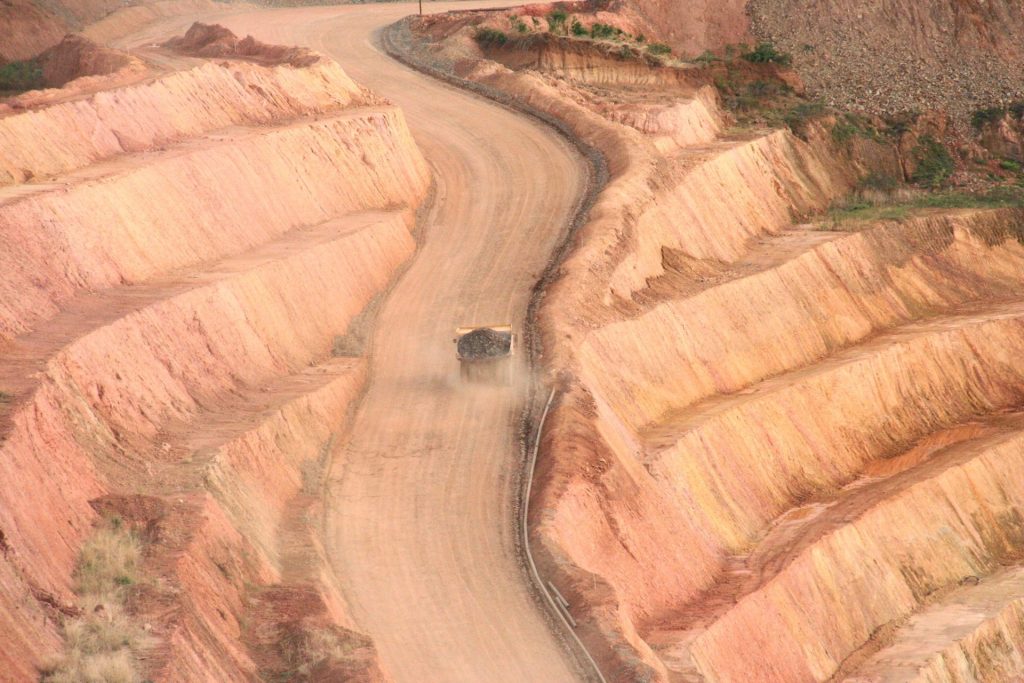
The government’s reason was the environment. Officials said miners who failed to follow the rules had caused serious environmental damage, including pollution of agricultural land, rivers and vegetation cover. The ban covers mining in riverbeds, agricultural areas, pastures, protected zones and classified forests.
The concern is real. Siguiri sits on one of West Africa’s most important gold districts, and artisanal mining there has grown enormously as the price of gold has risen. Mercury, the toxic metal traditionally used to separate gold from ore, can contaminate water and soil for years. Mercury poisoning is one of the best-known dangers of small-scale gold mining.
Guinea is rich in mineral resources, and the government says it is trying to curb the harm caused by informal mining, such as land degradation and water pollution. But the speed and scale of the crackdown caught the mining communities by surprise.
A mass exodus into Mali
The ban did not just stop the digging. It set off one of the largest sudden movements of people in the region in years.
Since the operation began, around 100,000 people have arrived in the capital of neighbouring Mali, Bamako, and nearly 60,000 more have gathered in the border town of Kouremale, according to Malian authorities. That is around 160,000 people — miners and their families — forced to leave Guinea in a matter of days.
Their stories describe panic and confusion. Moussa Konate, a 41-year-old from Ivory Coast, told the AFP news agency that he had lost track of his wife, who is seven months pregnant, in the rush to leave. “There was pushing, screaming, smoke everywhere,” he said from Ouezzindougou, one of two official reception sites in Mali. “When security forces ordered us to leave, everything happened very fast. I’ve spent days asking new arrivals if they’ve seen her but nobody has.”
Many of those expelled are from Burkina Faso, but Ivorians, Senegalese, Togolese and Beninese are also among the arrivals, Mali’s health ministry said. At Ouezzindougou, thousands of exhausted miners and their families lay on the ground after walking 125 kilometres (78 miles) from Kouremale. Tarpaulins and tents offered little protection from the sun.
Alassane Kabore, a 21-year-old from Burkina Faso, struggled to walk, his knee hastily bandaged after the journey. “We went through things I wouldn’t wish on anyone,” he said. “Some people were beaten. Others lost relatives in the panic as everyone fled through the bush. Today we feel like we’ve been thrown away like rubbish, with no respect for our dignity.”
Seydou Traore, a Burkinabe miner in his 30s, said he was given no time to prepare. “We worked hard there, honestly,” he said. “Then one day everything changed. We were told to leave immediately, without even enough time to collect our tools or savings. I left everything behind — my shovels, a few gold nuggets, my clothes. I’m going home with nothing, ruined.”
Eleven deaths have been recorded among the displaced people so far, the Malian government said. Hospital sources said at least six women have given birth in Mali since the arrivals began. Mali’s health ministry estimates it will need nearly 228 million CFA francs — about $388,000 — to respond to the crisis.
Burkina Faso brings its citizens home
Burkina Faso has been hit hardest. More than 8,000 Burkinabe gold miners were expelled from Guinea in the first days of the crackdown, and the government in Ouagadougou has begun bringing its citizens home. On Thursday, Burkina Faso announced that 45,406 people had arrived as part of repatriation operations from Mali, including 9,852 children and 1,224 nationals of other countries.
The expulsions have also caused a diplomatic row. Burkina Faso’s security minister, Mahamadou Sana, criticised Guinea for carrying out the expulsions without coordinating with its neighbours. Mali has contacted the countries whose citizens were among those expelled, and Ivory Coast has promised to come and collect its nationals, a Malian security ministry official said.
The worry in Mali goes beyond shelter and food. More than five million people in Mali already rely on humanitarian aid, according to the United Nations, and the sudden arrival of around 160,000 more people heaps further pressure on a country already struggling. Officials are also worried that vulnerable migrants could become targets for recruitment by jihadist groups active in the Sahel. “These people are vulnerable. We are looking at ways to prevent them from being approached by terrorist networks,” a Malian security ministry official told AFP.
Arrests and trials in Conakry
Inside Guinea, the crackdown continues. More than 1,200 suspected illegal miners have been arrested in the north-east, and the first mass trials opened this week in Conakry, the capital. According to local reports, 1,412 people have been arrested across Siguiri and the neighbouring prefecture of Kérouané, with 202 defendants facing proceedings before Guinea’s economic and financial crimes court.
The authorities have stressed that the measures target lawbreakers regardless of their nationality, and that undocumented residents would face legal action. But critics, including Aboul Sacko, coordinator of the Forum of Social Forces of Guinea, say the ban was not adequately prepared and has resulted in loss of life, serious injuries and other violations.
What is artisanal gold mining — and why it matters in West Africa
To understand why a mining ban could displace 160,000 people in days, it helps to understand what artisanal mining is.
Artisanal and small-scale mining means mining done by hand or with simple tools, by individuals or small groups, rather than by large companies with heavy machinery. Miners dig narrow pits and sift soil and rock for gold. It is hard, dangerous work. Pits can collapse, and the mercury and dust miners are exposed to can cause lasting health damage.
Today, artisanal mining is common across much of West Africa, driven by growing demand for metals and rising prices. For many families, it is the only livelihood available. When a whole town depends on the pits, a ban does not just stop an industry — it removes people’s income, their homes and their savings in a single day. That is why the order in Siguiri produced an exodus rather than a quiet shutdown.
The tension is not unique to Guinea. Across Africa, governments are trying to bring informal mining under control, both to protect the environment and to capture more of the value of their mineral wealth. Africa recently launched a $5 billion energy bank to fund oil, gas and power projects, and Pakistan has been making its own pitch to foreign investors in its minerals sector — a sign of how central mining and resources have become to development plans in many countries. But formalising an industry that millions of people depend on is slow, difficult work, and crackdowns often hit the poorest workers first.
The environmental cost
The government’s case for the ban is strong on the facts. Artisanal gold mining in Siguiri has damaged farmland, polluted rivers and stripped vegetation. Mercury, used to extract gold from ore, is a particular problem: it poisons water and soil, and it harms the health of miners and their families.
There is also the question of who benefits. Much of the gold dug up by artisanal miners is sold through informal channels, so the state earns little from it, while the environmental damage is left behind. Open pits and waste piles scar the landscape long after the miners have gone.
The problem for Guinea is that the environmental damage is real, but so is the human cost of stopping the mining overnight. A ban without an alternative livelihood for the miners simply moves the crisis across the border.
Why this matters
The events in Siguiri matter for three reasons.
First, they show how quickly an enforcement operation can become a humanitarian emergency. Around 160,000 people crossed into Mali in under two weeks. Eleven of them died on the way. Families were separated, savings were lost, and children were among those forced to walk more than 100 kilometres to safety. Mali, a country where more than five million people already need humanitarian aid, now has to feed and shelter them.
Second, the crackdown has created a diplomatic problem for the whole region. Burkina Faso has complained about the lack of coordination, Mali is struggling to cope with the arrivals, and Ivory Coast, Senegal, Togo and Benin all have citizens caught up in the exodus. West Africa’s governments will need to work together to repatriate people safely — and to decide what happens to the miners who have nowhere else to go.
Third, the episode raises a question that goes far beyond Guinea: how do countries clean up artisanal mining without destroying the people who depend on it? The gold in Siguiri will not disappear. If the pits stay closed, miners may simply return in secret, or move to another district and start again. If they reopen without rules, the pollution will continue. A lasting answer would need to give miners a legal way to work — with safety rules, proper equipment and a fair price for their gold. Nothing in the crackdown so far suggests that plan exists yet.
What happens next
Three things will be watched closely in the coming days.
The first is the investigation into the deaths. The government has said the matter is before the courts, and the provisional death toll of 10 may change as more information comes in. Whether anyone is held responsible for the killings will matter a great deal for trust in the operation.
The second is the trials in Conakry. More than 1,200 people have been arrested, and the first mass trials have already opened. How those cases are handled — and whether miners are treated fairly — will shape how the crackdown is judged at home and abroad.
The third is the humanitarian response in Mali. Around 160,000 people need food, shelter and medical care, and Mali’s health ministry says it needs nearly 228 million CFA francs to respond. Aid groups and local communities are helping for now, but a crisis on this scale needs a coordinated response — and a plan for getting people home safely.
Frequently asked questions
How many people were killed in the clashes in Guinea?
Ten people were killed, including five foreign nationals, and 13 were injured, according to provisional figures from Guinea’s Ministry of Territorial Administration. The nationalities of the foreign nationals have not yet been established.
Where did the clashes take place?
In Sètiguiyah, in the Balato district near Bouré-Balato, in the Siguiri region of north-eastern Guinea, about 20 kilometres from the town of Siguiri.
Why did Guinea ban artisanal gold mining?
The government said uncontrolled artisanal mining had caused serious environmental damage, including pollution of farmland, rivers and vegetation. The ban, imposed on 2 November, covers mining in riverbeds, agricultural areas, pastures, protected zones and classified forests in Siguiri prefecture.
How many people have fled to Mali?
Around 100,000 people have arrived in Bamako and nearly 60,000 more in the border town of Kouremale, according to Malian authorities — around 160,000 in total. Eleven deaths have been recorded among the displaced people.
What is artisanal gold mining?
It is small-scale mining done by hand or with simple tools, by individuals or small groups, rather than by large mining companies. It is a major source of income for millions of people across West Africa, but it is dangerous work and can cause serious environmental damage, including mercury pollution.
What happens to the arrested miners?
More than 1,200 suspected illegal miners have been arrested, and the first mass trials opened this week in Conakry. According to local reports, 202 defendants face proceedings before Guinea’s economic and financial crimes court.
Conclusion
Guinea’s ban on artisanal gold mining in Siguiri was meant to protect the environment. In less than two weeks, it has killed ten people, displaced around 160,000 more, strained relations with neighbouring countries and overwhelmed Mali’s already stretched aid system.
The environmental damage the government pointed to is real, and it needed an answer. But the events of the past two weeks show what happens when that answer arrives as a sudden crackdown, with no plan for the people whose livelihoods depend on the pits. The gold will still be in the ground tomorrow. The question is whether Guinea, Mali and Burkina Faso can find a way to deal with it that does not cost more lives.
Sources
This article is for general information and education only. It is not legal or financial advice.
