
Eurovision Comes to Asia: 11 Countries Take the Stage in Bangkok Tonight in the First-Ever Eurovision Asia Song Contest
For 70 years, the Eurovision Song Contest has been Europe’s biggest music party. Tonight, it finally crosses the continent. The first-ever Eurovision Song Contest Asia takes place in Bangkok, Thailand, on Saturday 14 November 2026, with 11 countries competing in one grand final — and anyone in the world can watch it free on YouTube.
Eleven singers, eleven original songs, one stage. Vietnam opens the show, Malaysia closes it, and by the end of the night Asia will have its first-ever Eurovision winner. For Pakistanis, the show starts at 6:30pm PKT — early evening, perfect viewing time.
Here is everything you need to know about Eurovision Asia, the countries taking part, how the winner is chosen, and why this night matters for music across the continent.
What is Eurovision Asia?
Eurovision Asia is a brand-new international song contest that takes the familiar Eurovision format — countries competing with original songs, judged by juries and the public — and brings it to Asia. It is organised by the European Broadcasting Union (EBU), the same body behind the European contest, together with Voxovation, Thailand’s S2O Productions and Channel 3.
The European Eurovision Song Contest began in 1956 and has grown into one of the most-watched music events on Earth. It has launched global stars, from ABBA, who won for Sweden in 1974, to Celine Dion, who won for Switzerland in 1988. The Asian edition is the first time the contest has been staged as a full competition on another continent.
The idea was announced on 31 March 2026, when the EBU confirmed that Bangkok would host the first edition. The contest was put together quickly — just over seven months from announcement to tonight’s final — and the response from broadcasters across Asia was strong enough to fill an 11-country line-up for the first show.
When and where to watch
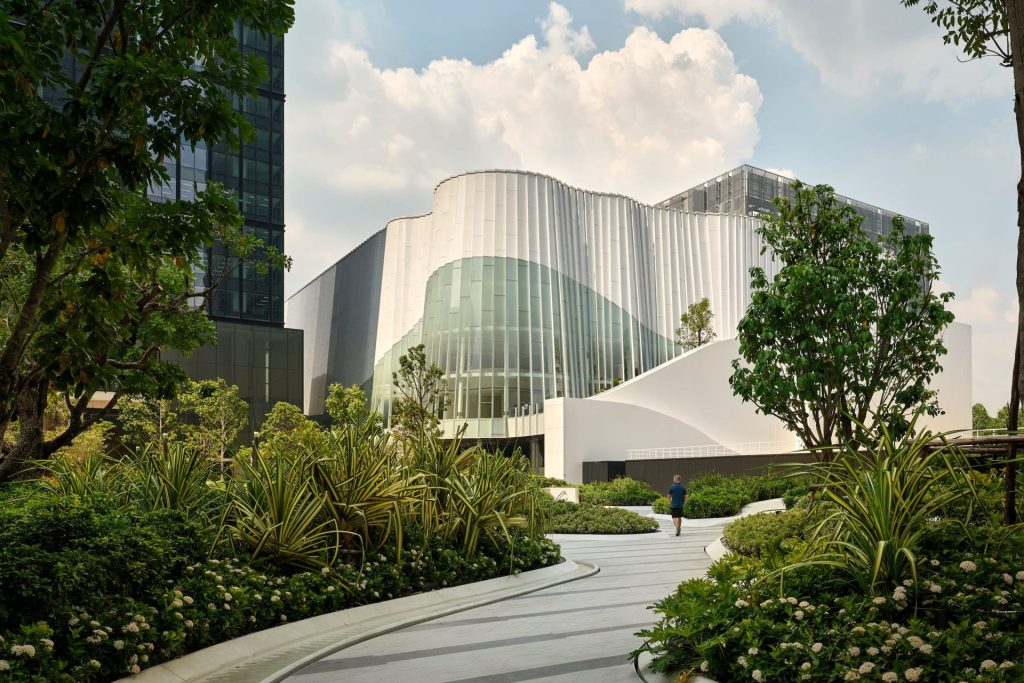
The grand final takes place on Saturday 14 November 2026 at the One Bangkok Forum, a modern concert venue in the heart of Thailand’s capital.
The show starts at 8:30pm local time in Bangkok. That is 6:30pm in Pakistan (PKT), 9:30pm in the Philippines, and 2:30pm in Central Europe.
The contest is streamed live and free around the world on the official Eurovision Song Contest YouTube channel. In Thailand it is also broadcast on Channel 3, and each participating country has its own broadcaster carrying the show. There is no ticket or subscription needed to watch the stream.
The show is hosted by Woody Milintachinda and Cindy Bishop, two well-known Thai television presenters.
The 11 countries and their songs
Unlike the European contest, there are no semi-finals in the first Asian edition. All 11 acts compete in a single grand final, one after another, in a running order that was announced after the rehearsals this week.
Here is the full running order for tonight:
- Vietnam — Tóc Tiên with “EM TIÊN”
- Cambodia — Monetrey with “I Let You Go”
- Laos — Thinla with “BAE”
- Mongolia — Beck with “Chamguigeer (Without You)”
- Bhutan — Nyendra with “Lhayi Semo”
- Philippines — CARMELLE with “Sobra-Sobra”
- Bangladesh — Beatmosphere with “Tumi Ele”
- Thailand — MANG x DAOU with “Aroma”
- South Korea — JUNHEE with “DEEP DIVE”
- Nepal — Pratik Himal Rai with “Ananta Maya”
- Malaysia — Aina Abdul with “Bluest Sky”
The line-up mixes some of Asia’s biggest music names with rising stars. Vietnam’s Tóc Tiên is one of her country’s most popular singers, and she has the honour — and the pressure — of opening the whole contest. The Philippines’ CARMELLE and South Korea’s JUNHEE bring large fan bases from two of Asia’s biggest pop markets. At the other end of the running order, Malaysia’s Aina Abdul, a singer, songwriter and actress, closes the show with “Bluest Sky”.
For the host nation, MANG x DAOU perform “Aroma” in front of a home crowd — a position that has often helped acts in the European contest, where home support can lift a performance.
The range of countries is part of the point. Bhutan and Laos are small music markets that rarely get a stage this big. Bangladesh and Nepal bring sounds from South Asia. Mongolia brings a voice from Central Asia. The contest’s organisers have said the aim is to show the full range of Asian music, not just the pop giants.
How the winner is decided
The winner is decided by a 50-50 split between national juries and the public vote — the same balance used in the European contest.
Each of the 11 participating countries has a national jury of music professionals. Those juries have already voted: the jury final was held at the One Bangkok Forum on Thursday 13 November, where the jurors watched the performances and cast their votes. That vote counts for half of each country’s final score.
The other half is decided by the public during tonight’s live final. Viewers can vote for their favourite acts, and those votes are combined with the jury scores to produce the final result.
The spokespersons who will announce each country’s jury votes during the show have already been revealed. They include Vice Ganda for the Philippines, Kelzang Dolkar for Bhutan, Đức Bảo for Vietnam and Jo Kwon for South Korea — in many cases the hosts of each country’s national selection show.
The split system is designed to balance popular appeal with musical quality. A song that wins the public vote but scores poorly with the juries — or the other way round — will struggle to take the trophy. In the European contest, that balance has produced some surprise winners over the years, and the same could happen tonight.
Who is missing — and why it matters
Three of Asia’s biggest media markets are not in the first edition: China, India and Japan. According to the organisers, broadcasters from all three countries were in talks to take part but could not sign on before the entry deadline.
Their absence is noticeable. India alone would have brought one of the world’s largest music audiences, and Japan and China are two of the biggest music industries on the planet. If any of them join a future edition, the contest would grow much bigger almost overnight.
Australia is also absent, even though it has competed in the European Eurovision since 2015. Australia will stay in the European contest and is not taking part in the Asian edition, at least for now.
Pakistan is not among the 11 countries either, so there is no Pakistani act on the stage tonight. But the contest is open to broadcasters across the region, and the organisers have said more countries are expected to join in future editions.
The guest stars
The final will also feature two guest performances. Thai star Jeff Satur, one of Thailand’s most popular singers, will perform on the night. He will be joined by DARA, the winner of this year’s European Eurovision Song Contest.
Guest performances are a Eurovision tradition. In Europe, past winners and famous acts often return to the stage during the final, and the Asian edition is following the same playbook. Having this year’s European winner perform in Bangkok is a clear signal: the organisers want the two contests to feel like part of the same family.
Why Bangkok, and why now?
Bangkok was chosen as host city for a mix of tradition and modernity, according to the organisers, and for Thailand’s experience in staging large live events. The One Bangkok Forum is a new venue in the Thai capital, built for concerts and major shows.
For Thailand, the contest is also a tourism opportunity. The country has been working to rebuild visitor numbers, and a global music event watched around the world is a showcase for Bangkok as a destination. The contest is being covered by travel and entertainment media across Asia, and the city will be on screen for hours tonight.
The timing matters too. The European Eurovision has become a global brand, with viewers far beyond Europe — including in Asia, where fan communities have followed the contest for years. Bringing a version of the show to Asia is a natural next step, and the speed with which the first edition came together suggests the organisers believe the demand is real.
What it means for Asian music
For the artists on stage tonight, the contest is a rare chance to be seen far beyond their home countries. A singer from Bhutan or Laos does not often get to perform in front of a worldwide audience. A strong performance in Bangkok could lead to streaming numbers, concert bookings and new fans across the region.
For viewers, it is a chance to hear music from countries they may never have listened to. The European contest has a long record of introducing audiences to sounds from places they knew little about — from Ukrainian folk to Finnish metal — and the Asian edition is built on the same idea.
There is also a practical effect. National selection shows have already been held in several of the participating countries, with local broadcasters running competitions to choose their acts. That process alone has given airtime to dozens of artists who would otherwise have struggled to reach a national audience.
Whether Eurovision Asia becomes a yearly fixture will depend on tonight. A strong audience, a memorable winner and good reviews would make a second edition almost certain. A weak debut would raise questions. But the fact that 11 countries signed up for an untested first edition — and that broadcasters in China, India and Japan were at the table — suggests the idea has real support.
What to watch for tonight
If you are tuning in, here are the moments to look out for:
- The opening act: Vietnam’s Tóc Tiên opens the show. The first performance sets the tone for the whole night, and the opener carries extra pressure.
- The host’s performance: Thailand’s MANG x DAOU perform eighth, in front of a home crowd that will be loud.
- The closing act: Malaysia’s Aina Abdul performs last, a slot that often helps an act stay fresh in voters’ minds.
- The voting: With half the result decided by juries who have already voted, the public vote tonight decides everything. A close race could come down to the last few countries announcing their points.
- The guest stars: Jeff Satur and DARA perform between the competition acts.
The show begins at 6:30pm Pakistan time. The winner will be crowned late tonight, Bangkok time — and Asia will have its first Eurovision champion.
Frequently asked questions
What is Eurovision Asia?
It is a new international song contest based on the European Eurovision Song Contest, with countries from Asia competing with original songs. The first edition takes place in Bangkok on 14 November 2026.
How many countries are competing?
Eleven: Vietnam, Cambodia, Laos, Mongolia, Bhutan, the Philippines, Bangladesh, Thailand, South Korea, Nepal and Malaysia.
How can I watch it in Pakistan?
The final is streamed live and free on the official Eurovision Song Contest YouTube channel. It starts at 6:30pm PKT on Saturday 14 November 2026.
How is the winner chosen?
Half of the score comes from national juries, who voted at the jury final on 13 November. The other half comes from the public vote during tonight’s live show.
Is Pakistan taking part?
No. Pakistan is not among the 11 countries in the first edition, and neither are China, India or Japan, whose broadcasters did not sign up before the deadline.
Will there be a second Eurovision Asia?
Nothing has been confirmed yet. The organisers have said more countries are expected to join in future editions, and a successful first show would make a second edition very likely.
Conclusion
Tonight, Bangkok hosts a small piece of music history. For the first time, the Eurovision format — 70 years old in Europe — is being staged as a contest for Asia, with 11 countries, 11 original songs and a worldwide audience watching free on YouTube.
It is a gamble. The contest was announced only in March, and three of Asia’s biggest markets are missing. But the line-up is real, the venue is ready, the juries have voted, and millions of viewers will be watching when the show begins at 6:30pm Pakistan time.
Whoever wins, the night belongs to the idea itself: that Asian music deserves a stage as big as Europe’s. By the end of tonight, we will know whether that idea has a future.
Sources
This article is for general information and education only. It is not legal or financial advice.

Pingback: Mišo Kovač, Croatia's best-selling singer, dies aged 85 - Findivoza
Pingback: Philippines' Carmelle Wins the First-Ever Eurovision Song Contest Asia in Bangkok - Findivoza