
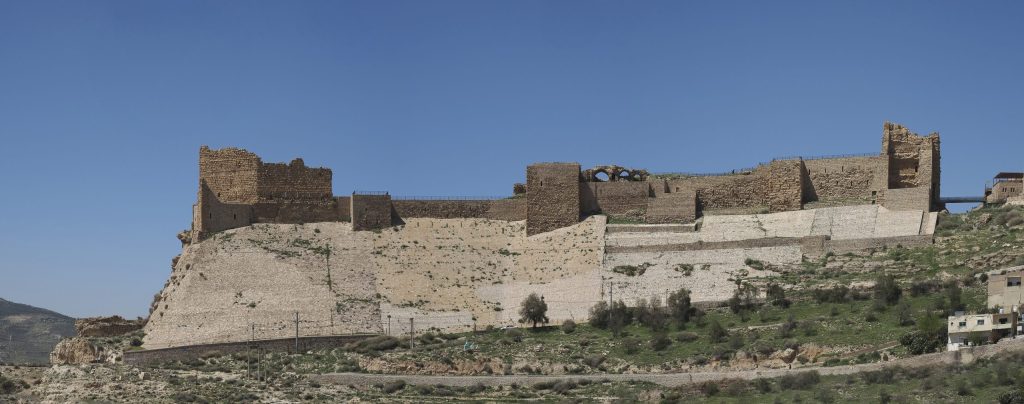
Jordan Sentences Three Men to Death Over Karak Church Attack That Killed Nine
A court in Jordan has sentenced three men to death for a gun attack on a church in the country’s south that killed nine people last month. The ruling, handed down on Sunday, 15 November 2026, closes the trial of an attack that shocked a kingdom where Christians and Muslims have long lived side by side — but the sentences are not yet final, and they will now go through an automatic review by Jordan’s highest court.
Jordan’s State Security Court sentenced the three men to death by hanging for carrying out the attack on St George’s Greek Orthodox Church in the village of Hammoud, in the Karak governorate, on 23 October. The state news agency Petra reported the verdict, and the Jordanian military confirmed it in a statement on Sunday.
“State Security Court issued its ruling sentencing to death the three criminals who carried out the terrorist attack,” the military said.
The attack was one of the deadliest assaults on a Christian gathering in Jordan in recent memory. Gunmen opened fire during a funeral at the church, killing nine people and wounding at least 25 others. Bells rang at St George’s Church in Hammoud after the sentences were announced, according to Arab News.
What happened on 23 October
On Friday, 23 October, three gunmen arrived at the Greek Orthodox Church of St George in Hammoud village, in Jordan’s southern Karak governorate, during a funeral service. They opened fire on the mourners gathered inside and around the church.
Nine people were killed. At least 25 others were wounded, according to Al Jazeera; Reuters put the number of wounded at 34. The victims were attending a funeral — an ordinary act of mourning that turned, in minutes, into one of the worst attacks on a Christian community in Jordan’s modern history.
The attackers fled the scene. Jordanian security forces tracked them down, and three days later, on 26 October, they were arrested after a shootout at an abandoned house in Karak. All three men were wounded in the clash. No security personnel were injured, according to Jordan’s Public Security Directorate.
Authorities identified the three as two Jordanian brothers and their relative by marriage. They had fled after the attack and were caught after security forces surrounded the house where they were hiding.
The attack stunned Jordan. It was a rare assault on the country’s Christian minority, in a kingdom that has long prided itself on the peaceful coexistence of its Muslim majority and Christian minority. King Abdullah II said those behind the attack would face the “harshest penalties” as he offered his condolences to the victims’ families. He also ordered a review of the country’s security procedures for responding to attacks.
The trial and the sentences
The three men were tried before Jordan’s State Security Court, the court that handles terrorism cases in the kingdom. On Sunday, the court found them guilty of a series of serious offences.
The convictions covered carrying out terrorist acts that resulted in death, possessing weapons and ammunition for terrorist purposes, conspiracy to commit terrorist acts, and promoting the ideas of a terrorist organisation. One of the men was also convicted of providing funds with the intention of using them to finance terrorist acts, Al Jazeera reported.
The court sentenced all three to death by hanging.
The death sentences are not the end of the legal process. Under Jordanian law, they are subject to appeal and to an automatic review by the Court of Cassation, the country’s highest court. That means the sentences are not yet final, and the Court of Cassation will examine the case before any execution can take place.
Who the attackers were
The three men convicted of the attack are two Jordanian brothers and a relative by marriage. Jordanian authorities have not publicly named them in the reports of the verdict, and no group has been publicly linked to them by the authorities.
What is known is that they were local men. They fled the church after the shooting and hid in an abandoned house in Karak, where security forces found them three days later. The shootout that ended in their arrest left all three wounded.
The speed of the trial was striking. The attack happened on 23 October. The men were arrested on 26 October. Less than a month later, on 15 November, the court had heard the case and delivered death sentences. The pace reflects how seriously Jordan’s government treated the attack — and how quickly it wanted to show that the killers would face justice.
Jordan’s response, and the strikes on Syria
The church attack set off a chain of events that reached beyond Jordan’s borders. On the same day as the attack, 23 October, Jordan launched airstrikes on southern Syria against groups it linked to the church attack.
Syrian authorities said seven people, including three children and a woman, were killed in those strikes. Jordan later acknowledged that its airstrikes had killed civilians in Syria. The two countries then agreed to form a joint security committee to review the incident and its consequences, Reuters reported.
The episode showed how quickly a single attack can spill across borders in a region where militant groups move between countries. It also showed the pressure on Jordan’s government to respond forcefully — both to reassure its own people and to signal that attacks on its soil would have consequences.
At home, the government’s message was one of unity.
Jordan’s Christian community
Christians make up a small but long-established part of Jordan’s population — around 300,000 people out of a total population of about 11.5 million, or roughly 3 per cent, according to Al Jazeera. Many of them live in the Karak governorate, in the south of the country, where the attack took place.
Jordan’s Christians are among the oldest Christian communities in the world, with roots going back to the earliest centuries of the faith. Churches in Jordan include Greek Orthodox, Roman Catholic, and other denominations, and Christians have long held senior roles in government, business, and public life.
Attacks on Christians in Jordan have been rare. That is part of why the Hammoud attack caused such shock. It was described by several news outlets as a rare attack on Jordan’s Christian minority.
The rarity of such violence is also why the trial mattered so much. For Jordan’s Christians, the death sentences were a signal that the state would protect them. For the country as a whole, the case was a test of whether Jordan could deliver justice quickly and fairly after an attack designed to divide its people.
What happens next
The case now moves to the Court of Cassation. The death sentences will be reviewed automatically, and the men can also appeal. Until that review is complete, the sentences are not final, and no execution can take place.
Several questions remain open. The authorities have not said publicly whether the three men were acting alone or as part of a wider network, or what motivated them beyond the extremist ideology cited in the convictions. The joint Jordanian-Syrian security committee set up after the airstrikes is also expected to report on the civilian deaths in Syria.
For the families of the nine people killed, the verdict brings the trial to a close but not the grief. The church in Hammoud, where bells rang on Sunday after the sentences were announced, will carry the memory of the attack for a long time.
For Jordan, the case is a reminder of a threat the country has worked hard to contain. Jordan is a close partner of the United States in the fight against extremism, and it sits in a region where militant groups remain active on several of its borders. The Hammoud attack showed that even a country with a strong security record is not immune — and the swift trial and sentences showed how determined its government is to respond.
Why this matters
The Karak church attack matters for three reasons.
First, it was an attack on a funeral — on people at their most vulnerable, gathered to mourn. Attacks on places of worship during services are among the most shocking forms of violence, and this one was no exception.
Second, it tested Jordan’s social fabric. Jordan’s Muslims and Christians have lived together for centuries, and the attack was plainly designed to drive them apart. The response — a united public condemnation and a trial that moved quickly — suggests the attack failed in that aim.
Third, it showed how a single attack can escalate across borders. The airstrikes on Syria that followed, and the civilian deaths they caused, are a reminder that the consequences of terrorism do not stop at the border — and that governments must weigh their responses carefully, even when the pressure to act is intense.
Frequently asked questions
What happened in the Karak church attack?
On 23 October 2026, gunmen opened fire during a funeral at St George’s Greek Orthodox Church in Hammoud village, in Jordan’s Karak governorate. Nine people were killed and at least 25 others were wounded.
Who was sentenced?
Three men — two Jordanian brothers and their relative by marriage — were sentenced to death by hanging by Jordan’s State Security Court on 15 November 2026. They were arrested on 26 October after a shootout at an abandoned house in Karak.
What were they convicted of?
The court convicted them of carrying out terrorist acts resulting in death, possessing weapons and ammunition for terrorist purposes, conspiracy to commit terrorist acts, and promoting the ideas of a terrorist organisation. One was also convicted of funding terrorist acts.
Are the death sentences final?
No. The sentences are subject to appeal and to an automatic review by the Court of Cassation, Jordan’s highest court. They are not final until that review is complete.
How big is Jordan’s Christian community?
Christians number around 300,000 people out of Jordan’s population of about 11.5 million — roughly 3 per cent. Many live in the Karak governorate, where the attack took place.
What happened after the attack?
On the same day as the attack, Jordan launched airstrikes on southern Syria against groups it linked to the attack. Syrian authorities said seven people, including three children and a woman, were killed. Jordan later acknowledged civilians were killed, and the two countries agreed to form a joint security committee.
Conclusion
The death sentences handed down on Sunday bring the trial of the Karak church attackers to a close, less than a month after nine people were killed at a funeral in Hammoud village. The speed of the trial, the severity of the sentences, and the King’s promise of the “harshest penalties” all show how seriously Jordan took the attack.
But the case is not over. The Court of Cassation must still review the sentences, and questions remain about the attackers’ motives and any wider network behind them. The airstrikes on Syria that followed the attack, and the civilian deaths they caused, are also still being examined by a joint committee.
What is clear is that the attack failed in its apparent aim. It was an attack on a Christian funeral in a mixed community — and the response, from a united public condemnation to a swift trial, was one of unity rather than division. The bells that rang at St George’s Church on Sunday were a reminder of that: a community grieving together, and a country determined that such an attack will not happen again.
Sources
- Reuters — “Jordan sentences three men to death over deadly church attack”, 15 November 2026 — https://www.reuters.com/world/middle-east/jordan-sentences-three-men-death-over-deadly-church-attack-2026-11-15/
- Al Jazeera — “Jordan sentences three men to death by hanging after deadly church attack”, 15 November 2026 — https://www.aljazeera.com/news/2026/11/15/jordan-sentences-three-men-to-death-by-hanging-after-deadly-church-attack
- Arab News — “Jordan court sentences perpetrators of Karak church attack to death”, 15 November 2026 — https://www.arabnews.pk/middle-east/jordan-court-sentences-perpetrators-of-karak-church-attack-to-death-3007081
- Firstpost — “Jordan sentences three men to death over deadly Karak church attack”, 15 November 2026 — https://www.firstpost.com/world/jordan-sentences-three-men-to-death-over-deadly-karak-church-attack-14060093.html
This article is for general information and education only. It is not legal or financial advice.
