
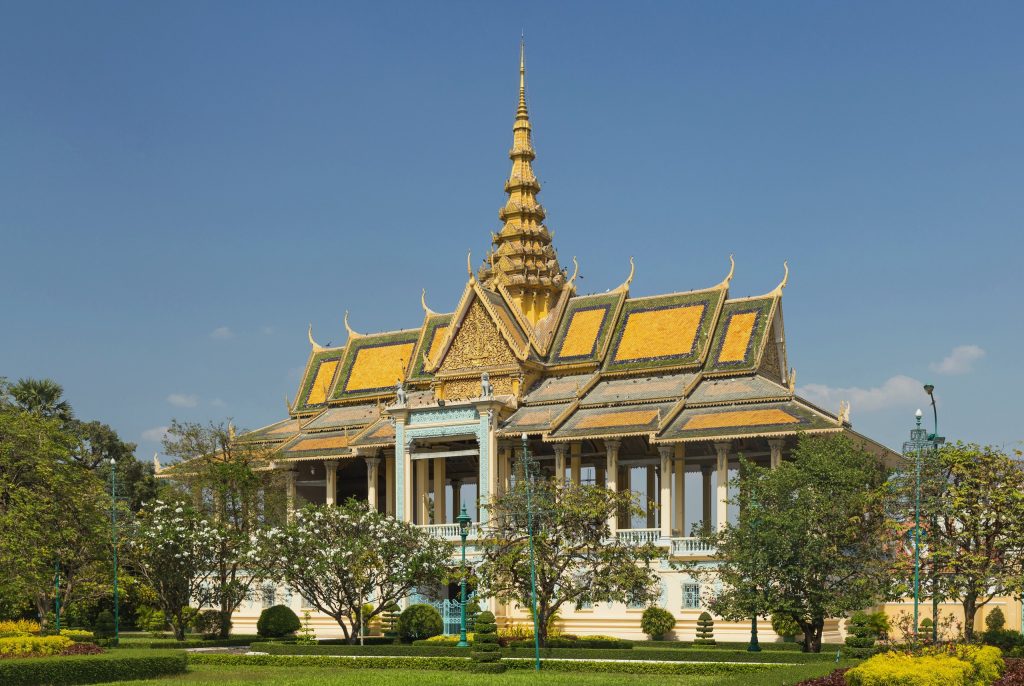
Francophone Summit Opens in Cambodia as Rwanda–DR Congo Rift Threatens to Split the French-Speaking World
The Francophone summit opened in Cambodia on Sunday, 15 November 2026, with the leaders of French-speaking nations gathering in Phnom Penh under a cloud: a bitter fight between the Democratic Republic of Congo and Rwanda over who should lead the organisation threatens to split it apart.
The 20th Francophonie Summit brings together leaders from the 90 states and governments of the International Organisation of La Francophonie, known as the OIF. It is the first time Cambodia has ever hosted the gathering. The leaders’ summit runs on Sunday and Monday, after a meeting of foreign ministers on Saturday, and its slogan is “Reinvest in Peace for Shared Prosperity and Lasting Stability.”
But the talk of peace and shared prosperity is shadowed by two disputes. One is inside the organisation itself, over its next leader. The other is on Cambodia’s own border, where the prime minister used his opening speech to accuse Thailand of occupying Cambodian land.
What happened in Phnom Penh
King Norodom Sihamoni presided over the opening ceremony on Sunday, alongside Prime Minister Hun Manet, French President Emmanuel Macron and OIF Secretary-General Louise Mushikiwabo.
About 20 heads of state and government were expected to attend, including Canadian Prime Minister Mark Carney, Vietnamese President To Lam, Rwandan President Paul Kagame and the Democratic Republic of Congo’s President Felix Tshisekedi.
Macron, who chaired the last summit when France hosted it in 2024, formally handed the summit’s rotating presidency to Cambodia. He arrived in Phnom Penh on Saturday for a three-day state visit, the first by a French president to Cambodia since Francois Mitterrand in 1993.
The summit is a big moment for Cambodia. The country was part of French Indochina until it gained independence in 1953, and it became a full member of the Francophonie in 1993. Yet only 0.16 percent of its population speaks French today, according to the OIF — a reminder that the organisation is about history and diplomacy as much as language.
The gathering was originally planned for Siem Reap, beside the famous Angkor temples. In February 2026 the government moved it to the capital, Phnom Penh, for logistical and operational reasons. Macron is still due to visit Angkor on Monday with King Sihamoni, to mark the completion of a French-supported restoration of the West Mebon temple, before leaving for a two-day visit to Malaysia.
A leadership fight that could split the group
The most serious business of the summit comes on Monday, when leaders will choose the organisation’s next secretary-general for a four-year term starting in 2027.
Rwanda’s Louise Mushikiwabo, who has led the OIF since 2018, is seeking a third term. The Democratic Republic of Congo, the organisation’s biggest African member, is firmly against her. It has threatened to leave the OIF altogether if she is re-elected.
The row is rooted in the war in eastern Congo. The DRC accuses Rwanda of backing the M23 armed group, one of about 100 armed groups fighting for control of the mineral-rich region along the two countries’ border. Congo, the United States and United Nations experts say Rwanda backs M23. Rwanda denies the allegations.
The DRC is the most populous country in the world where French is an official language. It has more than 110 million people — roughly 40 million more than France itself. Its exit would be a heavy blow to the organisation, which has already lost Mali, Niger and Burkina Faso. Those three countries announced their withdrawals in March 2025, after being suspended over military coups.
Macron has been working behind the scenes to find a compromise. His office said most members agreed on the need for consensus, and that he would take the matter up with his African counterparts. Rwanda has said Macron asked President Kagame to withdraw Mushikiwabo’s candidacy, and that Kigali refused. France is the OIF’s biggest contributor, providing the largest share of its 2026 budget of 71.7 million euros, about 79 million dollars.
On Saturday, the DRC withdrew its own candidate, Juliana Lumumba — the daughter of Congo’s independence hero Patrice Lumumba — and threw its support behind a rival, Romanian former Prime Minister Dacian Ciolos, to allow what it called “consensus around a unifying candidacy”.
The candidates for the top job
Here is where the contest stands ahead of Monday’s vote:
- Louise Mushikiwabo (Rwanda): The current secretary-general, in the job since 2018. She is seeking a third four-year term. Rwanda is standing firmly behind her, and its foreign minister has said she will not withdraw.
- Dacian Ciolos (Romania): A former prime minister of Romania. He is now backed by the DRC, which withdrew its own candidate to support him as a consensus choice. He is the candidate of those who want a change of leadership without a direct Rwanda–Congo showdown.
- Coumba Ba (Mauritania): A politician and doctor, and a former minister. She remains in the race as a third option.
The vote matters because the secretary-general runs the organisation day to day, sets its priorities and speaks for the French-speaking world on the global stage. A disputed election — or the loss of its largest African member — would weaken the OIF at a time when it is already smaller than it was two years ago.
Cambodia’s moment — and its border row with Thailand
Prime Minister Hun Manet used his opening remarks to put Cambodia’s border dispute with Thailand firmly on the agenda — even though Thailand had warned Cambodia against raising it, saying it could damage efforts to rebuild trust between the two neighbours.
“Cambodia did not fire the first shot,” Hun Manet said, referring to two rounds of deadly border clashes in 2025, for which each country blames the other. “Several parts of Cambodian sovereign territory are still occupied by Thai troops.”
He said about 20,000 Cambodians remain unable to return to their homes, and he called for existing agreements to be honoured and for joint border demarcation work to resume. Bangkok says the border areas its forces have held since a ceasefire last December are either frozen front lines or Thai territory. Phnom Penh says they are Cambodian sovereign territory.
Thailand is an observer at the OIF, a status it has held since 2008, and it sent observers to the summit. A Cambodian foreign ministry spokesperson, Chann Rotana, told reporters on Sunday that the Thai observers at Saturday’s meeting of foreign ministers had registered to speak but did not take the floor when invited. “It is their right,” he said. He dismissed Thailand’s objections to Cambodia raising the dispute as “their old routine”.
Hun Manet also used the opening to propose a three-part agenda for the organisation, which he summed up as “prevent, prepare and prosper”. It includes a Francophone network to mediate conflicts before they turn violent, a programme to train young people in artificial intelligence, and closer business ties between Francophone countries and ASEAN, the Association of Southeast Asian Nations.
Macron’s first visit in 33 years
For Emmanuel Macron, the summit is part of a wider diplomatic trip — and it comes at a difficult moment at home. He arrived in Cambodia as France faces weeks of mass protests over living costs, public services and education, with more than 100,000 people rallying across the country on Saturday.
In his opening remarks, Macron said the organisation must play a political role in a world facing many crises. “Our common language calls on us to engage in dialogue and mediation,” he said. “It gives us the words and tools to ensure that the rule of law prevails over the use of force.”
He also called for consensus to “preserve our unity”. “We can be different without being divided,” he said. “We can defend our identities without setting ourselves against one another.”
Macron’s visit is the first state visit by a French president to Cambodia in 33 years. During the trip he is holding talks with King Sihamoni and Prime Minister Hun Manet, and agreements are expected on defence, investment, the economy and cultural heritage. His attendance at the summit underlines how much France still matters to the Francophonie: it is the organisation’s biggest financial contributor and the country where the French language is most closely tied to national identity.
Human rights in the spotlight
The summit has also put Cambodia’s human rights record under the spotlight. Activists see the gathering as a chance to press the government, and the United Nations special rapporteur on human rights in Cambodia, Tom Andrews, urged delegates to press for the release of detained activists.
“No one should be detained for defending human rights, reporting on matters of public concern, or voicing critical opinions,” Andrews said. He has urged the government to release more than 100 people he believes are likely imprisoned for exercising their freedoms of expression, assembly and association. Cambodian activists petitioned the French and Canadian embassies ahead of the summit, asking them to press the government on rights and to intervene in the border dispute.
Cambodia is widely described as a de facto one-party state, and the summit’s slogan about peace and shared prosperity sits uneasily with the concerns raised by rights groups. How far leaders raise those concerns in public during the summit remains to be seen.
What is the Francophonie, and why does it matter?
The International Organisation of La Francophonie is a loose confederation of 90 states and governments where French is spoken or widely used. It has 53 full members, five associate members and 32 observers.
The group works on diplomacy, peace, democracy, human rights, education, culture and economic cooperation. Its members set long-term priorities at summits like this one, elect its leadership and adopt declarations on the issues of the day.
French is spoken by hundreds of millions of people around the world, and the largest French-speaking populations are now in Africa, not in France. The DRC alone has more than 110 million people. That is why the fight over the leadership — and the threat of the DRC walking out — matters so much to the organisation’s future.
The Francophonie also matters because it is one of the few international clubs where African, European, Asian and North American countries sit together as equals. Canada, Vietnam, Senegal, Belgium, Switzerland, Lebanon and many others are all members. When it works, it gives smaller countries a voice in global debates. When it splits, that voice gets weaker.
What happens next
Monday is the decisive day. Leaders will elect the organisation’s secretary-general for a four-year term starting in 2027, and decide on the admission of new members. They are also expected to adopt a Phnom Penh Declaration, along with resolutions on peaceful coexistence, economic and cultural cooperation, resolving crises and protecting cultural heritage.
Three outcomes are possible. The first is a compromise: leaders agree on a consensus candidate, most likely Ciolos, and the DRC stays. The second is Mushikiwabo’s re-election, which would test the DRC’s threat to leave. The third is a messy, divided vote that leaves the organisation weaker whichever way it goes.
Macron leaves for Malaysia on Monday after visiting Angkor with King Sihamoni. Hun Manet will be hoping the summit is remembered as Cambodia’s proud debut as a host. But the headlines on Monday are more likely to be about who leads the Francophonie — and whether its biggest African member is still in it by the end of the day.
Frequently asked questions
What is the Francophonie Summit?
It is the meeting of the leaders of the International Organisation of La Francophonie (OIF), a group of 90 states and governments where French is spoken or widely used. The 20th summit is being held in Phnom Penh, Cambodia, on 15 and 16 November 2026.
Why is the Democratic Republic of Congo threatening to leave?
The DRC opposes a third term for the current secretary-general, Louise Mushikiwabo of Rwanda. It accuses Rwanda of backing the M23 armed group in eastern Congo, a charge Rwanda denies. The DRC says it will quit the organisation if she is re-elected on Monday.
Who are the candidates to lead the Francophonie?
Three candidates remain in the race: Louise Mushikiwabo of Rwanda, the current secretary-general since 2018; Dacian Ciolos, a former prime minister of Romania, now backed by the DRC; and Coumba Ba of Mauritania. The DRC withdrew its own candidate, Juliana Lumumba, on Saturday.
Why is Cambodia hosting the summit?
Cambodia is a full member of the Francophonie and is hosting the summit for the first time. It was part of French Indochina until independence in 1953. Only 0.16 percent of its population speaks French, according to the OIF.
What did Cambodia’s prime minister say about Thailand?
Prime Minister Hun Manet said Thai troops still occupy parts of Cambodian territory after deadly border clashes in 2025, and that about 20,000 Cambodians cannot return home. Thailand says the areas its forces hold are frozen front lines or Thai territory.
Conclusion
The Francophonie Summit in Phnom Penh was meant to be a celebration of peace, shared prosperity and lasting stability. Instead, it has become a test of whether the French-speaking world can hold together.
The leadership election on Monday will decide more than who runs the organisation. It will show whether the DRC, the most populous French-speaking country on earth, stays inside it — and whether the Francophonie can still act as a bridge between continents, or becomes another club divided by the conflicts of its members.
For Cambodia, the summit is a moment in the spotlight it has waited years for. For the Francophonie, it may be remembered as the summit where its future was decided.
Sources
- Al Jazeera — Francophone summit opens in Cambodia amid Rwanda-DR Congo rift, 15 November 2026
- CamboJA News — Hun Manet Opens Francophonie Summit by Accusing Thailand of Occupying Cambodian Land, 15 November 2026
- Economic Times — A bitter African feud, a leadership battle and Macron’s diplomatic tightrope in Cambodia, 14 November 2026
- Punch — DR Congo, Rwanda clash over Francophone top job, 14 November 2026
- Modern Ghana — France’s Macron to pay state visit to Cambodia during Francophonie summit, 12 November 2026
This article is for general information and education only. It is not legal or financial advice.

Pingback: Five EU Countries Plan a Rwanda Deportation Hub for Rejected Asylum Seekers - Findivoza