
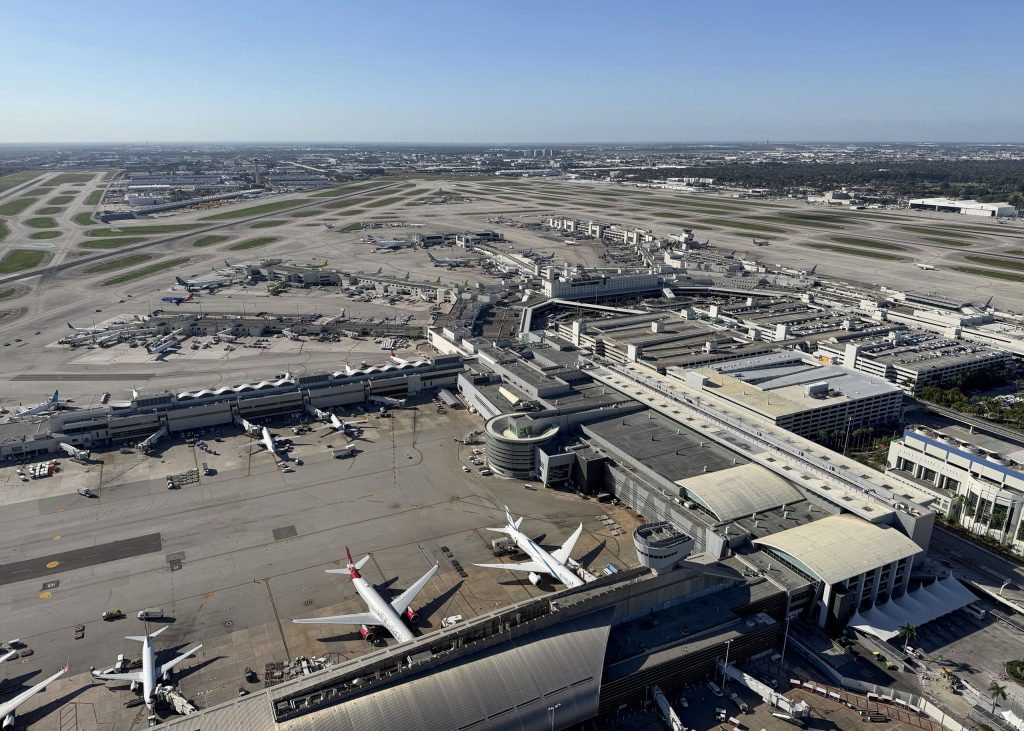
Two Planes Collide on the Ground at Miami Airport, Two Injured — a Day After America’s Longest Flight Shutdown Since 9/11
Two planes collided on the ground at Miami International Airport on Saturday night, leaving two passengers with minor injuries. The accident happened at one of the busiest airports in the United States — and it came just one day after a nationwide flight shutdown that had already thrown American air travel into chaos.
The collision involved a Copa Airlines passenger jet carrying 166 people and a UPS cargo plane. Nobody was seriously hurt, and the airport kept running. But air traffic control recordings from the moments after the crash, in which one pilot can be heard saying “Somebody hit us”, show how quickly a routine taxi to the gate can go wrong.
Here is what happened, why it happened, and what it tells us about a very bad weekend for flying in America.
What happened on the taxiway at Miami airport
The collision happened at around 9:15 pm local time on Saturday, 14 November 2026, at Miami International Airport in Florida.
A Copa Airlines Boeing 737 had just landed after a flight from Panama City. It was carrying 166 passengers and six crew members, and it was taxiing — moving slowly along the airport’s taxiways — towards its gate.
At the same time, a UPS Boeing 767 cargo plane was taxiing in the opposite direction, preparing to take off for Bogota, Colombia.
The two aircraft met at the intersection of two taxiways. The tip of the Copa jet’s left wing struck the nose of the UPS cargo plane.
Two passengers on the Copa flight were injured. Airport paramedics treated them at the scene, and neither needed to go to hospital. Everyone else on board was unhurt. Copa Airlines said all passengers had left the aircraft safely and returned to the terminal, and that the remaining passengers and all six crew members were in good condition.
The airport said its overall operations were not affected. Flights were redirected to other taxiways while the two damaged aircraft were moved.
The Federal Aviation Administration (FAA), the US aviation regulator, has opened an investigation into the collision.
“Somebody hit us”: what the radio recordings reveal
The most striking detail of the incident comes from the air traffic control audio recorded in the moments after the two planes touched.
The pilot of the Copa Airlines flight radioed the control tower to report what had happened.
“Somebody hit us,” the pilot said.
The controller then asked the crew of the UPS plane whether they had made contact with the other aircraft.
“Yeah, we went too far, and then he, he clipped us with the wing,” the UPS pilot replied, according to the recordings reported by US media.
A little later, the Copa pilot reported the damage to his own aircraft: “It seems that we are missing the left wingtip.”
The FAA said air traffic controllers had instructed the UPS crew to give way to the Copa Airlines aircraft before the collision. That instruction is now likely to be at the centre of the investigation: why did the cargo plane keep moving into the path of the passenger jet?
Copa Airlines said in a statement that the safety of passengers and crews was its priority, that it regretted the inconvenience and concern the incident had caused, and that it will cooperate with the authorities in the investigation.
What the passengers felt inside the cabin
For the people on board the Copa flight, the collision came without warning.
One passenger, Cesar Ferreira, told CNN what it felt like inside the cabin. The plane had landed normally and was taxiing towards the terminal at a normal speed, he said.
Then, all of a sudden, he heard the chatter around him getting louder, followed by a collective scream — and then the impact of another aircraft hitting their plane.
“Inside the cabin, we felt the plane jerk abruptly sideways,” Ferreira said.
He added that some passengers started to panic, but the Copa crew reacted quickly and got everyone to remain seated.
The two injured passengers received attention from airport paramedics. Miami-Dade aviation officials confirmed that both were treated at the scene for minor injuries and did not require transport to hospital.
Why it matters: the worst weekend in US aviation in years
The Miami collision did not happen in isolation. It came at the end of one of the worst weekends for American air travel in more than two decades.
Just one day earlier, on Friday, the FAA had ordered a nationwide ground stop — an order that kept planes on the ground across the whole country. The shutdown lasted nearly five hours and was described as the longest nationwide flight suspension since the September 2001 terrorist attacks.
The ground stop was caused by a technical failure. A router being installed by an FAA contractor, L3Harris, at a remote facility began generating more than 1,000 connection attempts every four to five seconds. The faulty router disrupted the radio frequencies and radar information that air traffic controllers use to communicate with pilots.
The work was part of a project to replace older copper telephone connections with fibre-optic cables. US Transportation Secretary Sean Duffy said investigators had not yet established whether the problem was caused by an installation error or by faulty equipment. Federal authorities initially examined the possibility of a cyberattack, but later said there was no evidence that a cyberattack had caused the disruption.
The FAA said the ground stop was imposed as a safety precaution because the communications problems had affected the stability of air traffic control systems.
The scale of the disruption was enormous. More than 20,000 flights were disrupted from Friday onwards. On Friday alone, about 9,200 flights were cancelled and another 7,500 were delayed. By 6:45 pm Eastern Time on Saturday, more than 6,150 further flights had been cancelled and over 7,300 delayed. More than 530 Sunday flights had already been cancelled by Saturday evening.
FAA Administrator Bryan Bedford said on Saturday that airlines expected to return to normal flight schedules by the end of business on Sunday, but warned that airlines faced the huge task of moving aircraft and crews back into position after the shutdown.
In other words, when the two planes collided at Miami on Saturday night, the airport — like every other major airport in the country — was already dealing with delayed flights, stranded passengers and crews in the wrong places. The investigation will establish exactly what happened on the taxiway.
Miami’s second major incident in two months
The collision was also the second major incident at Miami International Airport in about two months.
In September, an Amazon cargo plane ran off the end of a runway at the same airport, killing five people and injuring five others. The aircraft, a Boeing 767, overran the runway at around 2 pm on 6 September after arriving from San Juan, Puerto Rico. It tore through a perimeter fence and slammed into two vehicles before catching fire.
Flight data released by investigators suggested that the plane had tried to abort its landing before the crash.
Saturday’s collision was far less serious — two minor injuries and two damaged aircraft, rather than deaths and a fire. But two major incidents at the same airport within two months will raise questions about safety at one of America’s busiest international gateways.
Miami International Airport is a major hub for flights between the United States and Latin America and the Caribbean. Copa Airlines, based in Panama, and UPS, one of the world’s biggest cargo carriers, are both regular users of the airport.
How do taxiway collisions happen?
Collisions between aircraft on the ground are rare, but they are not unknown. They are usually called ground collisions or taxiway collisions, and they happen when two aircraft — or an aircraft and a vehicle — end up in the same place at the same time on the ground.
Airports are divided into runways, where planes take off and land, and taxiways, the roads that planes use to move between the runway and the terminal. At a large airport, dozens of aircraft can be moving on the taxiways at once, and air traffic controllers on the ground give each one instructions about where to go and when to stop.
A collision can happen when a pilot misunderstands an instruction, when a plane moves further than it was told to, or when a controller’s instructions are unclear. Low visibility, tiredness, and busy periods can all increase the risk.
In Saturday’s case, the key facts are already clear from the radio recordings and the FAA’s early statement: the UPS crew had been told to give way to the Copa flight, but the cargo plane went too far along the taxiway and the Copa jet’s wingtip clipped it. The full investigation will establish exactly how that happened and whether anyone’s instructions were misunderstood.
Damage in this kind of collision is often limited to the aircraft involved. A wingtip striking another plane’s nose can damage both, but at taxiing speeds — usually no more than about 20 to 30 miles per hour — the impact is far less violent than a crash in the air or on a runway. That is one reason why Saturday’s injuries were minor.
Even so, both aircraft will need to be inspected and repaired before they can fly again, and the pilots and controllers involved will be interviewed as part of the FAA’s investigation.
What happens next
The FAA investigation into the Miami collision is now under way. Investigators will listen to the full air traffic control recordings, look at the airport’s ground radar records, and interview the pilots and controllers involved. They will also examine the damage to both aircraft.
The investigation is likely to take weeks or months. The FAA will publish its findings when the work is complete, and it may recommend changes to procedures at Miami airport or elsewhere.
Meanwhile, US air travel is still recovering from the weekend’s chaos. Airlines have been working to reposition aircraft and crews, and passengers whose flights were cancelled are being rebooked. The FAA has said it expects normal schedules to return, but the knock-on effects of a nationwide shutdown can last for days.
For passengers, the lesson of the weekend is a simple one: even in a system built around safety, a single faulty piece of equipment — or a single wrong move on a taxiway — can bring the world’s biggest aviation network to a standstill.
Frequently asked questions
What happened at Miami airport on Saturday?
A Copa Airlines Boeing 737 arriving from Panama City collided with a UPS Boeing 767 cargo plane while both were taxiing at Miami International Airport at around 9:15 pm local time on Saturday, 14 November 2026. The Copa jet’s left wingtip struck the nose of the UPS plane.
Was anyone hurt?
Two passengers on the Copa flight suffered minor injuries. They were treated by airport paramedics at the scene and did not need to go to hospital. All other passengers and crew were unhurt.
How many people were on the Copa flight?
The Copa Airlines Boeing 737 was carrying 166 passengers and six crew members. The UPS cargo plane was preparing to depart for Bogota, Colombia.
What caused the collision?
The FAA has opened an investigation and has not yet published its findings. It said air traffic controllers had instructed the UPS crew to give way to the Copa aircraft. In radio recordings after the collision, the UPS pilot said the cargo plane had gone too far along the taxiway.
What was the nationwide flight shutdown the day before?
On Friday, the FAA ordered a nationwide ground stop lasting nearly five hours after a faulty router disrupted air traffic control communications. It was described as the longest nationwide flight suspension since the September 2001 terrorist attacks. More than 20,000 flights were disrupted from Friday onwards.
Has this happened at Miami airport before?
Yes. In September 2026, an Amazon cargo plane ran off a runway at Miami International Airport, killing five people and injuring five others after it struck two vehicles and caught fire.
Conclusion
Saturday night’s collision at Miami International Airport was, by the standards of aviation accidents, a lucky escape: two minor injuries, two damaged aircraft, and an airport that kept operating. But the words caught on the radio — “Somebody hit us” — and the admission from the UPS pilot that his plane had gone too far, show how close a routine evening at a busy airport came to something worse.
The collision also came at the worst possible moment, a day after a single faulty router shut down flights across the entire United States. Together, the two events made for one of the most difficult weekends in American aviation in years — and a reminder that safety in the air depends on everything working properly on the ground too.
The FAA investigation will now establish exactly what went wrong on that Miami taxiway. Until it reports, the airport, the airlines and the travelling public will be waiting for answers.
Sources
This article is for general information and education only. It is not legal or financial advice.
