
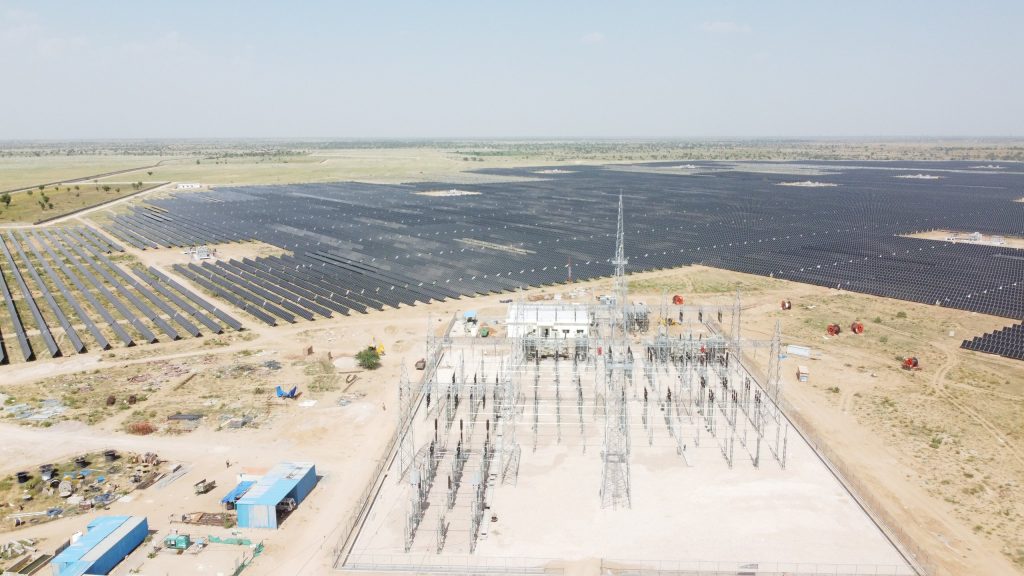
Amazon to Invest $7 Billion in Renewable Energy in India by 2030
Amazon has announced plans to invest $7 billion in renewable energy projects in India by 2030, in one of the largest clean-energy commitments ever made by a single company in the country. The money will go into wind and solar power, adding to $4 billion the company has already committed to renewable projects in India.
The announcement, made on Tuesday, 17 November 2026, comes with four new wind and solar projects and a new global climate goal for the company. Together, Amazon’s planned and already-contracted renewable energy investments in India now add up to $11 billion.
What Amazon announced
Amazon said it plans to invest $7 billion — about Rs 65,393 crore — in renewable energy projects in India by 2030. The investment is on top of $4 billion the company has already contracted in renewable energy projects in the country.
That makes Amazon one of India’s leading corporate buyers of carbon-free energy, according to the company. In simple terms, Amazon is now one of the biggest private customers for clean electricity in India.
The company also announced four new utility-scale wind and solar projects with a combined capacity of 934 megawatts (MW). A megawatt is a unit of power: a single MW of generating capacity can supply hundreds of homes. These four projects are secured through power purchase agreements, which are long-term contracts to buy the electricity a wind or solar plant produces. They form part of the $4 billion Amazon has already contracted, not the new $7 billion.
The four new projects
The four new projects are spread across three Indian states:
- A 234 MW wind farm in Karnataka. This is Amazon’s largest wind project contracted in Asia to date. It will be the biggest wind farm the company has ever signed up for anywhere in Asia.
- A 200 MW combined solar and wind project, also in Karnataka. This project pairs solar panels and wind turbines at the same site, so it can produce power in different weather conditions.
- A 300 MW solar project in Madhya Pradesh. This is the largest of the four new projects by capacity.
- A 200 MW solar project in Rajasthan. Rajasthan is one of India’s sunniest states and home to the Bhadla Solar Park, one of the largest solar parks in the world.
Karnataka takes two of the four projects, including the record wind farm. Together, the four projects add 934 MW of new clean power capacity.
What the numbers add up to
Once all of its projects are running, Amazon says its renewable energy portfolio in India will have a combined capacity of more than 2 gigawatts (GW). One gigawatt equals 1,000 megawatts. That is enough to generate electricity equal to the annual needs of more than 3.5 million Indian households.
Amazon’s renewable energy portfolio in India now includes 57 projects in total. Of these, 14 are utility-scale wind and solar projects — large plants that feed electricity into the grid for everyone to use. The other 43 are on-site solar installations at Amazon’s own facilities across India, such as warehouses and offices, which help power its own operations.
India’s Union Minister for New and Renewable Energy, Pralhad Joshi, welcomed the investment in a statement carried in Amazon’s announcement.
Amazon’s new climate goal
The India investment also feeds into a new global goal Amazon announced on the same day: to reduce the carbon intensity of the electricity powering its operations by 65% by 2030.
Carbon intensity is a measure of how much carbon dioxide is released for each unit of electricity used. Cutting it by 65% means the electricity Amazon uses would produce far less carbon pollution per unit than it did in 2019, the year Amazon uses as its starting point for comparison.
It is worth understanding what this goal does and does not promise. Because it is measured per unit of electricity, the goal can be met even while Amazon’s total electricity use keeps growing — for example, as it builds more data centres and warehouses. The company has not published its 2019 starting figure or its current reading, so the distance left to reach the goal cannot be measured from the announcements alone.
Amazon said it based the goal and the way it measures it on the International Energy Agency’s Net Zero by 2050 pathway, and that academics reviewed the method.
Why India, and why now
Amazon’s announcement lands at a moment when India’s clean energy sector is growing faster than almost anywhere else in the world.
India crossed 300 GW of non-fossil fuel power capacity on 31 July 2026, according to the Ministry of New and Renewable Energy. Non-fossil capacity includes solar, wind, hydro, bio-power and nuclear — every source that does not burn coal, oil or gas. The total of 300.50 GW breaks down into 164.59 GW of solar, 58.14 GW of wind, 57.24 GW of hydro, 11.75 GW of bio-power and 8.78 GW of nuclear power.
That is more than 60% of India’s target of 500 GW of non-fossil capacity by 2030, a goal the country set at the COP26 climate summit in Glasgow in 2021. Non-fossil sources now make up more than 54% of India’s total installed electricity capacity of around 552 GW. India reached the halfway mark — half of all installed power capacity from non-fossil sources — on 30 June 2025, five years ahead of the schedule in its climate pledge.
The growth has been fastest in solar power. India had just 2.8 GW of solar capacity in 2014. Today it has nearly 165 GW. Wind power has grown from 21 GW in 2014 to more than 58 GW. In the financial year 2025–26 alone, India added a record 55.29 GW of non-fossil capacity, including 44.6 GW of solar and 6 GW of wind. India now ranks third in the world for installed renewable energy capacity, according to the International Renewable Energy Agency’s 2026 statistics.
That scale is exactly why big companies are investing. India still needs about 200 GW more non-fossil capacity to reach its 500 GW goal by 2030, and the government has been encouraging private companies to help build it. For Amazon, which runs a large network of warehouses, offices and data centres in India, buying clean power is both a business decision and a climate decision: electricity is one of its biggest operating costs, and renewable power in India has become cheap enough to compete with coal.
The announcement also comes as the world’s governments are meeting at COP31 in Antalya, where countries are arguing over how fast to move away from fossil fuels. Corporate investments like Amazon’s are one of the ways the shift is actually happening on the ground, even while the negotiations continue. Our report on the talks explains the divide — COP31 Enters Its Final Week: UN Climate Chief Warns Against Delays as Fossil Fuel Divide Deepens.
What is still unclear
For all its size, the announcement leaves several questions unanswered. Amazon did not give a breakdown of how the $7 billion will be spent, did not identify the projects it intends to develop under the new commitment, and did not set out a timeline for deploying the money beyond the 2030 target. It also did not say how much of the $7 billion it will spend directly and how much will take the form of power purchase agreements with other developers.
That matters because an investment promise and money actually spent are two different things. The four new projects announced on Tuesday are part of the older $4 billion commitment, not the new $7 billion. The real test will be whether new projects tied to the $7 billion start appearing in the next year or two.
There is also a wider question about India’s energy mix. Even as solar and wind capacity grows quickly, coal still supplies most of India’s electricity. In the financial year 2025–26, non-fossil sources produced less than a third of the country’s electricity, even though they made up more than half of its installed capacity. That is because the sun does not always shine and the wind does not always blow, while coal plants run around the clock. Storage — big batteries that save solar power for the night — and stronger power grids are the missing pieces. Pakistan, India’s neighbour, has been making the same point at COP31, asking for funding for batteries to support its own household solar boom — Pakistan Asks COP31 to Fund Batteries for Its Household Solar Revolution.
What happens next
The four new projects will now move through construction and connection to the grid. Amazon has not given dates for when each one will start producing power.
The bigger question is what the $7 billion turns into. If Amazon follows through, it would make the company one of the largest private funders of clean energy in India, and a major buyer in a market where demand for renewable power is rising fast. India’s coal sector is also changing at the same time — its biggest coal producer is preparing a major stock market listing, as we reported in Mahanadi Coalfields IPO: Coal India’s Biggest Coal Producer Seeks a $9.6 Billion Valuation.
For Indian households, the direct effect is indirect but real. Every gigawatt of clean power added to the grid helps keep electricity supply growing as demand rises, and corporate buyers like Amazon help pay for the wind farms and solar parks that supply it. The 3.5 million households Amazon’s portfolio could power is a measure of scale, not a promise that those homes will get cheaper bills — but in a country adding tens of millions of new electricity users, every new source of power counts.
Frequently asked questions
How much is Amazon investing in renewable energy in India?
Amazon plans to invest $7 billion in renewable energy projects in India by 2030, on top of $4 billion it has already contracted. Together, its planned and contracted investments add up to $11 billion.
What are the four new projects Amazon announced?
A 234 MW wind farm in Karnataka, a 200 MW combined solar and wind project in Karnataka, a 300 MW solar project in Madhya Pradesh, and a 200 MW solar project in Rajasthan. Together they add 934 MW of capacity.
How much clean power will Amazon have in India?
Once all its projects are running, Amazon’s renewable energy portfolio in India will exceed 2 GW — enough to generate electricity equal to the annual needs of more than 3.5 million Indian households.
How many renewable energy projects does Amazon have in India?
Amazon’s portfolio in India includes 57 projects: 14 utility-scale wind and solar projects and 43 on-site solar installations at its own facilities.
What is Amazon’s new climate goal?
Amazon aims to reduce the carbon intensity of the electricity powering its operations by 65% by 2030, compared with a 2019 baseline. Carbon intensity measures the carbon dioxide released per unit of electricity used.
How much renewable energy capacity does India have?
India crossed 300.5 GW of non-fossil fuel capacity on 31 July 2026, including 164.59 GW of solar and 58.14 GW of wind. The country aims for 500 GW of non-fossil capacity by 2030.
Conclusion
Amazon’s $7 billion renewable energy pledge is one of the biggest corporate clean-energy commitments India has seen. On top of $4 billion already contracted, it would take the company’s total to $11 billion, with four new wind and solar projects already announced and a portfolio that will pass 2 GW when complete.
The announcement fits a wider story: India’s solar capacity has grown from 2.8 GW in 2014 to nearly 165 GW today, and the country has already passed 60% of its 500 GW non-fossil target for 2030. Big companies are now part of that build-out, buying the power their warehouses, offices and data centres need from the sun and the wind instead of from coal.
But the promise still needs to be turned into power plants. Amazon has not said which projects the $7 billion will fund, or when the money will be spent. Until those projects are named and built, the $7 billion is a plan, not a result. The next year will show whether it becomes one of the largest private clean-energy build-outs in Indian history — or just another big number in a press release.
Sources
- Amazon (About Amazon India) — “Amazon to invest US$7 billion in renewable energy in India”
- Amazon (About Amazon) — “Amazon to invest $7 billion in renewable energy in India by 2030”
- Rediff / PTI — “Amazon’s $7 Billion Renewable Energy Investment in India by 2030: New Wind & Solar Projects”
- The Telegraph India — “Amazon commits another USD 7 billion to India’s renewable energy push by 2030”
- ETV Bharat — “Amazon Accelerates Renewable Energy Push In India With USD 7 billion Investment, Sets New Global Climate Target”
- The Economic Times — “India achieves 300 GW renewable energy capacity, 60% of 500 GW target by 2030”
This article is for general information and education only. It is not legal or financial advice.
