
Pakistani Man Gets 27 Years in US Prison for Plot to Kill Trump
A Pakistani businessman has been sentenced to more than 27 years in a United States prison for plotting to kill Donald Trump and other American political leaders on behalf of Iran.
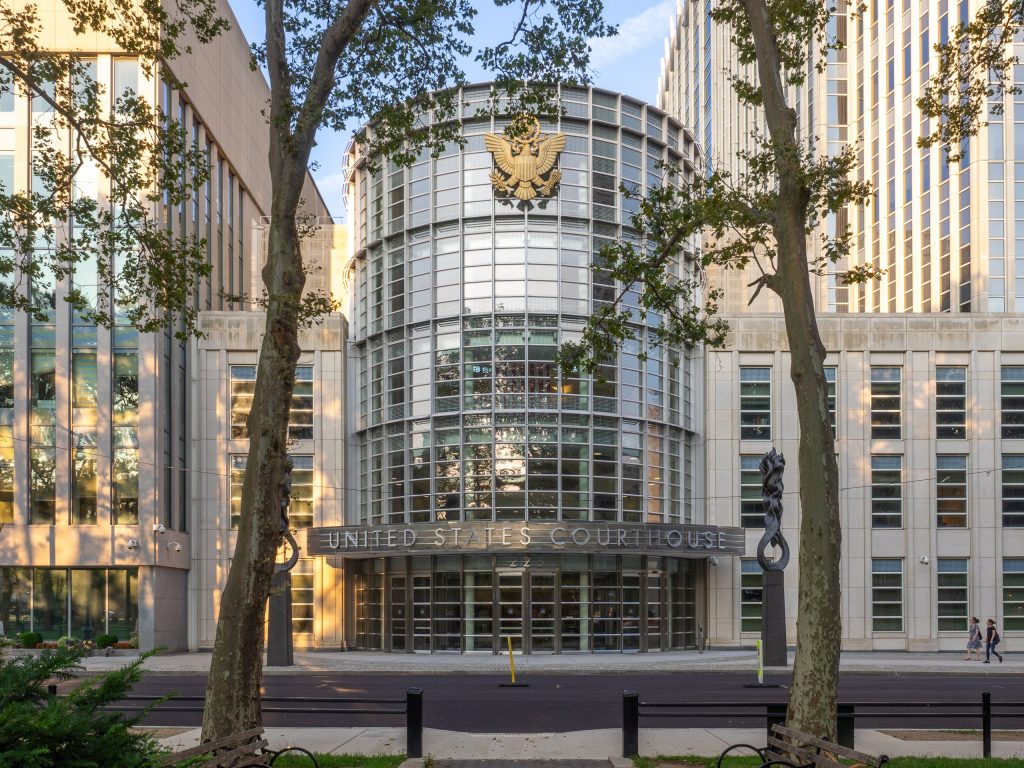
Asif Merchant, 48, was sentenced on Tuesday, 17 November 2026, in a federal court in Brooklyn, New York. The judge, Eric R. Komitee, gave him 330 months in prison — 27 and a half years — for trying to hire hitmen to murder a US politician.
Merchant had faced the possibility of life in prison. The judge called it an exceptionally serious crime, saying: “Not many charges … are more serious than the contemplated, targeted killing of a U.S. president or other senior government official.”
It was stopped before anyone was hurt — because the “hitmen” Merchant thought he had hired were actually undercover FBI agents.
What happened in court
Merchant was convicted by a federal jury in March 2026 on two charges: attempting to commit an act of terrorism that crosses national borders, and murder for hire.
At his sentencing on Tuesday, Merchant declined to speak. He sat in his chair and showed no visible reaction as the sentence was read out, according to reporters in the courtroom.
His lawyer, Avraham Moskowitz, said afterwards that Merchant plans to appeal, but was grateful the judge had rejected the prosecution’s request for a life sentence.
“I think what it shows is that our judiciary remains independent, thankfully,” Moskowitz said.
US Attorney General Todd Blanche said in a statement that Merchant was “justly sentenced”. The Justice Department said it “will not tolerate foreign terrorist plots against our leaders”.
Who is Asif Merchant?
Merchant is a Pakistani national who worked for Pakistani banks for decades before moving into business. His ventures ranged from car sales to banana exports, and he travelled to the United States regularly for work and to visit relatives.
He also travelled to Iran for Shia Muslim religious pilgrimages and to visit family there. It was during those trips, prosecutors say, that he was drawn into the world of Iranian intelligence.
According to the US Justice Department, Merchant was recruited by Iran’s Islamic Revolutionary Guard Corps (IRGC) in about 2022. The IRGC is Iran’s powerful paramilitary force, which the United States lists as a terrorist organisation.
Merchant met his IRGC handler, Yousef Merhardad, about 15 times over a year and a half in Tehran. During those meetings, the handler trained him in counterintelligence — the skills used to avoid being caught by spies and police — and gave him his mission: travel to the United States and arrange the assassination of American government officials.
The Justice Department says Merchant joined the IRGC voluntarily and became a trained intelligence asset. Merchant himself told a different story at his trial, saying he was pressured into it and acted to protect his family.
How the plot worked
In about April 2024, Merchant flew to the United States, just after spending a week in Iran. His instructions were clear: find criminals or Mafia members willing to kill for money, and have the killing carried out at a political rally.
Once in America, Merchant contacted an acquaintance and asked for help with his plan. Instead of helping, the acquaintance reported him to the FBI and agreed to work as an informant.
In a video shown at the trial, Merchant used objects on a hotel napkin to show the informant how the murder of a politician at a rally would work. It was that napkin demonstration that first tipped off the authorities.
Merchant then reached out to men he believed were professional killers. They were, in fact, undercover FBI agents. He met them three times and explained that he was working with people overseas and wanted to hire them to kill a politician.
He paid them $5,000 in cash as a first payment — money he had borrowed from a relative. Court documents say the plot also involved stealing documents from a target’s home and organising a protest as a distraction after the killing.
The FBI was watching the whole time. Merchant was arrested on 12 July 2024 in Richmond, Texas, as he was packing to fly back to Pakistan.
The timing was striking. His arrest came just one day before an unrelated attempt on Trump’s life in Butler, Pennsylvania, on 13 July 2024. The two events had nothing to do with each other, but the closeness of the dates underlined how tense the 2024 election campaign had become.
Who were the targets?
Merchant believed the main target of his plot was Donald Trump, who was then running for president. But he told investigators that other targets were possible too: then-President Joe Biden and Nikki Haley, the former US ambassador to the United Nations, who was running against Trump for the Republican nomination.
All three were presidential candidates at the time.
Evidence taken from Merchant’s laptop, mobile phones and social media accounts showed how focused he was on the 2024 election and on Trump. His internet searches included campaign rally locations, and he had used Google Maps to look up the location of a Trump rally in New Jersey. His social media accounts included posts praising Soleimani and attacking Trump and the United States.
Why Iran wanted revenge
The motive behind the plot, Merchant admitted, was revenge for the killing of Qasem Soleimani.
Soleimani was the commander of the IRGC’s Quds Force, Iran’s foreign operations arm. He was killed in a US drone strike in Baghdad in January 2020, during Trump’s first term as president.
“The IRGC sent Merchant to avenge the strike on their terrorist commander, Qasem Soleimani,” said M. Scott Proctor, a senior Justice Department official.
Iran has denied trying to kill US officials. The trial began in late February 2026, days before the start of the war between Iran and the United States, and Merchant was convicted in March. The Merchant case is a reminder of how those tensions can spill over into American cities.
The defence: “I was protecting my family”
Merchant’s defence was that he never really wanted to go through with the plot. His lawyers said he was acting under pressure from the Revolutionary Guard to protect relatives in Iran, and that he believed American authorities would stop the plan before anyone was harmed.
“My family was under threat, and I had to do this,” Merchant testified in March.
He told the jury he had figured US authorities would foil the plan, that he would cooperate, and that he might even get help with immigration as a reward.
His lawyer, Christopher Neff, told the court on Tuesday: “This plot was incompetent from the very beginning. Mr. Merchant’s participation was half-hearted.”
The defence also said Merchant had imagined intelligence work would be exciting and profitable when he first met the Revolutionary Guard operative, but that he feared for his relatives’ safety if he refused the powerful paramilitary force.
Prosecutors did not accept that version of events. They pointed out that Merchant had shared anti-American and anti-Trump posts on social media after Soleimani’s killing, and said his actions spoke louder than his excuses.
Assistant US Attorney Sarah Winik told the court that Merchant did “the most extreme thing you can do: Plot the assassination of a government official.”
The judge said he believed Merchant had some concern for his family — but also that he was “highly motivated to do harm to this country”.
What the sentence means
The 330-month sentence — 27 and a half years — means Merchant, who is 48, will be in his mid-70s by the time he is released, if he serves the full term.
The Justice Department presented the sentence as a warning to anyone else thinking of carrying out a foreign-backed attack in the United States.
“The stiff sentence Merchant has now received should stand as a stark warning — if you come to America on behalf of a foreign power to commit terrorist acts, we will find you and lock you away,” Proctor said.
Joseph Nocella Jr., the US Attorney for the Eastern District of New York, said: “Today’s sentence ensures that Asif Merchant never again has the opportunity to plan an evil attack on America.”
James C. Barnacle Jr., the head of the FBI’s New York office, called the sentencing “a victory of the FBI’s mission to secure the homeland” and said the case showed that “anyone who seeks to use violence or intimidation to silence dissent will face justice.”
Merchant’s lawyers say he will appeal. An appeal could take months or longer, and there is no guarantee it will succeed.
Why this matters for Pakistan
The case is uncomfortable for Pakistan. Merchant is a Pakistani citizen, and his plot was aimed at the president of the United States — a country that is one of Pakistan’s most important partners.
Pakistan’s government has said nothing about the sentencing so far. But the case is a reminder of how easily one person’s actions can affect a whole country’s reputation abroad.
It also raises difficult questions. How did a businessman with no criminal record become involved with a foreign intelligence service? How far did his family ties in Iran pull him in? And what, if anything, could have stopped him earlier?
For ordinary Pakistanis living and working in the United States, the case carries a different worry: that the actions of one man will be used to judge a whole community. Merchant’s story is his own — but headlines travel fast, and nuance often gets lost.
The lesson of the case is simpler. A plot that began with secret meetings in Tehran ended in a Brooklyn courtroom, stopped only because an acquaintance went to the FBI and the “hitmen” turned out to be federal agents. The system worked. But it worked only just in time.
Frequently asked questions
Who is Asif Merchant?
Asif Merchant is a 48-year-old Pakistani businessman. He worked for Pakistani banks for decades before moving into businesses including car sales and banana exports. He travelled regularly to the United States for work and to visit relatives, and to Iran for religious pilgrimages and family visits.
What was Asif Merchant convicted of?
He was convicted by a federal jury in March 2026 of two charges: attempting to commit an act of terrorism transcending national boundaries, and murder for hire. The jury found he travelled to the United States to arrange political assassinations on behalf of Iran’s Revolutionary Guard Corps.
How long was Asif Merchant sentenced for?
He was sentenced on 17 November 2026 to 330 months in prison — 27 and a half years. He had faced a possible life sentence. His lawyer says he plans to appeal.
Who was Merchant trying to kill?
Merchant believed the main target was Donald Trump, then a presidential candidate and now the US president. He said other possible targets were then-President Joe Biden and Nikki Haley, the former US ambassador to the United Nations. All three were presidential candidates at the time.
How was the plot stopped?
An acquaintance Merchant asked for help reported him to the FBI and became an informant. The “hitmen” Merchant hired were undercover FBI agents. He paid them $5,000 as a first payment and was arrested on 12 July 2024 in Richmond, Texas, as he was about to fly back to Pakistan.
What is the IRGC, and why did it want Trump killed?
The IRGC — the Islamic Revolutionary Guard Corps — is Iran’s powerful paramilitary force. Prosecutors say it sent Merchant to avenge the killing of its commander Qasem Soleimani, who died in a US drone strike in January 2020. Iran has denied trying to kill US officials.
Conclusion
Asif Merchant’s sentencing closes one of the most serious assassination plots in recent American history. A Pakistani businessman recruited by Iranian intelligence came to the United States, mapped out a killing on a hotel napkin, and paid $5,000 to men he thought were hitmen. The men were FBI agents, the plot never came close to succeeding, and Merchant will now spend the next 27 and a half years in a federal prison.
The case leaves behind hard questions about foreign interference, family pressure and how ordinary people get pulled into dangerous plots. But it also shows that the system can work: an informant spoke up, the FBI acted, and a court delivered a sentence the judge described as fitting one of the most serious crimes imaginable.
For Pakistan, the hope must be that Merchant’s story is seen for what it is — the actions of one man — and not as a judgement on the millions of Pakistanis who live, work and study abroad peacefully.
Sources
- US Department of Justice (Office of Public Affairs) — “Iranian Intelligence Agent Sentenced to Over 27 Years in Prison for Foiled Plot to Assassinate U.S. Government Officials”: https://www.justice.gov/opa/pr/iranian-intelligence-agent-sentenced-over-27-years-prison-foiled-plot-assassinate-us
- US Department of Justice (Eastern District of New York) — “Iranian Intelligence Agent Sentenced to 330 Months in Prison for Foiled Plot to Assassinate U.S. Government Officials”: https://www.justice.gov/usao-edny/pr/iranian-intelligence-agent-sentenced-330-months-prison-foiled-plot-assassinate-us
- Associated Press (via La Nacion) — “Man gets more than 27 years in US prison for assassination plot that he said was steered from Iran”: https://www.lanacion.com.ar/usa/man-gets-more-than-27-years-in-us-prison-for-assassination-plot-that-he-said-was-steered-from-iran-nid17112026/
- Reuters (via 947 The Beast) — “Pakistani man convicted of plotting to kill Trump is sentenced to over 27 years in prison”: https://947thebeast.com/2026/11/17/pakistani-man-convicted-of-plotting-to-kill-trump-is-sentenced-to-over-27-years-in-prison/
- CBS News (via AmeriLedger) — “Man convicted in Iran-backed plot to kill Trump is sentenced”: https://ameriledger.com/article/man-convicted-in-iran-backed-plot-to-kill-trump-is-sentenced
This article is for general information and education only. It is not legal or financial advice.
