
US Army Officer Accused of Spying for Russia Handed to US Military After Arrest in Britain
A serving US Army officer arrested in Britain on suspicion of spying for Russia has been handed over to the United States military, in a case British officials say is the first of its kind. Lieutenant Colonel Brandon Tyner, 41, was arrested near Gloucester in western England on 10 November, and on Tuesday, 17 November, London’s Metropolitan Police said he had been transferred to US military custody and the investigation passed to American authorities.
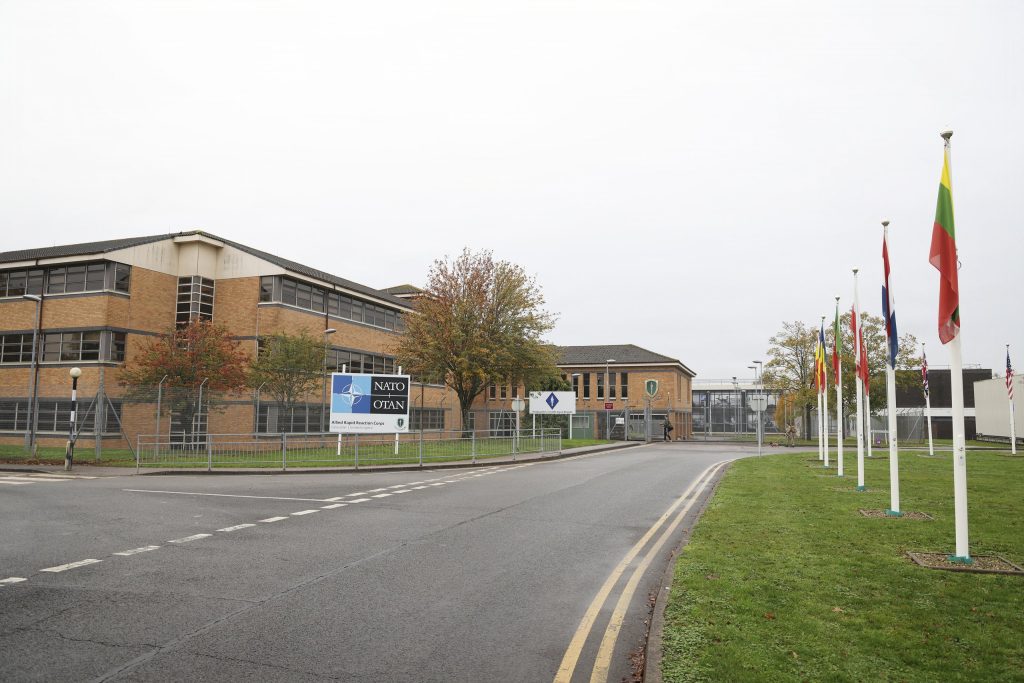
Tyner is a senior human resources officer with NATO’s Allied Rapid Reaction Corps, the alliance’s rapid-deployment headquarters based at Imjin Barracks in Gloucester. He is suspected of offences under Britain’s National Security Act, including obtaining or disclosing protected information and assisting a foreign intelligence service. No charges have been announced yet, and US officials have said no information reached Russian hands. The Kremlin has denied any connection to the case.
The handover ends a week of quiet diplomacy between London and Washington over who should handle the case of an American soldier arrested on British soil, and it opens a new phase in which the US military will decide whether to charge one of its own officers with espionage.
What happened on Tuesday
The Metropolitan Police announced on Tuesday that the 41-year-old officer had been transferred to US military custody. Assistant Commissioner Laurence Taylor, the head of Counter Terrorism Policing in Britain, said the investigation had been passed to US partners “in line with existing international protocols”.
The transfer followed consultations between British prosecutors, the attorney general’s office and US authorities, according to the Metropolitan Police. The Crown Prosecution Service, which decides whether to bring criminal charges in England and Wales, was also involved in the decision.
The FBI confirmed that Tyner was in US custody following a joint espionage investigation. FBI Director Kash Patel said the case demonstrated the bureau’s “zero tolerance” policy towards anyone who betrays their military oath or threatens US national security.
The handover came a week after the arrest, and days after US officials said British prosecutors had been preparing to charge the officer. Instead of facing a British court, Tyner will now answer to the American military justice system.
Who is Lt. Col. Brandon Tyner?
Tyner is a 41-year-old lieutenant colonel in the US Army — a senior rank, roughly equivalent to a senior manager with around two decades of service behind him. He joined the Army in 2008 and has previously deployed to Afghanistan, Iraq and Qatar, according to reports.
At the time of his arrest, he was serving as a senior human resources officer with NATO’s Allied Rapid Reaction Corps, known as the ARRC, at Imjin Barracks near Gloucester, about 160 kilometres west of London. The ARRC is a British-led multinational headquarters that provides NATO with a rapidly deployable command centre, able to run land operations and respond to crises. Its headquarters sits at Imjin Barracks in Innsworth, on the edge of Gloucester.
His role was in personnel, not combat operations. Human resources officers in a military headquarters deal with staffing, postings and the administration of soldiers — work that can involve access to lists of personnel, their roles and their movements. Investigators have not said what information, if any, Tyner is suspected of handling, and US officials have said that no information reached Russian hands.
Tyner was arrested on 10 November near Gloucester by British counter-terrorism police. His name was first publicly reported days later, on 13 November, and he was held in custody in London while British prosecutors considered the case.
What is he accused of?
Tyner was arrested on suspicion of offences under Sections 1 and 3 of the UK’s National Security Act 2023, a law passed to deal with hostile activity by foreign states.
Section 1 of the Act covers obtaining, copying or disclosing protected information — material that could be useful to a foreign intelligence service. Section 3 covers assisting a foreign intelligence service, in other words helping the spies of another country.
British police have said the allegations relate to Russia, though they have not given details of what Tyner is suspected of doing. The Kremlin has denied any connection to the case. Kremlin spokesman Dmitry Peskov said the arrest did not concern Moscow.
It is important to be clear about what has and has not been established. Tyner has been arrested on suspicion of these offences. He has not been charged, and no court has found him guilty of anything. The Associated Press, citing a US official, reported that he had not provided information to Russia — a detail that, if confirmed, would shape any charges that follow.
British police have also said the arrest was unrelated to other ongoing counter-terrorism investigations, a statement that appears designed to calm speculation about a wider spy ring.
Why Britain handed the case to the US
The decision to hand Tyner to the US military, rather than prosecute him in a British court, is the most unusual part of this case — and it was taken deliberately, after days of discussion between the two governments.
When a foreign soldier is stationed in another country, the question of who can prosecute them is governed by agreements between the countries involved. NATO members have a Status of Forces Agreement, which sets out the rules for which country has jurisdiction when a service member is accused of a crime while posted abroad. In many cases the host country can prosecute, but the soldier’s home country can also claim the case, particularly for offences connected to their military service.
In this case, the British authorities decided the investigation should be passed to the Americans. Assistant Commissioner Taylor said the handover was made “in line with existing international protocols”, and the Metropolitan Police said the decision followed consultations with the attorney general and US authorities.
There are practical reasons why Washington would want the case. Tyner is an American officer, serving in a NATO headquarters, and any trial would be likely to involve US military secrets and procedures. A US court-martial — a military trial — would allow the case to be heard behind closed doors where necessary, and under the rules that govern American service members wherever they serve.
The decision also avoids a difficult diplomatic problem. Putting a serving American officer on trial in a British court, on spying charges linked to Russia, would have been politically sensitive for both governments at a time when the US and Britain are working closely together on security.
A joint investigation across two countries
The case has involved an unusually wide group of agencies on both sides of the Atlantic, which shows how seriously it has been taken.
On the American side, the investigation has involved the FBI’s Philadelphia field office and its legal attache office in London, as well as the US Army’s own Counterintelligence Command. On the British side, it has involved the Metropolitan Police’s Counter Terrorism Command, the domestic intelligence agency MI5, and UK Defence Counter Intelligence.
The involvement of the FBI’s Philadelphia office has drawn attention, though officials have not explained why that office, rather than another, is leading the American side of the case. What is clear is that the two countries’ security services were working together from the start: the arrest was made by British counter-terrorism police, and the FBI was involved in the investigation that followed.
FBI Director Kash Patel described Tyner as a potential national security threat and said the arrest showed the bureau’s “zero tolerance” approach to anyone who betrays their military oath. Brigadier General Sean Stinchon, the commanding general of the US Army Counterintelligence Command, is also involved in the case, underlining that the Army is treating it as a counterintelligence matter — a case about protecting secrets, not just about one officer’s conduct.
Why this case is unusual
Espionage cases involving serving soldiers are rare in Britain, and this one is believed to be the first of its kind. Al Jazeera reported that the case is believed to be the first time a US soldier has come under suspicion of spying for a foreign government while in the UK.
That matters for several reasons. First, it comes at a time of high tension between Russia and the West. Western governments have repeatedly accused Russia of espionage, sabotage and other hostile activity in Europe, including the scrambling of fighter jets after suspected Russian aircraft entered Japanese airspace this week and the continuing war in Ukraine. Any allegation that a NATO officer was helping Russian intelligence would be taken extremely seriously by the alliance.
Second, the ARRC is not a backwater posting. It is one of NATO’s most important headquarters, the command that would run a major land operation if the alliance ever had to deploy quickly. An officer working there, even in a personnel role, sits inside the alliance’s command structure. That is why the case has attracted attention far beyond Gloucester.
Third, the case tests the trust between the United States and Britain, two countries whose intelligence agencies work more closely together than almost any other pair in the world. The speed and smoothness of the handover — arrest on 10 November, transfer a week later — suggests that both sides wanted the case handled quietly and quickly, without a public dispute over jurisdiction.
What happens next
Tyner is now in US military custody, and the investigation continues under American authorities. US officials have said he is expected to face charges soon, though none have been announced yet.
If charges are brought, they are likely to be under the US military justice system, which has its own courts, known as courts-martial, and its own rules for handling classified evidence. Espionage charges against a serving officer can carry very long prison sentences under US military law.
Several questions remain unanswered. Officials have not said where Tyner is being held, what information he is suspected of handling, or how long the investigation had been running before his arrest on 10 November. They have not said whether anyone else is under investigation, though British police have said the arrest is not connected to other counter-terrorism cases.
The case will also be watched in Moscow. The Kremlin has denied any link, but Russian intelligence services have been accused by Western governments of running recruitment operations targeting military and government personnel across Europe. Whether this case involves an actual attempt to recruit an American officer, or a misunderstanding that ends without charges, will only become clear when US authorities announce their next steps.
Why it matters
On its own, this is the story of one officer and one arrest. But it sits inside a much bigger picture: the contest between Russia and the West over secrets, influence and military information, and the strain that contest puts on alliances like NATO.
The fact that the alleged spying involved Russia, that the officer served in a NATO headquarters, and that the case was handled jointly by British and American intelligence agencies all point to the same thing — that espionage is not a relic of the Cold War, but a live part of today’s security landscape. The arrests and interceptions reported across Europe and Asia this week, from suspected Russian aircraft near Japan to attacks on shipping in the Strait of Hormuz, show how wide that landscape has become.
For NATO, the case is a reminder that the alliance’s security depends not only on weapons and headquarters, but on the trustworthiness of the thousands of people who work inside them. For Britain and the United States, it is a test of how quickly two close allies can deal with a problem that neither of them wanted to become public.
For now, the central fact is simple: a 41-year-old American officer who served in one of NATO’s most important headquarters is in US military custody, suspected of spying for Russia. What happens next depends on what the investigators found — and on whether prosecutors in the United States decide to charge him.
Frequently asked questions
Who is Lt. Col. Brandon Tyner?
He is a 41-year-old lieutenant colonel in the US Army who joined in 2008 and previously deployed to Afghanistan, Iraq and Qatar. At the time of his arrest he was a senior human resources officer with NATO’s Allied Rapid Reaction Corps at Imjin Barracks near Gloucester, England.
What is he accused of?
He was arrested on suspicion of offences under Sections 1 and 3 of the UK’s National Security Act 2023 — obtaining or disclosing protected information, and assisting a foreign intelligence service. British police have said the allegations relate to Russia. He has not been charged, and the Kremlin has denied any connection.
When was he arrested?
He was arrested on 10 November 2026 near Gloucester by British counter-terrorism police. On Tuesday, 17 November, he was transferred to US military custody and the investigation was passed to US authorities.
Why was he handed to the US military instead of being tried in Britain?
The Metropolitan Police said the investigation was passed to US partners “in line with existing international protocols”, after consultations between British prosecutors, the attorney general’s office and US authorities. As a serving US soldier, he will now be dealt with under the American military justice system.
Has he passed secrets to Russia?
According to the Associated Press, citing a US official, Tyner had not provided information to Russia. Investigators have not said what information, if any, was involved, and no charges have been announced.
Why is this case unusual?
It is believed to be the first time a US soldier has come under suspicion of spying for a foreign government while in the UK. It also involves a NATO headquarters, a joint investigation by British and American intelligence agencies, and a rare handover of the case from one country to another.
What happens next?
US authorities are continuing the investigation, and Tyner is expected to face charges soon. If charged, he would face a US court-martial. Officials have not said where he is being held or when charges might be announced.
Sources
- Reuters — “UK hands US Army officer to US military in espionage probe”
- Al Jazeera — “UK hands NATO-assigned US soldier accused of Russia spying to US military”
- New York Post — “Pentagon detains senior US Army officer accused of spying for Russians after UK arrest”
- Khaama Press — “UK Transfers US Soldier in Russia-Linked Espionage Probe”
- Times Now — “US Soldier Accused Of Spying For Russia Taken Into Military Custody After UK Arrest”
This article is for general information and education only. It is not legal or financial advice.
