
Volkswagen pauses work on the electric Golf: ‘We simply can’t afford this work right now’
Volkswagen has paused development work on the all-electric Golf, the battery-powered successor to its best-known car. The decision, announced on Friday 30 October 2026, is temporary, the company insists. But the words used by its own managers tell a harder story: Europe’s biggest carmaker says it cannot afford, right now, to build the electric version of the car that defines it.
The pause came one day after Volkswagen reported its largest quarterly loss in more than a decade: €5.82 billion after tax in the three months from July to September 2026, on revenue down 6.3 per cent to €75.3 billion, against a loss of about €1 billion a year earlier.
At a glance
What happened: On 30 October 2026, Volkswagen temporarily paused preliminary development work on the future electric ID. Golf at its Wolfsburg headquarters, saying it could not afford the work right now. The car has not been cancelled, and the works council says the pause need not delay its launch in the early 2030s.
Why it matters: The Golf is Volkswagen’s best-selling car of all time, with more than 37 million built since 1974. Pausing its electric successor shows how severe the company’s cost crisis has become, just as Chinese rivals expand in Europe and Volkswagen’s sales in China fall sharply.
What happens next: Volkswagen has not said when work on the ID. Golf will restart. Watch the cost-cutting talks with unions, the progress of its new SSP electric platform, and whether the works council can recover the lost development time.
What Volkswagen actually paused
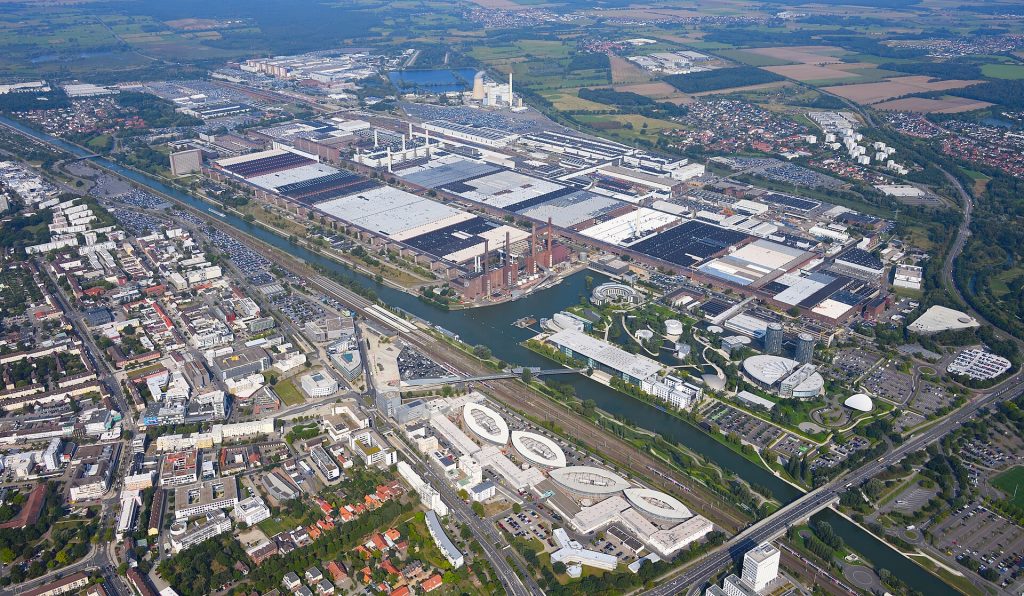
The work that has stopped is preliminary development work on the future ID. Golf, the all-electric Golf that Volkswagen plans to build at Wolfsburg in the early 2030s. This is not a car that was about to roll off a production line next month. It is a future model, still in the early stages of development, and the spending being frozen is the spending on that early work.
Volkswagen’s brand chief, Thomas Schäfer, announced the pause in an internal interview. According to Reuters, which saw an internal memo from Schäfer, he told staff: “I know what the Golf means for Volkswagen and for Wolfsburg. That’s why this decision was really not an easy one for us.” Then came the sentence quoted around the world: “We simply can’t afford this work right now.”
The company’s finance chief for the brand, David Powels, confirmed the decision in Volkswagen’s official statement on its nine-month results. “One specific measure is therefore to temporarily pause development work on the future ID. Golf at the Volkswagen brand until we can securely accommodate the necessary investments,” Powels said. Schäfer added, in words reported by Autocar: “We’re pausing it, not cancelling it.”
The works council, which represents Volkswagen workers, said the pause would not delay the model’s launch, and it pledged to make up the lost time. At the same time, it said in a statement shared with Reuters: “However, the freeze on spending for preliminary work on the ID. Golf is yet another sign of how strained the group’s financial situation is.”
Why Wolfsburg ran out of room
The immediate reason for the pause is money at Wolfsburg itself. According to the memo seen by Reuters, the Wolfsburg plant faces a €300 million shortfall against its cost-cutting target for the year. That is about $336 million. The plant is not among those threatened with closure, Reuters reported, but it is under growing pressure to cut costs.
The €300 million is the plant’s shortfall against its cost target, not the price of the ID. Golf project. It measures how far behind Wolfsburg is on the savings it was supposed to make this year.
According to electrive, the Emden and Zwickau plants are on track to reduce their factory costs. Wolfsburg is the outlier. More than 20 million Golfs have been built there alone.
The wider cost-cutting programme is much bigger than one plant’s shortfall. Reuters reported that Volkswagen is pushing ahead with plans to cut 100,000 jobs and close up to four German plants. Der Spiegel reported that cuts to 50,000 positions have already been agreed by the end of the decade, with another 50,000 jobs possibly at risk.
Unions are pushing back. Reuters reported that tensions have escalated with the IG Metall union, which is considering strikes from 1 January.
The loss behind the decision
The group reported a net loss of €5.82 billion for the third quarter of 2026, its largest quarterly loss in more than a decade. Revenue fell 6.3 per cent to €75.3 billion, and vehicle sales in the quarter fell from 2.2 million a year earlier to 1.88 million, a drop of about 320,000 cars in three months.
The loss was driven largely by one-off items. Volkswagen said one-off effects totalled €7.8 billion in the third quarter, the largest part a writedown of the value of Porsche, its sports car subsidiary. A goodwill writedown does not mean that amount of cash left the company in the quarter. It means Volkswagen has lowered its view of what Porsche is worth.
The result was also affected by the contraction of the Chinese market, increased price and competitive pressure worldwide, and a growing share of lower-margin electric vehicles, according to Der Spiegel. That last point goes to the heart of Volkswagen’s problem: its electric cars currently earn less profit per car than comparable petrol and diesel cars, which squeezes the money available to invest in future models, including the electric Golf.
The Volkswagen passenger car brand itself recorded a €182 million loss in the third quarter, its first quarterly deficit since 2020, according to Autocar. The brand group that includes Volkswagen, Skoda and other volume brands saw its net cash flow fall by about two-thirds, from €4.34 billion in the first nine months of 2025 to €1.43 billion in the same period of 2026. In September, chief executive Oliver Blume had already significantly lowered the company’s forecast for the year.
Why the Golf matters so much
Production of the first Golf began at Wolfsburg on 29 March 1974. It was the successor to the Beetle, the car that had made Volkswagen famous and had been produced more than 21.5 million times. The Golf had a difficult job: to follow the most successful car in the company’s history, with a completely different design.
It worked. More than 37 million Golfs have been built since 1974, according to Volkswagen, making it the company’s most successful model and the best-selling European car of all time. More than 2,000 people around the world have bought a new Golf every day, on average, over the last 50 years. The Golf also gave its name to a whole class of car, the practical compact family hatchback, and the Golf GTI, launched in 1976, created the “hot hatch”.
That history is why the pause matters. The Golf has paid the wages in Wolfsburg for two generations, and the future of the petrol Golf matters too. Autocar reported that production of the existing petrol-powered Golf is scheduled to move from Wolfsburg to the company’s Puebla plant in Mexico. If that happens, Wolfsburg’s long-term role as the home of the Golf will depend on the electric version. If the petrol car leaves and the electric car is delayed, what will Wolfsburg build in between?
The platform problem
The ID. Golf is one of the first vehicles planned for Volkswagen’s next-generation SSP platform, short for Scalable Systems Platform. SSP is the group’s planned single base for future electric cars, designed to replace the separate platforms used today and to reduce technical complexity and production costs. In plain terms, it is the shared set of parts, batteries, motors and software that many different Volkswagen Group cars will be built on, from small Volkswagens to large Audis and Porsches. If every car uses the same basic parts, the company can buy them in larger numbers and build them more cheaply, closing the cost gap with Chinese rivals.
The problem is that SSP has been delayed again and again. Reuters reported that the platform was already delayed from an original 2026 launch target. Autocar reported that the ID. Golf itself was originally expected in 2028 or 2029, and is now planned for introduction at the beginning of the next decade, in the early 2030s. The delay has been caused in part by changes to the platform and by software development.
Software has been Volkswagen’s weakest point in its electric shift. Its own software division struggled for years to deliver the systems its new cars needed, which pushed back several models. Autocar reported that the ID. Golf will combine familiar design elements with new software developed through Volkswagen’s joint venture with Rivian, the American electric car maker, and that it is planned to follow an electric T-Roc onto the SSP platform. If the platform is late, the car is late. If the software is late, the car is late. The works council says the lost time can be made up. That is a promise, not a fact, and it will be tested in the months ahead.
What it means for workers and buyers
For the people who build Volkswagens in Wolfsburg, the pause is about jobs as much as it is about cars. The plant is the largest employer in the city, and the Golf has been its main product for 50 years. When Volkswagen talks about cutting 100,000 jobs and closing up to four German plants, workers in Wolfsburg hear a warning, even if their own plant is not on the closure list.
For drivers, the pause does not change anything today. You cannot buy an ID. Golf yet, and the current petrol Golf remains on sale, alongside other electric Volkswagens including the ID.3, ID.4 and ID. Buzz. But if Volkswagen is late with its electric Golf, drivers who want a compact electric family car in the early 2030s will have more reason to look at rivals, including Chinese brands expanding in Europe.
Volkswagen’s own figures show how sharp that competition has become. In the first nine months of 2026, the group’s worldwide deliveries fell 9.0 per cent to 6.01 million cars, with deliveries in China down 30.3 per cent to 1.38 million. Its global electric car deliveries fell 5.4 per cent to 678,702, while electric deliveries in China fell 42.5 per cent to just 48,938.
What to watch next
Volkswagen has not said when work on the ID. Golf will restart, and that is the first thing to watch. A restart date, or a clear set of conditions for restarting, would show that the pause really is temporary. A long silence, or a further delay to the early-2030s launch date, would suggest the opposite.
The second thing to watch is the cost-cutting talks with unions and the works council. If Volkswagen and IG Metall reach an agreement, the company will have a clearer path to funding future models. If the talks break down and strikes begin in January, the disruption could make the financial problem worse.
The third thing to watch is SSP. The platform is the foundation for the ID. Golf and for many other future electric cars. If SSP makes good progress, with software from the Rivian joint venture working as planned, the Golf can catch up. If SSP slips again, the Golf will slip with it.
Frequently asked questions
Is the electric Golf cancelled?
No. Volkswagen has said the project is paused, not cancelled. Brand chief Thomas Schäfer said: “We’re pausing it, not cancelling it.” The company has not given a restart date, so the pause is open-ended, but the official position is that work will resume when the necessary investment can be secured.
When was the electric Golf supposed to launch?
The timing has slipped several times. Reuters reported that the SSP platform was already delayed from an original 2026 launch target. Autocar reported that the ID. Golf was originally expected in 2028 or 2029, and is now planned for the early 2030s. The works council says the pause need not delay that launch.
Why did Volkswagen pause the work?
Money. The Wolfsburg plant is about €300 million short of its cost-cutting target for the year, and the group lost €5.82 billion after tax in the third quarter of 2026. Volkswagen said it was pausing the work until it could securely accommodate the necessary investment.
Does the pause affect the petrol Golf I can buy today?
No. The pause affects preliminary development work on a future electric model. The current petrol Golf remains on sale. Autocar reported that production of the petrol Golf is scheduled to move from Wolfsburg to Puebla in Mexico, but that is a separate decision about where the existing car is built.
What is SSP, and why does it matter for the Golf?
SSP stands for Scalable Systems Platform. It is Volkswagen Group’s planned single base for future electric cars, designed to reduce complexity and lower costs by sharing parts, batteries, motors and software across many models. The ID. Golf is one of the first vehicles planned for SSP, so delays to the platform affect the car.
Will the pause mean job losses in Wolfsburg?
Volkswagen has not linked the pause directly to a specific number of job losses at Wolfsburg, and the plant is not among those threatened with closure, according to Reuters. But the company is planning to cut 100,000 jobs overall and close up to four German plants, according to Reuters, and IG Metall is considering strikes from 1 January.
Conclusion
Volkswagen’s decision to pause work on the electric Golf is a small decision with a large meaning. The car itself is years away, and the spending being frozen is preliminary work, not production. But the reason given by the company’s own managers, that they simply cannot afford the work right now, is unusually blunt, and it comes the day after the largest quarterly loss in more than a decade.
The Golf has carried Volkswagen for 50 years, through eight generations and more than 37 million cars. Its electric successor was supposed to carry the company into its next 50 years. Whether it does so will now depend on whether Volkswagen can cut its costs, settle its dispute with its workers, make its new electric platform work, and start making money from electric cars.
This article is for general information and education only. It is not legal or financial advice.
Sources
- https://ktwb.com/2026/10/30/vw-suspends-work-on-electric-golf-as-retrenchment-hits-hq/ (Reuters, 30 October 2026)
- https://www.autocar.co.uk/car-news/new-cars/golf-ev-ice-volkswagen-simply-cannot-afford-development (Autocar, 31 October 2026)
- https://www.electrive.com/2026/10/30/volkswagen-pauses-development-of-the-id-golf/ (electrive, 30 October 2026)
- https://www.europesays.com/germany/118126/ (Der Spiegel, 29 October 2026)
- https://www.volkswagen-newsroom.com/en/press-releases/a-world-bestseller-celebrates-its-50th-birthday-volkswagen-started-production-of-the-first-golf-on-29-march-1974-18313 (Volkswagen Newsroom, 29 March 2024)
