
49th ASEAN Summit Opens in Manila: Myanmar, South China Sea and Energy Security Top the Agenda
Leaders from across Southeast Asia and beyond gathered in Manila on Sunday for the opening of the 49th ASEAN Summit, three days of talks that will test whether the region’s main diplomatic club can still hold together on its hardest problems: the war in Myanmar, the long-running dispute over the South China Sea, and the rising cost of energy and food.
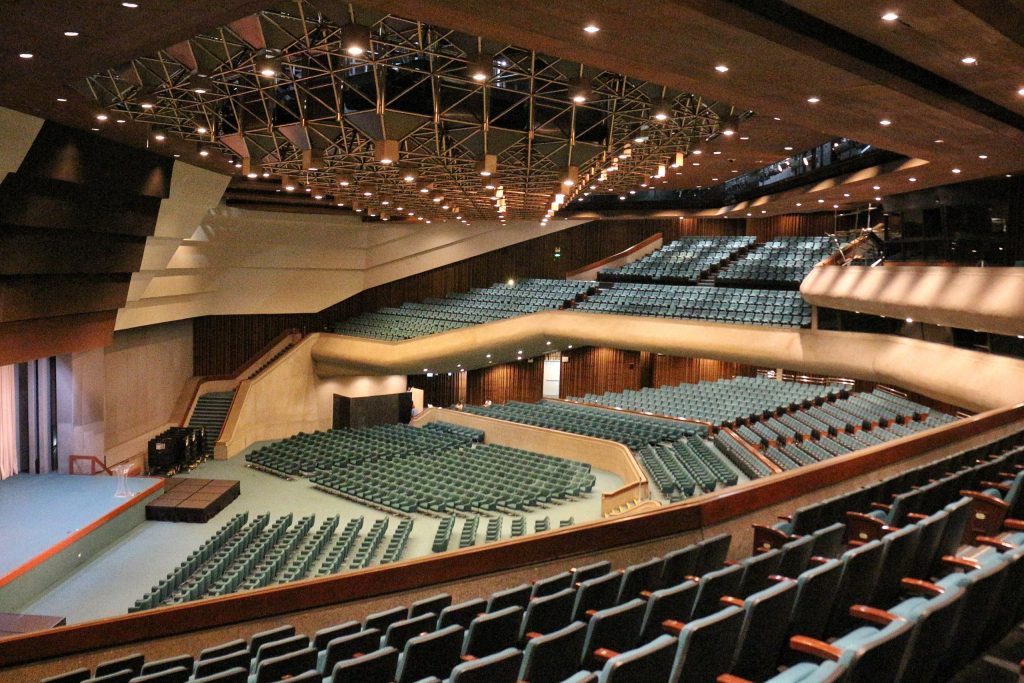
The summit opened at the Philippine International Convention Center in Pasay City, on the shore of Manila Bay, with an opening ceremony at 9:00 in the morning followed by a plenary session of leaders. The Philippines is hosting the meeting as this year’s chair of ASEAN, the Association of Southeast Asian Nations, under the theme “Navigating Our Future, Together.”
It comes with an unusually crowded guest list. At least 19 world and institutional leaders are expected to take part, according to the Philippine Department of Foreign Affairs, including the heads of government of the bloc’s dialogue partners: the United States, China, India and Japan.
For the Philippines, the summit is a chance to show it can steer a region caught between great-power rivalry, a civil war on its doorstep, and the knock-on effects of conflicts far away in the Middle East and Ukraine.
A weekend of arrivals
Most of the leaders arrived on Saturday, a day before the formal opening. Indonesian President Prabowo Subianto, Thai Prime Minister Anutin Charnvirakul and Malaysian Prime Minister Anwar Ibrahim landed in Manila on Saturday evening, along with the prime ministers of Australia, Timor-Leste, Laos and Vietnam, the Sultan of Brunei, and Canada’s Prime Minister Mark Carney.
United Nations Secretary-General António Guterres also arrived on Saturday evening to attend Sunday’s opening ceremony and Monday’s ASEAN–United Nations Summit. Brazilian President Luiz Inácio Lula da Silva, invited as a guest of the chair, arrived on Friday for a state visit, and International Monetary Fund Managing Director Kristalina Georgieva is also among the guests.
The arrivals matter because they show who is taking the summit seriously — and who is not. The most closely watched arrival is the one that has not happened yet. United States President Donald Trump is scheduled to land in Manila only on Tuesday afternoon, at 5:30pm, about half an hour before the summit formally closes. That means he is likely to miss the East Asia Summit, one of the gathering’s most important meetings, which begins at 2:30pm the same day. Philippine officials have said the schedule remains unchanged.
What is ASEAN, and why does this summit matter?
ASEAN is the main regional organisation of Southeast Asia. Founded in 1967, it now has 11 member states: Brunei, Cambodia, Indonesia, Laos, Malaysia, Myanmar, the Philippines, Singapore, Thailand, Vietnam — and Timor-Leste, which joined as the bloc’s newest member. Together, the member states are home to around 680 million people, making ASEAN one of the world’s largest regional groupings by population.
The bloc works by consensus, which means every member has to agree before ASEAN can take a joint position. That rule keeps the group together, but it also means ASEAN often moves at the pace of its most reluctant member, and its statements tend to be carefully worded compromises.
Each year, the chairmanship rotates between member states. The Philippines holds the chair for 2026 and will hand it over to Singapore at Tuesday’s closing ceremony. The chair sets the agenda, hosts the meetings, and speaks for the bloc — which is why the choice of priorities for this summit says a lot about what Manila thinks the region’s biggest problems are.
This year’s agenda is dominated by three issues: Myanmar, the South China Sea, and economic security — energy, food and the digital economy. None of them is new, and all of them have resisted solution for years. The question hanging over Manila is whether this summit can move any of them forward, or whether it will end, as many ASEAN meetings do, with promises to keep talking.
Myanmar: the crisis that will not go away
The hardest issue on the table is Myanmar. The country’s military seized power in 2021, and the civil strife that followed has never ended. Five years on, ASEAN’s own peace plan — the Five-Point Consensus, agreed by the bloc’s leaders in 2021 — has still not been fully implemented.
That failure has put ASEAN in an awkward position. The bloc barred Myanmar’s military leadership from its high-level meetings because the authorities did not carry out the peace plan, and that ban remains in force at this summit. Myanmar’s junta leader, Min Aung Hlaing, is not attending. Instead, the country is represented by Han Win Aung, a director-general in its foreign ministry — a much lower level of representation than the other members.
Leaders in Manila are expected to review how the Five-Point Consensus is being implemented. Philippine Foreign Secretary Theresa Lazaro recently travelled to Myanmar, where she pressed the authorities to do more to comply with the plan.
According to drafts of the prepared summit statements seen by the Associated Press, the language leaders are expected to agree on will call for an immediate end to the violence, safe access for humanitarian aid, inclusive dialogue between the warring sides, and the release of people described as unjustly detained. No breakthrough is expected: the drafts are a call for peaceful resolution, not a new plan.
The Myanmar question also raises a wider issue for ASEAN. Some members have pushed to end the five-year ban on Myanmar’s military leaders attending summits, arguing that excluding them has not worked. Others say letting them back in would reward a regime that has ignored the bloc’s own peace plan. The Philippines has not confirmed whether the summit will recommend any change, saying only that any decision would be reflected in the negotiated documents after the meeting.
The South China Sea code of conduct: close, but not done
The second big test is the South China Sea. The dispute involves China, Taiwan and four ASEAN members — Brunei, Malaysia, the Philippines and Vietnam — who have overlapping claims to parts of one of the world’s busiest waterways. Through it passes a large share of global shipping, and beneath it lie rich fishing grounds and possible oil and gas reserves.
For more than two decades, ASEAN and China have been negotiating a “code of conduct” — a set of rules meant to prevent accidents and clashes at sea from turning into something worse. It is, in effect, a non-aggression pact for the South China Sea. And for more than two decades, it has remained unfinished. ASEAN and China aim to conclude the negotiations by the end of the year, and diplomats say substantial progress has been made. But according to the Philippine foreign affairs department, the negotiations are about 70 percent complete in overall progress — a figure officials stressed does not reflect the proportion of the text actually agreed. Three Southeast Asian diplomats told the Associated Press that the agreement is not expected to be finalised before the end of 2026, although one regional analyst has said a deal remains possible before then.
The drafts of the summit statements are expected to reaffirm international law, freedom of navigation and overflight, and the peaceful resolution of disputes. That language is familiar: ASEAN has said similar things for years. What is missing is the code itself — the binding rules that would give those words force.
The South China Sea matters far beyond Southeast Asia. The waterway carries a huge share of world trade, including energy supplies bound for countries across Asia. Any clash there would ripple through global shipping, oil prices and supply chains — which is why the code of conduct is watched well beyond the region, and why its continued delay frustrates even ASEAN’s own members.
Energy, food and the cost of faraway wars
The third pillar of the summit is economic security — shaped by events far from Southeast Asia. The wars in the Middle East and Ukraine, and instability around the Strait of Hormuz, have pushed up the cost of energy and food across the region. ASEAN’s foreign ministers opened their meetings on Saturday seeking a coordinated response to surging energy costs, security tensions and an approaching El Niño.
Leaders are expected to discuss fuel stockpiling, more resilient supply chains for critical minerals, and the impact of Middle East instability on regional energy markets. Food security is also on the agenda, along with the welfare of migrant workers, transnational crime and online scams — a growing problem across the region, where scam centres have trapped workers from many countries.
The Middle East crisis looms over the energy discussion in a very direct way. Oil tankers have been hit by mines in the Strait of Hormuz in recent days, and the waterway carries a large share of the oil and liquefied natural gas that Asia depends on. For ASEAN’s economies, which import much of their energy, any disruption in the Gulf means higher fuel prices at home — and higher prices for everything that depends on fuel, from transport to food.
A first for the digital economy
One concrete achievement has already been recorded before the leaders even sat down. On Saturday, ASEAN’s economic ministers signed the ASEAN Digital Economy Framework Agreement — described as the world’s first binding regional digital economy pact. The agreement is meant to make it easier for digital trade, data and payments to flow across Southeast Asia’s borders, and leaders are set to discuss it in their plenary session.
The digital pact is a reminder that ASEAN’s agenda is not only about crises. The bloc’s economies are increasingly digital — from e-commerce and online payments to the freelance and remote work that employs millions of young Southeast Asians. A common set of rules for the digital economy could, over time, matter as much to ordinary people as any statement on the South China Sea.
The late arrival, and what it says
The summit’s most talked-about scheduling detail is not on the formal agenda at all: the timing of Donald Trump’s arrival. The US president is due to land at 5:30pm on Tuesday, half an hour before the closing ceremony, and is expected to take part only in the final moments of the summit, including the ceremonial handover of the chairmanship from the Philippines to Singapore.
That leaves him likely to miss the East Asia Summit, the meeting where ASEAN’s leaders sit down with their counterparts from the US, China, Russia, India, Japan, South Korea, Australia and New Zealand — the forum where the region’s biggest security questions are usually discussed. It also means there will be no ASEAN–United States Summit on the schedule, according to the media plan published earlier this month.
Trump’s brief appearance stands in contrast to the fuller participation of other dialogue partners. Li Qiang, Modi and Takaichi are all attending the summit series, and the leaders of Australia, Canada and New Zealand are also taking part in the related meetings. For a region that has long relied on American engagement to balance China’s influence, the message of a 30-minute visit is hard to miss — even if Philippine officials insist the schedule was never going to change.
What happens next
The summit runs until Tuesday, 17 November, with the related summits with dialogue partners on Monday and Tuesday and the closing ceremony on Tuesday afternoon. The real test will come in the documents published at the end: the chairman’s statement and the joint communiques, which will show what the leaders actually agreed — and what they could not.
Three things are worth watching: whether the summit produces any new language on Myanmar, whether the leaders commit to a firm date for finishing the South China Sea code of conduct, and whether the energy and food security discussions produce anything concrete — or remain at the level of general concern.
ASEAN summits rarely produce drama. Their value, when they have any, lies in keeping the region’s leaders talking to each other, and in the slow accumulation of agreements — like the digital economy pact — that change things over years rather than days. This summit will be judged by that standard: not by what is announced on Tuesday, but by whether anything agreed in Manila still matters in a year’s time.
Frequently asked questions
What is the ASEAN Summit?
The ASEAN Summit is the annual meeting of the leaders of the Association of Southeast Asian Nations, the regional bloc of 11 Southeast Asian countries. The 49th summit is being held in Manila, Philippines, from 15 to 17 November 2026, with related meetings involving dialogue partners such as the United States, China, India and Japan.
Why is the 2026 ASEAN Summit being held in the Philippines?
The chairmanship of ASEAN rotates between member states each year, and the Philippines holds the chair for 2026. As chair, the Philippines hosts the summits and sets the agenda. The theme for its chairmanship is “Navigating Our Future, Together.”
What are the main issues at the 49th ASEAN Summit?
The main issues are the civil conflict in Myanmar and ASEAN’s Five-Point Consensus peace plan, negotiations over a South China Sea code of conduct with China, and economic security — including energy and food prices, critical minerals, and the ASEAN Digital Economy Framework Agreement.
Why is Myanmar’s military leader not attending?
Myanmar’s junta leader, Min Aung Hlaing, remains barred from ASEAN leaders’ meetings because the military authorities have not fully implemented the bloc’s Five-Point Consensus peace plan, agreed after the 2021 military takeover. Myanmar is instead represented by a senior foreign ministry official, Han Win Aung.
What is the South China Sea code of conduct?
It is a proposed set of rules being negotiated between ASEAN and China to manage disputes in the South China Sea and prevent incidents at sea from escalating into conflict. Negotiations have run for more than two decades, and diplomats say the deal is not expected to be finalised before the end of 2026.
When will Donald Trump arrive at the summit?
US President Donald Trump is scheduled to arrive in Manila at 5:30pm on Tuesday, 17 November, about 30 minutes before the summit’s closing ceremony. He is likely to miss the East Asia Summit, which begins at 2:30pm the same day.
Conclusion
The 49th ASEAN Summit opened in Manila with the region’s familiar problems very much intact: a civil war in Myanmar that ASEAN has been unable to end, a South China Sea code of conduct unfinished after more than twenty years, and energy and food prices pushed up by conflicts far away. The digital economy agreement signed on Saturday shows ASEAN can still produce concrete results when its members agree. Whether the same can be said for Myanmar and the South China Sea will be clear when the summit closes on Tuesday — and, more importantly, in the months that follow.
Sources
- GMA News Online — “Indonesia, Thailand, Malaysia leaders arrive for 49th ASEAN Summit”, 14 November 2026
- Associated Press via DT Next — “Southeast Asian leaders will call for peaceful resolutions of conflicts, Trump will join final talks”, 14 November 2026
- Rappler — “What to expect as 49th ASEAN Summit begins in Manila”, 14 November 2026
- Asia Today — “49th ASEAN Summit Opens in Manila With Myanmar, Energy on Agenda”, 15 November 2026
- Asia Today — “ASEAN Leaders Arrive in Manila for 49th Summit as Ministers Open Talks”, 14 November 2026
- BusinessMirror — “Trump to arrive only 30 mins before Asean Summit closes”, 11 November 2026
- New Malaysia Times — “ASEAN And Dialogue Partner Leaders Converge On Manila Ahead Of 49th ASEAN Summit”, 14 November 2026
This article is for general information and education only. It is not legal or financial advice.

Pingback: Quad Summit Set for Manila on 17 November: Modi, Trump, Takaichi and Albanese to Meet in First Leaders' Gathering in Two Years - Findivoza
Pingback: Australia and the Philippines Sign New Defence Pact to Speed Up Joint Military Action in the South China Sea - Findivoza
Pingback: Myanmar Airstrike Kills 12 at Displaced Persons Camp in Rakhine, Including a Five-Year-Old Child - Findivoza
Pingback: East Asia Summit Agrees 19-Point Plan to Dismantle Online Scam Centres and Protect Trafficking Victims - Findivoza