
More than 107,000 species are bought and sold in the global wildlife trade — twice as many as we thought
For years, the world has worked from a single number for the wildlife trade: about 50,000 species. That figure, from the Intergovernmental Science-Policy Platform on Biodiversity and Ecosystem Services (IPBES), shaped how governments understood the trade in wild plants, animals and fungi. A major new study says it was wrong — by more than half.
Researchers led by the University of Melbourne report that at least 107,356 species are in use and traded around the world, more than double the old estimate. The study, published in Science Advances on Friday, 30 October 2026, is the first to count the trade across plants, animals and fungi together. The authors say even this much larger number is probably still an underestimate.
That matters because wildlife trade is one of the biggest drivers of biodiversity loss. If governments do not know what is being bought and sold, in what quantities, or where it came from, they cannot tell whether the trade is sustainable. As lead author Professor Alice Hughes of the University of Melbourne put it: “Without better data, we cannot accurately assess risks to biodiversity or identify when trade is pushing species towards decline.”
At a glance
What happened: A study published in Science Advances on 30 October 2026 found at least 107,356 species are in use and traded worldwide, more than double the previous estimate of 50,000.
Why it matters: Wildlife trade is a leading driver of biodiversity loss, yet most traded species are barely monitored. Traded populations are on average 50 to 60 per cent smaller than untraded ones, and trade has contributed to 294 extinctions.
What happens next: The researchers want countries to standardise trade records using existing customs and veterinary checks, so governments can see the full trade and act before species collapse.
What the researchers actually counted
The team did not count animals in markets. They pulled together the many separate systems that already record wildlife trade — global databases, national records and published research — and combined them into one picture for the first time.
The headline result was 107,356 species in use and traded globally, including up to 47,685 animal species — 42 per cent of all described vertebrate species — and 59,671 plant species across the sources examined. Some groups overlap between databases, so the totals cannot simply be added together. The old figure of about 50,000 came from IPBES, the body that assesses the state of nature for governments. It missed whole parts of the trade: the number of butterfly species found in trade alone is greater than the entire IPBES estimate for all traded terrestrial invertebrates combined. The researchers describe 107,356 as a minimum. “The number of species that we are talking about is still an underestimate, and that’s really clear in the paper, because we cannot access and we do not have the type of monitoring data that we really need,” said Molly Brown, a programme officer for wildlife use and trade at the International Union for Conservation of Nature (IUCN) and a co-author of the paper.
Most of it is legal — and that is the point
When most people hear “wildlife trade”, they picture smuggling: ivory hidden in containers, pangolin scales in suitcases, rare parrots stuffed into tubes. That illegal trade is real, and it is brutal. But the study’s second big finding is that it is only a small part of the story.
Most of the wildlife trade is legal. The paper estimates legal trade is worth around US$220 billion to US$300 billion a year, while illegal trade is worth an estimated US$28.4 billion to US$39.5 billion — so the legal trade is roughly 5.6 to 10.6 times larger in value. Based on US data and global assessments for reptiles, amphibians and arachnids, the authors estimate about 99.99 per cent of detected trade is legal, although unseized illegal trade remains hard to estimate.
Hughes put it plainly. “When we think of wildlife trade we tend to think about the illegal trade of elephants, tigers and pangolins,” she said. “But it’s much more than that. Wildlife trade includes everything from timber, seafood and medicinal plants to pets, cut flowers, ornamental fish and fungi, and most of it is legal.”
That breadth is why the trade is so hard to manage. Timber, fish, orchids and pet lizards are all wildlife trade, but they are recorded — if at all — by different agencies, under different rules, in different countries. Much of it is ordinary commerce: food, medicine, building materials, decoration and pets. Some of it is sustainable, some of it is driving species towards extinction, and without species-level records regulators often cannot tell which is which. Weak regulation also lets species, including sought-after exotic pets, be “laundered into legality” — passed off as captive-bred when they were taken from the wild.
The cost to wildlife
Where population data exist, traded populations are on average 50 to 60 per cent smaller than populations of the same or comparable species that are not traded. The average points firmly in one direction: trade, on balance, shrinks wild populations.
The longer record is grimmer still. The paper estimates that wildlife trade has contributed, directly or indirectly, to the global extinction of 294 species, to 25 species surviving only in captivity — extinct in the wild — and to 192 local extinctions, where a species has vanished from part of its range. Because data are missing for most traded species, the authors say the true toll is likely to be higher.
The study also highlights a newer threat the old estimates missed: the online exotic pet trade. “The dimensions of trade have changed. Without monitoring it in a representative way, we cannot manage it,” Hughes said. “At the moment, we are completely underestimating what modern trade looks like — for the pet trade and for the ornamental trade, we are not capturing it. And it poses a major risk to species.”
Sellers can now offer spider eggs by post across the world, or smuggle reptiles onto planes, reaching buyers in a few clicks. Species newly described by science are often rare and have a small range, making them especially valuable to collectors — and especially easy to wipe out. The Guardian, reporting the study on Friday, 30 October, gave the example of the Javan slit-faced bat, which conservationists say is being bought for decoration and placed at risk of extinction.
Why the old number was so wrong
The old estimate was not a guess. It was the best number available from the systems that existed — but those systems were never designed to capture the whole trade, only parts of it.
The main global system is CITES, the Convention on International Trade in Endangered Species of Wild Fauna and Flora, which monitors trade in listed species. As of August 2026, about 40,980 species were in the CITES appendices — 6,634 animals and 34,310 plants, orchids making up more than 70 per cent of the total — and its trade database holds more than 29 million records dating back to 1975. That sounds comprehensive. It is not: for reptiles, CITES covers around 9.5 per cent of species, against more than 45 per cent — 4,047 species — found in international trade. Listing is also slow. “Sometimes, it is years before things get listed and that means that they can be virtually extinct in the wild by that point,” Hughes said.
The one exception is the United States. Its Law Enforcement Management Information System, known as LEMIS, is the US Fish and Wildlife Service database of wildlife traded internationally into and out of the country — the only national system that systematically records and publicly shares trade data across many species groups. Since 2000, LEMIS alone has recorded more than 21,000 wild animal species traded into the United States. For some groups, 75 per cent of traded species appear in US datasets, yet trade in Europe may be comparable or even higher. “The problem is we really don’t know because the data isn’t openly available,” Hughes said.
The target that misses 97 per cent of the trade
The gap in monitoring has a direct consequence for policy. Four years ago, nearly 200 countries agreed, under the Kunming-Montreal Global Biodiversity Framework, to ensure that trade in wild species was “sustainable, safe and legal”. But the only headline indicator for the trade target — the single number used to measure global progress — is the proportion of fish stocks within biologically sustainable levels. Fish are important, but they are a small part of the trade. “While the global biodiversity framework does have a target on trade, based on our estimates it only accounts for around two or three per cent of species in trade and misses the other 97 per cent,” Hughes said. The paper itself puts the figure at less than 2 per cent.
That mismatch matters now: governments wrapped up COP17, the UN biodiversity conference in Yerevan, Armenia, on Saturday, 31 October, agreeing to speed up action on nature — but with the money to deliver it still short, according to Reuters. The study’s message is blunt: the targets they have set cannot be measured, let alone met, with the data they currently collect. Trade underpins livelihoods and food security for millions, and well-managed use can fund conservation. The argument is not that all trade should stop. It is that trade which cannot be measured cannot be managed.
What it means for Pakistan
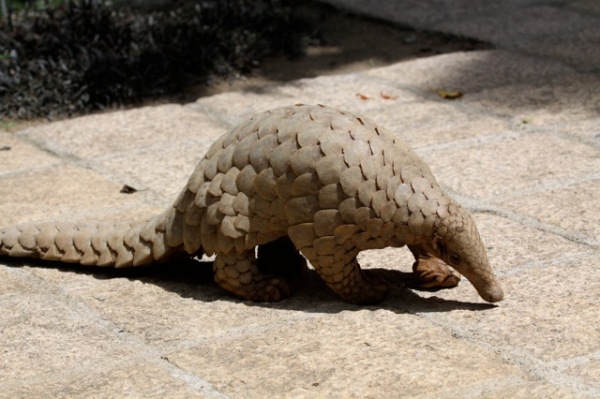
Pakistan sits squarely inside this story, even though the new study does not single the country out. The Indian pangolin, the only pangolin species found in Pakistan, is one of the world’s most trafficked mammals, hunted for its scales, which are used in traditional medicine and sold illegally abroad. WWF-Pakistan has warned that its population has drastically declined because of poaching, illegal trade, habitat loss, retaliatory killings and climate change. In the Potohar region, it has disappeared from 80 per cent of its former range. The Indian pangolin is classified as endangered on the IUCN Red List, and since 2016 it has been listed in Appendix I of CITES, which legally prohibits any international trade in the species and its products, including scales. WWF-Pakistan says studies indicate Pakistan is a transit route for smuggling pangolin scales, primarily to China and Southeast Asia.
That is the pattern the new study describes at a global scale: a species can be fully protected on paper — banned from international trade, listed as endangered, covered by federal and provincial wildlife laws — and still be pushed towards extinction by trade that is poorly recorded and weakly enforced. But Pakistan also imports and exports timber, fish, medicinal plants, ornamental species and pets through legal channels barely monitored at the species level. The study suggests the country’s true exposure to wildlife trade — as a source, a transit route and a market — is larger than its official records show.
What the researchers want to happen
The study does not call for a ban on wildlife trade. It calls for better counting. Countries do not need to build a new system from scratch, the authors argue: they could repurpose existing customs checks and zoosanitary, or animal-health, processes at borders to record which species are crossing, in what quantities, and where they came from. “If countries repurposed existing customs and zoosanitary processes we could develop a robust system to monitor trade, but this will require further engagement to implement at scale,” Hughes said. “If we are serious about halting biodiversity loss, we need far more comprehensive, transparent and globally coordinated reporting of wildlife trade.”
That is a deliberately unglamorous fix: forms, codes and shared databases, rather than dramatic raids or new bans. But the researchers argue it is the fix that makes everything else possible. Enforcement cannot target what it cannot see, and global targets cannot be judged by an indicator that covers only fish. New species are being described, traded and depleted faster than the monitoring system can follow. The old number — 50,000 species — made the trade look like a contained problem, centred on a few famous animals. The new number — 107,356, and probably more — makes it look like what it is: a trade that touches a large share of the living world, most of it legal, most of it barely recorded, and much of it unassessed.
Frequently asked questions
How many species are in the global wildlife trade?
At least 107,356 species, according to the study published in Science Advances on 30 October 2026 — more than double the previous estimate of about 50,000 from IPBES. The researchers say the true number is probably higher still, because so much trade goes unrecorded.
Is most wildlife trade illegal?
No. The study estimates legal trade is worth about US$220 billion to US$300 billion a year, compared with US$28.4 billion to US$39.5 billion for illegal trade. The authors estimate about 99.99 per cent of detected trade is legal, though unseized illegal trade is hard to measure.
What kinds of wildlife are traded?
Almost everything: timber, seafood, medicinal plants, pets, cut flowers, ornamental fish and fungi, as well as ivory, tiger parts and pangolin scales. The study counted up to 47,685 animal species and 59,671 plant species across the sources it examined.
How does wildlife trade harm species?
Where population data exist, traded populations are on average 50 to 60 per cent smaller than untraded populations. The study links trade to 294 global extinctions, 25 species surviving only in captivity, and 192 local extinctions.
What do the researchers want governments to do?
Standardise and share trade records using existing customs and animal-health checks at borders, so every country records which species are traded, in what quantities and from where — letting governments assess whether trade is sustainable and measure progress against global targets, which currently rely on an indicator covering only fish stocks.
Conclusion
The wildlife trade is twice as big as the world thought. That is the message of a study that counted, for the first time, across plants, animals and fungi, and found 107,356 species in use and traded, against an old estimate of about 50,000. Most of that trade is legal, worth hundreds of billions of dollars a year. Yet for most species involved, there is little or no data on how much is traded, where it comes from, or what it is doing to wild populations. Traded populations are already, on average, 50 to 60 per cent smaller than untraded ones. The fix is not dramatic, but it is far-reaching: count the trade properly, using the border checks countries already run, and share the records openly.
This article is for general information and education only. It is not legal or financial advice.
Sources
- https://www.unimelb.edu.au/newsroom/news/2026/october/global-wildlife-trade-twice-previous-estimates-but-true-scale-stays-hidden (University of Melbourne, 31 October 2026)
- https://phys.org/news/2026-10-global-wildlife-previous-species-major.html (Phys.org, 30 October 2026)
- https://www.science.org/doi/10.1126/sciadv.aei3504 (Science Advances, 30 October 2026)
- https://particle.news/story/study-shows-global-trade-in-wild-species-exceeds-107000-species (Particle, 31 October 2026)
- https://exposingthebiggame.blog/2026/10/31/twice-as-many-plants-and-animals-sold-in-wildlife-trade-as-previously-thought-says-report/ (The Guardian, via Exposing the Big Game, 30 October 2026)
- https://mongolia.panda.org/?390818/WWF-Pakistan-urges-immediate-action-to-save-pangolins (WWF-Pakistan, 14 February)
- https://1027wbow.com/2026/10/31/countries-reach-cop17-deal-to-speed-up-biodiversity-action-but-money-still-short/ (Reuters, via 102.7 WBOW, 31 October 2026)
