
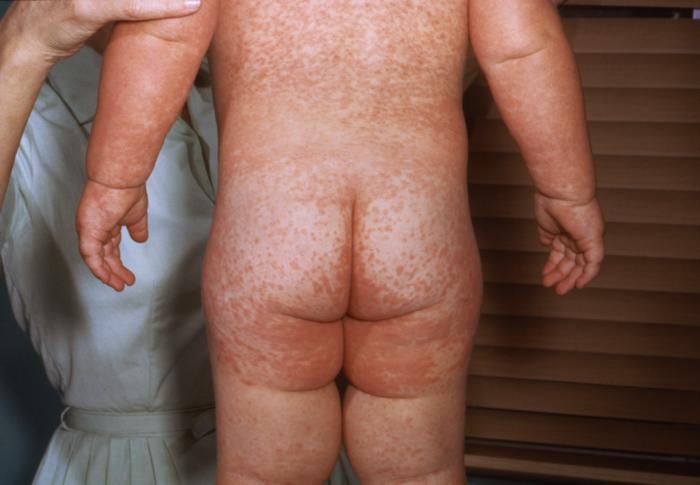
US measles cases pass 4,850 as 2026 total more than doubles all of 2025
The United States has now recorded 4,852 confirmed cases of measles in 2026, the country’s health agency reported on 30 October, a total already more than double the number seen in the whole of last year — with two months of the year still to go. The latest weekly update added 264 cases, a faster rise than the week before, and underlined how a disease the US declared eliminated a quarter of a century ago has returned as a large, spreading outbreak.
The figures come from the US Centers for Disease Control and Prevention (CDC), which published its weekly update on Thursday 30 October, covering cases reported up to noon on 29 October. Almost all of the cases are linked to outbreaks rather than isolated infections, and almost all are in people who were not vaccinated or whose vaccination status is unknown. The centre of the outbreak is Pennsylvania, where state health officials reported more than 1,400 cases, the largest state outbreak in the country in more than three decades.
At a glance
What happened: The CDC reported 4,852 confirmed measles cases in the US in 2026 as of 29 October, up 264 in a week, with 511 people hospitalised.
Why it matters: The 2026 total is already more than double the 2,289 cases recorded in all of 2025, and the US is weeks away from a decision on whether it has lost its measles-free status.
What happens next: The CDC is due to publish its next weekly update on 6 November, and the PAHO commission meets from 10 to 13 November to review the US elimination status.
The numbers behind the latest update
The CDC’s update, published on 30 October, put the 2026 total at 4,852 confirmed cases. That was 264 more than the 4,588 cases reported a week earlier, a week-on-week rise of 5.8 percent. The increase was faster than the 4.0 percent rise recorded the previous week, interrupting what had briefly looked like a slowdown in the spread.
Of the 4,852 cases, 4,834 were reported by 47 jurisdictions — the 50 states plus the District of Columbia and New York City, counted separately — and 18 were among international visitors to the United States. The CDC counts only confirmed cases that state health departments have formally notified to it, and it notes that it is aware of probable cases that are not included in the total, so the true number of infections is likely to be higher.
The CDC reported 43 new outbreaks in 2026, and 96 percent of all confirmed cases — 4,666 of 4,852 — were linked to outbreaks, including 1,384 cases from outbreaks that started in 2025 and carried over into this year. The CDC defines an outbreak as three or more related cases.
Hospitalisations stood at 511, about 11 percent of all reported cases. Children under five accounted for 812 cases, people aged five to 19 accounted for 2,010, and adults aged 20 and over accounted for 1,996. The pattern of who is falling ill has barely changed all year: 96 percent of cases in 2026 were in people who were unvaccinated or whose vaccination status was unknown, up from 93 percent in 2025.
The CDC has confirmed three measles-associated deaths in 2026, a figure it says is subject to change as reviews are completed. That national figure is lower than the death toll reported by Pennsylvania alone, a gap that has become a dispute in its own right and is explained below.
Pennsylvania: the centre of the outbreak
Pennsylvania has by far the most cases of any state. Its health department reported 1,426 cases and 268 hospitalisations as of 30 October, according to Reuters. The outbreak there began in late April, west of Philadelphia, and has since spread to 39 of the state’s 67 counties. It is the largest outbreak in Pennsylvania in more than 30 years, and the worst single-state outbreak in the United States in 35 years, according to the Associated Press.
Lancaster County, about 60 miles west of Philadelphia, has carried the heaviest burden. It had 391 confirmed cases by early October, close to 40 percent of the state total at that point. Lancaster is home to the largest Amish population in the United States, around 44,000 people, as well as some of the country’s oldest Mennonite communities. Vaccination rates in those close-knit communities have historically run below those of the general population, though experts stress that low uptake there is a matter of culture and habit rather than religious doctrine.
The outbreak has also spread well beyond those communities. State health officials have said the highest number of infections in recent months has been among adults aged 24 to 49, and kindergarten vaccination rates have fallen in every county in central Pennsylvania since 2020.
Pennsylvania has reported five measles-associated deaths this year. Two were unvaccinated adults, aged 18 and 40. Two were infants too young to have received the measles, mumps and rubella (MMR) vaccine. The fifth was an unvaccinated resident of Lancaster County. The state’s first two deaths, announced in August, were the first measles deaths recorded in Pennsylvania in 35 years.
The gap between the state’s five deaths and the CDC’s national figure of three comes down to how a measles death is counted. Pennsylvania counts a death as measles-associated when a person with confirmed measles dies within 30 days of developing symptoms, unless the death resulted from an unrelated event. The CDC applies its own confirmation process and has not said where its three confirmed deaths occurred. The agency said it is working with the Council of State and Territorial Epidemiologists to develop a standardised case definition for deaths due to measles, to make reporting consistent across states. The disagreement has also become political: Pennsylvania’s governor, Josh Shapiro, and the US health secretary, Robert F. Kennedy Jr, have clashed publicly over how the deaths are classified.
There are signs the Pennsylvania outbreak may have passed its worst point. The Associated Press reported that case numbers in the state had fallen from their September peak, although some doctors expect them to rise again as winter brings more indoor gatherings.
A year that has already doubled 2025
The scale of 2026 becomes clear when it is set against recent years. For the whole of 2025, the CDC recorded 2,289 confirmed measles cases across 45 jurisdictions, with 48 outbreaks. That was itself the highest annual total since 1991. The 2026 total of 4,852 has now more than doubled it, with two months of the year remaining.
Go back further and the change is even sharper. In 2024 there were 285 cases and 16 outbreaks; in 2023 there were just 59. Even 2019, the previous worst year of the modern era, saw 1,274 cases — roughly a quarter of this year’s total so far.
The national picture is not only about Pennsylvania. Cases have been reported in 47 jurisdictions, and the year’s outbreaks include chains that began in West Texas in January 2025 and spread through several states. The CDC’s figures show that 1,384 of this year’s cases came from outbreaks that started in 2025, a reminder that this is not a series of separate, short-lived clusters but a long-running episode that has crossed from one calendar year into the next.
That continuity is what makes the coming PAHO review so consequential. Measles is one of the most contagious diseases known. It spreads through the air when an infected person coughs or sneezes, and the CDC says a person can catch it simply by being in a room where someone with measles has been. Up to nine out of 10 unprotected people close to an infected person will catch the virus, according to the CDC.
Why measles is so hard to stop once it takes hold
Measles is often remembered as a childhood rash, but it can be a serious illness. Before the vaccine was introduced, an estimated 48,000 people were hospitalised and 400 to 500 people died in the United States every year because of measles, according to the CDC. Complications include pneumonia and encephalitis, swelling of the brain.
That is why public health officials focus so heavily on vaccination coverage. The CDC says that when more than 95 percent of people in a community are vaccinated, most people are protected through community immunity, often called herd immunity. National coverage among US kindergarteners has fallen from 95.2 percent in the 2019–20 school year to 92.4 percent in 2025–26, leaving about 280,000 kindergarteners at risk during the current school year, according to the CDC. National averages also hide much lower coverage in particular communities.
The protection offered by the vaccine itself is strong. Two doses of the MMR vaccine are about 97 percent effective at preventing measles, and one dose is about 93 percent effective, according to the CDC. Breakthrough infections in vaccinated people do happen, particularly where large amounts of virus are circulating, but they remain uncommon. The fact that 96 percent of this year’s cases were in people who were unvaccinated or whose status was unknown is, in the CDC’s own data, the clearest single fact about the outbreak.
The decision that could end 26 years of measles-free status
Measles was declared eliminated in the United States in 2000, meaning there was no continuous spread of the virus within the country and new cases appeared only when someone caught the infection abroad and brought it home. It was a historic public health achievement, built on decades of routine childhood vaccination. Cases have still appeared every year since, but until now none of the chains of transmission has lasted long enough to count as endemic.
That may be about to change. The Pan American Health Organization’s regional commission for verifying measles elimination is due to meet from 10 to 13 November to review the US position. The commission will examine data for 2025 and the first half of 2026, and the question it must answer is whether the same strain of the virus has circulated without interruption for 12 months or more. PAHO set 20 January 2025, the start of the West Texas outbreak, as the beginning of the period under review.
The decision will turn on genetics as much as on case numbers. Researchers have identified a particular genotype, known as D8-9171, in cases in West Texas, Utah and South Carolina, and whole-genome sequencing has traced a continuous chain linking outbreaks across several states, according to reporting on the evidence. The commission’s decision is not a foregone conclusion: case totals alone do not prove a single unbroken chain, and the meeting is closed, with conclusions sent to PAHO’s director before any public announcement. A ruling would be a classification rather than a new medical rule, but it would formally acknowledge that measles is once again spreading on its own inside the United States. Canada lost its elimination status in November 2025, and under PAHO’s rules a lost status cannot be regained in less than a year.
What happens next
The immediate course of the outbreak will be visible in the CDC’s next weekly update, expected on 6 November. That update will show whether the faster weekly growth seen in the 30 October figures — 264 new cases, up from 178 the week before — continues.
The bigger moment comes a few days later, when the PAHO commission meets from 10 to 13 November. A public announcement may lag the meeting itself, because the commission’s conclusions go first to PAHO’s director, who formally communicates the classification to national authorities.
For health departments, the work in the meantime is the same work it has been all year: finding cases quickly, tracing their contacts, and offering vaccination in the communities where coverage is lowest. For parents and travellers, the CDC’s advice is straightforward — check MMR vaccination status, especially before travel, and speak to a healthcare provider about catching up on any missed doses.
Frequently asked questions
How many measles cases has the US had in 2026?
The CDC reported 4,852 confirmed cases as of 29 October 2026, in an update published on 30 October. That is more than double the 2,289 cases recorded in the whole of 2025, and far above the 285 cases recorded in 2024.
Where are most of the cases?
Pennsylvania has the most, with 1,426 cases reported by its health department as of 30 October. Lancaster County has been the hardest-hit area, with 391 cases by early October. Cases have been reported in 47 jurisdictions across the country, and 96 percent of all cases are linked to outbreaks.
How many people have died?
The CDC has confirmed three measles-associated deaths in 2026, a figure it says is subject to change. Pennsylvania’s health department has separately reported five measles-associated deaths in the state. The difference comes down to how a measles death is classified, and the CDC is working with state epidemiologists to agree a standard definition.
How effective is the MMR vaccine?
Two doses of the MMR vaccine are about 97 percent effective at preventing measles, and one dose is about 93 percent effective, according to the CDC. In 2026, 96 percent of cases were in people who were unvaccinated or whose vaccination status was unknown.
What is measles elimination status, and could the US lose it?
Elimination means there has been no continuous spread of measles inside a country for at least 12 months. The US has held the status since 2000. A PAHO commission meets from 10 to 13 November 2026 to decide whether the virus has circulated without interruption for 12 months or more, which would mean the status is lost. Canada lost its status in November 2025.
Why is measles spreading again?
Measles is extremely contagious and spreads through the air. It takes hold where vaccination coverage has fallen: US kindergarten MMR coverage has dropped from 95.2 percent in 2019–20 to 92.4 percent in 2025–26, below the 95 percent level needed for community protection. Global measles activity is also rising, so more travellers bring the virus into the country.
Conclusion
The 30 October update from the CDC put a number on a year that was already the worst for measles in the United States since 1991: 4,852 cases, 511 hospitalisations, and an outbreak centred on Pennsylvania that has claimed five lives by the state’s own count. The figures are concentrated in specific communities where vaccination coverage has fallen, and they have now lasted long enough to put a 26-year public health achievement at risk.
The next two weeks will decide how the story is recorded. The CDC’s update on 6 November will show whether the spread is still accelerating, and the PAHO commission’s meeting from 10 to 13 November will decide whether the United States formally loses its measles-free status.
Sources
- https://www.cdc.gov/measles/data-research/index.html (CDC, updated 30 October 2026)
- https://kwsn.com/2026/10/30/us-measles-cases-rise-to-4852-cdc-says/ (Reuters, 30 October 2026)
- https://www.contagionlive.com/view/measles-update-october-30-2026 (Contagion Live, 30 October 2026)
- https://buckscountybeacon.com/2026/10/as-a-historic-measles-outbreak-hits-pennsylvania-amish-country-more-show-openness-to-vaccines/ (Associated Press, 30 October 2026)
- https://www.medicaldaily.com/us-measles-4588-cases-paho-elimination-review-november-480442 (Medical Daily, 23 October 2026)
- https://publichealth.jhu.edu/2026/why-review-of-the-uss-measles-elimination-status-has-been-delayed (Johns Hopkins Bloomberg School of Public Health, 2026)
- https://www.newscubby.com/briefings/us-measles-cases-4852-pennsylvania-outbreak-october-30-2026 (Newscubby, 30 October 2026)
This article is for general information and education only. It is not legal or financial advice.
