
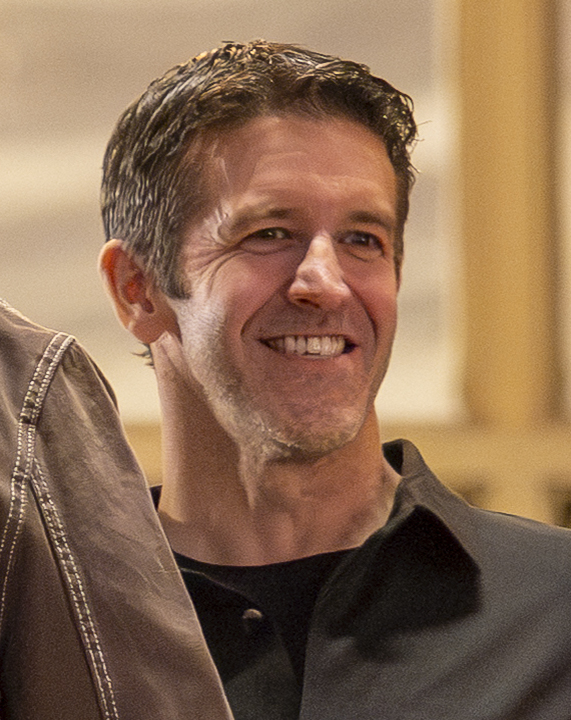
Apple’s new boss John Ternus says ‘product’ comes first — and AI must earn its place
Apple has a new chief executive, and in his most revealing interview since taking the job, he summed up his approach in a single word: product.
John Ternus, who became Apple’s chief executive on 1 September 2026, told WIRED’s Steven Levy that building great products is what he cares about most. The interview, reported on 30 October, came two months into his time in charge and days before his first earnings call as chief executive, which was due on 2 November. It was the clearest statement yet of how the man who spent 25 years inside Apple’s hardware teams intends to run the company.
The timing mattered. Apple has spent the past two years being described as behind on artificial intelligence, after delays to a more powerful version of its Siri voice assistant. Ternus did not deny that Apple has taken a different path. He argued that it was the right one.
“We don’t want to ship AI for AI’s sake,” he said. “When we’re doing it right, people won’t have to think about whether it was AI that made this happen or more traditional software. What matters is, did we build something that they really love?”
That sentence, reported by TechCrunch on 31 October, is likely to be quoted back to him for a long time. It sets a test that is easy to understand and hard to pass: Apple will be judged not on how much AI it announces, but on whether the products that contain it feel better to use.
At a glance
What happened: Apple chief executive John Ternus told WIRED, in an interview reported on 30 October 2026, that “product” is his main focus, and said Apple would use AI to make products better rather than shipping AI for its own sake.
Why it matters: The interview sets the terms for Ternus’s leadership after he succeeded Tim Cook on 1 September, at a time when Apple is under pressure over AI, Siri delays and rising component costs.
What happens next: Ternus was due to lead his first earnings call as chief executive on Monday, 2 November 2026, alongside chief financial officer Kevan Parekh.
The interview in one word
Levy asked Ternus what it was like to take on a much bigger job than the hardware role he had held before. Ternus answered that the wider role had given him a chance to learn new parts of the business, but that his passion had not changed.
“One of the amazing privileges of this job is getting to learn so many new things,” he said. “I have been and will continue to learn and go deeper into different areas. But, you know, I do love product. I’m super passionate about it.”
The point was echoed by the two senior executives Levy also quoted. Johny Srouji, Apple’s hardware chief, said: “John is going to be a great CEO. He’s a product guy at heart.” Greg Joswiak, the marketing chief, said: “John innately has a great sense for great products, and that’s what Apple is.”
That is not a surprising thing for an Apple chief executive to say. Product has been at the centre of Apple’s story since Steve Jobs returned to the company in the 1990s. What makes it notable now is who is saying it. Ternus is not a finance or operations leader in the mould of his predecessor, Tim Cook. He is an engineer who ran hardware, and his answer suggests he intends to lead from the product side, not from the spreadsheet side.
It also fits with how he has behaved since September. Bloomberg reported in early October that Ternus had taken direct control of Apple’s design teams and was working in the company’s design studio several times a week, sometimes visiting more than once in a single day. Cook, by contrast, was reported to have visited the studio for about an hour once a month at most. The report said no search for an outside design chief was under way, with Ternus acting as the final decision maker for design.
What he said about AI
The most closely watched part of the interview was what Ternus said about artificial intelligence. Apple has faced two years of questions about whether it has fallen behind. Its rivals have launched AI assistants, AI search tools and AI-powered devices at a fast pace. Apple, meanwhile, delayed a more powerful version of Siri, which TechCrunch noted finally launched this summer.
Ternus did not accept the framing that Apple was behind. Asked whether Apple had fallen behind because of Siri’s problems, he said: “Everyone has an opinion. I really like where we’re at.”
He was clearer about what Apple would do next. “I would hope people recognize that the work we do is building incredible products that make their lives better. We’re absolutely going to leverage AI to do that,” he said.
The idea is that AI should disappear into the product. If a photo looks better or a task takes fewer steps, the user should not need to know whether AI or ordinary software did the work. That is a different pitch from companies that put an AI chatbot at the front of everything they sell.
Levy also pressed Ternus on AI agents — software that carries out tasks on its own, rather than waiting for the user to tap or type. Could agents replace apps, and even replace the way people use computers today? Ternus allowed that they could make life easier, but he drew a line around the work of making things.
“That could make life really easy, I suppose, but the creation of products is a deeply human and personal thing, something that we love to do,” he said.
On regulation, he did not take a position. Asked whether he supported AI regulation, he said: “Our focus is on making sure that our products are secure and safe, and protecting the users’ information.”
Taken together, the answers describe a cautious, product-led approach to AI: use it where it improves something a person already does, and put safety and privacy ahead of speed. The risk is that caution looks like slowness.
The touchscreen Mac — and why now
The interview took place in Los Angeles at the launch of the new MacBook Pro, and the most concrete example of Ternus’s approach was sitting on the table in front of him: the first Mac with a touchscreen.
Apple unveiled the new 14-inch and 16-inch MacBook Pro models on 28 October, with a PROLED XDR display that supports touch. The laptops were due to reach customers from 6 November, priced from 2,899 dollars for the 14-inch model and 3,399 dollars for the 16-inch model. They run on Apple’s M5 Pro or M5 Max chips.
For more than a decade, Apple had argued against touchscreen laptops. The company said they created ergonomic problems, that reaching up to touch a vertical screen was tiring, and that software designed for a mouse and trackpad would not work well with fingers.
Ternus explained the change in simple terms. Touch, he said, was now possible without making the laptop worse. “We needed to get to a point where adding touch didn’t make the product lesser in any way. It didn’t make it heavier. It didn’t make it thicker. That came together with the OLED screen, the best display we’ve ever put into a Mac,” he told WIRED.
He was careful to say that touch was an addition, not a replacement. “The Mac is first and foremost an indirect input device, built around the trackpad and keyboard. But I think there’s times when it’s comfortable and handy to have touch,” he said.
Srouji said improvements in display technology, custom silicon and software had finally made the change possible. “Ten years is a very, very long time. Many things have changed, whether it’s the display technology, the custom silicon, et cetera,” he said.
Apple also changed the machine around the screen. It redesigned the cooling system so warm air is directed away from the display, and reworked the hinge to reduce screen movement when users tap or swipe. The macOS interface adjusts some elements for touch, and Apple added touch gestures for Dynamic Island and support for precise adjustments in professional apps such as Logic Pro and DaVinci Resolve.
For now, touch remains limited to the new MacBook Pro models. When Levy asked whether it would come to the MacBook Air or the iMac, Ternus declined to discuss future products.
Who Ternus is, and how he got the job
Ternus, 51, joined Apple’s product design team in 2001 and spent 25 years at the company before becoming chief executive. He became vice president of hardware engineering in 2013 and senior vice president of hardware engineering in 2021. Apple has credited him with work on the iPad and AirPods, and he oversaw hardware engineering during the company’s move from Intel processors to its own Apple silicon chips in Mac computers.
Apple announced the leadership change on 20 April 2026. Cook, who had been chief executive since 2011, moved to the role of executive chairman, with a focus on engaging with policymakers around the world. Ternus took over on 1 September and joined Apple’s board on the same day. The change was approved unanimously by the board, which Apple described as the result of a long-term succession planning process.
Cook’s own account of the handover came in an interview with The Independent in early October. He said the transition had “started years ago” and that he had stepped down on 1 September, eight days before Ternus unveiled the iPhone Duo, Apple’s first foldable iPhone, in part to give his successor momentum. “I wanted John to have some wind at his back,” Cook said.
Cook also said he was not interfering in Ternus’s running of the company. “I’m not meddling. I’m not a meddler,” he said. Ternus echoed that in the WIRED interview. Of Cook, he said: “Tim is available to help wherever I ask him.”
The handover is the first change of chief executive at Apple since Cook succeeded Jobs in 2011. Cook built Apple into one of the most valuable companies in the world. Ternus inherits that machine. His challenge is different from Cook’s: not to build the machine, but to decide what it should make next, and how fast AI should change it.
Why the timing matters
The WIRED interview landed just before a moment when Ternus’s words would be tested against numbers. Apple was due to report its fiscal fourth-quarter results on Monday, 2 November, with the results published at 1:30 p.m. Pacific Time and a conference call at 2:00 p.m. Pacific Time. It was to be Ternus’s first earnings call as chief executive, alongside chief financial officer Kevan Parekh.
The quarter itself covered 28 June to 26 September 2026, so it would not include the iPhone Duo, which went on sale on 23 October, or the new touchscreen MacBook Pro. It would include the first days of sales of the iPhone 18 Pro, which went on sale on 18 September.
Apple had guided investors to expect total revenue growth of 9 to 11 percent year on year for the quarter. With revenue of 102.5 billion dollars in the same quarter a year earlier, that pointed to revenue of about 111.7 billion to 113.7 billion dollars. Apple had also guided for a gross margin of 47 to 48 percent.
Analysts were expected to ask about more than the headline number. Memory pricing and supply constraints were likely to come up, along with the outlook for the December quarter, which is Apple’s biggest of the year because of holiday shopping. That outlook would be the first issued under Ternus.
Frequently asked questions
Who is John Ternus?
John Ternus is the chief executive of Apple. He took over from Tim Cook on 1 September 2026, after 25 years at the company. He joined Apple’s product design team in 2001, became vice president of hardware engineering in 2013 and senior vice president of hardware engineering in 2021.
What did Ternus say about AI in the WIRED interview?
He said Apple would “absolutely” use AI to build better products, but added: “We don’t want to ship AI for AI’s sake. When we’re doing it right, people won’t have to think about whether it was AI that made this happen or more traditional software. What matters is, did we build something that they really love?” He also said product creation was “a deeply human and personal thing”.
Why has Apple added a touchscreen to the MacBook Pro now?
Apple unveiled the touchscreen MacBook Pro on 28 October 2026, after arguing for more than a decade that touchscreen laptops were a bad idea. Ternus said Apple had waited until touch could be added without making the laptop heavier or thicker, which became possible with the new PROLED XDR OLED display. Touch is an addition to the keyboard and trackpad, not a replacement for them.
How much does the new touchscreen MacBook Pro cost?
The 14-inch model starts at 2,899 dollars and the 16-inch model starts at 3,399 dollars. The laptops were due to reach customers from 6 November 2026. Touchscreen support is limited to these new MacBook Pro models for now, and Ternus declined to say whether it would come to the MacBook Air or iMac.
When was Ternus due to lead his first earnings call as Apple chief executive?
Apple was due to report its fiscal fourth-quarter 2026 results on Monday, 2 November 2026, with a conference call at 2:00 p.m. Pacific Time. Ternus was due to take part alongside chief financial officer Kevan Parekh. The quarter covered 28 June to 26 September, so it did not include the iPhone Duo or the new MacBook Pro.
What happened to Tim Cook?
Tim Cook stepped down as Apple’s chief executive on 1 September 2026 after 15 years in the role and became executive chairman. He has said he is not interfering in Ternus’s running of the company, and Ternus said in the WIRED interview: “Tim is available to help wherever I ask him.”
Conclusion
John Ternus has had two months as Apple’s chief executive, a run of new products, and now his clearest public statement of how he intends to lead. The message is simple: product comes first, AI must earn its place inside products people love, and making things remains a deeply human job.
If the products that follow live up to the words, Ternus will have set Apple on a clear course. If they do not, the interview will be remembered as the moment a new chief executive told the world what he cared about, just before the world asked him to prove it.
This article is for general information and education only. It is not legal or financial advice.
Sources
- https://9to5mac.com/2026/10/30/john-ternus-defines-his-focus-as-apple-ceo-with-one-word/ (9to5Mac, 30 October 2026)
- https://techcrunch.com/2026/10/31/apple-ceo-says-the-company-doesnt-want-to-ship-ai-for-ais-sake/ (TechCrunch, 31 October 2026)
- https://www.macobserver.com/news/apple-ceo-john-ternus-talks-ai-new-products-and-his-biggest-passion/ (MacObserver, 30 October 2026)
- https://www.macobserver.com/news/john-ternus-explains-apples-decision-to-finally-bring-touch-to-the-mac/ (MacObserver, 30 October 2026)
- https://www.macrumors.com/2026/10/06/apple-q4-2026-earnings-nov-2/ (MacRumors, 6 October 2026)
- https://www.macrumors.com/2026/10/08/tim-cook-interview-about-john-ternus/ (MacRumors, 8 October 2026)
