
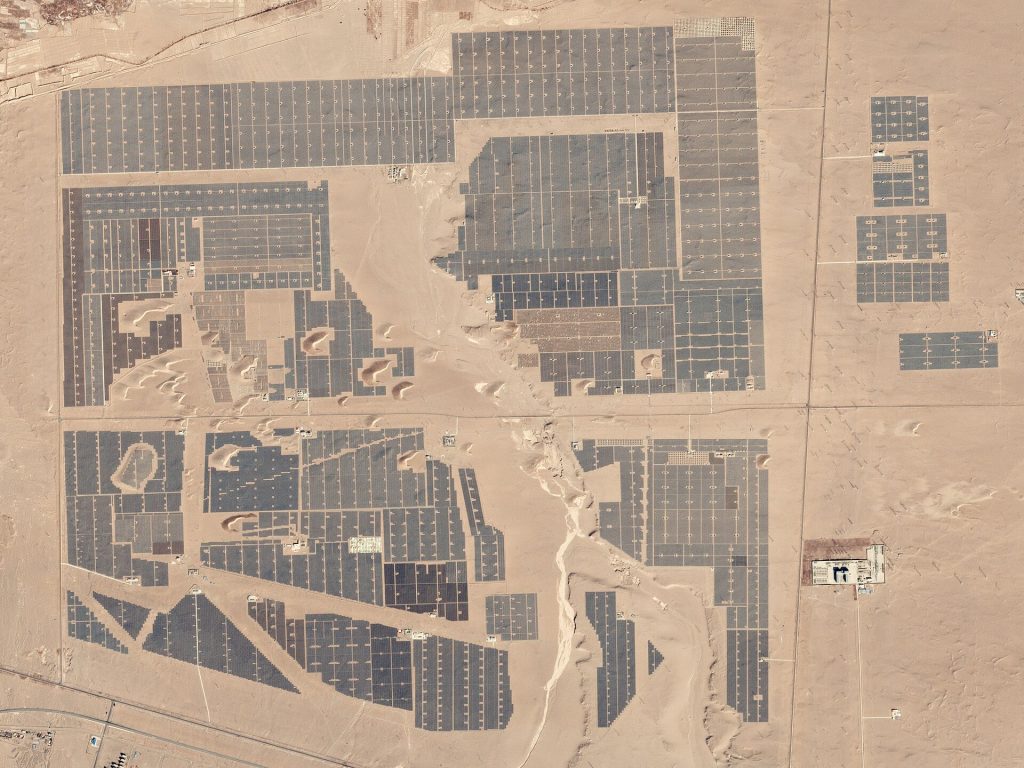
China’s solar power overtakes coal for the first time
China has passed a landmark in the global energy shift: solar power is now its largest source of generating capacity, overtaking coal for the first time. Grid-connected solar capacity reached 1.31 terawatts by the end of September, just ahead of coal’s 1.30 terawatts, within a total of 4.13 terawatts, the China Electricity Council said in a report released on 28 October. Officials confirmed the milestone at a briefing in Beijing on Friday, 30 October.
Renewables now make up nearly three-fifths of China’s power capacity. Total renewable capacity reached 2.52 terawatts, or almost 61 per cent of the total, while wind and solar combined passed 2 terawatts. Electricity use in the first nine months of the year rose 3.9 per cent to 8,070 terawatt-hours. Full-year use is forecast at about 10.8 trillion kilowatt-hours, up 4 to 4.5 per cent.
The milestone is about capacity, not the electricity actually produced. Solar panels only generate power when the sun shines, while coal plants can run around the clock, so coal still supplies far more of the electricity China uses. Even so, the crossover marks a structural change in the world’s largest power system, long built around coal.
Demand is still growing fast. The National Energy Administration said electricity used for computing power is expected to grow by more than 100 billion kilowatt-hours a year during the 15th Five-Year Plan, from 2026 to 2030, reaching 800 billion kilowatt-hours by 2030 — roughly 6 per cent of total power use.
Why it matters
China is the world’s biggest electricity user and coal consumer, so a shift in its power mix moves global energy markets and the outlook for coal. It also strengthens China’s lead in clean-energy manufacturing, from solar panels to batteries. For the climate, the test is how quickly solar cuts actual coal burning, not just coal’s share of capacity.
What happens next
The China Electricity Council expects total installed capacity to reach about 4.3 terawatts by the end of the year, with wind and solar making up half of it and coal’s share falling to about 31 per cent. Supply and demand are expected to stay broadly balanced through the winter peak, though some regions could face tight supply if cold waves hit.
This article is for general information and education only. It is not legal or financial advice.
Sources
- https://en.sxcoal.com/news/detail/2115724704688099330 (Sxcoal, 29 October 2026)
- https://bccci.net/blog/nation-pushes-for-energy-dynamism/?fsp_sid=807112 (China Daily, 30 October 2026)
