
Taiz Siege: One Million People Trapped in Yemen’s Third-Largest City as UN Warns Time Is Running Out
For more than a month, around one million people in Taiz, Yemen’s third-largest city, have been cut off from the outside world. Roads are closed, food prices have soared, water production has halved, and hospitals are running out of fuel and medicine. This week, the United Nations warned that time is running short to reach the city — and that the people trapped inside cannot wait much longer.
This is the story of the Taiz siege: how a city of one million was sealed off, what life is like for the families inside, who the UN blames, and what could happen next.
What is happening in Taiz?
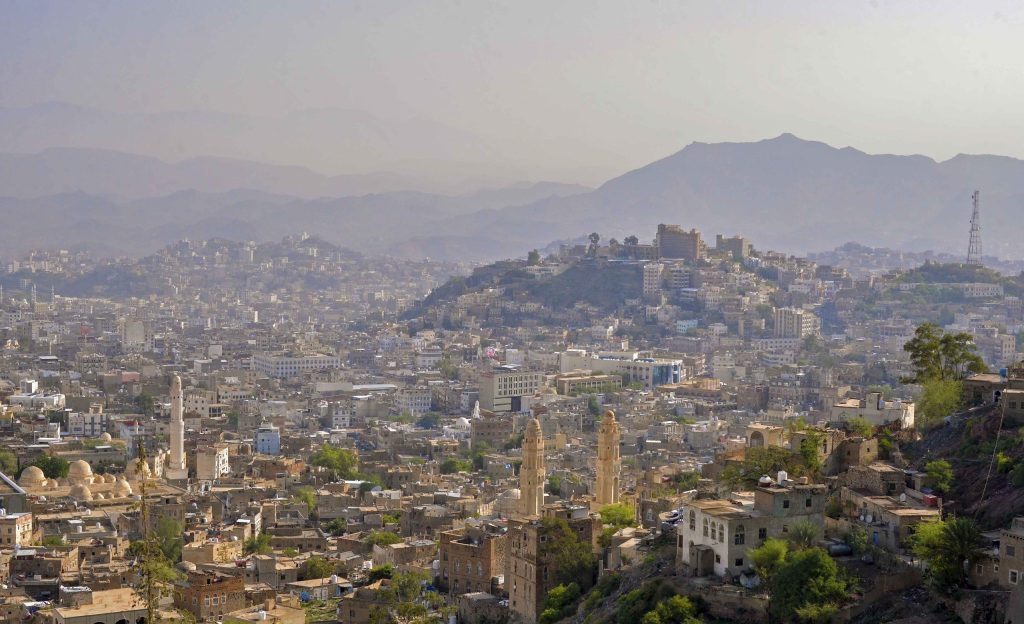
Taiz sits in the highlands of south-western Yemen. It is the country’s third-largest city, home to about one million of Yemen’s roughly 43 million people. Since early October 2026, the city has been largely cut off after fighting between the Iran-backed Houthi movement and forces loyal to Yemen’s internationally recognised government closed the roads in and out.
The United Nations says the blockade has now lasted about 20 days in its tightest form, with earlier closures stretching back to the start of October. Supplies of food, fuel, water and medicine are running out. The UN’s humanitarian chief, Tom Fletcher, has called on all sides to open the roads, saying: “We have food and medicines ready to move, but the roads must be opened by the parties and those supplies must be let in as soon as possible.”
The UN spokesman, Stephane Dujarric, went further, describing the encirclement as a “medieval siege” — a blockade cutting off about one million people from food, water and medicine.
How the city was cut off
The siege did not happen in a single day. It tightened in stages in early October, as fighting flared again after a summer of renewed conflict across Yemen.
First, government forces closed the eastern al-Houban crossing, which leads into Houthi-held territory. They said they were responding to attempted Houthi incursions. Then, by 4 October, Houthi fighters had taken the town of al-Turbah, south-west of the city. That severed the Taiz–Al-Turbah–Aden Road, the main artery carrying goods from Aden, the interim capital, into Taiz.
With those two routes gone, the city lost both of its land routes. Three other routes out of the city are also closed. Since then, only minimal amounts of fuel, food and other essential goods have reached Taiz.
Fuel stations in the city have been closed since 5 October. Local authorities say access restrictions are also stopping water tankers from the Al-Dhabab basin, an important source of drinking water, from entering the city.
On 20 October, the United Nations warned that road closures and a lack of security were blocking vital supplies. Two days later, the World Health Organization warned that 42 health facilities in Taiz were reporting severe shortages of fuel, oxygen, medicine and medical supplies.
It is not the first time Taiz has been besieged. Houthi fighters reached the outskirts of the city in 2015, after pushing the government out of the capital, Sanaa, in September 2014, and besieged it from the north, east and south. But local officials say this is the worst closure yet. Salah Ahmed Ghaleb al-Majidi, acting director of the governorate’s Siege Affairs Department, described it as “the worst catastrophic siege imposed on a Yemeni city since the war began in 2014”.
What life is like inside the siege
For families in Taiz, the siege is measured in prices — and in what has simply disappeared from the shops.
The cost of the food and fuel still available has more than doubled since the fighting escalated, according to Al Jazeera’s reporting from the city. The UN’s humanitarian chief put the rise in basic food prices at at least 50 per cent. Either way, food that was already hard to afford is now out of reach for many families.
Water has become one of the hardest daily problems. The city’s water production has dropped by half. The cost of water delivered by tanker has roughly tripled since the fighting escalated, according to UN officials. Families who can still buy water pay far more for far less of it.
Fuel is nearly gone. With filling stations closed since 5 October, there is little petrol or diesel for cars, generators or water pumps. That matters for almost everything: without fuel, hospitals cannot run generators, water cannot be pumped, and food cannot be moved around the city.
Rubbish is piling up in the streets because it cannot be taken to landfill sites outside the city. And with no way in or out, people who left Taiz for a short trip have found they cannot get back into their own city.
The UN’s World Food Programme says more than 800,000 people in Taiz and the surrounding areas have been cut off from food aid since early October. The city also hosts about half of the 300,000 people displaced across Yemen by the latest fighting, according to the UN — people who fled their homes elsewhere and are now trapped in a besieged city themselves.
Hospitals under strain
The siege is hitting hospitals hardest of all. By late October, the World Health Organization said 42 health facilities in Taiz were reporting severe shortages of fuel, oxygen, medicine and medical supplies.
Access to the city’s hospitals had fallen by between 60 and 70 per cent by the end of the siege’s second week, according to the governorate’s health office. That means most sick and injured people simply cannot reach a doctor.
The crisis is especially dangerous for pregnant women. The UN Population Fund (UNFPA) said on 3 November that fighting and access restrictions in and around Taiz have left more than 13,000 pregnant women without essential healthcare, and are leading to more miscarriages.
Only five of the 27 designated emergency maternal and newborn health facilities in and around Taiz are still partly working, UNFPA said. Essential healthcare has been cut off for about 147,000 women and girls of childbearing age.
At Taiz’s main maternal care facility, the Yemeni-Swedish Motherhood and Childhood Hospital, daily deliveries of babies have fallen to around five, down from about ten before the fighting. Most of the hospital’s incubators are out of use because there is no fuel to run them. Insecurity, shelling and high fuel prices are stopping many women and medical staff from travelling to the hospital at all.
“Unless access restrictions are lifted in the coming days, the hospital itself could close,” UNFPA’s Yemen representative, Francesco Galtieri, told reporters in Geneva.
Yemen already had the highest maternal death rate in the Arab region before the conflict flared again this summer, with an estimated three women dying each day from complications during childbirth. UNFPA expects about 1,500 obstetric emergencies among 6,400 displaced pregnant women because of the physical and psychological stress of the conflict and mass displacement. Many pregnant women in Taiz are surviving on little more than tea, bread or rice, Galtieri said.
“No woman should have to risk her life simply because she is giving birth to a new life in a war zone,” he said.
Who does the UN blame — and what the Houthis say
The United Nations and aid agencies place most of the blame for the shortages on the Houthis. Residents and UN officials say Houthi forces have deprived Taiz civilians of food, medicine and other essentials since fully encircling the city, according to Human Rights Watch, which spoke to residents, doctors and civil society workers in October.
The Houthi side disputes that account. Its leader has said the way remains open for food, medicine and aid, and a Houthi spokesperson told Human Rights Watch that government forces, not the Houthis, were blocking the roads into the city.
What is not in dispute is that the roads are closed and supplies are not getting through. The UN humanitarian chief has demanded that all warring parties reopen the blocked roads and allow aid to pass without obstruction. “Civilians must not be held hostage to the conflict,” Fletcher said.
The UN’s frustration has been sharpened by another issue: its own staff are among the victims. Fletcher expressed outrage over the death of UN human rights staff member Mohammed Al-Shami while held in detention by the Houthi movement, and demanded the immediate release of 70 UN personnel, along with dozens of other humanitarian workers, who remain detained.
Why Taiz matters
Taiz matters for two reasons. The first is its size: with about a million residents, it is one of Yemen’s biggest cities, and the siege affects more people than almost any other single battle in the war. The second is what it shows about where Yemen’s war is heading.
Yemen’s war began in 2014, when the Houthis pushed the government out of Sanaa. Fighting has continued, on and off, ever since, with the government backed by Saudi Arabia and the Houthis backed by Iran. Taiz has been on the front line for much of that time, partly besieged since 2015.
The latest escalation began this summer, when conflict resumed across the country. Since August, about 300,000 people have been forced from their homes by the fighting, according to the UN. The siege of Taiz is the sharpest single example of what that escalation means for civilians: a whole city sealed off, with no reliable way to bring in food or take out the sick.
It also matters beyond Yemen. The country sits on one of the world’s busiest shipping routes, at the southern end of the Red Sea. A war that traps a million people in one city is also a warning about how quickly a local fight can become a regional crisis — and how little attention it can receive while the world watches other conflicts.
What happens next
Several things will decide what happens in Taiz in the coming days.
First, the roads. The UN says it has food and medicine ready to move and is pressing all sides to open the corridors. If the Taiz–Aden road or the al-Houban crossing reopens, even partly, supplies could start flowing within days. If they stay closed, the UN warns the situation will keep getting worse.
Second, the hospitals. If fuel does not arrive, more health facilities will close, including the city’s main maternity hospital. UNFPA has warned that the Yemeni-Swedish hospital could shut altogether unless access restrictions are lifted in the coming days.
Third, the fighting. The siege is the result of a military struggle for control of the roads around Taiz. As long as both sides see those roads as prizes, civilians will pay the price. A local ceasefire or a deal to open a humanitarian corridor would change the picture quickly — but no such deal has been announced.
Fourth, the wider war. The UN says about 300,000 people have been displaced across Yemen since August. If the fighting spreads further, Taiz could become one crisis among many, competing for aid and attention.
For now, the people of Taiz are waiting — for roads to open, for water tankers to arrive, for fuel to reach the hospitals. The United Nations has said time is short. The families inside the city already know that.
Frequently asked questions
Where is Taiz?
Taiz is a city in the highlands of south-western Yemen. It is Yemen’s third-largest city, with about one million residents, and sits on the road between Sanaa, the capital, and Aden, the interim capital.
What is the siege of Taiz?
Since early October 2026, fighting between the Houthi movement and forces loyal to Yemen’s internationally recognised government has closed the roads in and out of Taiz. The Houthis took the town of al-Turbah, cutting the main road to Aden, while government forces closed the eastern al-Houban crossing. The city is now largely cut off from food, fuel, water and medicine.
How many people are affected?
About one million people live in Taiz. The UN’s World Food Programme says more than 800,000 people in Taiz and surrounding areas have been cut off from food aid since early October. The city also hosts about half of the 300,000 people displaced across Yemen by the latest fighting.
What is the UN asking for?
The UN is asking all warring parties to reopen the blocked roads and allow humanitarian aid to pass without obstruction. UN humanitarian chief Tom Fletcher said the UN has food and medicines ready to move, adding: “Civilians must not be held hostage to the conflict.”
Are hospitals still working in Taiz?
Barely. The World Health Organization says 42 health facilities in Taiz are reporting severe shortages of fuel, oxygen, medicine and medical supplies. Only five of 27 emergency maternal and newborn health facilities in and around the city are still partly working.
Who is to blame for the siege?
The UN and aid agencies say Houthi forces have encircled the city and deprived civilians of essentials. The Houthis dispute this and say government forces are blocking the roads. Both sides agree the roads are closed; they disagree about who closed them.
Sources
– Al Jazeera, “Mapping the siege of Yemen’s Taiz, and the price families are paying”, 6 November 2026: https://www.aljazeera.com/news/2026/10/28/mapping-the-siege-of-yemens-taiz-and-the-price-families-are-paying
– Reuters, “Thousands of pregnant women at risk in Yemeni city of Taiz, UN agency says”, 3 November 2026: https://northlandnewsradio.com/2026/11/03/thousands-of-pregnant-women-at-risk-in-yemeni-city-of-taiz-un-agency-says/
– UN Office for the Coordination of Humanitarian Affairs, via Yemen Monitor, “UN Calls for Opening Taiz Roads and Unhindered Humanitarian Access”, 3 November 2026: https://www.yemenmonitor.com/en/Details/ArtMID/908/ArticleID/186751
– UN humanitarian chief Tom Fletcher’s statement on Yemen, via Democrata, 3 November 2026: https://www.democrata.es/en/international/the-un-humanitarian-chief-denounces-the-brutal-price-of-the-war-on-civilians-and-warns-about-taiz/
– Al Jazeera, “Houthis’ monthlong siege on Taiz creating misery for trapped Yemenis”, 4 November 2026: https://234radio.com/houthis-monthlong-siege-on-taiz-creating-misery-for-trapped-yemenis/
This article is for general information and education only. It is not legal or financial advice.

Pingback: Saudi Arabia Calls Reported $51 Billion Houthi Demand 'Pure Fabrication' as Yemen War Flares Again - Findivoza