
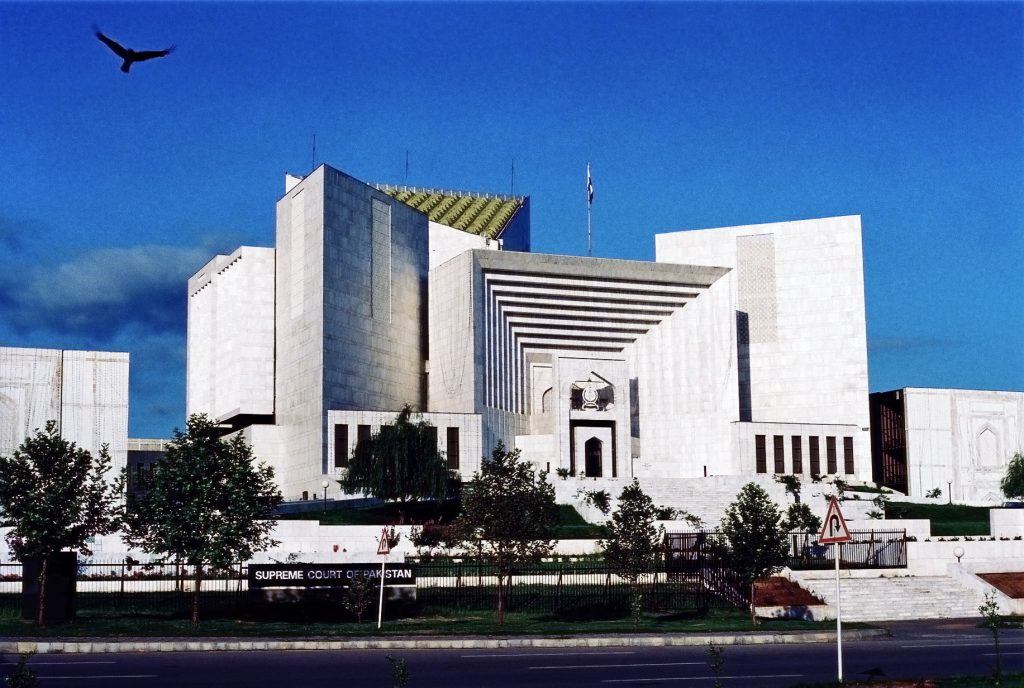
Islamabad High Court: an acquittal must not follow you on your character certificate
Imagine this. You were accused of a crime, you went through the courts, and a judge cleared you. The case is over. The law says you are not guilty. Then you apply for a job abroad, or for a visa to study overseas, and the police hand you a character certificate that still mentions the old case. The embassy officer reading it sees a criminal case number next to your name. No explanation is attached. No word says you were cleared. In that moment, the acquittal — the most important fact of all — is missing, and the accusation is doing the talking.
That is the problem the Islamabad High Court dealt with on Saturday, 31 October 2026. The court ruled that police cannot mention a First Information Report, known as an FIR, in a character certificate once the case behind it has ended in a final acquittal. A certificate that does so is unlawful, the court said, and it declared the certificate in the case before it illegal. It also told the Inspector General of Islamabad Police to put a proper procedure in place, so that people in the same position do not have to go to court one by one to get a document that reflects what the law already says about them.
The ruling is narrow in one sense and wide in another. It decides one citizen’s petition about one certificate and one FIR, registered at Shalimar Police Station in Islamabad. But its reasoning applies to every similar certificate issued in the capital: once a court has finally acquitted a person, the police have no legal basis, in the court’s view, to keep presenting that person to the outside world as if the case were still hanging over them.
At a glance
What happened: The Islamabad High Court ruled on 31 October 2026 that police must not mention an FIR in a character certificate after the case has ended in a final acquittal, and it declared the petitioner’s certificate unlawful.
Why it matters: Character certificates are routinely required for visas, jobs abroad and immigration, so a lingering FIR reference can look like a criminal record even when a court has cleared the person.
What happens next: The Inspector General of Islamabad Police has been directed to devise a procedure so that FIRs ending in final acquittal are left out of character certificates, and people do not have to approach the courts to secure that correction.
What the court decided
Justice Ayyaz Shaukat issued the ruling while allowing a citizen’s petition. The petitioner had asked the court to remove a reference to an FIR registered at Shalimar Police Station from his police character certificate. The court accepted the petition, declared the certificate unlawful, and ordered the FIR reference removed.
The core of the decision is simple: once proceedings have concluded in an acquittal that has attained finality — meaning the acquittal is final and no longer open to challenge in the ordinary way — there is no legal justification for carrying the FIR into a police character certificate. A person acquitted by a competent court, the court held, could not continue to be presented as someone carrying criminal liability. To keep listing the case wrongly creates the impression that the person is a criminal.
The court also directed the Inspector General of Islamabad Police to devise a procedure addressing such cases, so that citizens are not compelled to approach the courts to obtain a right the law already recognises. Two limits are worth noting: the ruling does not order the police to delete the FIR from their own records, and no deadline for the new procedure was reported.
The case behind the ruling
The facts, as reported, are straightforward. A citizen applied for a police character certificate in Islamabad. The certificate he received mentioned a criminal case registered against him at Shalimar Police Station. That case, however, had ended in his acquittal by a court. The certificate did not present him as a person who had been tried and cleared. Instead, according to the reporting of the decision, it described him as having been discharged during the investigation, and said the court had agreed with that outcome.
The court took exception to that wording. It found the description incorrect, because the man had not simply been let go during an investigation. He had been acquitted by a court, after proceedings that reached a final conclusion. Describing him as merely discharged diminished the legal effect of the acquittal. It made a full clearance sound like an unfinished or administrative outcome, when in law it was a complete answer to the accusation.
That is why the court did more than order a single line deleted. It declared the whole certificate unlawful, because the document as issued misrepresented the petitioner’s legal status.
What is a police character certificate, and why one line matters
A police character certificate, also called a police clearance certificate, is an official document issued by the police confirming whether a person has a criminal record registered with the police in a particular district or jurisdiction. In Pakistan, the certificates are issued by the relevant provincial or territorial police authority. In Islamabad, the issuing authority is the Islamabad Capital Territory Police, which uses the Police Khidmat Markaz system.
The document is not a formality. It is one of the first papers a person is asked to produce when applying for a visa, moving abroad for work, applying to a foreign university, or immigrating to another country. Employers in Gulf countries routinely require it before issuing an employment visa. Immigration authorities in countries such as the United Kingdom, Canada, Australia and the United States ask for it. A 2026 guide to the process puts it plainly: without the certificate, most international applications stall.
That is why a single line carries so much weight. The person reading it — a visa officer, an employer, a university administrator — usually has no access to the court file and no time to investigate the history of a case. They read the certificate as a summary of the police record. If it lists an FIR, the natural reading is that the applicant has, or had, a criminal case. If it lists nothing, the natural reading is that the applicant has a clear record. The certificate is also a document that travels.
Discharged is not acquitted: why the wording mattered
The most revealing part of this case is not the order to delete the FIR reference. It is the court’s objection to the word “discharged”. In ordinary language, discharged and acquitted can sound similar. Both suggest that a person is no longer facing a case. In law, they are not the same thing, and the court insisted on the difference.
A discharge during investigation generally means the police or an investigating authority decided not to proceed, or a court agreed at an early stage that the case should not go forward. An acquittal, by contrast, comes after a trial, when a court decides that the accusation has not been proved and the accused person is not guilty. An acquittal is a judicial finding. It carries the full authority of the court, and when it attains finality it settles the matter.
The certificate in this case blurred that distinction. It said the petitioner had been discharged during the investigation and that the court had agreed. The court found that description incorrect, because the petitioner had in fact been acquitted. To call an acquitted person merely discharged understates what the court decided and leaves the reader with the impression that the case ended for administrative reasons rather than because the person was cleared.
The constitutional argument in plain language
The court did not treat this as a mere paperwork error. It linked the continued inclusion of an acquitted case in a character certificate to violations of constitutional protections under Articles 4, 9, 14 and 15 of the Constitution of Pakistan. Those four articles, as described in the reporting of the judgment, concern treatment in accordance with law, security of person, human dignity and freedom of movement.
Put in plain language, the argument runs like this. Article 4 protects the right of every individual to be dealt with in accordance with law. Article 9 protects the security of the person. Article 14 protects the dignity of man. Article 15 protects freedom of movement. If the police keep presenting an acquitted person as a person with a criminal case, the court reasoned, they are not dealing with that person in accordance with law, because the law has already cleared them. They are also touching that person’s dignity and security, and interfering with the freedom to move, work and settle that depends on a clean certificate.
What police can still keep — and what they cannot show
One of the most useful parts of the ruling is the line it draws between two kinds of record. The court distinguished between retaining information in internal police records and disclosing that information in a certificate issued to a citizen for use abroad. Police may preserve records of criminal cases for lawful internal purposes. An FIR is a real document: it records that a complaint was made and an investigation began. The police may need to keep it for their own administrative purposes, for statistics, for reference if related matters arise, and for the ordinary running of a police force. The ruling does not require the deletion of the underlying FIR from internal police records, and it does not pretend that the case never happened.
What the police cannot do, on this ruling, is carry that internal record onto the face of a character certificate once the case has ended in a final acquittal. The certificate is a public-facing document, shown to employers, embassies and universities. After a final acquittal, the certificate must reflect that answer.
What happens next
The immediate next step belongs to the Islamabad police. The court directed the Inspector General of Islamabad Police to devise a procedure addressing cases of this kind, so that FIRs resulting in final acquittals are excluded from character certificates.
No deadline for that procedure was reported, and no details of its design were published with the judgment.
What can be said is that the direction changes the burden. Until now, a person in the petitioner’s position had to discover the error, hire a lawyer, file a petition and wait for a court to order the correction. The court has said that should not be necessary. The right already exists under the law, and the procedure is meant to make the correction automatic, or at least routine. There is also the question of appeal. A High Court ruling of this kind can be challenged before the Supreme Court of Pakistan, which hears appeals from the Islamabad High Court. No appeal had been reported at the time of writing. The ruling does not apply, on its face, beyond Islamabad: the court’s jurisdiction covers the Islamabad Capital Territory, so a person in another province would need a ruling from their own high court or a change in police practice, although this reasoning may help them argue the point. It also does not guarantee that a corrected certificate will be accepted abroad, since foreign embassies and employers apply their own rules.
Frequently asked questions
What did the Islamabad High Court actually decide?
Police must not mention an FIR in a character certificate after the case has ended in a final acquittal. The court declared the petitioner’s certificate unlawful, ordered the FIR reference removed, and directed the Islamabad police chief to devise a procedure so that similar cases are handled without each person having to go to court.
What is a police character certificate?
It is an official police document confirming whether a person has a criminal record registered with the police in a particular district or jurisdiction. In Pakistan it is commonly required for visa applications, jobs abroad, immigration, foreign university admission and some government and senior private-sector roles.
What is an FIR?
An FIR, or First Information Report, is the first report registered with the police about an alleged offence. It records that a complaint was made and an investigation began. It is not a finding of guilt.
Does the ruling delete the FIR from police records?
No. Police may keep the record for lawful internal purposes. What they must not do is carry the FIR onto the face of a character certificate once the case has ended in a final acquittal.
Why did the court object to the word “discharged”?
The certificate described him as discharged during the investigation, even though he had been acquitted by a court. The court held that this wording diminished the legal effect of the acquittal: an acquittal is a judicial finding after trial that the accusation was not proved, and calling it a mere discharge understates that finding.
Does the ruling help people outside Islamabad?
Not directly. The court’s jurisdiction covers the Islamabad Capital Territory, and the direction was given to the Islamabad police chief. People in other provinces would need a ruling from their own high court or a change in police practice, although this reasoning may help them argue the point.
What should I do if my certificate mentions a case that ended in acquittal?
Check the certificate as soon as you receive it, keep a copy of the court’s acquittal order, and ask the issuing police authority to correct it, referring to this ruling. If the correction is refused, seek legal advice. This article is general information, not legal advice for any individual case.
Conclusion
The Islamabad High Court’s ruling is short, practical and humane. It does not invent a new right. It insists that an old one be honoured in the documents people actually use. A person who has been acquitted has been cleared by a court. The police certificate that person carries into an embassy, an employer’s office or a university admissions desk should say so.
The test of the ruling will be what happens next at the police counter. If the Inspector General’s new procedure works, the correction the petitioner had to fight for in court will become routine. If it is slow or narrow, people will keep discovering the error only when a visa or a job is at stake. Either way, the principle is now clear: an acquittal is final, and a character certificate must not pretend otherwise.
This article is for general information and education only. It is not legal or financial advice.
Sources
- https://beflaz.com/news/2026-11-01-islamabad-high-court-bars-fir-mention-in-character-certifica-241675.html (Dawn, 1 November 2026, via Beflaz mirror)
- https://islamabadtribune.com/5220/ (Islamabad Tribune, 31 October 2026)
- https://bloompakistan.com/ihc-orders-major-change-in-police-character-certificates/ (Bloom Pakistan, 31 October 2026)
- https://azaaddigital.com/court-issues-major-ruling-on-police-character-certificates/ (Azaad Digital, 31 October 2026)
- https://exploreitbeyond.com/police-character-certificate-pakistan/ (Explore It Beyond, 2026 guide)
- https://en.wikipedia.org/wiki/Islamabad_High_Court (Wikipedia, accessed 1 November 2026)
