
COP31 in Turkey: Satellites Reveal a Landfill Methane Problem the Host Cannot Ignore
Turkey is about to host COP31, the world’s biggest climate summit, in the resort city of Antalya from 9 to 20 November 2026. Methane reduction is one of the priorities the host country has set for the talks. But just days before the delegates arrive, new satellite data has revealed an awkward problem at home: Turkey’s rubbish dumps are leaking large amounts of methane, one of the most powerful greenhouse gases, into the air.
The findings come from researchers at the University of California, Los Angeles (UCLA), who analysed satellite observations of Turkey’s largest landfill sites. Their work shows that the country’s waste sector is releasing methane at rates that place some of its dumps among the largest landfill emitters ever recorded. The discovery puts Turkey’s climate promises under the spotlight at the very moment the world is watching its leadership.
This is not a small, hidden problem. Turkey is the world’s fifth-biggest emitter of methane from solid waste, behind only China, the United States, Russia and Brazil, according to data from the non-profit emissions tracker Climate TRACE. And the satellite evidence suggests that fixing a handful of large landfills could cut a large share of those emissions quickly.
What the satellites found
The UCLA team studied public data from Carbon Mapper, collected by the Tanager-1 satellite between January 2025 and the end of May 2026. The satellite can spot plumes of methane rising from the ground, allowing researchers to measure how much gas is escaping from individual sites.
Across Turkey’s 10 highest-emitting waste sites, the researchers identified 70 separate methane plumes. The average detected rates ranged from 841 kilograms to 7.4 metric tons of methane per hour. Three of the sites were around Istanbul, while the others were near Ankara, Izmir and Antalya — the very city where COP31 will be held.
The single biggest source was a landfill west of Istanbul, near Seymen, which showed an average detected rate of about 7.4 tons of methane an hour. That figure puts it just below the highest-emitting landfill on a global list from 2025. As Tia Scarpelli, the waste sector lead for the emissions-monitoring non-profit Carbon Mapper, told Reuters: “What stands out is how big its emissions are and how persistently large they are.”
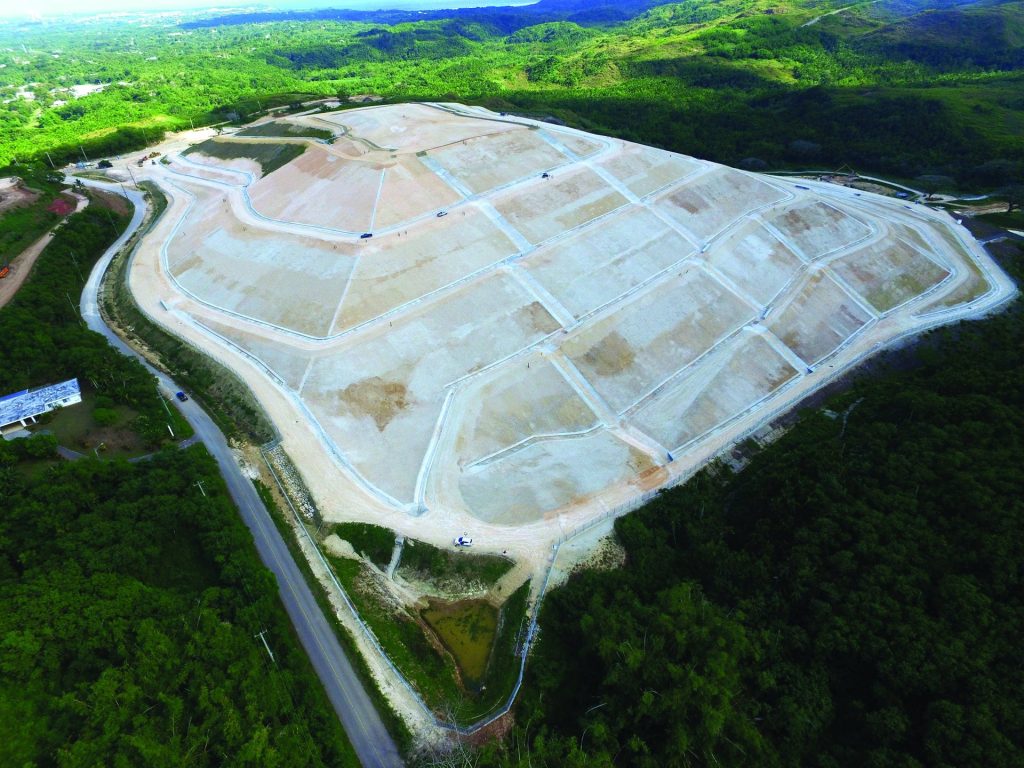
The Seymen site is enormous. It takes in about 8,500 tons of household waste every day, out of Istanbul’s average total of around 20,000 tons a day. Istanbul is a city of 16 million people, and its rubbish has to go somewhere. Trucks line up to empty mixed household waste onto a vast landscape of decomposing rubbish, while a nearby plant captures some of the gas to generate electricity.
But the satellites show that much of the gas is escaping anyway. Gas capture is widespread at Turkey’s larger municipal landfills, the researchers found — yet large releases continue. Collection systems alone, it seems, do not prevent the leaks.
Why methane matters so much
To understand why this matters, it helps to know what methane is and why scientists worry about it so much.
Methane is the biggest cause of climate change after carbon dioxide (CO2). It is produced when organic material — food scraps, paper, garden waste and other natural matter — rots without oxygen, which is exactly what happens when rubbish is buried in a landfill. The gas then seeps up through the waste and into the atmosphere.
Methane is over 80 times more potent than CO2 in its first 20 years in the air. That means a ton of methane traps far more heat than a ton of carbon dioxide over that period. The good news is that methane does not stay in the atmosphere as long as CO2. So cutting methane emissions now could slow global warming relatively quickly — within years rather than decades.
That is why methane has become such a focus of climate talks. Unlike some climate problems, which need new technology or decades of change, landfill methane can be reduced with tools that already exist: better gas collection, repaired covers and wells, and keeping organic waste out of dumps in the first place.
The Seymen landfill: a closer look
The Seymen landfill, west of Istanbul, is the clearest example of the problem — and of the argument over how big the problem really is.
At the site, the municipal operator ISTAC collects the gas produced as buried organic material decomposes, and an energy company burns the gas to generate electricity at a plant that opened in 2020. The facility produces about 22,000 megawatt-hours of electricity a month, according to a 2025 report by the energy news website Enerji Gunlugu. In other words, the landfill is not just a dump: it is also a power station of sorts, turning waste gas into electricity.
But ISTAC disputes the satellite figures. Aysen Erdincler, an ISTAC official, told Reuters that the site’s methane emissions typically ranged between 4 and 6 tons per hour — lower than the satellite average of 7.4 tons. She said a single satellite reading of 12 tons per hour on one day had pushed the average up.
Fatih Ugur, the head of ISTAC, added that about 30 hectares of the landfill had been left uncovered on the day of that measurement, while work was being carried out on methane-collection pipes. Low atmospheric pressure had also contributed to a higher concentration of methane, he said. Erdincler added that methane leaks at the site were usually around 25% — meaning about a quarter of the gas escapes instead of being captured.
Turkey’s Environment Ministry made a similar point. In response to a request for comment, it said the satellite data were not from continuous measurements and could not be used to measure annual emissions at the Seymen landfill. A satellite passing overhead captures a snapshot, not a year-round record.
These are fair points, and they matter. A single day’s reading is not the same as a yearly total. But the researchers’ answer is that the pattern — not just one reading — is what stands out. The Seymen site showed large emissions repeatedly, and the same was true across the other nine sites. The problem, in their view, is persistent, not a one-day accident.
The people living next door
For the people who live near the Seymen landfill, the issue is not only about the climate. It is about daily life.
The landfill sits about 5 kilometres (3 miles) from nearby homes. Methane itself is odourless, but the decomposing organic waste also releases pungent compounds that smell terrible. In summer, the smell drifts through windows left open against the heat.
Soner Duz, a 46-year-old barber who lives near the site, described the routine to Reuters. “Around four or five in the morning, the smell suddenly comes,” he said. “It wakes you up.”
Turkey’s response: the Zero Waste drive
The Turkish government says it is already working on the problem. Its main tool is the Zero Waste Initiative, a government scheme that promotes recycling and aims to reduce the amount of waste going to landfills. Less waste buried means less methane produced in the first place.
The Environment Ministry said the national “recovery rate” for waste — the share that is recycled or recovered rather than dumped — had risen to 37.53% in 2025, up from 13% in 2017. That is real progress. But it also shows how far there is to go: nearly two-thirds of waste is still not recovered.
The ministry also pointed out that ISTAC benefits economically from capturing methane efficiently, because the gas is used to generate electricity. In theory, the operator has a financial reason to plug the leaks.
Yet the numbers show that Turkey’s waste methane problem has been getting worse, not better. Methane emissions from waste in Turkey rose nearly 25% in the decade to 2024, compared with a global rise of 6.5% over the same period, according to World Bank data based on the European Commission’s EDGAR emissions database. Turkey’s waste emissions have stayed at around 21 million tons of CO2 equivalent a year since 2020.
Selim Yildirim, chief climate policy researcher at D84, a non-profit policy and media platform based in Ankara, told Reuters that Turkey’s waste system sits in the middle: it has more developed waste disposal than poorer countries, but less effective management, recycling and value recovery than much of Europe. The country, in other words, has the basics in place — but not the systems that would stop the leaks.
The missing pledge
There is one gap that the satellite findings make hard to ignore: Turkey has not joined the Global Methane Pledge.
The pledge was launched at COP26 in 2021. It asks countries to work together towards a collective 30% cut in methane emissions from 2020 levels by 2030, and more than 30 countries later backed national targets under it. Turkey is not listed among the participants.
That does not mean Turkey has made no methane commitments at all. But joining the pledge would be a clear public signal, and it would put the country’s progress under international scrutiny. Yildirim said Turkey could still join during COP31 — but he warned that signing up would not guarantee results on its own.
“The issue is whether you can effectively turn it into action and implement it,” he said, adding that regulation was needed to push operators to capture and reuse methane. A promise, in other words, is only as good as the rules that enforce it.
This is the awkward position Turkey finds itself in as COP31 host. It has chosen methane reduction as a priority for the summit, while its own landfills are among the world’s biggest methane sources and it has not signed the main international pledge on the gas. Delegates and campaigners in Antalya are likely to ask pointed questions about that gap.
Why fixing landfills is the quick win
The hopeful part of this story is that landfill methane is one of the most fixable climate problems there is. Experts say the solutions are known, affordable and fast.
Tia Scarpelli of Carbon Mapper explained that cutting landfill methane needs two things: diverting organic material before it reaches dumps, and improving the rate at which gas is captured once waste is buried. That means better-designed collection systems, and repairs to cracked covers or faulty gas wells — the kind of maintenance that stops gas escaping through gaps.
Because Turkey’s largest detected emissions were concentrated at a few sites, fixing those landfills could deliver disproportionate gains, Scarpelli said. “There is this huge mitigation potential by just addressing the largest landfills to reduce their national emissions,” she said.
This is the key insight from the satellite data. Turkey does not need to fix hundreds of small dumps to make a difference. A small number of very large sites account for a large share of the problem. Targeting them first — Seymen and the other nine sites in the study — could cut national waste emissions sharply.
The same logic applies around the world. Landfills are one of the few sources of greenhouse gases where the fix is mostly about maintenance and management, not new inventions. Divert food waste to composting, cover landfills properly, capture the gas and burn it for power — and emissions fall fast.
What to watch at COP31
When COP31 opens in Antalya on 9 November, here is what to watch on the methane question:
Will Turkey join the Global Methane Pledge? Joining would be the simplest way for the host to answer the satellite findings. Watch for an announcement in the first days of the summit.
Will there be new rules for landfill operators? Experts say pledges need regulations behind them. Any Turkish plan to force operators to capture more gas, repair covers and report their leaks would matter more than a signature.
Will other countries face the same scrutiny? Turkey is fifth in the world for waste methane, but the four countries ahead of it — China, the United States, Russia and Brazil — are far bigger emitters. Satellite monitoring is now exposing landfill leaks everywhere. The question is whether COP31 turns that data into action.
Will the Zero Waste drive speed up? Turkey’s recovery rate has improved from 13% to 37.53% since 2017. The summit is a chance to set a faster timetable — and to show how the country will cut the 21 million tons of CO2 equivalent its waste sector still emits each year.
Frequently asked questions
What is COP31?
COP31 is the 31st United Nations climate summit, where governments from around the world meet to negotiate action on climate change. It takes place in Antalya, Turkey, from 9 to 20 November 2026.
What is methane, and why does it matter?
Methane is a greenhouse gas produced when organic waste rots without oxygen, as it does in landfills. It is the biggest cause of climate change after carbon dioxide, and it is over 80 times more potent than CO2 in its first 20 years in the air. Cutting methane can slow warming relatively quickly.
How do satellites detect methane from landfills?
Satellites such as Tanager-1 carry sensors that can spot plumes of methane rising from the ground. Researchers at UCLA used public Carbon Mapper data from the satellite, collected between January 2025 and May 2026, to measure emissions from Turkey’s largest landfill sites.
Is Turkey part of the Global Methane Pledge?
No. The pledge, launched at COP26 in 2021, aims for a collective 30% cut in methane emissions from 2020 levels by 2030. Turkey is not listed among its participants, though experts say it could still join during COP31.
Can landfill methane be fixed?
Yes. The main solutions are to divert organic waste away from landfills, improve gas collection systems, and repair cracked covers and faulty gas wells. Because a few large sites produce a large share of emissions, fixing the biggest landfills first can deliver fast results.
Conclusion
Turkey goes into COP31 with a difficult story to tell. It has made methane reduction a priority for the summit, yet satellites have shown that its own landfills are leaking methane at rates that rank among the highest in the world. Its waste methane emissions have risen by nearly a quarter in a decade, it has not joined the Global Methane Pledge, and the people living near its biggest landfill wake up to the smell of rotting waste.
But the same findings also point to a solution. The leaks are concentrated in a handful of large sites, the fixes are known and affordable, and cutting methane is one of the fastest ways to slow global warming. If Turkey uses its turn as host to join the pledge, tighten the rules on landfill operators and target its biggest sites, COP31 could be remembered as the summit where the host cleaned up its own backyard first.
The satellites will be watching — and so will the rest of the world.
Sources
- Reuters, “As COP31 comes to Turkey, satellites reveal a landfill methane problem”, 7 November 2026: https://www.reuters.com/sustainability/cop/cop31-comes-turkey-satellites-reveal-landfill-methane-problem-2026-11-07/
- The Hindu, “As COP31 comes to Turkiye, satellites reveal a landfill methane problem”, 7 November 2026: https://www.thehindu.com/sci-tech/energy-and-environment/as-cop31-comes-to-turkiye-satellites-reveal-a-landfill-methane-problem/article71679128.ece
- Korea Times, “As COP31 comes to Turkey, satellites reveal a landfill methane problem”, 7 November 2026: https://www.koreatimes.co.kr/amp/world/20261107/as-cop31-comes-to-turkey-satellites-reveal-landfill-methane-problem
- TBS News, “COP31 host Turkey faces scrutiny over rising landfill methane emissions”, 7 November 2026: https://www.tbsnews.net/videos/tbs-english/cop31-host-turkey-faces-scrutiny-over-rising-landfill-methane-emissions-1595671
This article is for general information and education only. It is not legal or financial advice.
