
Nepal Names 2,465 People Missing After August’s Himalayan Floods as Death Toll Passes 1,455
Nepal has taken the painful step of naming thousands of people who are still missing more than two months after devastating Himalayan floods swept through the country in August. On Saturday, 7 November, the country’s disaster authority published the details of 2,294 Nepali citizens and 171 foreign nationals who vanished when the Bhotekoshi and Trishuli rivers flooded on 26 August 2026. The Nepal floods killed at least 1,455 people, and 5,285 are still officially missing.
For the families who have waited since August without news, the list is both an answer and a new kind of pain. It confirms, in black and white, that their loved ones are among the missing. But it also marks the moment when Nepal moves from searching for survivors to counting the dead, helping the living, and rebuilding what the water destroyed.
This article explains what Nepal announced, what happened on 26 August, who is on the list, and what happens next for the families still waiting.
What Nepal announced on 7 November
Nepal’s National Disaster Risk Reduction and Management Authority, known as the NDRRMA, released the details on Saturday. The list names 2,294 Nepali nationals from 32 districts, along with 171 foreign nationals from seven countries. The full list is published on the authority’s website.
The names on the list are not guesses. The authority said the list of Nepali citizens was put together from recommendations by the local governments where each missing person lived, and then approved by the District Disaster Risk Reduction and Management Committees in each of the 32 districts. The information about foreign nationals came through Nepal’s Department of Consular Services and the diplomatic missions of the countries involved.
But the list does not cover everyone who is missing. The NDRRMA says 5,285 people are still missing in total. The 2,465 names published on Saturday cover less than half of them. The authority said it had no further details about the remaining missing people who were not named in this list, and that a revised notice will follow once more details arrive from district offices and diplomatic missions.
The authority also made a request that shows how much uncertainty remains. If any person on the list is found alive, or is located, that person or their immediate family should submit a claim within seven days. In other words, even now, the door is not fully closed.
The floods of 26 August: what happened
The disaster began on the morning of 26 August 2026, near the border between Nepal and Tibet, the high Himalayan region that China administers. A huge glacial collapse — a massive fall of ice and rock from a glacier at Lhende Khola in Tibet — sent a wall of water, rock and debris surging down the mountains.
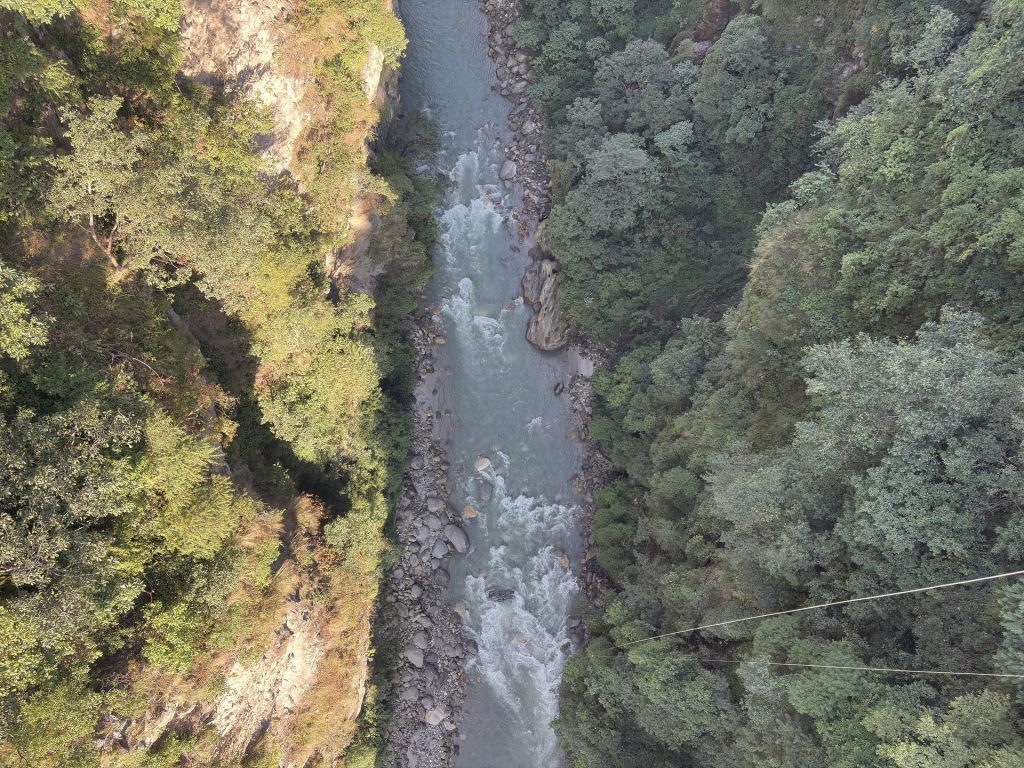
The floodwaters poured into the Bhotekoshi River, which flows south from the Himalayan border into Nepal, and then into the Trishuli River system. The rivers carried the flood downstream through towns and villages in northern and central Nepal, sweeping away homes, vehicles, roads and bridges, and damaging hydropower projects along the way.
Rasuwa district, which sits on the border with Tibet, was hit hardest. It is the district where the floodwaters first entered Nepal, and it accounts for the largest share of the missing — more than 1,500 of the Nepali nationals on the new list are from Rasuwa alone.
The flood also struck the Trishuli 3A hydropower plant, one of the projects on the river, where large numbers of workers were reported missing in the first days after the disaster. Roads were cut, bridges were washed away, and whole settlements along the river valleys were destroyed in a matter of hours.
The scale of the disaster
The numbers behind the Bhotekoshi-Trishuli floods are hard to take in. At least 1,455 people were killed, according to the NDRRMA. Another 5,285 people are still missing. Together, that means more than 6,700 people are dead or unaccounted for — one of the worst natural disasters in Nepal’s recent history.
The missing include people from far beyond Nepal. The list published on 7 November names 171 foreign nationals from seven countries, not counting India, because the authority said it had not yet received a confirmed list of missing Indian nationals from the Indian Embassy.
The foreign nationals named include 33 people from Australia, 11 from Russia, nine from South Korea, eight from Germany and two from Italy, as well as citizens of Malaysia and Ukraine. Malaysia was among the countries worst affected: 55 Malaysians were reported uncontactable after the floods, and Malaysia sent an 11-member disaster rescue team to Nepal on 5 September to help with the search. On 7 November, the Malaysian government announced a one-off payment of RM10,000 (around $2,100) for the family of each of the 54 Malaysian victims.
The missing are spread across 32 of Nepal’s districts. After Rasuwa, the list includes people from districts as far apart as Dhankuta and Dadeldhura in the east and west, Khotang, Bhojpur, Achham, Kapilvastu, Jajarkot, Sarlahi, Lalitpur, Kailali, Mahottari, Baglung, Taplejung, Jumla, Bajura and Kalikot, along with Nawalparasi, Udayapur, Kavrepalanchok, Tehrathum, Rukum, Saptari, Bardiya, Syangja, Ramechhap, Dang, Sindhupalchok and Sindhuli. The wide spread shows how far the floodwaters travelled — and how many people from across Nepal had been working, travelling or living in the river valleys when the water came.
Why so many people are still missing
One of the hardest questions about this disaster is why, more than two months later, so many people are still listed as missing rather than confirmed dead or found alive.
Part of the answer is the nature of the flood itself. A glacial flood does not rise slowly like a normal river flood. It arrives as a sudden surge of water mixed with rock, ice and mud, moving at great speed down steep mountain valleys. People caught in its path can be carried far downstream, buried under debris, or swept into places that rescue teams cannot reach. In some stretches of the Bhotekoshi and Trishuli valleys, the river runs through deep, narrow gorges with almost no road access.
The search operation was also limited by time and terrain. Nepal ran a 40-day search and rescue operation after the floods, and ended it on 5 October, shifting its focus to rehabilitation and reconstruction. By then, many bodies had been recovered, but thousands of people had simply never been found. In mountain disasters like this one, some victims are never recovered at all.
There is also a paperwork problem. Nepal’s missing-persons list only includes people whose status has been verified by a district committee. That verification takes time: a family must report the person missing, the local government must recommend the case, and the district committee must approve it. People whose families live far away, or who were travelling alone, or whose relatives are themselves among the missing, may never make it onto the list at all. That is why the published list of 2,465 names is much shorter than the official total of 5,285 missing.
What happens next for the families
For the families of the missing, the publication of the list starts a new and difficult phase.
First, there is the seven-day window. The NDRRMA has asked that if anyone on the list is found alive, or located, they or their family should come forward within seven days. The authority will then issue a revised notice with updated details from the district offices and from diplomatic missions.
Second, there is the question of official recognition. In Nepal, as in most countries, a missing person cannot simply be declared dead on the spot. Families usually need a formal process before they can claim compensation, settle property, or receive support as the family of a deceased person. The verified list is a step towards that process, because it gives each missing person an official record.
Third, there is the rebuilding. Nepal ended its search and rescue operation on 5 October and shifted its focus to rehabilitation and reconstruction in the affected areas. That means repairing roads and bridges, restoring power from damaged hydropower plants, and helping families who lost their homes. For a country where many people in the hills depend on a single road or a single bridge to reach markets, schools and hospitals, that work will take months, if not years.
For the foreign families, the process runs through their embassies and Nepal’s Department of Consular Services. Some governments, like Malaysia, have already announced direct financial help for the families of their victims. Others are still waiting for confirmed lists of their own nationals.
Why the Himalayas are so vulnerable
The Bhotekoshi-Trishuli floods are a reminder of a danger that is growing across the Himalayas. The region holds thousands of glaciers, and as the climate warms, those glaciers are melting and becoming less stable. When a glacier collapses, or when a lake formed by a melting glacier bursts, the result can be a sudden flood that gives people downstream almost no warning.
Nepal is one of the most exposed countries in the world to this risk. Its rivers run from the high Himalayas down through steep valleys where millions of people live, farm and work — including on hydropower projects that generate much of the country’s electricity. A flood that starts in a remote glacier can reach towns, power plants and roads within hours.
Scientists have warned for years that glacial lake outburst floods and similar disasters are becoming more likely as temperatures rise. The August floods, which began with a glacial collapse in Tibet and then devastated valleys across the border in Nepal, show that this is not a problem for one country alone. Water, ice and rock do not stop at borders — and neither do the consequences.
What this means for Nepal
The floods of August 2026 will shape Nepal for years. The human cost is already clear: more than 1,455 dead, more than 5,000 missing, and thousands of families left without answers. The economic cost is still being counted, in destroyed homes, washed-out roads and bridges, and damaged hydropower plants.
But the publication of the missing-persons list also shows something about how Nepal is handling the disaster. By naming the missing, district by district, the authorities are giving families an official record — and giving the rest of the country a clear picture of the scale of what happened. The list is incomplete, and the authorities say so themselves. A revised list will follow. Even so, it is the fullest public account yet of who was lost in the floods.
For the families, though, a list is not an ending. Until a person is found, or formally declared dead, they remain missing — and their families remain waiting. The seven-day window the authorities have set is a small sign that hope has not been entirely given up. But after two months, and after a 40-day search that has already ended, most of those families are preparing for the hardest outcome of all.
Frequently asked questions
How many people died in the Nepal floods of August 2026?
At least 1,455 people were killed in the Bhotekoshi-Trishuli floods of 26 August 2026, according to Nepal’s National Disaster Risk Reduction and Management Authority. Another 5,285 people are still officially missing.
How many people are on the missing-persons list Nepal published?
The list published on 7 November 2026 names 2,465 people: 2,294 Nepali nationals from 32 districts and 171 foreign nationals from seven countries. It covers less than half of the 5,285 people who are officially missing.
What caused the floods?
The floods were set off by a huge glacial collapse — a massive fall of ice and rock from a glacier at Lhende Khola in Tibet, near the Nepal-China border. The floodwaters surged into the Bhotekoshi River and flowed downstream through northern and central Nepal, sweeping away homes, roads, bridges and hydropower projects.
Which area was hit hardest?
Rasuwa district, on Nepal’s border with Tibet, was hit hardest. More than 1,500 of the missing Nepali nationals on the new list are from Rasuwa, where the floodwaters first entered Nepal.
Are foreign nationals among the missing?
Yes. The list names 171 foreign nationals from seven countries, including 33 Australians, 11 Russians, nine South Koreans, eight Germans and two Italians, as well as citizens of Malaysia and Ukraine. Indian nationals are not yet on the list because Nepal has not received a confirmed list from the Indian Embassy.
What should families do if a missing person is found alive?
Nepal’s disaster authority has asked that if anyone on the list is found alive, or located, they or their immediate family should submit a claim within seven days. The authority will then issue a revised notice.
Is the search for survivors still going on?
No. Nepal ended its 40-day search and rescue operation on 5 October 2026 and shifted its focus to rehabilitation and reconstruction in the affected areas.
Conclusion
The list Nepal published on 7 November is a document of loss: 2,465 names, from 32 districts and seven foreign countries, of people who went missing when Himalayan floodwaters swept through the country on 26 August. Behind each name is a family that has waited more than two months for news.
The figures are stark — at least 1,455 dead, 5,285 still missing — and they make the Bhotekoshi-Trishuli floods one of the worst disasters Nepal has faced in years. The search has ended, the rebuilding has begun, and the official counting is still incomplete. For the families of the missing, the list is not closure. It is the moment the waiting became official.
Sources
- The Week (PTI), “Nepal releases details of 2,294 nationals, 171 foreigners missing after Aug 26 floods”, 7 November 2026: https://www.theweek.in/wire-updates/international/2026/11/07/nepal-releases-details-of-2-294-nationals-171-foreigners-missing-after-aug-26-floods.html
- MyRepublica, “Details of 2,294 missing victims of Bhotekoshi-Trishuli flood unveiled”, 7 November 2026: https://myrepublica.nagariknetwork.com/news/details-of-2294-missing-victims-of-bhotekoshi-trishuli-flood-unveiled-74-11.html
- Radio Nepal, report on Nepal releasing details of missing flood victims, 7 November 2026: https://radionepalonline.com/en/2026/11/07/438472.html
- The New Indian Express, “Nepal releases names of 2,465 missing after August 26 floods, 171 foreigners among them”, 7 November 2026: https://www.newindianexpress.com/world/2026/Nov/07/nepal-releases-names-of-2465-missing-after-august-26-floods-171-foreigners-among-them
- Focus Malaysia, “Gov’t announces RM10,000 special financial aid for families of Nepal-Tibet flood victims”, 7 November 2026: https://focusmalaysia.my/govt-announces-rm10000-special-financial-aid-for-families-of-nepal-tibet-flood-victims/
This article is for general information and education only. It is not legal or financial advice.
