
2026 Is on Track to Become the Hottest Year on Record, Scientists Say, as COP31 Opens in Turkey
The year 2026 is on track to become the hottest year on record. That is the warning from scientists as world leaders and negotiators gather in Antalya, Turkey, for the opening of COP31, the United Nations climate summit.
Berkeley Earth, the independent US research group behind the forecast, said it is 95% confident that 2026 will pass the previous record, which was set in 2024 — even though two months of the year are still to go. The European Union’s Copernicus climate service confirmed on Friday that October was the hottest October ever recorded. And the United Nations’ World Meteorological Organization (WMO) released its own report on Monday, saying 2026 will rank among the four warmest years on record and warning that an unusually powerful El Niño will keep pushing temperatures higher into 2027.
The message from the scientists is simple: the planet keeps getting hotter, and the heat is no longer a distant warning. It is already here — in collapsing glaciers, record-breaking heatwaves, droughts, floods and storms. For countries like Pakistan, which produce only a tiny share of the world’s emissions but suffer some of the worst effects, the stakes at COP31 could hardly be higher.
What the scientists found
The headline finding comes from Berkeley Earth. The group studies temperature records from around the world, and its forecast gives 2026 a 95% chance of finishing as the hottest year since records began, beating 2024.
“We have had a run of record warm years,” Dr Robert Rohde of Berkeley Earth told the BBC. “That is what we expect as global warming progresses.”
October gave the forecast its latest push. Copernicus, the EU’s climate monitoring service, confirmed that October 2026 was the hottest October on record. Climate researcher Zeke Hausfather, writing after the Copernicus data was released, noted that October was 1.75°C above pre-industrial levels.
Not every dataset agrees on the exact ranking. The WMO, in its State of the Climate Update 2026 released on the opening day of COP31, was more cautious than Berkeley Earth, forecasting that 2026 will finish among the four warmest years on record. Its update also found that each of the past 12 years has individually been the warmest on record, with the past four years ranking as the top four. Some estimates based on the Copernicus ERA5 dataset suggest 2026 could end just below 2024, at around 1.56°C above pre-industrial levels compared with 2024’s 1.6°C.
The small differences between datasets do not change the big picture. Whether 2026 finishes first or second, it will be one of the hottest years ever measured — and part of a run of record-warm years that has now lasted more than a decade.
WMO Secretary-General Celeste Saulo said the findings “give new meaning to the phrase off the charts”.
Why is 2026 so hot?
Two forces are pushing temperatures up at the same time: long-term climate change and a powerful El Niño.
Climate change is the slow, steady force. Burning coal, oil and gas releases greenhouse gases that trap heat in the atmosphere. As those gases have built up over decades, the planet has warmed — and each new record is a step further along the same path.
El Niño is the short-term push. It is a natural warming of the surface waters of the Pacific Ocean that happens every few years. When it is strong, it releases huge amounts of heat into the atmosphere and raises global temperatures. The current El Niño is unusually powerful, and the WMO says it will continue into 2027, keeping temperatures high.
The combination is what makes 2026 stand out. El Niño alone would not break records year after year. Climate change alone would warm the planet more slowly. Together, they have produced a year in which month after month has set or neared records.
Dr Rohde warned that this is only the beginning. “There is potential for much larger and much more dramatic changes down the line,” he said.
Stephen Belcher, the chief scientist at the UK’s Met Office, put it in plain terms when he spoke to the BBC’s Panorama programme: “We’re designed for a climate of the 20th century that we don’t live in any longer, so it’s going to change all aspects of our lives.”
What the heat looks like on the ground
The temperature records are numbers on a chart. On the ground, they show up as events people can feel.
Glaciers are collapsing. In Nepal, a glacier collapse was among the year’s major climate events, and in Slovenia, the Triglav glacier — a national symbol that had existed for 12,000 years — disappeared after a scorching summer. When glaciers melt, the water they store is lost, and the risk of sudden floods from glacial lakes rises.
Heatwaves are getting longer and hotter. In South Asia this year, the heat arrived early. March 2026 in Pakistan was 2.3°C hotter than normal, making it the fifth warmest March on record, according to the Pakistan Meteorological Department. Night-time temperatures were 2.7°C above normal — the second-highest on record — which matters because warm nights give people no chance to recover from the daytime heat.
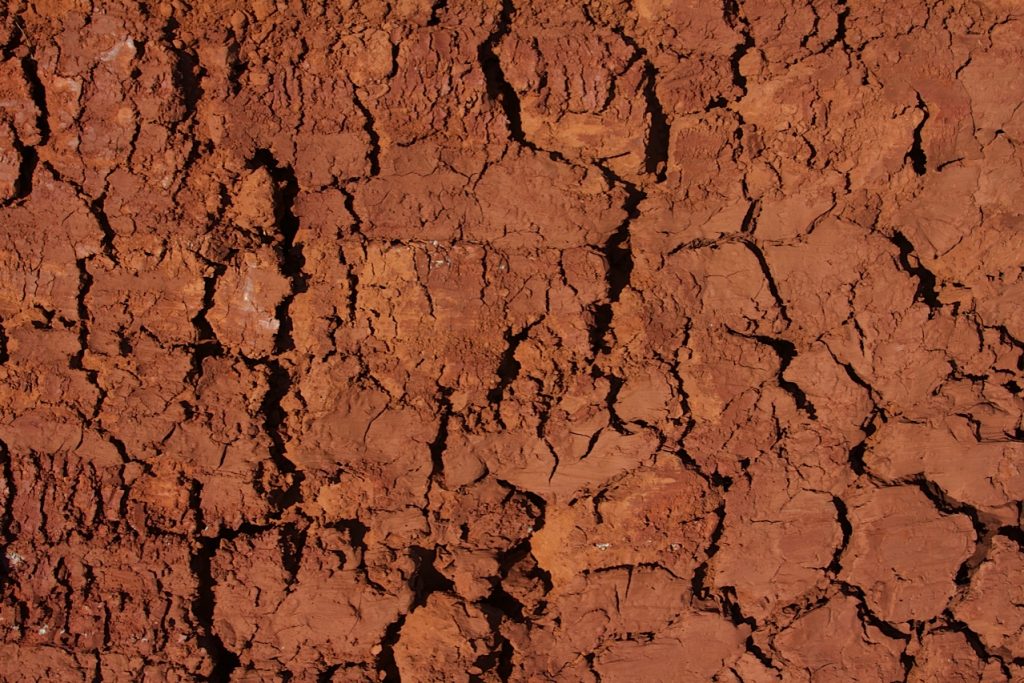
Droughts are drying out farmland. In Sindh, the Tharparkar district was declared calamity-hit after drought destroyed 90% of crops. Dry, cracked earth — like the parched ground in our photo — has become a familiar sight in farming regions that once depended on regular rain.
Floods are striking harder when the rain does come. Warmer air holds more moisture, so when it rains, it can rain much harder. A study by World Weather Attribution found that the heaviest 30 days of monsoon rain in Pakistan in 2025 were about 15% more intense because of global warming. The 2025 monsoon floods killed at least 1,006 people across Pakistan, affected more than 44 million people in Punjab alone, and put about 2.48 million acres of crops under water.
This is the pattern scientists have warned about for years: hotter, drier dry spells, and heavier rain when it falls. Both extremes are becoming more common at the same time.
What is happening at COP31 in Antalya
The climate summit where all of this is being discussed opened on Monday, 9 November, in Antalya, a coastal city in southern Turkey. COP31 — the 31st Conference of the Parties to the UN Framework Convention on Climate Change — runs until 20 November, with a leaders’ summit scheduled for 11–12 November.
COP31 President Murat Kurum, who is also Turkey’s environment minister, opened the summit by calling it an “Implementation COP” — one focused on turning past promises into real action. He said the goal of keeping global warming to 1.5°C above pre-industrial levels “remains our guide”.
At the centre of Turkey’s presidency is an ambitious idea: the “35-by-35” Global Electrification Pledge. It aims to raise electricity’s share of global energy use from about 20% today to 35% by 2035, by replacing petrol cars, gas heating and fossil-fuel-powered industry with electric alternatives. Australia’s climate minister, Chris Bowen, is leading the negotiations under a shared arrangement between Turkey and Australia.
UN climate chief Simon Stiell told delegates in his opening address: “The urgency of this moment must drive us forward.”
But the talks open with a familiar argument unresolved: money. Developing countries are pressing for a clearer plan to pay for climate protection, including the previous summit’s call to triple finance for adaptation — the work of preparing for floods, heatwaves and droughts that are already happening. For many of them, the question is not only how fast the world cuts emissions, but who pays for the damage already done.
There is also a contradiction at the heart of the host country’s position. Turkey is promoting electrification and renewable energy, but coal still generated about 34% of its electricity in 2025, making it Europe’s largest coal-fired electricity producer, according to the energy think tank Ember. Satellites have also revealed a landfill methane problem the host country cannot ignore. Critics have pointed out that the “35-by-35” target does not specify that the extra electricity must come from clean sources — the only way it delivers climate benefits.
What it means for Pakistan
Few countries have more at stake in the COP31 talks than Pakistan. The country produces less than 1% of global greenhouse gas emissions, yet it is consistently ranked among the most climate-vulnerable nations in the world.
The last few years have shown why. The 2022 floods killed about 1,700 people, affected 33 million, and caused more than $30 billion in damage, according to the United Nations. In 2025, the monsoon floods hit Punjab hard, with the Chenab, Ravi and Sutlej rivers all flooding. In 2026, the monsoon had killed 199 people by 30 September, including 91 children.
Heat is the other half of the story. Pakistan’s cities regularly record some of the highest temperatures on Earth. Jacobabad in Sindh has hit 49°C, and Turbat in Balochistan has endured weeks of temperatures close to 50°C. In May 2017, Turbat recorded 53.5°C — the hottest temperature ever reliably measured in the month of May anywhere on Earth. For the millions of people who work outdoors, in fields, on building sites and on the streets, extreme heat is not an abstract problem. It is a daily danger.
The El Niño now under way adds to the risk. El Niño typically weakens and disrupts the South Asian monsoon, making rainfall more erratic. Pakistan’s National Disaster Management Authority has warned that developing El Niño conditions could trigger unusually heavy rainfall in upper Pakistan, Khyber Pakhtunkhwa, Balochistan, Gilgit-Baltistan, Azad Jammu and Kashmir, and the Pothohar region — while heat stress remains greatest in southern Punjab and Sindh.
For Pakistan, the COP31 debate about adaptation finance is therefore not a diplomatic detail. It is about whether money will be available to build flood defences, improve early warning systems, protect crops and keep people safe during heatwaves. That is what the country’s negotiators in Antalya will be pushing for.
What happens next
The next two weeks in Antalya will show whether the world’s governments can turn the warnings into action. The leaders’ summit on 11–12 November is the first test: national leaders will set out what their countries are willing to do, and the negotiations that follow will decide what, if anything, is agreed.
Three things are worth watching:
- The temperature record itself. Final figures for 2026 will be published early next year by Berkeley Earth, Copernicus, the WMO and NASA. They will confirm whether 2026 beat 2024 — and by how much. If Berkeley Earth’s forecast is right, it will be the second time in three years that the record has fallen.
- El Niño in 2027. The WMO expects the unusually powerful El Niño to continue into next year, pushing temperatures higher — so 2027 is unlikely to bring any let-up from the heat.
- The money. The biggest question at COP31 is whether rich countries will agree to clearer, faster funding for adaptation in vulnerable countries. Without it, the countries that did least to cause climate change will keep paying the highest price for it.
The science is no longer the uncertain part of this story. The planet is warming, the records keep falling, and the effects — floods, heatwaves, droughts, melting glaciers — are already visible from Pakistan to the poles. What happens in Antalya will decide how fast the world responds.
Frequently asked questions
Is 2026 definitely the hottest year on record?
Not quite yet — the year is not over. Berkeley Earth says there is a 95% chance that 2026 will beat the 2024 record. The WMO is more cautious and forecasts that 2026 will be among the four warmest years. Final figures will be published early in 2027.
What was the previous hottest year?
2024 holds the current record. It was the first year in which the global average temperature was more than 1.5°C above pre-industrial levels.
What is El Niño?
El Niño is a natural warming of the surface waters of the Pacific Ocean. It happens every few years and pushes extra heat into the atmosphere, raising global temperatures. The current El Niño is unusually powerful and is expected to continue into 2027.
What is COP31?
COP31 is the 31st United Nations climate change conference. Nearly 200 countries are meeting in Antalya, Turkey, from 9 to 20 November 2026 to negotiate how to cut greenhouse gas emissions and how to help countries adapt to climate change.
Why does this matter for Pakistan?
Pakistan produces less than 1% of global emissions but is one of the countries most affected by climate change. It has suffered catastrophic floods in 2022 and 2025, record heatwaves, drought in Sindh, and threats from melting glaciers in the north. Decisions at COP31 about funding for adaptation directly affect how well Pakistan can protect its people.
What is the “35-by-35” pledge?
It is Turkey’s flagship proposal at COP31: to raise electricity’s share of global energy use from about 20% today to 35% by 2035. The idea is to replace fossil fuels with electricity in transport, buildings and industry. Critics note the pledge does not require that electricity to come from clean sources.
Sources
- BBC News, “Scientists predict 2026 hottest year on record as climate talks begin”, 9 November 2026, as carried by the Daily Mirror: https://www.dailymirror.lk/international/Scientists-predict-2026-hottest-year-on-record-as-climate-talks-begin/107-354499
- Saudi Gazette (reporting BBC), “Scientists say 2026 hottest year on record as climate talks begin in Turkey”, 9 November 2026: https://saudigazette.com.sa/article/666105/world/scientists-say-2026-hottest-year-on-record-as-climate-talks-begin-in-turkey
- COP31 Presidency, “COP31 President opens summit with call to action”, 9 November 2026: https://cop31.tr/news-detail/cop31-president-opens-un-climate-summit-calls-for-action
- Agence France-Presse via The Straits Times, “Turkey’s COP31 message: electrify, recycle and don’t mention coal”, 8 November 2026: https://www.straitstimes.com/world/turkeys-cop31-message-electrify-recycle-and-dont-mention-coal
- RenewEconomy, “Chart of the day: World notches up hottest October on record”, 3 November 2026: https://reneweconomy.com.au/chart-of-the-day-world-notches-hottest-october-on-record-as-500-academics-call-for-courage-on-climate/amp/
This article is for general information and education only. It is not legal or financial advice.

Pingback: Cruise Ship Pianist Survives Nine Hours in the Pacific After Falling Overboard — and Warm El Niño Water May Have Saved Him - Findivoza
Pingback: We Have Entered a New Age of Climate Extremes, UN Chief Warns as COP31 Opens in Turkey - Findivoza
Pingback: Norway Gives Brazil $64 Million for the Amazon Fund as Deforestation Falls to Its Lowest Level Since 1988 - Findivoza
Pingback: Quantum Computers Could Solve AI's Energy Problem — an Australian Startup Just Put One Inside a Real Data Centre - Findivoza