
Tarbela T-5 Project Halted After Rock Collapse Floods Tunnel and Powerhouse — All Workers Safe
Work on one of Pakistan’s biggest power projects came to a sudden stop on Monday, 9 November 2026, after a section of weak rock collapsed at the Tarbela Dam and water poured into a tunnel and an under-construction powerhouse. Every worker was evacuated safely, and no one was killed — but the incident has halted construction indefinitely and raised fresh questions about a project that has already been delayed once before.
The accident happened at the Tarbela 5th Extension Hydropower Project, known as T-5, in Haripur district of Khyber Pakhtunkhwa. The Water and Power Development Authority (WAPDA) said the water came from the project’s intake pit after rock gave way during digging work. Rescue teams moved quickly, and by the end of the day the water had been drained from the intake pit and workers were clearing the powerhouse.
What happened on Monday
According to WAPDA, the trouble began during excavation of the second bench connecting tunnel — a passage being dug as part of the T-5 works. A weak mass of rock collapsed, and water from the intake pit rushed into the tunnel and the powerhouse area that is still being built.
The protective bund — a barrier built to hold water back from the construction site — was breached, and a large volume of water entered Tunnel Five. An emergency was declared at the site, and construction was suspended.
Haripur Deputy Commissioner Waseem Ahmed visited the site with rescue and administrative teams. He confirmed that water had entered the tunnel after the protective barrier gave way. He also rejected reports on social media claiming the dam itself had broken, saying that if the dam had broken it would have caused flooding downstream, and that the water level inside the tunnel had almost completely receded.
WAPDA said in its statement that the water from the intake pit had been completely drained, that no more water was entering the work sites downstream, and that dewatering — pumping the water out — of the under-construction powerhouse had begun. Senior WAPDA officials, consultants and contractors were assessing the situation.
Everyone got out safely — but one worker was swept away
The most important news from Monday is that nobody died.
All Pakistani and foreign workers at the site were evacuated to safe places as soon as the water started coming in. WAPDA said all workers were “immediately evacuated safely” and that no casualties had been reported.
But the evacuation was not without drama. Deputy Commissioner Waseem Ahmed said one Pakistani worker was swept into the water as the tunnel flooded. Emergency teams reached him in time and pulled him out. He was rescued safely.
That quick rescue is a reminder of how dangerous tunnel work can be. When water breaks into an underground passage, it can rise fast, and workers have very little time to get out. The fact that everyone escaped — including the worker who was caught by the current — speaks to how fast the emergency response worked.
What WAPDA says — and what it denies
Within hours of the incident, reports began circulating on social media claiming that Tunnel Five itself had collapsed. WAPDA moved quickly to reject those reports.
In a detailed statement, the authority said: “There is no damage to the main Tunnel, under-construction powerhouse, tailrace culvert or switch yard. Reports of tunnel collapse are incorrect.”
That distinction matters. The tunnel that flooded is a connecting tunnel still being dug. The main Tunnel Five — the huge passage that will one day carry water to the new power station — was not damaged, according to WAPDA. Neither was the powerhouse structure itself, the tailrace culvert that will carry water away from the turbines, or the switchyard that will send electricity into the national grid.
In other words, the flooding hit the work site, but the main structures of the project survived. That is why WAPDA is talking about dewatering and restarting work, rather than rebuilding.
Still, officials have launched an investigation to find out exactly why the rock gave way and the barrier failed. Until that inquiry reports, there is no date for work to restart. Construction has been suspended indefinitely.
What is the Tarbela 5th Extension project?
To understand why this accident matters, it helps to know what T-5 is.
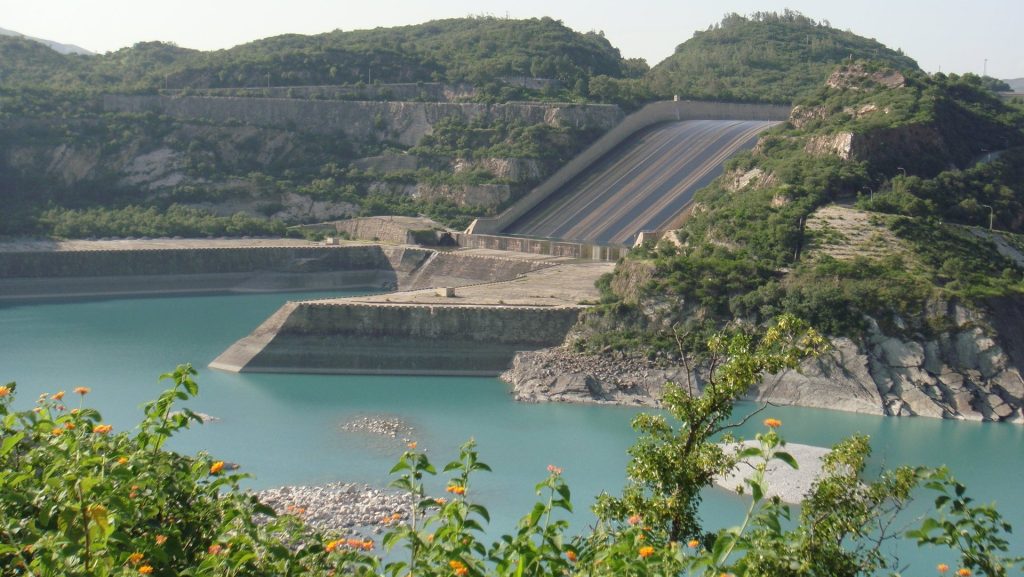
Tarbela Dam, on the Indus River in Haripur district, is Pakistan’s largest dam. It was completed in 1976 and has supplied electricity and irrigation water to the country for half a century. The dam has several tunnels that carry water from the reservoir. Four of those tunnels already feed power stations. The fifth tunnel, Tunnel Five, was built for irrigation — releasing water for farms — not for making electricity.
The T-5 project changes that. It converts Tunnel Five into a power tunnel and builds a new powerhouse with turbines that will generate electricity from the water already flowing through it. When finished, it will add 1,530 megawatts of electricity generation capacity to the national grid.
That is a big number. For comparison, 1,530 megawatts is enough to power well over a million homes. It is also cheap, clean hydropower — electricity made from flowing water, with no fuel to buy and no smoke. That is why the government and WAPDA see T-5 as an important part of Pakistan’s energy future.
The project is also expensive. It is a Rs316 billion scheme — up from about Rs82 billion when it was approved in 2017 — and it has already taken years longer than first planned.
Why Tarbela matters for Pakistan’s electricity
Pakistan has struggled with electricity for years. Demand keeps growing as the population grows and more people use fans, air conditioners, fridges and phones. At the same time, the country depends heavily on imported fuel — oil and gas bought from abroad with dollars Pakistan can barely afford.
Hydropower from dams like Tarbela is one of the few ways to make large amounts of electricity without importing fuel. The water is already there, flowing down the Indus. Once a dam and its turbines are built, the running cost is low, and the electricity is clean.
That is why every megawatt from Tarbela counts — and why a delay to T-5 is more than a construction problem. It is a delay to cheaper electricity for homes and businesses, and to reducing Pakistan’s dependence on expensive imported fuel.
Tarbela is also important for farming. The dam stores water from the Indus and releases it for irrigation in Punjab and Sindh, feeding the crops that millions of people depend on. Any problem at the dam is watched closely across the country.
This is not the first time water has stopped work at T-5
Monday’s flooding is the second time in about 15 months that water has interrupted work on the T-5 project.
In August 2025, the project’s protective cofferdam — a temporary barrier built to keep water out of the construction area — collapsed, allowing water to flood the site and forcing work to stop.
A government inquiry into that collapse held WAPDA, the contractor and the consultant jointly responsible, finding that the failure was caused not by flooding but by an unauthorised change of design — from roller-compacted concrete to a weaker rock-fill structure — along with inadequate supervision.
That history makes Monday’s incident harder to dismiss as a one-off accident. Two water-related failures in just over a year raise questions that the inquiry will need to answer: was the ground weaker than expected? Were the protective barriers strong enough? And what needs to change before work restarts?
The project is now targeted for completion by the end of June 2028, after earlier delays. But WAPDA has not said what Monday’s flooding will cost, or whether the schedule will move again. Until the inquiry reports and the dewatering is finished, nobody can say when the first turbine will start turning.
What happens next
For now, the work site is closed and the water is being pumped out. Here is what to watch in the coming days and weeks:
The inquiry. Haripur’s district administration and WAPDA have launched an investigation into the cause of the breach. Its findings will decide what changes are needed before work can restart — and whether anyone is held responsible.
The dewatering. WAPDA says the intake pit is already drained and the powerhouse is being pumped out. Engineers will then need to inspect the tunnel and the powerhouse for damage that is not visible yet.
The restart date. There is no date for work to resume. That decision will depend on the inquiry and on the inspection of the site. Workers and contractors will be waiting to hear when they can go back.
The cost and the schedule. WAPDA has not said how much the flooding will cost, or whether the project’s completion date will slip again. That will become clear once the damage is assessed.
The bigger question. Pakistan is building several large hydropower projects, including Diamer-Bhasha and Dasu, to secure its energy future. What happened at Tarbela will be studied by engineers across all of them. If weak rock or weak barriers caused this flood, other projects will want to know — before it happens to them.
Frequently asked questions
What happened at Tarbela Dam on 9 November 2026?
A weak section of rock collapsed during excavation work at the Tarbela 5th Extension hydropower project. Water from the intake pit entered Tunnel Five and the under-construction powerhouse. All workers were evacuated safely and no one was killed.
Did Tunnel Five collapse?
No. WAPDA has said clearly that reports of a tunnel collapse are incorrect. The main tunnel, the under-construction powerhouse, the tailrace culvert and the switchyard were not damaged.
Was anyone hurt?
No one was killed and no casualties were reported. One Pakistani worker was swept into the water when the tunnel flooded, but emergency teams rescued him.
What is the T-5 project?
The Tarbela 5th Extension converts the dam’s fifth tunnel — previously used only for irrigation — into a power tunnel. It will add 1,530 megawatts of hydropower capacity to Pakistan’s national grid.
When will work restart?
There is no date yet. Construction has been suspended indefinitely while an investigation looks into the cause of the breach and engineers assess the site.
Has this happened before at T-5?
Yes. In August 2025, the project’s protective cofferdam collapsed and water flooded the construction site, forcing work to stop.
Conclusion
Monday’s accident at Tarbela could have been much worse. A tunnel full of fast-rising water is one of the most dangerous places on a construction site, and the fact that every worker came out alive — including one who was swept away by the current — is a credit to the rescue teams and the evacuation.
But the project itself now faces serious questions. Work is stopped indefinitely, an inquiry is under way, and nobody yet knows how much the flooding will cost or how far it will push back a scheme that has already been delayed once. For a country that urgently needs cheap, clean electricity, the answers matter.
The next update will come from WAPDA’s investigation — and from the engineers now pumping water out of a powerhouse that was supposed to be lighting Pakistani homes.
Sources
- The Express Tribune, “Tarbela T-5 project work suspended indefinitely after protective bund breach”, 9 November 2026: https://tribune.com.pk/story/2639423/tarbela-t-5-project-work-suspended-indefinitely-after-protective-bund-breach
- Arab News, “Rock mass collapse causes floodwater surge at Pakistan’s Tarbela Dam”, 9 November 2026: https://www.arabnews.pk/pakistan/rock-mass-collapse-causes-floodwater-surge-at-pakistans-tarbela-dam-3006561
- HUM English, “Water enters Tarbela extension project’s tunnel after rock section collapses”, 9 November 2026: https://humenglish.com/latest/water-enters-tarbela-extension-projects-tunnel-after-rock-section-collapses/
- AAJ English, “Tarbela 5th extension project halted after protective embankment breach”, 9 November 2026: https://english.aaj.tv/news/330479981/tarbela-5th-extension-work-halted-after-embankment-breach
- The Daily Pioneer, “Pakistan’s Rs316-billion Tarbela hydropower project halted after protective barrier collapses”, 9 November 2026: https://dailypioneer.com/world/pakistans-rs316-billion-tarbela-hydropower-project-halted-after-protective-barrier-collapses
This article is for general information and education only. It is not legal or financial advice.
