
We Have Entered a New Age of Climate Extremes, UN Chief Warns as COP31 Opens in Turkey
The world has entered a new age of climate extremes. That is the warning from the head of the United Nations, Antonio Guterres, as world leaders and negotiators gather in Antalya, Turkey, for COP31, the annual United Nations climate summit.
“A supersized El Nino is colliding with a planet already superheated by manmade climate change,” Guterres said in a statement on Monday, 9 November 2026. “We have entered a new age of climate extremes.”
He called on leaders at the summit to “get serious by cutting emissions faster, accelerating a just transition from fossil fuels and delivering the finance and protection vulnerable countries need”.
It is a warning backed by the numbers. The World Meteorological Organization (WMO) released a report on the same day showing that 2026 has continued a streak of exceptional global temperatures, melting ice and rising sea levels, and the year is set to rank among the hottest ever recorded.
This article explains what Guterres warned about, what a “supersized” El Nino means, why the summit opened with a fight over money, and what it means for Pakistan.
What did the UN chief actually say?
Guterres did not attend the opening in person. He issued his warning in a written statement as the COP31 climate talks opened in Antalya on Monday, 9 November 2026.
His central claim is that extreme weather is no longer the exception but the normal state of the world: heatwaves, wildfires, floods and storms that once seemed rare are now striking almost every year, in almost every region.
The phrase he chose — “a new age of climate extremes” — is deliberately strong. UN chiefs usually speak in careful diplomatic language. This time, the language was chosen to shock leaders into action.
He gave them three tasks: cut greenhouse gas emissions faster, move away from fossil fuels in a fair way that does not leave poor countries behind, and deliver the money and protection that vulnerable countries need to survive the damage already happening.
What is a “supersized” El Nino?
El Nino is a natural weather pattern that starts in the Pacific Ocean. Every few years, the surface waters of the eastern and central Pacific become unusually warm. That warmth changes weather across the whole planet. Some places get heavier rain and floods. Others get drought and heat.
The El Nino now under way is described as exceptionally strong — “supersized”, in Guterres’ word. It is adding extra heat on top of the warming caused by burning coal, oil and gas.
That combination is what worries scientists. Human-caused climate change has already warmed the planet, and a powerful El Nino on top of that warming pushes temperature records to fall and rainfall patterns to become more extreme.
The EU’s climate monitor warned last week that 2026 would most likely be the second-hottest year ever recorded — but on Monday, Berkeley Earth put the chance of 2026 becoming the hottest year on record at 95 per cent. The WMO warned that an unusually powerful El Niño will keep pushing temperatures higher into 2027.
The WMO reported that the global average surface temperature between January and September 2026 was around 1.47 degrees Celsius above the pre-industrial average. The pre-industrial average is the temperature of the world before factories, cars and power plants began filling the air with greenhouse gases on a large scale.
That figure matters because of a line drawn in the Paris Agreement of 2015, under which countries agreed to try to keep warming well below 2 degrees Celsius and aim for 1.5 degrees. The UN warned in September that global temperatures were on course to exceed 1.5 degrees above pre-industrial levels.
A single year above 1.5 degrees does not mean the Paris target has formally failed, since the target is measured over decades. But scientists say every year that comes close to or passes that line is a sign that the world is running out of time to slow the warming.
A year of disasters
Guterres’ warning follows a year of punishing weather: severe heatwaves in Europe, major wildfires in Indonesia and catastrophic floods in Nepal.
Each disaster has its own local causes, but scientists say the pattern is clear: a hotter planet makes heatwaves hotter, dries out forests so they burn more easily, and loads the air with more moisture so that rain can fall much harder.
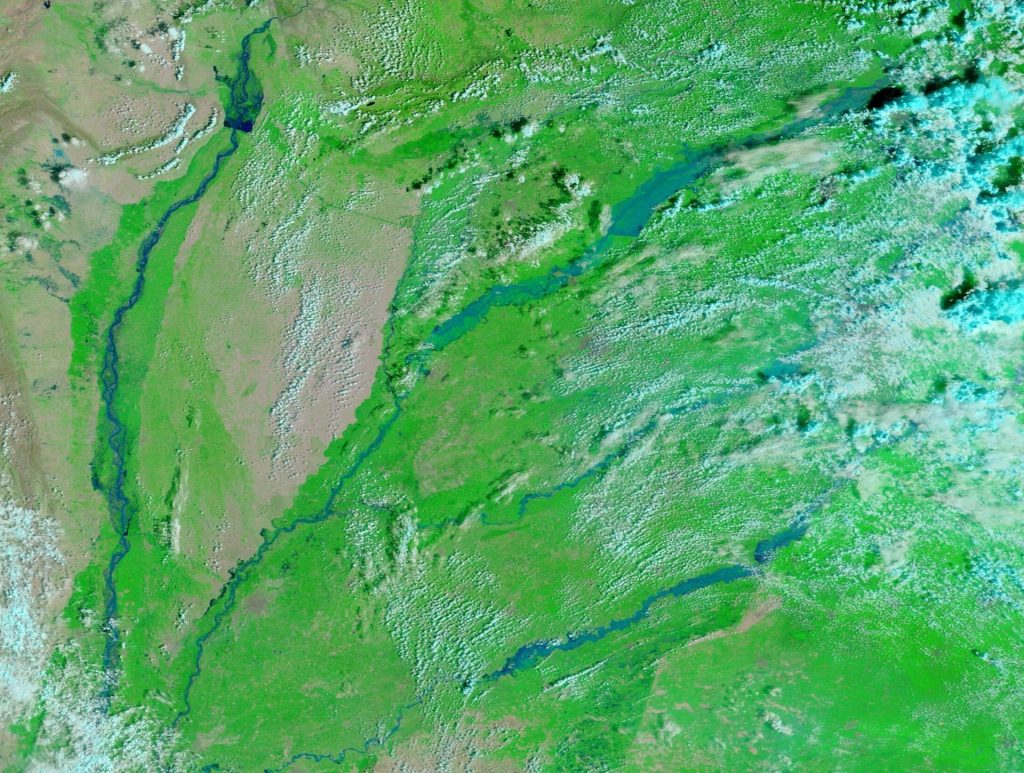
Pakistan knows this pattern better than most countries. In late August 2025, torrential monsoon rains caused devastating flooding in Punjab, the country’s most heavily populated province, which the United Nations described as the worst monsoon flooding there in nearly four decades.
Floods are only one side of the danger. Hotter, drier spells are the other: warmer air holds more moisture, so rain can fall in destructive bursts, while dry periods last longer and bite harder. Both extremes are becoming more common at the same time — exactly what Guterres means by an “age of climate extremes”.
That is why the phrase matters for Pakistan. The country is regularly listed among the nations most vulnerable to climate change, even though it produces only a small share of the world’s greenhouse gas emissions — so when the UN chief talks about delivering “finance and protection” to vulnerable countries, Pakistan is one of the countries he means.
COP31 opens with a fight over money
The summit itself got off to a difficult start. The opening ceremony opened an hour and a half late, without explanation. Negotiators had been locked in discussions late into Sunday night over demands by developing nations to include items on climate finance in the official agenda.
“This has already been a difficult start for COP31,” said Jasper Inventor, the head of Greenpeace’s COP31 delegation.
The argument is about money — who pays, how much, and for what. Under UN climate agreements, developed countries, historically responsible for most greenhouse gas emissions, provide financial support to help developing nations adapt and move to cleaner energy. But poorer countries say the sums remain far too small.
Inventor said developed countries were “taking a hard line” over whether to include a platform agreed at COP30 in Brazil last year, aimed at discussing how wealthy nations should provide funds to developing nations.
African countries are also pushing for the agenda to include discussions on tripling adaptation finance — money that helps poorer nations pay for measures such as building sea walls or planting drought-resistant crops. That point was not made a standalone agenda item.
A senior European Union official warned last week that there would be “no political will” for extra funding pledges at COP31. That warning set the tone before the summit even began: countries are arriving in Antalya reluctant to promise more money, even as the costs of climate disasters keep rising.
The EU had already signalled its position, reporting 41.6 billion euros in climate finance for developing countries while making clear it would offer no new pledges at COP31. For developing countries, that is not enough — and the gap between what is offered and what is needed is the central fight of this summit.
The fossil fuel question
Money is not the only argument in Antalya. The other big fight is about fossil fuels — coal, oil and gas.
At COP28 in Dubai in 2023, countries committed to transition away from fossil fuels, but they have struggled ever since to turn that pledge into action. COP30 ended with a deal that made no explicit mention of fossil fuels after oil-producing countries opposed the language, and Brazil instead produced a voluntary “roadmap” that each country can tailor to its own circumstances.
That history hangs over COP31. Guterres is pressing leaders to speed up the move away from fossil fuels, but many countries, including major oil and gas producers, resist language committing them to a firm timetable.
Turkey, which is presiding over COP31, has branded the summit the “implementation COP”, focusing on turning past promises into concrete action after years of pledges and ambitious announcements. Australia is leading the negotiations under an unusual arrangement that settled a dispute over who would host the conference.
Turkey is also promoting an “action agenda” of non-binding pledges, whose centrepiece is an “electrification” drive to raise electricity’s share of global energy demand from around 20 per cent today to 35 per cent by 2035.
But even that idea could become a source of friction. The European Union has called for “clean” electrification, a term that could spark debate over the role of fossil fuels in the Turkish proposal. The argument, in short, is whether the world’s future electricity should come from clean sources or whether gas and other fossil fuels still have a place.
“Global leaders must pull us back from the brink and commit to rapidly transitioning away from fossil fuels and expanding renewable energy, an imperative reinforced by the current energy affordability crisis,” said Rachel Cleetus, climate programme director at the Union of Concerned Scientists.
A missing player
Climate diplomacy is also missing a major player. The United States, the world’s second-largest emitter of greenhouse gases, has not sent officials to COP31. President Donald Trump, a climate sceptic, has stayed away from the summit.
A US congressional delegation will come to Antalya, with Democrats buoyed after their historic win in last week’s midterm elections. But without the US government at the table — historically one of the largest sources of climate finance — the world’s biggest climate negotiation is happening without one of the countries that matters most.
What it means for Pakistan
Pakistan has more at stake in Antalya than most countries. It is one of the nations most exposed to climate extremes, and it needs the finance and protection that Guterres is demanding.
Prime Minister Shehbaz Sharif arrives in Turkiye today, 10 November, leading Pakistan’s delegation at COP31. For Pakistan, the key asks are the same ones developing countries are making across the board: more money for adaptation, faster progress on the promises already made, and real help for countries hit hardest by floods, heat and drought.
The floods of 2025 showed why. They overwhelmed rivers, drowned farmland and forced families from their homes, and recovery costs money that Pakistan, already carrying heavy debts, struggles to find. Climate finance is meant to help pay for stronger embankments, better drainage, early warning systems and drought-resistant crops before the next disaster strikes.
If COP31 ends without progress on finance, the cost will fall on countries like Pakistan anyway — not in conference halls, but in flooded fields and damaged homes.
What happens next
COP31 runs for two weeks in Antalya: the first week is mostly technical negotiations, and the second brings ministers and heads of government, when the political decisions are made.
Three things will decide whether the summit succeeds or fails.
The first is money. Will rich countries agree to put climate finance properly on the agenda, and will they offer anything new? The early signs are not encouraging, but summits often move slowly until the final days.
The second is fossil fuels. Will countries turn the COP28 promise to move away from fossil fuels into a real plan, or will the summit end, like COP30, with the words left out?
The third is whether the “implementation COP” lives up to its name. If it ends with concrete steps — on electrification, adaptation and finance — it will count as progress. If it ends with vague promises, the gap between words and action will grow wider still.
Observers say few major breakthroughs are expected at COP31, as countries grapple with an oil price shock and geopolitical tensions. But Guterres’ warning sets the stakes: the world, he says, has already entered the age of climate extremes, and the question for the next two weeks in Antalya is whether its leaders will act like it.
Frequently asked questions
What does “a new age of climate extremes” mean?
It means extreme weather — heatwaves, wildfires, floods and storms — is no longer rare. The UN chief says it is becoming the normal state of the world, because a powerful El Nino is adding extra heat to a planet already warmed by human-caused climate change.
What is COP31?
COP31 is the 31st United Nations Climate Change Conference, the annual summit where nearly 200 countries negotiate action on climate change. This year’s meeting is in Antalya, Turkey, and runs for two weeks from 9 November 2026, with Turkey presiding and Australia leading the negotiations.
What is El Nino?
El Nino is a natural weather pattern that begins in the Pacific Ocean. Every few years, the surface waters of the eastern and central Pacific become unusually warm, changing weather around the world. The current El Nino is described as exceptionally strong, which is why Guterres called it “supersized”.
How hot was 2026?
The World Meteorological Organization reported that the global average surface temperature between January and September 2026 was around 1.47 degrees Celsius above the pre-industrial average. The EU’s climate monitor had said 2026 would most likely be the second-hottest year ever recorded, but Berkeley Earth put the chance of 2026 becoming the hottest year on record at 95 per cent on Monday. The WMO warned that an unusually powerful El Niño will keep pushing temperatures higher into 2027.
Why is there a fight over money at COP31?
Developing countries want richer nations to provide more climate finance — money to help them adapt to climate impacts and switch to clean energy. They say current funding is far too small. Developed countries have been reluctant to promise more, and a senior EU official warned there would be “no political will” for extra pledges at COP31.
What does COP31 mean for Pakistan?
Pakistan is one of the countries most vulnerable to climate extremes, despite producing only a small share of global emissions. It needs adaptation finance for flood defences, early warning systems and drought-resistant crops. Prime Minister Shehbaz Sharif is leading Pakistan’s delegation at the summit.
Conclusion
Antonio Guterres chose his words carefully. “We have entered a new age of climate extremes” is not a prediction about the future. It is a description of the present — a year of heatwaves in Europe, wildfires in Indonesia and floods in Nepal, record temperatures, rising seas, and a supersized El Nino piling more heat onto an already overheated planet.
The science supports him. The WMO’s numbers show 2026 continuing a streak of exceptional heat, and the world is on course to pass the 1.5-degree threshold that the Paris Agreement treated as a limit not to cross.
What happens now depends on the two weeks in Antalya. The summit opened late, opened with a fight over money, and opened without the United States at the table. Those are not promising signs. But the history of climate summits is that the real decisions come in the final days, when ministers arrive and the pressure peaks.
For Pakistan, and for every country on the front line of climate change, the hope is that this time promises turn into money, and money turns into protection — sea walls, early warnings, stronger homes — before the next extreme arrives. Because in the new age Guterres describes, the next extreme is not a matter of if. It is a matter of when.
Sources
- Dawn (AFP), “COP31 opens with leaders under pressure to tackle climate crisis”, 9 November 2026: https://www.dawn.com/news/2043267/un-chief-urges-leaders-to-get-serious-as-cop31-set-to-open
- The Hindu, “World entering ‘age of climate extremes’: UN chief”, 9 November 2026: https://www.thehindu.com/sci-tech/energy-and-environment/world-entering-age-of-climate-extremes-un-chief/article71681846.ece
- The Straits Times, “UN chief urges leaders to get serious at COP31”, 9 November 2026: https://www.straitstimes.com/world/world-entering-age-of-climate-extremes-un-chief?ref=latest-headlines
- The Economic Times, “World entering ‘age of climate extremes’: UN chief Guterres”, 9 November 2026: https://economictimes.indiatimes.com/news/international/world-news/world-entering-age-of-climate-extremes-un-chief-guterres/articleshow/135676031.cms
- Kuwait Times, “World entering ‘age of climate extremes’, UN chief warns”, 9 November 2026: https://kuwaittimes.com/article/53284/world/world-entering-age-of-climate-extremes-un-chief-warns/
- 24NewsHD, “PM Shehbaz to visit Turkiye from November 10”, 7 November 2026: https://www.24newshd.tv/07-Nov-2026/pm-shehbaz-visit-turkiye-november-10
This article is for general information and education only. It is not legal or financial advice.

Pingback: Norway Gives Brazil $64 Million for the Amazon Fund as Deforestation Falls to Its Lowest Level Since 1988 - Findivoza
Pingback: Pakistan Takes Its Climate Case to COP31: What Shehbaz Sharif Will Tell World Leaders in Antalya - Findivoza
Pingback: Global Fossil Fuel Emissions Set to Fall for the First Time in Five Years — But Total CO2 Still Hits a Record High - Findivoza