
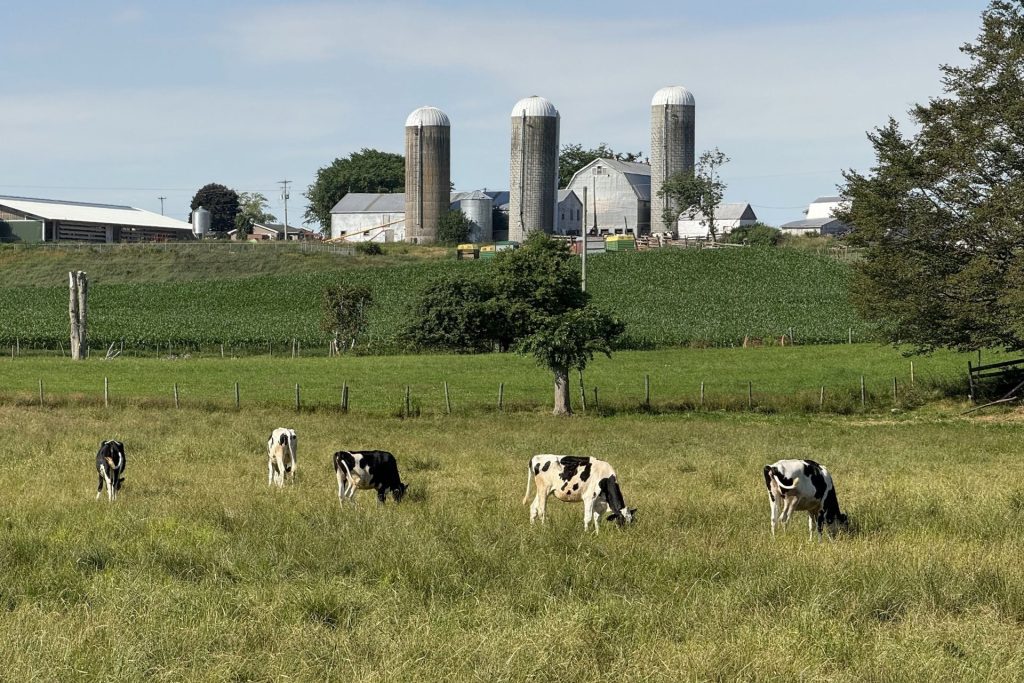
Canada Makes Its Rural Immigration Programme Permanent: 5,500 New Places for Skilled Workers From 2027
Canada has turned one of its most popular immigration routes into a permanent programme, giving skilled workers a lasting way to move to the country’s smaller towns and rural areas.
Immigration Minister Lena Metlege Diab announced the change on 9 November 2026 in Pictou County, Nova Scotia — one of the communities already taking part in the scheme. From 1 January 2027, the Rural Community Immigration Pilot will become the permanent Rural Community Immigration Program, and Canada has set aside 5,500 permanent residence places for it in 2027.
For workers around the world who dream of moving to Canada but find the main immigration routes too competitive, this is a big deal. The rural programme does not use the points ranking that decides most Express Entry applications. Instead, it works through local employers and local communities — and if a small town wants you, that is what counts.
What Canada announced
The announcement came from Immigration, Refugees and Citizenship Canada (IRCC), the government department that runs the country’s immigration system. In a news release titled “Canada creates a permanent immigration pathway to help rural communities attract and retain talent”, the government said the pilot scheme had worked well enough to become a permanent part of the immigration system.
The decision follows Budget 2026, and it fits into Canada’s wider immigration plan for 2027 to 2029, which was released on 5 November 2026. Under that plan, Canada will keep overall permanent resident admissions at 380,000 a year through 2029, and the rural programme gets its own dedicated share of those places.
The numbers grow over time. Canada has targeted 5,500 admissions through the rural programme in 2027, rising to 6,000 in 2028 and 6,500 in 2029. The 2028 and 2029 figures are planning targets that the government will confirm or adjust each year.
The change matters because pilots, by their nature, are trials. They can end. Making this programme permanent tells workers, employers and small towns that the route is here to stay — and that they can plan around it for years to come.
What is the Rural Community Immigration Program?
The Rural Community Immigration Program is a community-driven route to permanent residence in Canada. It is designed for skilled foreign workers — and international graduates in priority sectors — who are willing to live and work in smaller communities rather than in Canada’s big cities.
The idea is simple. Many small towns in Canada have jobs they cannot fill. Hospitals need nurses. Farms need workers. Factories, shops and schools need staff. At the same time, many newcomers to Canada settle in Toronto, Vancouver or Montreal, where competition for jobs and housing is fierce. The rural programme tries to match the two sides: workers who want a new life in Canada, and towns that need them.
The programme is employer-led and community-led. That means a worker cannot simply apply on their own. The route has three steps, in this order:
First, get a job offer. The worker must have a genuine job offer from an employer that the community has designated — that is, an employer the community has approved to take part in the programme. Only designated employers in priority sectors can use the programme.
Second, get the community’s recommendation. The local community must recommend the worker. Each participating community has its own economic development organisation, and it checks that the worker fits the town’s needs.
Third, apply to IRCC for permanent residence. Only after the job offer and the community recommendation are in place can the worker apply to the federal government. IRCC makes the final decision.
Without a community recommendation, there is no application under this route. That is what makes the programme different from Canada’s main immigration system, where applicants are ranked by points and invited to apply. Here, the community’s say comes first.
The 14 communities taking part
The permanent programme is expected to start with the same 14 communities that took part in the pilot. They are spread across six provinces:
- Nova Scotia: Pictou County
- Ontario: North Bay, Sudbury, Timmins, Sault Ste. Marie and Thunder Bay
- Manitoba: Steinbach, Altona/Rhineland and Brandon
- Saskatchewan: Moose Jaw
- Alberta: Claresholm
- British Columbia: West Kootenay, North Okanagan Shuswap and Peace Liard
The government has said it plans to expand the programme to more communities in the future, but no new community has been named yet.
These are not Canada’s famous big cities. They are smaller places — towns of a few thousand to a few tens of thousands of people — where a new family can make a real difference. A nurse in Timmins, a truck driver in Brandon, a farm worker in Claresholm: these are the kinds of jobs the programme is built around.
Each community sets its own priorities. Some need health-care workers. Others need people in trades, food processing, manufacturing or services. The jobs on offer depend on what local employers need, and the lists change as needs change.
Who can apply
To apply for permanent residence through the Rural Community Immigration Program, a person must meet six requirements, as listed by IRCC:
- A valid recommendation certificate from a participating community.
- A valid job offer from a designated employer in that community.
- Work experience: at least one year (1,560 hours) of related work experience in the past three years.
- Language skills: proof of ability in English or French, shown by taking an approved language test.
- Education: a Canadian educational credential, or a foreign credential that has been assessed as equal to a Canadian one.
- Settlement funds: proof of enough money to support yourself and your family when you arrive.
The programme also has a work permit route, and IRCC has published a full set of applicant pages for the permanent programme, including guidance on fees. The listed fee for a permanent residence application under the programme starts at $1,590.
One important point: the programme does not run on a points ranking. There is no Comprehensive Ranking System (CRS) score to compete on, as there is in Express Entry. That is good news for workers whose points score would not be high enough for the main system — for example, older workers, or workers without a Canadian degree — but who have the skills a small town needs.
The detailed rules for the permanent programme had not all been published at the time of writing, and the government says the permanent programme builds on the pilot’s rules. Anyone thinking of applying should check IRCC’s official pages before acting, because details may change.
Why Canada is doing this
Canada’s small towns face a problem that will be familiar to many countries: young people leave for the cities, the population ages, and employers struggle to find staff. Rural communities play an important role in Canada’s economy — in farming, forestry, mining, food processing and tourism — but they have long found it hard to attract and keep workers.
Immigration has been one answer. Canada has used community-based immigration before. The earlier Rural and Northern Immigration Pilot, which ran from 2019 to 2024, welcomed more than 12,000 newcomers and their family members to small communities. The Rural Community Immigration Pilot replaced it in January 2025, and the government says the early results have been positive, including in health care, education and sales and services.
Sean Fraser, Canada’s Minister of Justice and Attorney General, said the programme was helping businesses in Pictou County keep the workers they need, while letting newcomers settle, become part of the community and build their lives there.
The logic is straightforward. A worker who arrives with a job, a community that chose them, and a clear path to permanent residence is more likely to stay. And a town that gains a family gains not just a worker but a neighbour, a parent at the local school, and a customer for local shops.
The programme also fits a wider shift in Canadian immigration policy. For years, most newcomers settled in a handful of big cities. The government now wants to spread the benefits of immigration more evenly across the country — and to the places that need workers most.
What it means for workers abroad
The rural programme is open to qualified applicants from anywhere in the world. It does not reserve places for particular nationalities. That includes workers from Pakistan, India, Nigeria, the Philippines and other countries with large numbers of people looking to move to Canada.
For many, the route is attractive for three reasons. First, there is no points race. Second, the job comes first — so the worker arrives with work already lined up, rather than arriving and then searching. And third, the path leads directly to permanent residence, not to a temporary visa that may or may not lead somewhere.
But it is not a shortcut, and it is not for everyone. The worker must find a designated employer willing to offer them a job, and must convince the community to recommend them. That takes effort, and it usually works best for people whose skills match what a particular town needs. The programme also requires proof of funds, a language test and an education assessment — all of which cost time and money.
There is also a warning worth repeating. Whenever a new immigration route opens, scammers follow. No genuine Canadian immigration programme asks for payment through unofficial channels, and no agent can guarantee a job offer or a community recommendation. Anyone interested should use IRCC’s official website and the official pages of the participating communities, and should be wary of anyone promising a guaranteed place for a fee.
What happens to people already in the pilot
The pilot closes on 1 January 2027, the same day the permanent programme opens. But people already in the system are not left stranded.
Applications already received under the pilot will continue to be processed. People who hold a community recommendation dated 31 December 2026 or earlier must submit their permanent residence application before that recommendation expires, using the existing application forms. People who receive a recommendation dated 1 January 2027 or later will use a different set of forms, for the permanent programme.
The regulations that make the programme permanent were registered on 22 October 2026 and came into force as new sections of Canada’s Immigration and Refugee Protection Regulations. Because the change is now written into the regulations, it does not expire the way a pilot does.
What happens next
The permanent programme opens on 1 January 2027. Between now and then, the 14 communities are expected to prepare for the changeover, and IRCC is publishing the full guidance for the new programme.
Three things are worth watching. First, whether any new communities join the programme, and when. The government has said expansion is planned, but it has not named places or dates. Second, how quickly the 5,500 places for 2027 fill up — demand is likely to be high, and each community works within its own allocation and intake windows. And third, whether other countries copy the model. Community-led immigration, where towns choose the workers they need, is being watched by governments far beyond Canada.
For the small towns of Pictou County, North Bay, Brandon and the rest, the message is that their experiment has worked — and that it is now a permanent part of how Canada welcomes new people.
Frequently asked questions
When does Canada’s permanent Rural Community Immigration Program open?
It opens on 1 January 2027. The pilot version closes on the same day.
How many places are available?
Canada has targeted 5,500 permanent resident admissions through the programme in 2027, rising to 6,000 in 2028 and 6,500 in 2029. These are planning targets, and the later figures may be adjusted.
Do I need a high Express Entry points score?
No. The programme does not use the Express Entry points ranking. Instead, you need a job offer from a designated employer and a recommendation from a participating community.
Which communities take part?
Fourteen communities across six provinces are expected to continue: Pictou County in Nova Scotia; North Bay, Sudbury, Timmins, Sault Ste. Marie and Thunder Bay in Ontario; Steinbach, Altona/Rhineland and Brandon in Manitoba; Moose Jaw in Saskatchewan; Claresholm in Alberta; and West Kootenay, North Okanagan Shuswap and Peace Liard in British Columbia.
What do I need to qualify?
A community recommendation, a job offer from a designated employer, at least one year of related work experience in the past three years, proof of language ability, an education credential or its equivalent, and proof of settlement funds.
What happens to my pilot application?
Applications already received under the pilot will keep being processed. If your community recommendation is dated 31 December 2026 or earlier, you must apply for permanent residence before it expires.
Conclusion
Canada’s decision to make its rural immigration programme permanent is a quiet change with a large effect. It gives 14 small communities a lasting tool to fill the jobs they cannot fill locally, and it gives skilled workers around the world a clear, community-backed route to a new life in Canada — without the points race of the main immigration system.
The pilot proved the idea works. From 1 January 2027, it is no longer a trial. For a nurse in Pictou County, a mechanic in Thunder Bay or a farm worker in Claresholm, that permanence is the point: a job, a town that chose them, and a home they can plan around.
Sources
- Immigration, Refugees and Citizenship Canada (IRCC), Rural Community Immigration Pilot: https://www.canada.ca/en/immigration-refugees-citizenship/services/immigrate-canada/rural-franco-pilots/rural-immigration.html
- CIC News, “Canada launches new pathway to permanent residence”, 9 November 2026: https://www.cicnews.com/2026/11/canada-launches-new-pathway-to-permanent-residence-1182349.html
- Gateway to Canada, “Rural Community Immigration Program: What It Means for PR Applicants”: https://www.gatewaytocanada.com/post/rural-community-immigration-program
- Atlantic Post, “Canada Makes Rural Immigration Programme Permanent”: https://atlanticpostng.com/canada-makes-rural-immigration-permanent-can-small-towns-keep-workers/
- Within Nigeria, “Canada Permanent Rural Immigration Program Opens January 2027 With 5,500 Spaces: Who Qualifies and How to Apply”, 10 November 2026: https://www.withinnigeria.com/2026/11/10/canada-permanent-rural-immigration-program-opens-january-2027-with-5500-spaces-who-qualifies-and-how-to-apply/
This article is for general information and education only. It is not legal or financial advice.
