
Rheinmetall Shares Fall 13% After Second Forecast Cut in Three Months as Boxer Order Slips
Rheinmetall shares fell 13% on Thursday after Germany’s biggest defence company cut its sales forecast for the second time in three months, rattling investors who had bet on a smooth boom in European military spending.
The fall was the biggest on Europe’s STOXX 600 index that day. At one point during trading, the shares were down as much as 16%, and trading was briefly halted, before they recovered some ground to close about 13% lower.
The warning came late on Wednesday, when Rheinmetall said it no longer expected a major German army vehicle contract to be awarded this year, and that slower approvals for artillery ammunition would push more income into 2027. For a company whose shares had risen steeply over the past four years on the back of Europe’s rearmament drive, it was a sharp reminder that even a defence boom can hit delays.
What happened
Rheinmetall, based in Düsseldorf, lowered its forecast for 2026 sales to about €13.2 billion (around $14.9 billion), down from the €13.7 billion to €14.2 billion range it had guided to before. It also trimmed its operating margin target to about 18.5%, from around 19%.
A sales forecast, often called guidance, is a company’s own prediction of how much it will sell in a year. When a company cuts its guidance, it is telling investors it now expects to earn less than it previously thought. Two cuts in three months — the first came in August — suggest the problems are not going away quickly.
The company also dropped its target for a cash conversion rate above 40%. Cash conversion measures how much of a company’s profit actually turns into cash in the bank. Dropping the target is a sign that money is arriving later than expected, even though the underlying business is still growing.
Why the forecast was cut
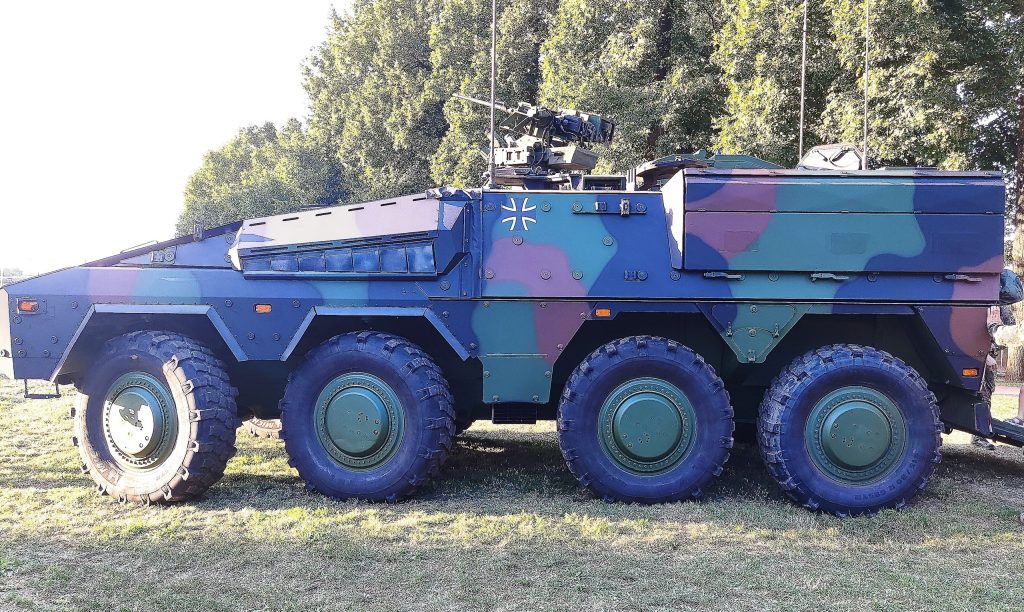
The main reason is a delay to Germany’s Arminius programme, a plan to buy Boxer armoured vehicles for the German army. Rheinmetall said the contract award would not come this year, so the revenue and advance payments linked to it will move into next year instead.
An advance payment is money a customer pays before delivery, to help fund production. For a contract as large as Arminius, that payment alone was expected to be worth more than €3 billion, according to comments by Rheinmetall’s chief executive, Armin Papperger, in August. He said at the time that Rheinmetall’s share of an initial Arminius order could amount to about €12.4 billion.
The second problem is artillery ammunition. Rheinmetall said slower batch approvals would delay revenue from ammunition deliveries. In plain terms, each batch of ammunition has to be tested and formally accepted before the company can count the sale — and those approvals are taking longer than planned. The company also pointed to setbacks in acceptance testing.
None of this means the orders have been cancelled. The vehicles and the ammunition are still expected to be delivered. But the money will arrive later than investors had been told to expect, and in the world of company forecasts, later is often punished just as harshly as less.
The numbers behind the warning
The timing of the warning surprised analysts, because Rheinmetall’s actual results for the third quarter of 2026 were strong.
Sales in the third quarter rose to €3.15 billion, up from €2.31 billion in the same period a year earlier. Operating profit — the profit a company makes from its day-to-day business, before interest and tax — climbed 62% to €553 million. The operating margin, which shows profit as a share of sales, rose to 17.5% from 14.8% a year earlier.
For the first nine months of 2026, sales reached €8.38 billion, up 38% on the same period last year, while operating profit rose 68% to €1.34 billion.
But there were warning signs underneath the strong headline figures. Order intake — the value of new orders won — totalled €2.89 billion in the third quarter, below sales of €3.15 billion. That means the company sold more than it won in new business during the quarter. Operating free cash flow, a measure of the cash the business generates after paying for its operations and investments, was negative €82 million.
Analysts at Jefferies said they were surprised by the size of the outlook cut so late in the year, and noted that Rheinmetall had not given a revised order outlook even though the Arminius delay was now known. JPMorgan cut its price target for the shares to €1,150 from €1,350.
What is the Boxer, and what is the Arminius programme?
The Boxer is an eight-wheeled armoured vehicle used to carry soldiers and equipment. It is built in different versions — for carrying troops, as a command post, as an ambulance, and more — and is used by the German army, the Bundeswehr, as well as by the British Army and other forces.
The Arminius programme is Germany’s plan to buy a large number of new Boxer vehicles as part of its military modernisation. Germany has been sharply increasing defence spending since Russia’s full-scale invasion of Ukraine in 2022, and Rheinmetall, as the country’s largest defence contractor, has been one of the main beneficiaries.
That is why the delay matters so much. The Arminius order is not a small side project; it is one of the biggest contracts in Rheinmetall’s future. When a contract of that size slips by a year, it leaves a hole in the sales forecast that is hard to fill with anything else.
Rheinmetall also makes artillery ammunition, air defence systems and other military equipment, and its order book — the stack of confirmed orders waiting to be delivered — remains large. The company has repeatedly said its long-term prospects are unchanged. The problem, in the short term, is the speed at which government contracts move from signature to delivery.
Why investors reacted so sharply
There are a few reasons the market punished the shares so heavily.
First, it was the second cut in three months. One downgrade can be written off as bad luck. Two in quick succession make investors wonder whether the company really understands its own pipeline of orders — and whether a third cut could follow.
Second, the cut came late in the year. With only weeks of 2026 left, investors had expected the forecast to be safe by now. A cut in November, rather than in the summer, suggests the delays emerged suddenly, or were worse than the company had first thought.
Third, the shares had a long way to fall. Rheinmetall’s stock had risen steeply over the past four years as European governments poured money into defence, averaging annual returns of more than 100% over that period, according to market data. When a stock has climbed that fast, even a small disappointment can trigger a sharp sell-off, because many investors are sitting on large gains and are quick to sell at the first sign of trouble.
Fourth, the cash picture worried the market. Sales growth is one thing; turning that growth into cash is another. Negative free cash flow in the quarter, combined with the dropped cash conversion target, raised questions about how quickly Rheinmetall can convert its booming order book into money in the bank.
What this means for Germany’s defence build-up
The delay is not only a Rheinmetall problem. It points to a wider bottleneck in Europe’s rearmament: governments are promising to spend much more on defence, but the machinery of buying weapons — approvals, testing, contracts, budgets — is moving slowly.
Germany’s military modernisation depends on companies like Rheinmetall delivering vehicles, ammunition and air defence systems on time. If contract awards slip and ammunition batches wait for approval, the armed forces get their equipment later than planned, whatever the budget says.
That said, nothing in the announcement suggests Germany is cutting defence spending. The Arminius programme is delayed, not cancelled, and the money is expected to flow in 2027 instead. For the German army, the vehicles will still arrive — just later. For Rheinmetall, the revenue will still arrive — just later. The market’s reaction was about timing and trust, not about the long-term demand for weapons, which remains strong while the war in Ukraine continues and European governments keep raising military budgets.
What happens next
The next big test for Rheinmetall is its Capital Markets Day on 27 November 2026, when the company will present its plans to investors in detail. Investors will want to hear exactly when the Arminius award is now expected, how the ammunition approvals are progressing, and whether the company can give a firmer outlook for 2027.
Other things to watch include whether the Arminius contract is awarded early in 2027, whether order intake recovers above sales in the fourth quarter, and whether cash flow turns positive again. The company’s full-year results, due early in 2027, will show whether the delayed revenue did arrive or slipped further.
For now, the episode is a lesson in how defence booms actually work. Governments can announce big budgets overnight, but turning those budgets into signed contracts, tested ammunition and delivered vehicles takes time — and the stock market has very little patience for waiting.
Frequently asked questions
Why did Rheinmetall shares fall so sharply?
The company cut its 2026 sales forecast for the second time in three months, to about €13.2 billion from €13.7–14.2 billion, and lowered its profit margin target. The delay to the Arminius Boxer vehicle contract and slower artillery ammunition approvals mean revenue will arrive later than expected. The shares fell as much as 16% during the day and closed about 13% lower.
Is Rheinmetall in trouble?
No, not in the sense of a business in decline. Sales rose to €3.15 billion in the third quarter, operating profit jumped 62% to €553 million, and the company still has a large order book. The problem is timing: big contracts and payments are arriving later than forecast, and the company has twice had to lower its expectations.
What is the Arminius programme?
It is Germany’s programme to buy Boxer armoured vehicles for its army. Rheinmetall’s chief executive said in August that the company’s share of an initial order could be worth about €12.4 billion, with an advance payment of more than €3 billion. The award will now not come this year, pushing the revenue into 2027.
What is the STOXX 600?
The STOXX 600 is an index that tracks 600 large companies across Europe. Rheinmetall’s 13% fall was the biggest decline on the index that day, which shows how badly the market took the news compared with other European stocks.
Does this affect Germany’s defence plans?
The programme is delayed, not cancelled, so the vehicles should still be delivered — later than planned. But the delay highlights how slowly government weapons contracts can move, even when the money has been promised.
Conclusion
Rheinmetall’s 13% share price fall was not caused by falling demand for its products. Demand for armoured vehicles, ammunition and air defence is as strong as ever. It was caused by delay — a major contract slipping into next year, ammunition approvals moving slowly, and a forecast cut for the second time in three months.
For investors, the question now is whether the delays are a one-off bump in an otherwise strong growth story, or a sign that Europe’s defence boom is harder to deliver than it looked on paper. The company’s Capital Markets Day on 27 November should give some answers. Until then, the market has sent a clear message: in a boom, promises matter — but delivery matters more.
Sources
- Reuters, “Rheinmetall shares slide as investors question growth outlook after second guidance cut”: https://live.euronext.com/en/financial-news/rheinmetall-shares-slide-investors-question-growth-outlook-after-second-guidance-cut
- Reuters, “Rheinmetall cuts 2026 sales forecast again as Boxer order slips”: https://wixx.com/2026/11/04/rheinmetall-cuts-2026-sales-forecast-again-as-boxer-order-slips/
- CNBC, “Rheinmetall stock plunges 16% after Germany contract delays”: https://www.vespernews.com/en/news/bc72c2df-f655-4b50-8af1-3443ace2be1d
- Ad-hoc News, “Rheinmetall’s Cash Gap Tests the Bull Case After Second Guidance Cut in Three Months”: https://www.ad-hoc-news.de/boerse/news/unternehmensnachrichten/rheinmetall-s-cash-gap-tests-the-bull-case-after-second-guidance-cut-in-three-months/70466015
- TokenPost, “Rheinmetall Shares Fall 15% as Company Cuts 2026 Outlook Again”: https://www.tokenpost.com/news/business/49164
This article is for general information and education only. It is not legal or financial advice.
