
Khyber Pakhtunkhwa Suspends All Gold Mining After Deadly Kohat Clash
Khyber Pakhtunkhwa has suspended all gold mining across the province and cancelled gold mining leases, days after a deadly clash near Kohat left ten policemen and 18 militants dead. The province’s governor says illegal gold mining was generating billions of rupees a month — and claims some of that money was reaching militant groups.
Governor Faisal Karim Kundi announced the decision at a press conference in Peshawar on Saturday, 14 November. He said all mining activities in the province would stop with immediate effect, and leaseholders and contractors must remove their heavy machinery from mining areas within seven days.
The announcement follows a security operation against illegal gold mining at Darabo Kach, near Kohat, in which police came under attack. The governor has ordered a judicial commission to investigate both the illegal mining and the clash itself.
The claims about where the gold money was going have not been independently verified. But the scale of the figures the governor put forward — and the speed of the shutdown — make this one of the biggest moves yet against illegal mining in the province.
What the governor announced
At the press conference in Peshawar on Saturday, Governor Kundi was joined by the provincial adviser for mines and minerals, the chief secretary and the Inspector General of Police, Zulfiqar Hameed.
He announced two things. First, all gold mining leases in Khyber Pakhtunkhwa are cancelled. Second, all mining activities across the province are suspended with immediate effect.
Leaseholders and contractors have been told to remove their heavy machinery from the mining areas within a week. The governor warned there would be zero tolerance for anyone involved in illegal mining, and said strict action would follow against anyone who breaks the restrictions.
As of Saturday evening, no official notification cancelling the leases had been published, so for now the move rests on the governor’s announcement. The coming days will show whether the suspension is enforced on the ground.
The deadly clash in Kohat
The crackdown follows a security operation at Darabo Kach, near Kohat, where police and the local civil administration moved against illegal gold mining.
According to officials, militants attacked police personnel as they were returning from the operation. Ten policemen were killed, while the authorities reported that 18 militants died in the fighting that followed.
One of the policemen killed was Deputy Superintendent of Police Haidar Zaman. The governor has approved a special task force named after him.
Governor Kundi alleged that the attackers had links to individuals involved in illegal mining. He said the mining operators had been paying protection money to militant groups in exchange for being allowed to keep working. Geo News reported that the governor linked the attackers to Fitna al-Khawarij, the name the state uses for the banned Tehreek-e-Taliban Pakistan.
He pledged that those responsible would face action. But the central question — whether the alleged flow of gold money to militants can be proved with evidence — is still open.
The governor’s claims about gold and militants
The most striking part of the governor’s announcement was his account of how much gold was being taken out of Kohat, and where the money was going.
He claimed that around 90 kilogrammes of gold were being extracted from the Kohat area every month. That gold, he said, was worth about Rs4.2 billion a month.
He also claimed that approximately 80 per cent of the proceeds were going to Afghanistan. And he said illegal mining operators had been paying extortion money to militant groups, which was then used to finance terrorism and other activities against Pakistan.
These are the governor’s claims. They have not been independently verified, and no audit of the alleged trade has been published. The figures should be read as his account of the problem, not as established fact.
Even so, the claims raise serious questions about who has been watching over the province’s mineral wealth — and who has been benefiting from it.
The scale of the alleged illegal mining
Governor Kundi gave detailed figures for the scale of the operation he says was running in Kohat.
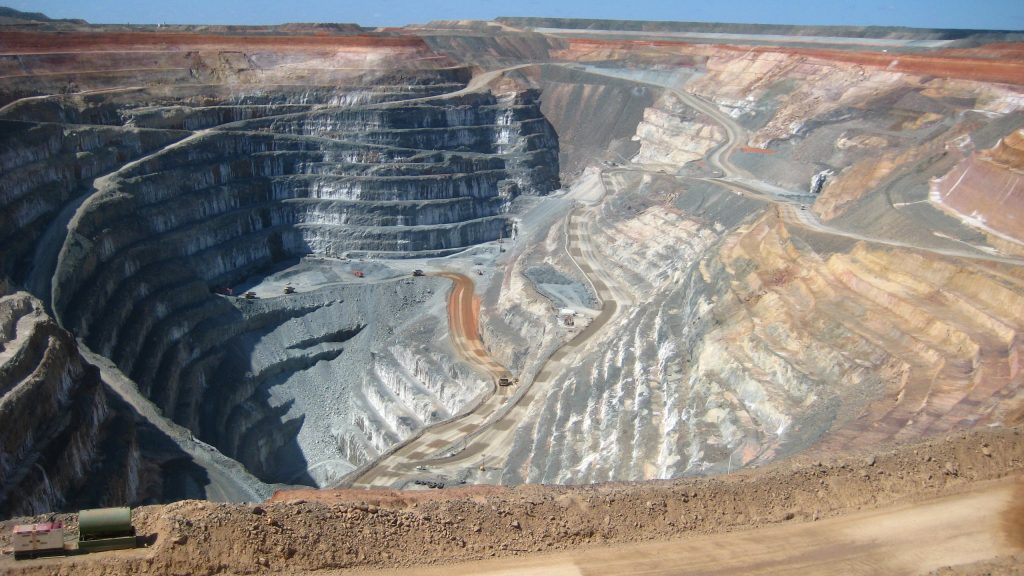
He said the district had two mineral blocks, identified as C and D, where large-scale illegal mining was taking place. He claimed that 8,350 tractors and tractor-trolleys, along with 1,730 heavy dumpers and large numbers of labourers, were being used in the illegal extraction.
He also questioned the deal under which the mining was taking place. A ten-year mining lease covering gold worth about Rs4.2 billion a month had been granted for just Rs4.92 billion, he said — roughly the value of a little more than one month’s alleged output.
That comparison is at the heart of the governor’s argument. If his figures are right, the province was giving away a resource worth billions every month for a fraction of its value, while the money flowed to people outside the formal economy — and, he alleges, to militants.
The judicial commission will have to test those numbers. Until it reports, the lease figure and the monthly output figure remain claims, not confirmed facts.
Political names and the questions around them
The governor also alleged that 12 political figures had provided backing in connection with the Kohat incident. Among those he named were former provincial minister Aftab Alam, Shehryar Afridi and Khurram Zeeshan.
But he also acknowledged that no police cases had been registered against the individuals he identified. The allegations of political involvement have not been independently established.
This part of the announcement is likely to be the most contested. Naming politicians without cases against them raises questions of its own — about evidence, about motive, and about whether the judicial commission will be able to examine the claims fairly.
For now, the names are an allegation, not a finding. Anyone named has not been charged, and the governor’s own statement makes clear that no cases exist yet.
What happens next
Two bodies have been set up in response to the Kohat incident.
First, a judicial commission will investigate illegal gold mining and the Kohat clash. The governor said action would be taken against anyone found involved.
Second, a special task force named after the martyred DSP Haidar Zaman has been approved. It will include police, district administration officials and others, and is expected to work on the crackdown against illegal mining.
The immediate test is the seven-day deadline. Leaseholders and contractors have been told to remove their heavy machinery from mining areas within a week. Whether the machinery actually leaves — and whether mining stops — will be the first sign of how seriously the suspension is being enforced.
A longer test is the investigation itself. Proving that gold money reached militant groups will need financial evidence, not just claims at a press conference. The commission’s findings, when they come, will matter more than the announcement.
Why this matters
Khyber Pakhtunkhwa is a province already under severe strain. The province has been under governor’s rule for a month, with emergency measures in place, and maintaining law and order is the government’s top priority, the governor said. Attacks on police checkposts have become a regular feature of militancy in the province — a checkpost in Hangu district was attacked only days ago, leaving one policeman dead and three abducted.
Against that background, the gold mining story connects two of the province’s biggest problems: security and resources. If illegal mining really is generating billions of rupees a month outside the law, that is money the province is losing. And if any of it is reaching armed groups, it is money that is being used against the state itself.
The province’s mineral wealth is real. The question is who controls it, who profits from it, and whether the state can bring it under the law. The governor’s announcement is an attempt to answer that question with a shutdown. Whether it works will depend on enforcement, on the investigation, and on whether the suspension survives the legal and political challenges that are likely to follow.
For the families of the ten policemen killed at Darabo Kach, the announcement is small comfort. The task force named after DSP Haidar Zaman is a recognition of their loss. But the real measure of this decision will be whether the mining stops, the money trail is followed, and those responsible — whoever they are — are actually held to account.
Frequently asked questions
What did the Khyber Pakhtunkhwa governor announce?
Governor Faisal Karim Kundi announced on Saturday, 14 November 2026 that all gold mining leases in the province are cancelled and all mining activities are suspended with immediate effect. Leaseholders and contractors must remove heavy machinery from mining areas within seven days.
What happened in Kohat?
Police and the local administration carried out an operation against illegal gold mining at Darabo Kach, near Kohat. Militants attacked police personnel as they were returning from the operation. Ten policemen were killed, including DSP Haidar Zaman, and the authorities reported that 18 militants died in the fighting.
How much gold was allegedly being mined illegally?
Governor Kundi claimed about 90 kilogrammes of gold, worth around Rs4.2 billion, was being extracted from the Kohat area every month. He also claimed about 80 per cent of the proceeds were going to Afghanistan. These figures are his claims and have not been independently verified.
Who was allegedly involved?
The governor alleged that mining operators paid protection money to militant groups linked to Fitna al-Khawarij, and that 12 political figures had provided backing. He named former provincial minister Aftab Alam, Shehryar Afridi and Khurram Zeeshan, but acknowledged no police cases had been registered against them.
What is the judicial commission?
A judicial commission has been formed to investigate illegal gold mining and the Kohat incident. A special task force named after martyred DSP Haidar Zaman has also been approved to work on the crackdown.
Is gold mining now banned in Khyber Pakhtunkhwa?
All gold mining leases have been cancelled and mining activities suspended, according to the governor’s announcement. But no official notification had been published by Saturday evening, so the legal position will become clearer once the formal orders appear.
Conclusion
The suspension of gold mining in Khyber Pakhtunkhwa is a dramatic response to a deadly clash — and to claims that illegal mining was funding militancy on a scale of billions of rupees a month.
The governor’s announcement is clear. The evidence behind it is not yet public. The judicial commission now has to do the hard work: verify the figures, follow the money, and establish who, if anyone, enabled the trade.
Until then, the story is a warning about what can happen when valuable resources sit outside the law in a province already fighting militancy. Ten policemen are dead. The mining has been ordered to stop. What happens next will show whether this was a turning point — or just another announcement.
Sources
- Geo News — KP governor suspends gold mining across province, cancels leases, 14 November 2026
- Gulf News — Pakistan Suspends Gold Mining Amid Allegations of Terror Funding After Deadly Clash, 15 November 2026
- Khabar Wire — K-P cancels all gold mining leases after Kohat ambush, 14 November 2026
- Zark News — Governor Kundi Announces Cancellation of All Gold Mining Leases in KP After Kohat Ambush, 14 November 2026
This article is for general information and education only. It is not legal or financial advice.
