
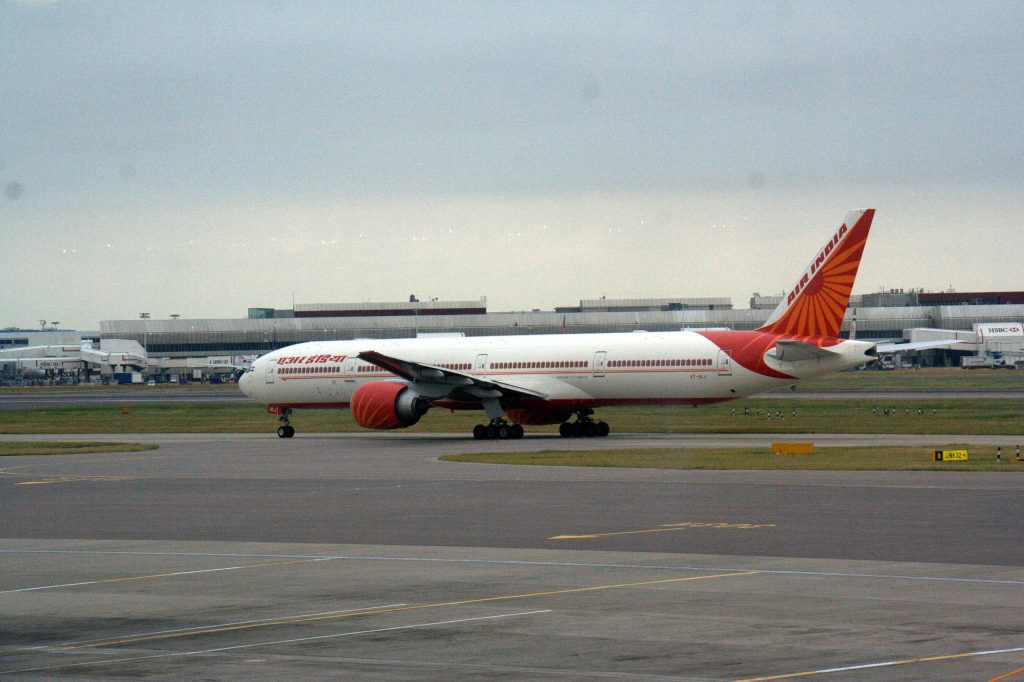
Air India Brings Back Non-Stop Flights to New York and Newark, Cutting Up to Five Hours Off the Journey
Air India has restored non-stop flights between India and the New York area, ending months of refuelling stops in Rome and cutting up to five hours off the journey for passengers flying between Delhi, Mumbai and the United States.
The airline announced on Sunday, 15 November 2026, that all four of its routes connecting Delhi and Mumbai with New York’s John F. Kennedy International Airport (JFK) and Newark Liberty International Airport (EWR) are now operating non-stop. Flights that had stretched to around 22 hours with the stop in Italy are back to about 17 hours.
For the tens of thousands of people who fly between India and the US every week — students, workers, families visiting relatives, and business travellers — it is a welcome return to something close to normal. But the restoration is not complete. Two big airspaces are still closed to the airline, and the non-stop schedule may not survive the winter winds.
At a glance
- What happened: Air India has resumed non-stop flights on all four of its Delhi and Mumbai routes to New York JFK and Newark, after months of stopping in Rome to refuel.
- When: The non-stop services restarted in the first week of November 2026, using Iraqi airspace. The airline formally confirmed the full restoration on Sunday, 15 November.
- Time saved: Up to five hours per journey. Flights that took around 22 hours with the Rome stop now take about 17 hours.
- Why it matters: The Rome stop was a reminder of how regional conflict in early 2026 had redrawn the map for long-haul flying. Its removal shows that at least part of that map is opening up again.
- What is still not normal: Pakistan’s airspace remains closed to Indian airlines, and Iranian airspace is still unavailable.
The four routes that are non-stop again
Air India now flies non-stop on all four of its city pairs between India and the New York area:
- Delhi to New York JFK (AI101): one flight a day
- Delhi to Newark (AI105): four flights a week
- Mumbai to New York JFK (AI119): one flight a day
- Mumbai to Newark (AI191): three flights a week
The Delhi services are operated with Airbus A350-900 aircraft, and the Mumbai services with Boeing 777-300ER aircraft.
The New York area is one of the most important destinations in Air India’s network. New York and New Jersey are home to one of the largest Indian communities in the United States, and the Delhi and Mumbai routes carry a heavy mix of students heading to American universities, technology workers, and families travelling to visit relatives. When those flights take 22 hours instead of 17, the extra time is felt by every one of those passengers — and by the airline, which burns more fuel and ties up its aircraft for longer on every trip.
Why were the flights stopping in Rome?
To understand why the restoration matters, it helps to know why the Rome stop existed at all.
In early 2026, the map of the skies between India and North America changed quickly. Pakistan closed its airspace to Indian airlines, and airspace restrictions spread across parts of the Middle East as regional conflict intensified. The US–Iran conflict, which broke out in February 2026, disrupted flight paths across the region and forced airlines to find new routes around closed skies.
For Air India, the result was a longer, harder journey west. The normal route from Delhi or Mumbai to New York crosses Pakistan and Iran before heading over Europe and the Atlantic. With those airspaces closed, the airline had to fly a much longer route, through Jordan and Egypt, before turning north towards Europe. The detour was so long that the Boeing 777s could not carry enough fuel to make the whole trip in one go. So the airline added a technical stop at Rome Fiumicino airport, where the aircraft landed to take on fuel before continuing to New York or Newark.
A technical stop is not a normal stopover. Passengers usually stay on the aircraft while it is refuelled, but the landing, refuelling, checks and take-off still add hours to the journey. By the time the aircraft reached New York, the trip could take around 22 hours — roughly five hours longer than the non-stop flight.
The Rome stop was a practical fix to a political problem. It kept the flights running when the direct route was impossible. But it was expensive for the airline and exhausting for passengers, and it was always meant to be temporary.
How Iraq’s reopened airspace made the difference
The change that made non-stop flying possible again came from Iraq.
Iraqi airspace reopened for commercial flights, and reduced risk assessments for Iraq, Syria and Jordan allowed Air India to resume flights through Iraqi skies. Once it reopened, airlines could once again plan routes through Iraqi skies — and for Air India, that opened a path that was short enough to skip Rome.
Air India began using the new routing in the first week of November, and the non-stop services have been operating since 4 November 2026. The airline’s formal announcement on 15 November confirmed that the restoration now covers all four routes, with the Rome refuelling stop removed entirely.
The airline expects the non-stop services to continue through November and December. But there is a warning attached: from January, strong winter headwinds could force temporary fuel stops on some flights, particularly when the aircraft are carrying heavy passenger loads. Headwinds — winds blowing against the aircraft — slow the plane down and burn more fuel, and on an ultra-long flight of 17 hours, even a small change in the wind can be the difference between making it non-stop and needing to land for fuel.
What it means for passengers
For passengers, the change is simple and welcome: a shorter journey, with no stop in the middle of it.
A non-stop flight of about 17 hours is still one of the longest journeys in commercial aviation. But the difference between 17 hours and 22 hours is the difference between arriving in the evening and arriving in the middle of the night, between one meal service and two, and between a journey that is tiring and one that is gruelling.
There is also a practical benefit that passengers may not notice but airlines care about deeply: fuel. Every extra hour in the air burns thousands of kilograms of fuel, and every landing and take-off burns more. Removing the Rome stop cuts the airline’s fuel bill on these routes and frees up the aircraft for other work. It also removes the risk that a delay in Rome would make passengers miss connections in New York.
For the large Indian community in the New York area, the restoration is also a small sign that the disruption of 2026 is easing. Many families plan their travel around school holidays and festivals, and a reliable non-stop service makes those plans easier to keep.
Not quite back to normal yet
The good news comes with an important qualification: the flights are non-stop again, but they are not back to the routes they flew before 2026.
Pakistan’s airspace is still closed to Indian airlines. Pakistan’s latest notice keeps the ban in place until at least 24 November 2026, and it is not yet clear whether it will be extended beyond that date. Iranian airspace also remains unavailable to Air India. As a result, the new route through Iraq is still longer than the old route through Pakistan and Iran.
That is the gap that remains: the Rome stop is gone, but the detour is not.
There is another reason for caution. The non-stop schedule depends on the weather. Air India expects the services to run through November and December, but from January, strong winter headwinds may force the airline to bring back fuel stops on some flights. Passengers booking for January onwards should check their flight details, because a flight sold as non-stop could still gain a stop if the winds demand it.
The date to watch is 24 November, when Pakistan’s current airspace ban on Indian carriers is due to expire. If the ban is lifted, Air India could shorten its routes further and bring flight times closer to where they were before 2026. If it is extended, the Iraq routing is likely to stay in place for longer.
The wider picture: airlines are still flying around conflict
Air India’s story is part of a much bigger change in global aviation. Since early 2026, airlines around the world have been redrawing their route maps to avoid conflict zones, and the changes have added hours to journeys that used to be routine.
When airspace closes, airlines do not simply stop flying. They find a longer way round, add fuel stops, or in some cases cancel the route entirely. Each of those choices costs money and time, and the costs eventually reach passengers in the form of higher fares and longer journeys.
The reopening of Iraqi airspace shows that the process can also work in reverse. When skies reopen, airlines move quickly to use them, because every hour saved is fuel saved and every stop removed is a better service for passengers. Air India took the new route within weeks of it becoming available.
But the map is still far from settled. As long as Pakistan’s airspace stays closed to Indian airlines and Iranian airspace stays off limits, the flights between India and the US will carry a reminder of the conflicts that reshaped them. The Rome stop is gone. The detour is not.
What happens next
Three things will decide whether the non-stop flights stay non-stop.
First, Pakistan’s airspace decision on or around 24 November. A lifting of the ban would let Air India fly a shorter route and cut journey times further. An extension would keep the Iraq routing in place.
Second, the winter winds. From January, headwinds on the westbound route may force the airline to reintroduce fuel stops on some flights, particularly on days when the aircraft are full. Air India has said the non-stop services should run through November and December, which suggests it is confident about the next few weeks at least.
Third, the wider security picture in the Middle East. The reopening of Iraqi airspace followed a reduction in risk assessments for Iraq, Syria and Jordan. If the security situation changes again, routes can close as quickly as they opened.
For now, passengers flying between Delhi or Mumbai and New York can enjoy the shorter journey. After months of stopping in Rome, the non-stop flight is back — and with it, five hours of their lives on every trip.
Frequently asked questions
Which Air India flights to New York are non-stop again?
All four routes between India and the New York area: Delhi to New York JFK (daily), Delhi to Newark (four times a week), Mumbai to New York JFK (daily), and Mumbai to Newark (three times a week). Delhi services use Airbus A350-900 aircraft; Mumbai services use Boeing 777-300ER aircraft.
How much time does the change save?
Up to five hours. Flights that took around 22 hours with the refuelling stop in Rome now take about 17 hours.
Why were the flights stopping in Rome?
Pakistan closed its airspace to Indian airlines, and airspace restrictions spread across parts of the Middle East after regional conflict in early 2026. The longer detour meant the aircraft could not carry enough fuel for the whole trip, so Air India added a technical refuelling stop at Rome Fiumicino.
Why can the flights go non-stop now?
Iraqi airspace reopened for commercial flights, and reduced risk assessments for Iraq, Syria and Jordan allowed Air India to resume flights through Iraqi skies. The new routing is short enough to skip the Rome stop. Non-stop services have been operating since 4 November 2026.
Are the flights back to normal?
Not completely. Pakistan’s airspace is still closed to Indian carriers until at least 24 November 2026, and Iranian airspace remains unavailable. From January, strong winter headwinds may force temporary fuel stops on some flights.
Will the non-stop flights last?
Air India expects them to continue through November and December 2026. Their future after that depends on the winter winds, on Pakistan’s airspace decision, and on the wider security situation in the Middle East.
Conclusion
Air India’s restoration of non-stop flights to New York and Newark is a small but meaningful step back towards normal for one of the world’s busiest long-haul markets. After months of stopping in Rome, passengers can once again fly from Delhi or Mumbai to New York in about 17 hours instead of 22.
The change was made possible by Iraq’s decision to reopen part of its airspace, and it shows how quickly airlines can recover lost time when the skies open up. But the recovery is only partial. With Pakistan’s airspace still closed and Iran’s still out of reach, the flights remain longer than they were before 2026 — and the winter winds may yet force a fuel stop back onto the schedule.
For now, though, the message for travellers is simple: the non-stop flight is back, and the journey to New York is five hours shorter than it was.
Sources
- The Hindu — “Air India resumes direct flights to New York, Newark after easing of airspace curbs”, 15 November 2026
- CNBC-TV18 — “Air India restores non-stop flights to New York, cutting travel time by up to five hours”, 15 November 2026
- NDTV Profit — “Air India Restores Non-Stop India-New York Flights, Cuts Travel Time By Up To Five Hours”, 15 November 2026
- Times Now — “Air India Resumes Direct Delhi, Mumbai Flights To New York; Travel Time Cut By 5 Hours”, 15 November 2026
- News18 — “Air India Restarts Nonstop Flights To US Via Iraq Airspace From Delhi, Mumbai To New York”, 9 November 2026
- Travel+Leisure Asia — “Iraq Airspace Opens, Air India Resumes Direct Flights To New York”, 9 November 2026
This article is for general information and education only. It is not legal or financial advice.
