
Iraq Orders Army Into Kataib Hezbollah Stronghold in Oil Smuggling Crackdown
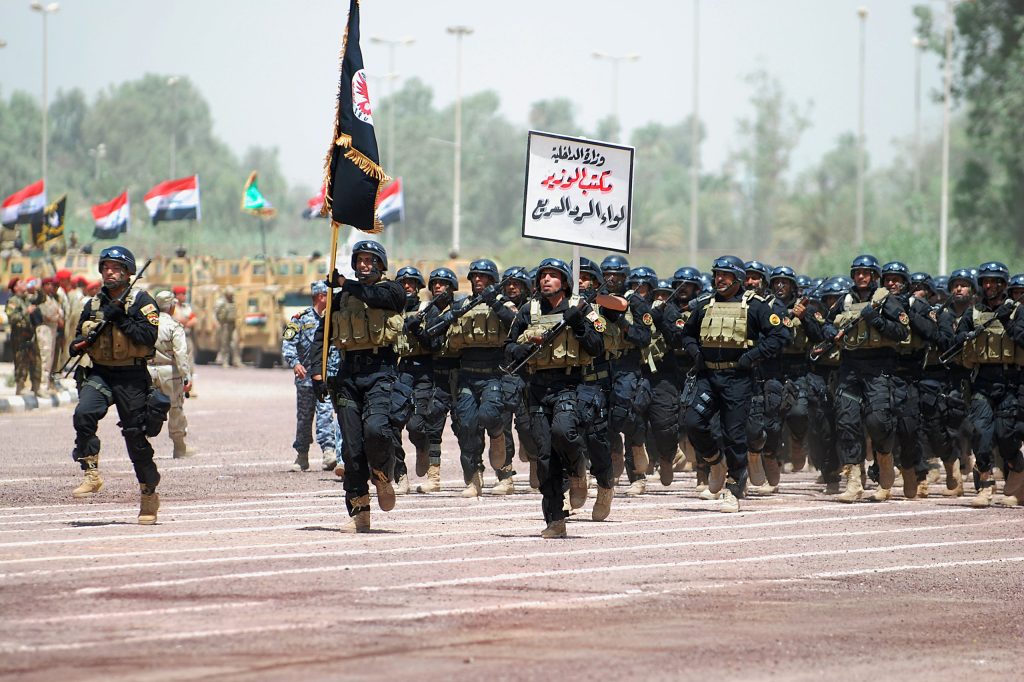
Iraq’s prime minister has ordered the army into a town controlled by one of the country’s most powerful armed groups, in the biggest test yet of his campaign to bring Iraq’s militias — and its oil money — under state control.
Prime Minister Ali al-Zaidi on Monday, 16 November 2026, ordered armed forces to enter Jurf al-Sakhar, a town about 50 kilometres (30 miles) south of Baghdad that has been a stronghold of the Iran-backed Kataib Hezbollah group for more than a decade. The group has been given until Friday to leave the area.
The order follows a government investigation that, officials say, found proof that crude oil has been stolen from a pipeline running through the town and sold for hundreds of millions of dollars since 2021. Kataib Hezbollah denies the charges and says the crackdown is a trick to force it to give up its weapons.
If government troops do enter the town, it could put Iraqi soldiers face to face with heavily armed fighters — a confrontation the prime minister has been building towards since he took office early this year.
What happened on Monday
Government spokesman Haidar al-Aboudi announced the order on Monday, according to the state-run Iraqi News Agency (INA). He said the prime minister had “ordered the armed forces to enter” Jurf al-Sakhar and that “a deadline has been set for the armed faction to exit the area”.
A senior Iraqi official told Al Jazeera Arabic that Kataib Hezbollah has until Friday to leave the town, which is also known as Jurf al-Nasr. A security source gave the same Friday deadline to the AFP news agency.
Al-Zaidi told military and security commanders to send extra forces to the area around the town and to prepare for government troops to go in. Security agencies have also been told to stop any tankers carrying oil or petroleum products from leaving the area.
As of Monday, there was no confirmed report that government forces had actually entered the town or that fighting had started. The order, for now, is a deadline — not yet a battle.
The oil smuggling allegation
The crackdown began with an investigation into what officials describe as a large oil theft operation centred on Jurf al-Sakhar, in Babil province.
On Saturday, investigators visited the town and found evidence that smugglers had punctured a crude oil pipeline and drained oil into makeshift storage pits dug into the ground, two security sources who took part in the inspection told Reuters.
The same sources said investigators found pumping equipment hidden inside hangars, where it could not be seen from the air, and a small oil refinery hidden in the area. The equipment was used to load stolen crude onto tanker trucks.
The pipeline at the centre of the case is 26 inches wide and carries at least 200,000 barrels of crude oil a day, according to an Iraqi Oil Ministry document seen by Reuters.
How much oil has actually been stolen is not yet known. Two Iraqi oil officials with direct knowledge of the investigation told Reuters it was too early to put a firm number on the losses, because nobody knows how long the tapping points had been in use. But they estimated the value of the crude that may have been siphoned off since 2021 could run into the hundreds of millions of dollars.
The government’s investigative committee said it had found “clear tampering with pipelines passing through the area, as well as attempts to bury and conceal traces of that tampering”, according to the government spokesman.
So far, nine senior security and oil officials have been dismissed and referred to the courts over the affair. Among them are the Babil police chief, the province’s intelligence and security commanders, and the director of the state-run Oil Pipelines Company.
Who is Kataib Hezbollah?
Kataib Hezbollah — the name means “the Brigades of the Party of God” — is one of dozens of heavily armed groups in Iraq that support Iran. The United States has branded it a terrorist organisation.
The group has held Jurf al-Sakhar since helping to recapture the town from the Islamic State group in 2014. Since then, thousands of Sunni residents displaced by the fighting have been unable to return, and the town has effectively become a militia base. It was renamed Jurf al-Nasr, meaning “victory”, after the defeat of the Islamic State fighters.
Like other pro-Iranian groups, Kataib Hezbollah has a semi-official status in Iraq. Its fighters are part of the country’s wider network of armed factions, many of which were brought under a state umbrella after the war against the Islamic State group — but which have kept their own commanders, weapons and funding.
The group has built up a large arsenal, including assault rifles, machine guns, anti-tank guided missiles, mortars, rockets and armed drones. Iraqi security reports also say it has some short-range ballistic and cruise missile capabilities, supplied by Iran or copied from Iranian systems, according to Reuters.
Kataib Hezbollah denies any part in oil smuggling. In a statement on Sunday, the group said an inspection had found no interference with the pipelines and accused the prime minister’s office of “fabricating lies”.
“We are therefore being subjected to the greatest campaign of blackmail aimed at forcing us to relinquish the weapons of dignity that have upheld sovereignty and protected the rights of Iraqis at multiple stages,” the group said.
Why the prime minister is taking this risk
The oil investigation is officially about protecting public money. But analysts say it is also a deliberate move against the financial lifelines of armed groups that refuse to come under full state control.
Jasim al-Bahadli, an Iraqi security analyst who studies armed Shi’ite groups aligned with Iran, told Reuters the anti-smuggling campaign had become a political confrontation with the militia.
“Al-Zaidi is effectively challenging a group with deep security, political and economic influence, and that carries significant risks for both sides,” he said.
“More broadly, it appears to be an attempt to contain the influence of Iran-backed armed groups by targeting economic networks that underpin their power, particularly after Kataib Hezbollah resisted government efforts to bring armed factions more firmly under state control.”
The prime minister, who came to power early this year and has built close relations with Washington, has promised that armed factions will hand their weapons over to the state. That is a long-standing demand of the United States, which wants Iraq’s militias disarmed.
Pressure from Washington has been growing. In May, the US sanctioned Iraq’s deputy oil minister, accusing him of helping to divert Iraqi oil for the benefit of Iran and its proxy militias. Sanctions were also placed on militia leaders and networks that Washington said were using Iraq’s oil wealth to fund Tehran-aligned groups.
Reuters reported in 2024 that a fuel oil smuggling network had already earned $1 billion for Iran and its proxies — a reminder that the problem in Jurf al-Sakhar may be part of a much larger pattern.
Iran has held deep influence in Iraq, where most people are Shi’ite Muslims, since the United States toppled the Sunni dictator Saddam Hussein in 2003. The armed groups have resisted repeated calls by both al-Zaidi and US President Donald Trump to disarm, and have attacked US troops and targets in Saudi Arabia and the United Arab Emirates in solidarity with Tehran since the war against Iran began in February.
What happens next
Everything now depends on what happens before Friday.
If Kataib Hezbollah withdraws from Jurf al-Sakhar by the deadline, the prime minister will have scored a major win without a shot being fired — proof that his government can take back territory from an armed group through pressure alone.
If the group refuses, government troops are expected to move in, and Iraq could see its first direct armed confrontation between the state and one of its most powerful militias. The group has already said it will not give up the area or its weapons.
Either way, the investigation is not over. More officials could face charges, and the government has said it will keep blocking oil tankers from leaving the area. The wider question — whether Iraq’s government can finally bring all of the country’s armed factions under its control — is now being tested in one small town south of Baghdad.
Frequently asked questions
Where is Jurf al-Sakhar?
Jurf al-Sakhar is a town in Babil province, about 50 kilometres (30 miles) south of Baghdad. It is also known as Jurf al-Nasr, a name given to it after it was recaptured from the Islamic State group in 2014. It has been a stronghold of the Kataib Hezbollah militia for more than a decade.
What is Kataib Hezbollah accused of?
The Iraqi government says the group ran an oil smuggling network in the Jurf al-Sakhar area. Investigators say they found a punctured crude oil pipeline, makeshift storage pits, hidden pumping equipment and a small concealed refinery. Officials estimate the stolen oil could be worth hundreds of millions of dollars since 2021, though the exact figure is not yet known.
What is the Friday deadline?
Prime Minister Ali al-Zaidi has given Kataib Hezbollah until Friday, 20 November 2026, to leave Jurf al-Sakhar. Government forces have been ordered to prepare to enter the town if the group does not withdraw.
Why does the United States care about this?
Washington has been pressing Iraq to curb the influence of Iran-backed armed groups and to stop Iraqi oil wealth being diverted to Iran and its proxies. In May, the US sanctioned Iraq’s deputy oil minister over alleged oil diversion, and it has long demanded that Iraq’s militias hand over their weapons to the state.
Has fighting started?
No. As of Monday, 16 November, there was no confirmed report of government forces entering the town or of any fighting. The prime minister has ordered troops to prepare, and extra forces are being deployed around the area.
Conclusion
The order to send the army into Jurf al-Sakhar is the boldest move yet by Iraq’s prime minister in his effort to take back control from the country’s armed groups. The oil smuggling case gives him a strong public reason to act — stolen oil worth hundreds of millions of dollars, a punctured pipeline, and officials already dismissed and facing the courts.
But the risks are just as clear. Kataib Hezbollah is heavily armed, denies everything, and has said it will not leave. With a Friday deadline in place, the next few days will show whether Iraq’s government can enforce its authority peacefully — or whether the confrontation it has been building towards will turn into a fight.
Sources
- Al Jazeera, “Iraq deploys army to stronghold of Iran-backed Kataib Hezbollah”
- Reuters, “Iran’s proxy in Iraq rakes in hundreds of millions through oil smuggling”
- CNA, “Iraq orders army to enter stronghold of Iran-backed group”
- Aaj TV, “Iraq orders army to enter stronghold of Iran-backed group”
This article is for general information and education only. It is not legal or financial advice.
