
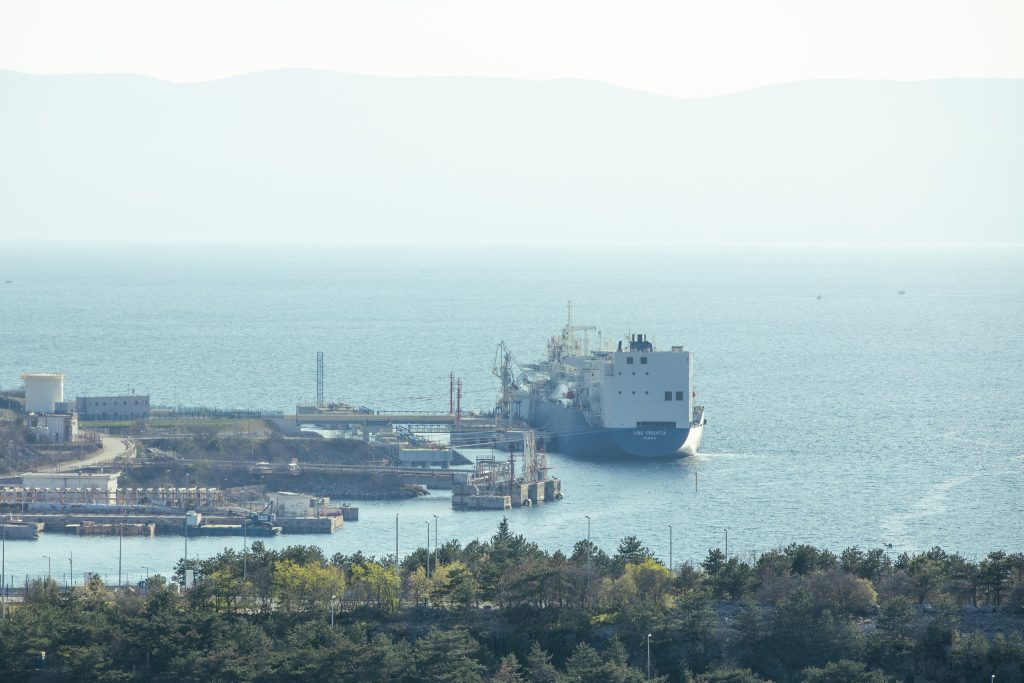
Pakistan Secures $200 Million Oman Fuel Deal as PSO Signs Supply Pact With OQ Trading
Pakistan has secured a new fuel lifeline from Oman. On Sunday, 22 November 2026, Pakistan State Oil (PSO) signed a petroleum products supply agreement with Oman’s OQ Trading (OQT), and the Omani company agreed to extend a $200 million credit line to Pakistan’s state-run fuel company. The Pakistan Oman fuel deal gives Islamabad a more reliable source of petrol, diesel and LPG at a time when its main shipping route for oil remains disrupted by war.
The agreement was signed in Muscat, Oman’s capital, during a visit by Pakistan’s Federal Minister for Petroleum, Ali Pervaiz Malik. He met Oman’s Minister of Energy and Minerals, Engineer Salim Bin Nasser Al Aufi, and the two ministers witnessed the signing together. The deal matters because it is about more than buying fuel: it is about how Pakistan keeps its petrol stations stocked and its power plants running while the region around it is in conflict.
What the deal covers
The agreement has two main parts. First, there is a Sale and Purchase Agreement, known as an SPA, under which OQ Trading will supply petroleum products to PSO. Second, OQT has agreed to give PSO a credit limit of $200 million, which PSO can use to pay for those fuel purchases.
In simple terms, the credit line works like a tab at a shop. PSO can buy fuel from OQT now and settle the bill later, instead of having to pay the full amount in US dollars upfront every time a cargo arrives. That matters because Pakistan pays for all of its oil imports in dollars, and dollars are always in short supply.
The two companies had already agreed the supply deal on 8 October, according to a filing PSO made to the Pakistan Stock Exchange that month. Sunday’s ceremony in Muscat was the formal signing, and the $200 million credit line is the new part of the arrangement. The deal was approved earlier by the Economic Coordination Committee (ECC) and sits under an existing inter-governmental agreement between Pakistan and Oman that dates back to 2018.
The Petroleum Division, which announced the deal, said it “marks an important milestone in the commercial relationship between the two companies and provides a structured arrangement for petroleum product supplies from OQT to PSO, supporting supply reliability amid continued volatility in regional energy markets.”
Why Oman matters: the Hormuz problem
To understand why this deal is important, it helps to look at a map. Pakistan imports nearly 80 to 85 per cent of the petroleum it needs, and most of those shipments arrive by sea through the Strait of Hormuz, the narrow waterway between Iran and Oman, before reaching Karachi and Port Qasim.
That route has become unreliable since the US-Iran war began. The conflict has now entered its ninth month, and the Strait of Hormuz remains severely disrupted. Tankers have been attacked near the strait, and shipping through it has become riskier and more expensive. Three attacks on tankers were reported in less than a day in the days before this deal was signed.
Pakistan has historically bought most of its oil and gas from Saudi Arabia, Kuwait, the United Arab Emirates and Qatar. The problem is that most of those countries have their ports inside the Strait of Hormuz, so their cargoes must pass through the same troubled waterway. The alternative route, through the Red Sea, has also been disrupted as the regional conflict spread to Yemen, where Houthi forces have attacked shipping.
This is where Oman’s location becomes valuable. Oman sits outside both chokepoints: its ports are on the Arabian Sea, beyond the Strait of Hormuz, and cargoes loaded there do not need to pass through the Red Sea either. A tanker leaving Oman reaches Pakistan after a short crossing of the Arabian Sea. Oman has also become a key transfer point for Gulf crude that can no longer leave through the strait. In other words, buying from Oman means buying fuel that avoids the two most dangerous stretches of water in the region.
What the $200 million credit line does
The credit line is the part of the deal that helps Pakistan’s economy most directly. Oil imports must be settled in US dollars, so when global oil prices rise, Pakistan needs more dollars to buy the same amount of fuel. That extra demand for dollars weakens the rupee and pushes up the cost of everything Pakistan imports, from machinery to medicine.
Deferred payment eases that pressure. Instead of paying for each cargo immediately, PSO gets breathing room. The arrangement also adds Muscat to the list of Gulf partners that help finance Pakistan’s fuel purchases. Kuwait already does something similar: PSO imports three oil cargoes from Kuwait every month on 90-day deferred payments.
The $200 million figure is a credit limit, not a gift or a loan to the government. It is a ceiling on how much PSO can owe OQT at any one time while it buys fuel. As PSO pays for one cargo, room opens up to buy the next one. For a country that spends billions of dollars a year on oil imports, $200 million is not a huge sum on its own, but it is a useful cushion — and it comes with a reliable supply arrangement attached to it.
What Oman already supplies to Pakistan
The new agreement builds on a trading relationship that is already working. OQ Trading has become a major supplier of petrol to PSO, delivering more than one million tonnes of gasoline during 2026 alone. That makes the Omani company one of Pakistan’s most important fuel partners already, before this formal agreement was even signed.
Oman has also been growing its presence in Pakistan’s LPG market. LPG, or liquefied petroleum gas, is the bottled gas used for cooking in millions of Pakistani homes, especially in areas without piped gas. OQT supplies LPG to both state-owned and private-sector buyers in Pakistan, and the Petroleum Division expects its LPG supplies to Pakistan to exceed 120,000 tonnes by the end of 2026.
That LPG figure matters for ordinary households. Pakistan faces gas shortages every winter, when demand for heating and cooking rises and the piped gas network cannot keep up. Extra LPG supplies help fill that gap, and a steady supplier means fewer sudden shortages.
The bigger picture: Pakistan-Oman energy ties
The two ministers did more than witness a signing. During their meeting in Muscat, Ali Pervaiz Malik and Salim Al Aufi discussed ways to strengthen cooperation in oil, gas and minerals, and they welcomed the creation of a Pakistan-Oman Joint Working Group on Oil and Gas. The group is meant to be a standing forum where officials from both countries can keep working on energy projects together, rather than meeting only when a deal needs signing.
Both ministers said they were confident the agreement would strengthen Pakistan-Oman energy ties and support Pakistan’s efforts to improve its energy security by buying fuel from more than one source. The Petroleum Division’s statement said the meeting and the signing showed “the shared commitment of Pakistan and Oman to expanding bilateral energy cooperation, strengthening commercial partnerships and exploring new investment opportunities in the oil, gas and minerals sectors.”
Energy security is a phrase that comes up often in these announcements, but it has a simple meaning: a country should not depend on one supplier, one route or one payment method for something as essential as fuel. If one source fails, others must be ready. Pakistan learned this lesson the hard way over the past year, as war disrupted its main supply route. The Oman deal is one more step towards having a backup plan.
The deal also fits a wider pattern in Pakistan’s energy policy. The government has been trying to lock in long-term supply arrangements with friendly countries instead of buying fuel shipment by shipment on the open market, where prices can swing sharply. The agreement with Kuwait on deferred payments follows the same logic, and the Oman deal adds another stable partner to that list.
What it means for petrol prices
For most Pakistanis, the first question about any fuel deal is simple: will it make petrol cheaper? The honest answer is that this deal is unlikely to change pump prices on its own. Petrol prices in Pakistan are set by the government every two weeks, based on international oil prices, the rupee-dollar exchange rate and taxes. A supply agreement does not change the world oil price.
What the deal can do is make supply steadier and take some pressure off the rupee. If PSO can buy fuel on credit instead of paying dollars upfront, there is less sudden demand for dollars, which helps keep the rupee stable. A stable rupee, in turn, helps keep the rupee cost of imported fuel from rising. These are small, indirect effects, but over months they add up.
The latest fuel prices show how sensitive the market is. Petrol was selling at Rs322 a litre and diesel at Rs357 a litre until 23 November, the rates set on 21 November, when petrol was cut by Re1 from Rs323 and diesel raised by Rs2 from Rs355. Those fortnightly changes are driven by world prices and the exchange rate, not by supply deals. The Oman agreement is about making sure the fuel is there to buy, at whatever price the market sets.
There is one more benefit that matters to households. A reliable supply of LPG from Oman helps keep cooking gas available through the winter, when shortages are most common. That is the part of this deal that ordinary families are most likely to notice, even if they never hear about the $200 million credit line.
What happens next
The agreement is now signed, but its value will be judged by what happens over the coming months. The first thing to watch is whether fuel cargoes from OQT start arriving regularly under the new arrangement, and whether the $200 million credit line is actually used to smooth out payments. The second is whether the new Joint Working Group on Oil and Gas produces further deals, for example in gas exploration or minerals.
The third thing to watch is the Strait of Hormuz itself. If the US-Iran conflict eases and shipping through the strait returns to normal, the Oman route becomes less urgent but still useful as a backup. If the disruption continues or gets worse, the Oman deal could become one of Pakistan’s most important energy arrangements, because it is one of the few supply routes that avoids the conflict zone altogether.
For now, Pakistan has done what any country in its position should do: it has found a supplier outside the danger zone, agreed a formal framework for buying from them, and secured credit to pay for it. In a region where fuel supply can no longer be taken for granted, that is a meaningful step.
Frequently asked questions
What is the Pakistan Oman fuel deal?
It is a petroleum products supply agreement signed on 22 November 2026 between Pakistan State Oil (PSO) and Oman’s OQ Trading (OQT). Under the deal, OQT will supply fuel to PSO and extend a $200 million credit line so PSO can pay for its purchases.
Who signed the agreement?
The Sale and Purchase Agreement was signed in Muscat by PSO and OQ Trading. Pakistan’s Petroleum Minister Ali Pervaiz Malik and Oman’s Minister of Energy and Minerals, Engineer Salim Bin Nasser Al Aufi, witnessed the signing.
Why is Oman an important fuel supplier for Pakistan?
Oman’s ports sit outside the Strait of Hormuz, the narrow waterway through which most of Pakistan’s oil imports travel. Because the strait is disrupted by the US-Iran conflict, fuel loaded in Oman can reach Pakistan across the Arabian Sea without passing through the conflict zone or the Red Sea.
What is the $200 million credit line for?
It is a credit limit that lets PSO buy petroleum products from OQT and pay for them later, instead of paying the full amount in US dollars upfront. This eases pressure on Pakistan’s dollar reserves and helps keep the rupee stable.
How much fuel does Oman already supply to Pakistan?
OQ Trading supplied more than one million tonnes of gasoline to PSO during 2026. Its LPG supplies to Pakistan are expected to exceed 120,000 tonnes by the end of 2026.
Will the deal lower petrol prices in Pakistan?
Not directly. Petrol prices are set every two weeks based on world oil prices, the exchange rate and taxes. The deal should make fuel supply more reliable and ease pressure on the rupee, which can help keep prices steadier over time.
Conclusion
The Pakistan Oman fuel deal is a practical response to a difficult situation. With the Strait of Hormuz disrupted by a war now in its ninth month, Pakistan needed a fuel supplier whose cargoes do not have to pass through the danger zone. Oman, sitting on the Arabian Sea outside the strait, fits that need. The $200 million credit line from OQ Trading gives PSO room to buy fuel without paying every dollar upfront, and the new Joint Working Group on Oil and Gas gives both countries a way to keep building the relationship.
The deal will not change petrol prices overnight, and $200 million is small next to Pakistan’s total oil import bill. But energy security is built one agreement at a time, and this one secures a reliable supply route, a growing source of LPG for Pakistani homes, and a financial cushion for the country’s biggest fuel buyer. In a region where the flow of oil can no longer be taken for granted, that is worth having.
Sources
- “Islamabad secures oil supply, $200m credit line from Muscat”
- “Oman to supply petroleum products, $200m credit facility to PSO under new agreement”
- “Pakistan, Oman seal $200m energy deal”
- “$200m Oman credit facility for fuel imports secured”
- “Oman extends 200 million dollars credit facility to Pakistan for fuel imports”
- “PSO Signs Oman Fuel Deal, Gets $200 Million Credit Line”

Pingback: Petrol Price in Pakistan Falls to Rs319 as Diesel Stays at Rs357 — New Rates From 24 November - Findivoza
Pingback: Pakistan and Malaysia Deepen Defence Ties as Field Marshal Asim Munir Meets Anwar Ibrahim in Putrajaya - Findivoza