
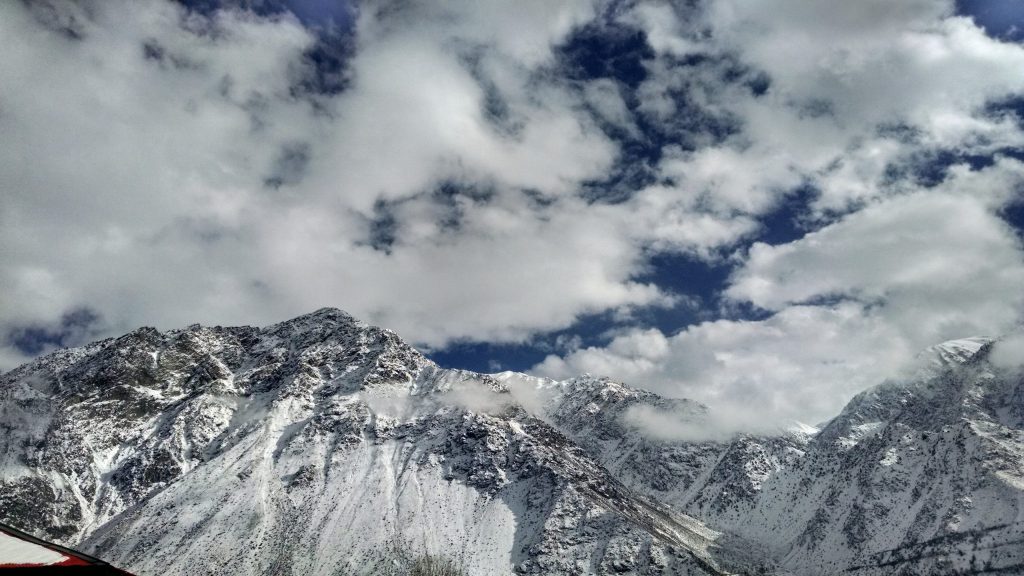
Pakistan stays dry into November as the first snow falls on the northern mountains
November has arrived in Pakistan with a split personality. Most of the country will stay dry for the whole first week of the month, with warm afternoons in the plains and cold nights almost everywhere. But in the far north, winter is already knocking: the Pakistan Meteorological Department (PMD) expects light rain and snow over the high mountains of Gilgit-Baltistan, Chitral, Dir and Swat from Sunday 1 November, with a stronger spell of rain, wind and thunderstorms due in the upper north on Thursday 5 November.
It is the same pattern Pakistan has lived with for two weeks now. The PMD’s weekly outlook, issued on 30 October 2026, says dry weather will cover most of the country every day from 31 October to 5 November, and its updated outlook for 1 to 7 November keeps that picture unchanged. The reason is a mass of dry continental air sitting over most of Pakistan, with only a shallow trough of a westerly wave — a band of unsettled air moving in from the west — disturbing the northern areas.
For most people, that means a settled, sunny week. For travellers heading north, farmers watching their fields, and drivers on the motorways at night, the details matter a great deal more. Here is what the forecast says, city by city and day by day.
At a glance
What happened: The Pakistan Meteorological Department’s weekly outlook, issued on 30 October 2026 and updated for 1 to 7 November, forecasts dry weather over most of Pakistan for the whole week, with light rain and snow over the high mountains of the north from 1 November and a rain and thunderstorm spell in upper Khyber Pakhtunkhwa on 5 November.
Why it matters: The dry spell is now more than two weeks long. Days stay warm — Karachi is forecast at 35 to 37 degrees Celsius — while nights turn sharply cold, with Babusar recording 1 degree Celsius on 31 October. Dry, calm air also means no rain to clear dust and smoke from the air over the plains, so fog and smog risks rise.
What happens next: Snow is expected on the mountains of Gilgit-Baltistan, Chitral, Dir and Swat from 1 to 4 November. On 5 November, rain, wind and thunderstorms are likely in upper Khyber Pakhtunkhwa, Gilgit-Baltistan and adjoining Kashmir, with a chance of rain and thunderstorms in northern Balochistan too. The plains stay dry throughout.
The week ahead, day by day
The PMD’s outlook for 1 to 7 November 2026 is remarkably steady. Almost every day carries the same headline — dry over most of the country, cold and partly cloudy in the north — with the only changes coming in the far north.
Sunday 1 November brings dry weather over most parts of the country, with cold and partly cloudy weather in the northern areas. Light rain and snowfall over the hills may occur at isolated places in upper Khyber Pakhtunkhwa and Gilgit-Baltistan during the night, according to the PMD’s outlook.
Monday 2 November looks very similar: dry over most of the country, cold and partly cloudy in the north during the morning and night, with light rain and snowfall likely at isolated places in upper Khyber Pakhtunkhwa and Gilgit-Baltistan. On Tuesday 3 November, the PMD expects light rain, with snow over the mountains, at isolated places in Gilgit-Baltistan, Chitral, Dir and Swat. Wednesday 4 November adds Kashmir to that list.
Thursday 5 November is the most active day of the week. Rain, wind and thunderstorms, with snow over the mountains, are likely at isolated places in upper Khyber Pakhtunkhwa, Gilgit-Baltistan and adjoining areas of Kashmir. Partly cloudy weather is also likely in the northern parts of Balochistan, where rain, wind and thunderstorms may occur at isolated places during the period.
Friday 6 November and Saturday 7 November return to the settled pattern: dry weather over most parts of the country, with cold and partly cloudy weather in the northern areas.
Two words in the forecast deserve attention. “Isolated” means the rain and snow will fall in scattered places, not everywhere in the named areas. “Light” means the amounts will be small. This is the first touch of winter in the mountains, not a heavy snowstorm. Even so, it is the first snow of the season for many high valleys, and it marks the turn of the year in the north.
A country split in two: hot days in the south, freezing nights in the north
The most striking feature of this week’s weather is the gap between day and night, and between south and north. Pakistan in early November is two countries at once.
Karachi, the country’s biggest city, is forecast at 35 to 37 degrees Celsius on both Saturday 31 October and Sunday 1 November, according to the PMD’s daily forecast issued on 30 October at 5:30pm. That makes it the hottest of the big cities. Turbat, in Balochistan, is hotter still at 37 to 39 degrees Celsius, while Hyderabad is forecast at 33 to 35 degrees and Sukkur at 31 to 33 degrees. The PMD’s own text for Sindh describes the afternoons as “hot during daytime” — an unusual phrase for November, and a reminder that summer has not fully let go of the south.
Move north and the numbers fall steadily. Multan and Bahawalpur are forecast at 29 to 31 degrees. Lahore, Islamabad and Faisalabad sit at 27 to 29 degrees, Rawalpindi at 26 to 28 degrees, Peshawar at 25 to 27 degrees, and Quetta at 23 to 25 degrees. In the hills, Murree is forecast at 17 to 19 degrees, Gilgit at 22 to 24 degrees, Babusar at 11 to 13 degrees, and Malam Jabba at 14 to 16 degrees.
Then night falls, and the gap widens further. The PMD’s minimum temperature table dated 31 October 2026 shows Babusar as the coldest station in the country at 1 degree Celsius, followed by Skardu at 2 degrees, Gupis at 3 degrees, and Kalat and Astore at 4 degrees. Quetta dropped to 6 degrees and Murree to 7 degrees. In the plains, Islamabad read 11 degrees, Lahore 16 degrees and Karachi 22 degrees.
That means Quetta swings from about 25 degrees in the afternoon to 6 degrees at night, and Islamabad goes from around 28 degrees by day to 11 degrees at night. These are the swings that catch people out, and the season when families start switching on heaters.
The PMD read that temperature table at about 3am on 31 October, so some stations may have dropped a little further by sunrise. But the pattern is clear and it will hold all week: warm days, cold nights, and the coldest nights in the high north.
Why the dry spell has lasted so long
Dry weather in early November is not unusual in Pakistan. Autumn is the season when continental air — dry air that has travelled over land rather than over the sea — takes control of the country. It brings clear skies, warm afternoons and cold nights, and very little rain. What makes this spell worth noting is its length.
The PMD’s outlook for the previous week, 27 October to 1 November, was also dry, with cold mornings and nights in the north and a chance of rain only around Chitral on 28 and 29 October. Put the two weeks together and the dry spell now runs past a fortnight, with no rain at all forecast for Punjab, Sindh, Balochistan and Islamabad in the current outlook. Only a shallow trough of a westerly wave — a ripple in the fast-moving air high above the ground — disturbs the north, which is why Chitral, Dir, Swat, Kohistan and Gilgit-Baltistan are the only places with rain or snow in the forecast.
What the dry spell means: fog, smog and farming
Six dry days with calm air and cold nights are the classic setting for fog in Punjab and smog in the big cities. Rain washes dust and smoke out of the air; when it does not rain, the pollution stays where it is, and cold nights trap it close to the ground.
Lahore has already felt this. The city topped the world’s pollution chart in late October as smog hit hazardous levels, and the dry week ahead offers no relief. The PMD’s weekly outlook does not mention fog, but drivers should still check conditions before night trips: fog forms most easily on exactly these kinds of calm, clear, cold nights, and it can appear quickly on the motorways between Lahore, Islamabad and the north.
For farmers, the dry week is a mixed picture. Dry weather is good for harvesting and for drying crops, and it keeps the roads to the markets passable. But it also means no rain for winter crops being sown now, and it adds to the pressure on water supplies. Pakistan’s 2026 summer monsoon finished 19 per cent short of normal for the country as a whole, and 51 per cent short in Sindh, according to the Pakistan Meteorological Department, so water stored in the reservoirs started the dry season below the average of the past decade.
The snow in the north does have one longer-term benefit. Snow that falls on the high mountains in November stays there through the winter and melts in spring and summer, feeding the rivers that water the plains. It is too early to say how much snow this week’s light falls will leave behind, but every spell of mountain snow is a small deposit in the country’s water account.
Snow in the north: what travellers need to know
The PMD has specifically forecast partly cloudy conditions with chances of light rain in Chitral, Dir, Swat, Kohistan and Kurram, according to reporting of the forecast published on 1 November 2026. In Murree, Galiyat and adjoining areas, partly cloudy weather is expected, with mornings and nights likely to remain cold. Islamabad and its surrounding areas are expected to stay dry.
The Met Office has advised residents and travellers visiting northern and mountainous regions to remain mindful of changing weather conditions, particularly during the night hours. Mountain weather changes fast, and a light snowfall at night can leave roads slippery by morning even if the day itself looks clear. Anyone travelling north should check the PMD’s tourist forecast, and make sure their vehicle is ready for winter roads — tyres, brakes, lights, fuel and warm clothing are the basics.
The strongest spell of the week, on 5 November, is the one to watch most closely. Rain, wind and thunderstorms with snow over the mountains are likely in upper Khyber Pakhtunkhwa, Gilgit-Baltistan and adjoining Kashmir, and northern Balochistan may see rain and thunderstorms too. If you are travelling in the north on that day, check the forecast again on the morning of travel, because forecasts for mountain weather can change as the day approaches.
How this week fits the bigger picture
This is not a dramatic week of weather. There is no storm, no flood and no heatwave. But quiet weeks matter too, because they set the conditions for what comes next.
The dry, cold pattern of early November is the bridge between autumn and winter in Pakistan. The monsoon is long gone, the winter rains have not yet arrived, and the country waits. What happens in the Pacific Ocean over the next two months will help decide whether the winter brings helpful rain for the wheat crop or more pressure on water supplies that are already stretched. A record-breaking El Niño is building in the Pacific, and the World Meteorological Organization has warned it could become one of the strongest since 1950, with effects on rainfall and temperature around the world.
For now, the message for Pakistan is simple. The plains stay dry and warm by day. The nights get colder. The north gets its first snow.
Frequently asked questions
Will it rain in Lahore or Islamabad this week?
No. The PMD’s outlook issued on 30 October 2026 shows dry weather in Punjab and Islamabad every day from 31 October to 5 November, and the updated outlook for 6 and 7 November keeps the same dry picture.
What is the weather in Karachi this week?
Dry and hot by day. The PMD forecasts 35 to 37 degrees Celsius for Saturday 31 October and Sunday 1 November, with no rain. Nights are much milder, at around 22 degrees.
When will it snow in Pakistan in November 2026?
The PMD expects light snow over the mountains of Gilgit-Baltistan, Chitral, Dir and Swat from 1 to 4 November 2026. Kohistan and Mansehra are also named on some days, and a stronger spell with rain, wind and thunderstorms is likely in the upper north on 5 November.
Which was the coldest place in Pakistan overnight?
On the PMD’s minimum temperature table dated 31 October 2026, Babusar was the lowest at 1 degree Celsius, followed by Skardu at 2 degrees and Gupis at 3 degrees.
Where does the PMD publish its weekly forecast?
On its website, weather.gov.pk, under Forecast and then Weekly Outlook. The page shows the outlook for the coming week. The outlook covering 1 to 7 November 2026 was prepared by forecasting officer Mehr Fatima.
Is there a fog warning this week?
The PMD’s weekly outlook does not mention fog. Its motorway fog information should be checked for its issue date before a night journey, and the motorway police can be reached on 130 for live road conditions.
Conclusion
Pakistan’s first week of November will be a quiet one for most of the country — dry, sunny and warm by day, cold at night — and a wintry one for the far north, where the first snow of the season is forecast for the high mountains. Karachi will feel more like late summer than November, while Babusar and Skardu are already close to freezing at night.
That contrast is normal for Pakistan in November, but the length of the dry spell is worth watching. Two weeks without rain in the plains, on top of a monsoon that fell well short of normal, leaves the air dusty, the cities smoky and the soil dry. The snow in the north is a small piece of good news for the water supply, and the rain and thunderstorms due on 5 November will be welcome in the upper valleys.
Check the forecast before you travel, dress for the cold nights, and enjoy the clear autumn days while they last. Winter is coming to the mountains first — and, as always in Pakistan, it will reach the plains in its own time.
This article is for general information and education only. It is not legal or financial advice.
Sources
- Pakistan Meteorological Department, Weekly Weather Outlook, 1–7 November 2026 — https://weather.gov.pk/nwfc/weekly-outlook
- Bloom Pakistan, “Rain and Snowfall Expected in 5 Areas of Pakistan”, 1 November 2026 — https://bloompakistan.com/rain-snowfall-expected-5-areas-pakistan/
- PKRevenue, “Pakistan Weather Forecast for October 31 and November 1”, 31 October 2026 — https://pkrevenue.com/pakistan-weather-forecast-october-31-november-1-2026/
- Pakera, “Pakistan Weather Forecast 31 Oct to 5 Nov 2026: Every City”, 31 October 2026 — https://pakera.pk/pakistan-weather-forecast-31-october-5-november-2026-pmd/
- World Meteorological Organization announcement on El Niño intensifying through December, reported 8 October 2026 — https://informat.ro/en/environment/el-nino-intensifies-and-could-become-the-strongest-on-record-142504

Pingback: El Niño breaks its 2015 record as forecasters warn of a historic peak — and what it means for Pakistan - Findivoza
Pingback: Pakistan Faces a Warmer, Wetter Winter: What the PMD Forecast Means for You - Findivoza