
Pakistan Faces a Warmer, Wetter Winter: What the PMD Forecast Means for You
Pakistan is heading into a winter that will feel different from the ones most people remember. November is expected to bring more rain than usual to much of the country, yet temperatures are likely to stay above average almost everywhere. In plain terms: a wetter month, a warmer season, and a sharp divide between a rainy north and a dry south.
The Pakistan Meteorological Department (PMD) has published its monthly climate outlook for November 2026, and the picture it paints matters for farmers planting wheat, families planning travel, drivers on foggy motorways, and anyone watching their health this winter. This article explains what the forecast says, why it is happening, and what it means for you — in simple language, without the jargon.
What the forecast says
The PMD’s November outlook forecasts above-normal rainfall across much of Pakistan. The wettest areas are expected to be Khyber Pakhtunkhwa, northwestern Punjab and parts of Kashmir. Central Punjab and Balochistan are likely to see near-normal rain.
At the same time, temperatures are expected to remain above average across the whole country. The sharpest rise in temperature is projected in Gilgit-Baltistan, Kashmir and northern Khyber Pakhtunkhwa — the very areas that normally turn cold first.
That combination — more rain, but warmer air — is the heart of this winter’s story. Rain in November is not unusual in the north, where weather systems from the west regularly bring showers. What is unusual is how warm it still feels. In several parts of the country, November has begun with ceiling fans and air conditioners still running, and the cold season that usually runs from December to February looks likely to arrive late and end early.
It is worth remembering what a seasonal outlook is, and what it is not. The PMD itself has said its monthly outlook describes broad weather trends based on probability, not precise day-to-day predictions. It tells you which way the season is leaning, not whether it will rain on a particular Tuesday. For daily plans, the short-term forecast still matters most.
Two Pakistans: a wet north and a dry south
The most striking part of the forecast is the divide it draws across the country. The north is set to be wetter than usual. The south is set to be drier.
For November, most areas of Khyber Pakhtunkhwa, northwestern Punjab and parts of Kashmir are expected to receive above-normal rainfall. Central Punjab and Balochistan should record near-normal rain. But Sindh, southern Balochistan and a few districts of southern Punjab are likely to get slightly below-normal rainfall.
This north-south split is not new, but it has been getting sharper. The National Disaster Management Authority’s (NDMA) outlook for October to December points to the same pattern: northern areas, including Khyber Pakhtunkhwa, Gilgit-Baltistan, Azad Kashmir and northern Punjab, are likely to receive normal to above-normal rain, while Sindh and southern areas stay near normal or a little drier. The NDMA expects an active run of western disturbances — the rain-bearing weather systems that sweep in from the west — during October and November, bringing well above-normal rain to the northern highlands, before the activity weakens in December.
October already showed the split clearly. According to the PMD, Punjab, Gilgit-Baltistan, Khyber Pakhtunkhwa and Azad Jammu and Kashmir recorded above-normal rain in October. Balochistan and Sindh, by contrast, stayed mostly dry. Sindh received no rainfall at all during the month.
That dry start matters. The PMD’s own seasonal review noted that rainfall from July to September was 19.3 percent below normal across the country, and 50.8 percent below normal in Sindh. In other words, the south is entering winter already short of rain, and November is not expected to make up the difference.
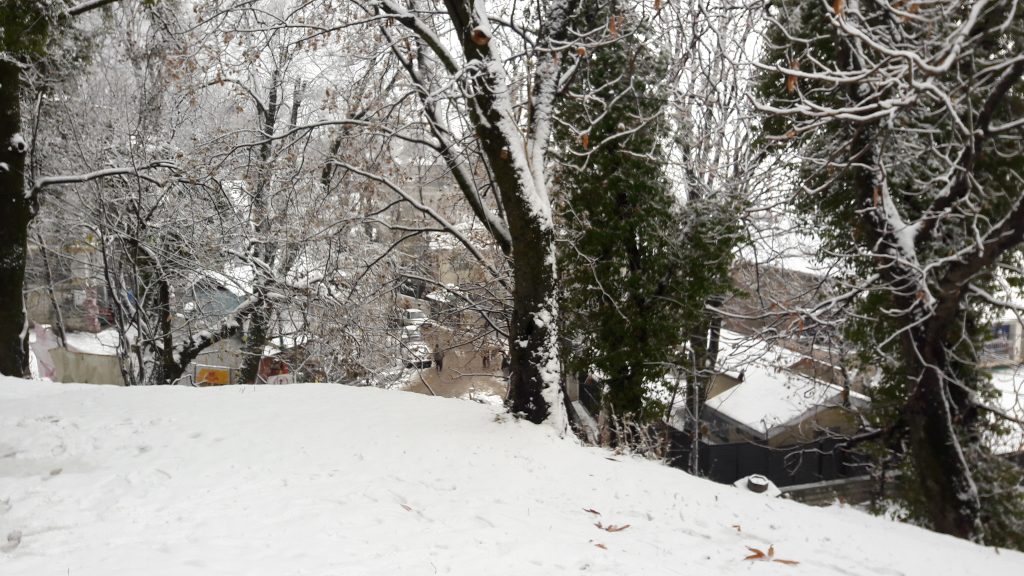
Just a week ago, the picture looked different: early November brought dry conditions and the first snow to the northern mountains. The new outlook does not cancel that out — the mountains will still get their snow — but it adds a wetter, warmer layer to the season ahead.
Why this winter is different: El Niño, explained simply
The main reason behind this unusual winter is a climate pattern called El Niño. It sounds technical, but the idea is simple.
Every few years, the surface water of the Pacific Ocean near the equator becomes warmer than usual. That warm water changes wind patterns and rainfall around the world. When El Niño is active, some places get more rain and others get less, and global temperatures tend to rise.
The World Meteorological Organization (WMO) has warned that the current El Niño could become one of the strongest ever recorded, with its effects expected to continue through February 2027. The NDMA puts the chance of El Niño persisting through the October-to-December period at nearly 100 percent. A second pattern, a warm phase of the Indian Ocean known as a positive Indian Ocean Dipole, is also in play, and it can push more moisture towards South Asia.
El Niño is not the only reason winters are changing. Climate experts point to rising global temperatures as the bigger, longer-term force. Pakistan’s own recent history fits that picture: October 2026 was on track to be the hottest October ever recorded, and the PMD’s seasonal outlook for November 2026 to January 2027 expects above-normal temperatures across much of the country.
There is one claim doing the rounds that should be treated with care. Some reports have suggested that this year’s winter will last only 50 days. Climate experts have said that claim is unconfirmed — it is difficult to say whether winter will last exactly 50, 40 or 60 days. What they do agree on is that the cold season is getting shorter, and that this year it is likely to be shorter than usual. The exact number of days is not something anyone can promise in advance.
What it means for farmers and the wheat crop
For Pakistan’s farmers, this forecast is a mixed bag — good news in the north, a warning in the south.
November is the month when farmers sow Rabi crops, the winter crops led by wheat. Wheat is Pakistan’s most important food crop, and the timing of sowing matters: seeds need enough moisture in the soil to germinate, but waterlogged fields can rot them.
In the north, the forecast is helpful. The PMD says above-normal rain is expected to favour Rabi sowing and seed germination in northern Punjab, central Khyber Pakhtunkhwa and Azad Jammu and Kashmir. Rain at the right time means farmers may need less irrigation water to get their wheat started, which saves both water and money.
In the south, the picture is different. The expected rain shortfall in Sindh, southern Punjab and southern Balochistan could put pressure on water for irrigation in rain-fed farming areas and could disrupt the sowing of Rabi crops. Farmers in these areas will need to plan their irrigation carefully and watch the weather before deciding when to sow.
The PMD has advised farmers to check weather updates before making decisions about irrigation and sowing. Experts have also called for stronger early-warning systems, better guidance for farmers, and more preparation by local governments and agriculture departments for unusual weather.
The stakes go beyond individual farms. Changing rainfall patterns affect wheat sowing, agricultural productivity and water availability across the country. A good Rabi season helps keep food prices stable; a poor one does the opposite. That is why a weather forecast like this one is not just a talking point — it is an economic event.
Dengue, smog and fog: the health and travel warnings
Warm weather in November brings more than discomfort. It also extends the season for mosquitoes, worsens air quality, and creates dangerous driving conditions.
The PMD has warned that above-normal temperatures could prolong the dengue season, particularly in southern Punjab, Sindh and Balochistan, where conditions favourable for mosquito breeding may persist. Health authorities have been advised to stay alert and continue measures to control mosquitoes. Dengue is already a much bigger problem in Pakistan than the official numbers suggest, and it is now a threat almost all year round, so a warm November is not good news on that front.
Fog is another concern. Dry, cool nights may create the right conditions for fog to form, especially in southern Punjab, Sindh and adjoining areas of Balochistan. Fog cuts visibility in the early morning, and it can disrupt road traffic, delay journeys on major highways, and cause problems at airports. Drivers should expect slow, low-visibility mornings and plan extra time for travel.
Smog is the third warning. The PMD has flagged the possibility of smog across the country’s plains as air quality worsens. Children, elderly people and those with breathing problems are the most at risk. Lahore’s smog season is already a familiar problem every winter, and a warm, dry spell in the plains can make it worse.
None of this means people should panic. It means the usual winter precautions matter more this year: avoid unnecessary travel in thick fog, keep an eye on air quality before outdoor exercise, and clear standing water around the home so mosquitoes have nowhere to breed.
October already gave us a preview
If November feels warm, that is because the warmth has been building for months. October 2026 was on track to be the hottest October ever recorded, continuing a run of unusually warm months. The first snow did fall on the northern mountains in early November, but the plains stayed warm and dry.
The seasonal outlook for November 2026 to January 2027 points in the same direction: above-normal temperatures across much of the country, with the north and northwest more likely to see above-normal rain. The NDMA’s outlook adds that November should be warmer than normal almost everywhere, with the warmest conditions expected around Lahore and Faisalabad.
In short, this is not one odd week of weather. It is a season with a clear tilt: warmer than usual, wetter in the north, drier in the south, and shaped by one of the strongest El Niño events on record.
What you can do: a simple checklist
Forecasts are only useful if people act on them. Here is a short, practical checklist based on the PMD’s advice and the outlook itself.
If you are a farmer: check the weather forecast before irrigating or sowing. In the north, use the expected rain to your advantage and avoid over-watering. In the south, plan irrigation carefully and talk to your local agriculture office about the best sowing dates for your area.
If you travel by road: expect fog on early mornings, especially in southern Punjab, Sindh and Balochistan. Leave earlier, drive slowly, use fog lights, and avoid overtaking when you cannot see clearly. Check motorway and flight updates before you leave.
If you live in a smog-prone city: follow daily air quality updates, keep windows closed on bad-air days, and limit outdoor exercise when the air is thick. People with asthma or other breathing problems should keep their medicines close and see a doctor early if symptoms worsen.
If you want to avoid dengue: do not let water collect in pots, tyres, coolers or open containers. Mosquitoes breed in still water, and a warm November gives them extra weeks to do it.
If you are planning a trip to the north: the mountains will still be cold, and snow is expected. Pack warm clothes even if the plains feel warm, and check road conditions before heading into the hills. The PMD has urged travellers and tourists to take care during rain.
Frequently asked questions
Will it rain more than usual this November?
In most of the country, yes. The PMD expects above-normal rainfall in November, especially in Khyber Pakhtunkhwa, northwestern Punjab and parts of Kashmir. But Sindh, southern Balochistan and parts of southern Punjab are likely to get less rain than usual.
Will winter be cold this year?
Probably milder than usual. Temperatures are expected to stay above average across most of Pakistan, with the biggest rise in Gilgit-Baltistan, Kashmir and northern Khyber Pakhtunkhwa. The cold season is also likely to be shorter than usual, though claims that it will last only 50 days are unconfirmed.
What is El Niño and why does it matter?
El Niño is a warming of the Pacific Ocean’s surface water that changes weather patterns worldwide. It can bring more rain to some places and less to others, and it tends to push global temperatures up. The current El Niño could be one of the strongest ever recorded, and its effects are expected to last through February 2027.
Is the rain good or bad for wheat?
Both. In the north, the rain should help wheat seeds germinate and may reduce the need for irrigation. In the south, the lack of rain could make sowing harder and put pressure on irrigation water in rain-fed areas.
Should I worry about dengue and smog?
Stay alert rather than worried. Warm temperatures may extend the dengue season in the south, and smog is possible across the plains. Clear standing water, follow air quality updates, and take the usual precautions for foggy mornings.
Conclusion
Pakistan’s winter of 2026–27 is shaping up to be warmer, wetter in the north and drier in the south — a season tilted by a powerful El Niño and by a warming climate that is already changing how long winter lasts.
For farmers, it means checking the forecast before every sowing decision. For travellers, it means allowing extra time on foggy mornings. For everyone, it means taking the season’s health warnings seriously: mosquitoes, smog and fog are all more likely when November stays warm.
The forecast is not a promise of rain on a particular day. It is a picture of the season ahead, and the picture is clear enough to plan around. Watch the PMD’s updates, prepare early, and do not be caught out by a winter that refuses to behave like the winters of the past.
Sources
- The Global Times, “Pakistan faces above-normal November rainfall amid rising temperatures”, 5 November 2026: https://theglobaltimes.pk/category/pakistan/news/pakistan-faces-above-normal-november-rainfall-amid-rising-temperatures
- Bloom Pakistan, “Pakistan winter to last just 50 days? Experts reveal”, 6 November 2026: https://bloompakistan.com/pakistan-winter-season-50-days-2026/
- Pakistan Era, “Winter 2026 in Pakistan: when cold starts, NDMA outlook”, 4 November 2026: https://pakera.pk/winter-2026-pakistan-when-cold-starts-ndma-outlook/
- TaazaTaren, “PMD winter outlook: warmer season, smog risk ahead”: https://taazataren.com/pmd-winter-outlook-late-winter-smog-pakistan/
- National Disaster Management Authority, “Disaster Early Warning (DEW-4) Outlook for October–December 2026” (PDF): https://www.ndma.gov.pk//storage/dews/October2026/6abf2f5c9f71d.pdf
This article is for general information and education only. It is not legal or financial advice.
