
Blue Planet III: Attenborough returns at 100 as a clever dolphin steals the show
Twenty-five years after Sir David Attenborough first took viewers beneath the waves, the BBC’s landmark ocean series was due back on Sunday, 1 November 2026, with its most famous narrator now 100 years old and its animals doing things no camera had ever caught before.
Blue Planet III was scheduled to open on BBC One and BBC iPlayer at 8pm in the United Kingdom with an episode called “Tropical Seas”. The six-part series, made by the BBC Studios Natural History Unit, took four years to film across five oceans, and its producers said it was built around a single aim: to show animal behaviour that viewers had never seen before.
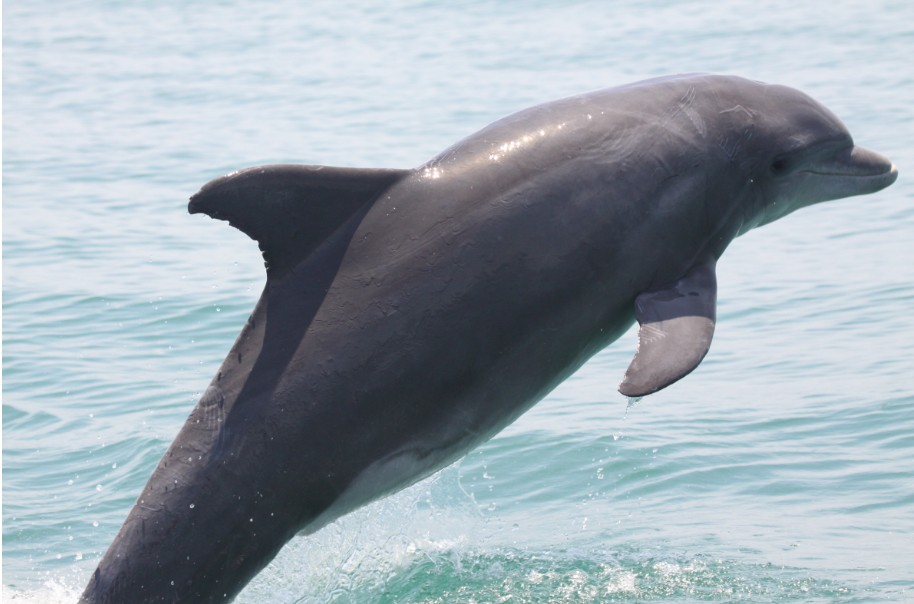
The headline act is a dolphin. In the shallow waters of Shark Bay, in Western Australia, a bottlenose dolphin known as Gambara was filmed using sea sponges to block the holes in a coral reef where fish hide, trapping her prey inside. It is, the programme-makers said, one of the most sophisticated examples of tool use ever filmed in the animal kingdom, and the findings are being prepared for scientific publication.
But the series arrives at a strange moment for nature television. Artificial intelligence can now make a convincing video of almost anything, including animals that do not exist doing things that never happened. So the BBC has done something unusual: it has left in the cloudy water, the floating specks and even the odd boat or buoy, as proof that what viewers are seeing is real.
At a glance
What happened: Blue Planet III, narrated by Sir David Attenborough at 100, was due to premiere on BBC One and BBC iPlayer on Sunday, 1 November 2026, with the first episode, “Tropical Seas”.
Why it matters: The series promises new animal behaviour never before filmed, including a dolphin using sponges as tools, and it takes a public stand against AI-generated footage by keeping imperfect, real shots in the final cut.
What happens next: The first three episodes were due to be available on BBC iPlayer at launch, with the series rolling out in Asia from 2 November and in the United States in January 2027.
What viewers were due to see first
The opening episode, “Tropical Seas”, packs six stories into 58 minutes, all set in the warm waters of the tropics. The tropical seas hold the greatest diversity of life in the ocean, from coral reefs and seagrass meadows to mangrove forests and remote islands, and the episode moves quickly between them.
At the northern tip of Australia, tawny nurse sharks were filmed apparently working together to herd fish onto beaches, then collecting them at the waterline. In the Red Sea, coral groupers team up with giant Maori wrasse and moray eels to flush prey out of the reef’s maze of crevices. After dark in Tulamben, Bali, a pair of harlequin shrimps, each only about five centimetres long, take on a starfish many times their size, and the starfish is caught on camera deliberately shedding one of its own arms to escape.
There are quieter moments too. A blue whale cruises past. Baby turtles nose out of the sand on a moonlit beach in Mexico. In Portugal, the loss of seagrass meadows forces a seahorse to cross bare sand to find a mate. And in Kimbe Bay, Papua New Guinea, a clownfish family tries to hold on to its home as a marine heatwave bleaches the anemone it lives in.
The dolphin that plans ahead
The story the producers talked about most before the launch was Gambara, a female bottlenose dolphin in Shark Bay. She is thought to be about 40 years old, and she was pregnant while she was filmed.
Dolphins in Shark Bay have been known for decades to carry sea sponges on their beaks. The behaviour was first seen in the area in 1984, and it is known to be passed from mother to daughter. For a long time, scientists thought the sponges were mainly protection, shielding the dolphins’ beaks as they hunted for fish buried in the sand.
What Gambara does is different, and far more impressive. She picks up tufts of sponge and jams them into the gaps in the coral where fish would otherwise escape, blocking their exits before she hunts them. The programme’s producer for the episode, Yoland Bosiger, said nobody had been able to see the hunting behaviour with their own eyes before. The crew spent five weeks earning the dolphin’s trust, and tracked her using the distinctive markings on her dorsal fin and aerial drone footage.
Gambara’s name comes from a Malgana Aboriginal word meaning clever, and the name fits. Planning, problem solving and tool use, all in one hunt, from an animal working out how to close the doors before she goes in.
The discovery matters beyond television. Because the technique had never been witnessed, let alone filmed, the findings are being prepared for scientific publication, turning a television shoot into a genuine addition to what science knows about dolphins.
New cameras, built for the job
Filming behaviour like Gambara’s took equipment that did not exist before the series began. The production team spent four years building and testing new cameras, and several of them were made for one specific job.
The most talked about is Stonefish, a remote camera that records in 4K continuously for 24 hours underwater, with no external power source and no tether, and no human nearby. The BBC has described it as the world’s first underwater CCTV camera. It was developed by Bosiger, and it was Stonefish that captured the dolphins using sponges to trap fish. Without a camera that could sit quietly on the seabed for a full day, the behaviour might never have been recorded at all.
Other tools included a mini-dome camera built to follow an octopus, a deep-sea selfie stick, lasers to light up creatures in the dark, splash drones, and leg-mounted scooters that let camera operators move quickly through the water. In Japan’s Ogasawara Islands, the crew filmed an overland octopus, a creature that risks its life by leaving the sea at low tide to hunt crabs and small fish in rock pools.
The second episode, “Open Ocean”, was expected to include a confrontation between killer whales and an adult blue whale, pitting the ocean’s most formidable predators against the largest creature ever to exist. Later episodes were due to show penguin behaviour that the producers compared with the famous iguana and snake chase from Planet Earth II, and a gathering of around 200,000 crabs lining up in formation to feed.
Why the footage looks deliberately imperfect
The most unusual decision in Blue Planet III is not a camera or an animal. It is what the producers chose not to cut out.
In earlier series, shots with cloudy water, floating particles, or a boat or buoy in frame would often have been dropped in the edit. This time, they were kept in on purpose. The executive producer, Elizabeth White, said the rise of artificial intelligence made the team want to be even more authentic, and that the producers were happier to include shots that are not totally pristine.
The BBC’s head of specialist factual commissioning, Jack Bootle, put it plainly at a press screening: “No gen AI was used in this series. Not a single frame. It’s all real photography.”
That matters because AI-generated video has become hard to tell from real footage, and nature documentaries depend entirely on trust. If viewers cannot be sure a dolphin really did something, the wonder drains away. By leaving the murk in, the BBC is offering viewers a kind of proof: this water is real, this light is real, and so is the animal in it.
It is also a gamble. For 25 years, the Blue Planet series has been famous for beautiful, crystal-clear images. Deliberately keeping cloudier shots is a break with that tradition, and the producers knew it. Their argument is that in 2026, a slightly imperfect real shot is worth more than a perfect-looking one that leaves viewers wondering whether it was made by a computer.
A series 25 years in the making
Blue Planet III is the third part of a story that began in 2001, when the first series, then called The Blue Planet, was shown. It returned in 2017 as Blue Planet II, and that series became the most watched television programme of the year in the United Kingdom. Its first episode was seen by more than 14 million people, and the series as a whole reached about 37.6 million people in the UK.
Blue Planet II is remembered as much for what it changed as for what it showed. Its final episode put plastic pollution in front of millions of viewers, including a mother pilot whale carrying her dead calf, and the public response was so strong it became known as the “Blue Planet effect”. Searches for plastic recycling rose sharply after the series, traffic to conservation charities jumped, and the issue became a talking point in politics. The BBC later promised to cut single-use plastics from its own operations. The new series picks up that thread, following warming seas, pollutants and so-called forever chemicals, with the final episode, “Future Seas”, asking what it will take to protect the seas.
Attenborough at 100
None of this would feel quite the same without the voice holding it together. Sir David Attenborough, who turned 100 in May 2026, narrates the series, and the BBC announced his return on his 100th birthday, at a celebration at the Royal Albert Hall in London.
In a recorded message played at the series launch event, he said: “Twenty-five years ago, when I narrated the first Blue Planet series, it didn’t occur to me that I would be narrating a third series in my centennial year.” He added that he was proud and delighted to be associated with the new series.
His involvement was not a formality. The executive producer said there was no guarantee he would take part, and that his centenary year made his decision feel even more special. The series producer, Lara Bickerton, said she cried the first time she heard his voiceover, on the first line of the “Seasonal Seas” episode, because it was her first time working with him. Bosiger said Attenborough rewrote every line of her script for the opening episode, adding character and wit to the material.
The music is new as well. The series features an original score from Hans Zimmer and Bleeding Fingers Music, and an original song, “Into The Deep (Seas Cry)”, co-written by Jade, the former Little Mix singer, which appears in the trailer.
When and where to watch
In the United Kingdom, Blue Planet III was due to begin on BBC One and BBC iPlayer on Sunday, 1 November 2026 at 8pm, with the first episode, “Tropical Seas”. The first three episodes were due to be available on BBC iPlayer at launch, so viewers could watch ahead of the weekly broadcast.
The six episodes are “Tropical Seas”, “Open Ocean”, “Seasonal Seas”, “Polar Waters”, “The Deep” and “Future Seas”. Each is about an hour long, and together they cover the planet’s five key underwater habitats, with the final episode turning to what happens next for the oceans.
Viewers elsewhere face a wait. In Asia, the series was due to premiere on BBC Earth and BBC Player on Monday, 2 November at 8pm, with a new episode each Monday. In the United States, the premiere on BBC America and AMC+ was scheduled for 23 January 2027.
For the BBC, the launch is a test of whether the old formula still works: a Sunday night nature series, a familiar voice, and animals doing things no one has seen before. The early reviews suggest it does. The New Scientist, reviewing the first three episodes, called it the best yet from the BBC and David Attenborough, and the Radio Times gave it four stars out of five.
Whether it changes minds the way Blue Planet II did will take longer to judge. That series needed weeks, not a night, for its plastic message to sink in.
Frequently asked questions
When was Blue Planet III due to premiere?
It was due to premiere in the United Kingdom on BBC One and BBC iPlayer on Sunday, 1 November 2026 at 8pm, with the first episode, “Tropical Seas”. The first three episodes were due to be available on BBC iPlayer at launch.
Who narrates Blue Planet III?
Sir David Attenborough narrates the series. He turned 100 in May 2026, and the BBC announced his return on his 100th birthday. He first narrated The Blue Planet in 2001, 25 years earlier.
How many episodes are there, and what are they called?
There are six episodes, each about an hour long: “Tropical Seas”, “Open Ocean”, “Seasonal Seas”, “Polar Waters”, “The Deep” and “Future Seas”. The first five each focus on a different underwater habitat, and the final episode looks at conservation and the future of the seas.
What is the dolphin sponge story in the first episode?
A bottlenose dolphin called Gambara, filmed in Shark Bay in Western Australia, was shown using sea sponges to block the holes in a coral reef where fish hide, trapping them inside before hunting them. Dolphins in the area have been known to carry sponges since 1984, but this hunting technique had never been witnessed or filmed before, and the findings are being prepared for scientific publication.
Was any AI used to make Blue Planet III?
No, according to the BBC. Jack Bootle, the BBC’s head of specialist factual commissioning, said at a press screening: “No gen AI was used in this series. Not a single frame. It’s all real photography.” The producers deliberately kept cloudier, less polished footage in the final cut to show viewers the images are genuine.
Where can viewers outside the UK watch it?
In Asia, the series was due to premiere on BBC Earth and BBC Player on Monday, 2 November 2026 at 8pm, with a new episode each Monday. In the United States, the premiere on BBC America and AMC+ was scheduled for 23 January 2027.
Conclusion
Blue Planet III is more than a return for a much-loved series. It is a test of what nature television can still do in an age of artificial images: show something genuinely new, prove it is real, and trust viewers to care about it.
A 100-year-old narrator, a dolphin that sets traps with sponges, and a camera that can watch the seabed for a full day: those are the ingredients the BBC has put together for its Sunday night return.
This article is for general information and education only. It is not legal or financial advice.
Sources
- https://www.theguardian.com/media/2026/oct/24/blue-planet-iii-cloudier-footage-prove-authenticity-ai-boom (The Guardian, 24 October 2026)
- https://petapixel.com/2026/10/27/blue-planet-iii-will-use-murky-footage-to-prove-no-ai-was-used/ (PetaPixel, 27 October 2026)
- https://www.newscientist.com/article/2595712-blue-planet-iii-is-the-best-yet-from-the-bbc-and-david-attenborough/ (New Scientist, 28 October 2026)
- https://www.radiotimes.com/tv/documentaries/blue-planet-3-review/ (Radio Times, 24 October 2026)
- https://danamic.org/2026/10/29/blue-planet-iii-on-bbc-earth-sponge-hunting-dolphins-from-2-november/ (Danamic, 29 October 2026)
- https://www.techtimes.com/articles/329783/20261030/bbc-built-cameras-that-didnt-exist-film-blue-planet-iii-including-24-hour-seabed-recorder.htm (Tech Times, 30 October 2026)
- https://www.memorabletv.com/news/blue-planet-iii-tropical-seas/ (Memorable TV, 26 October 2026)
