
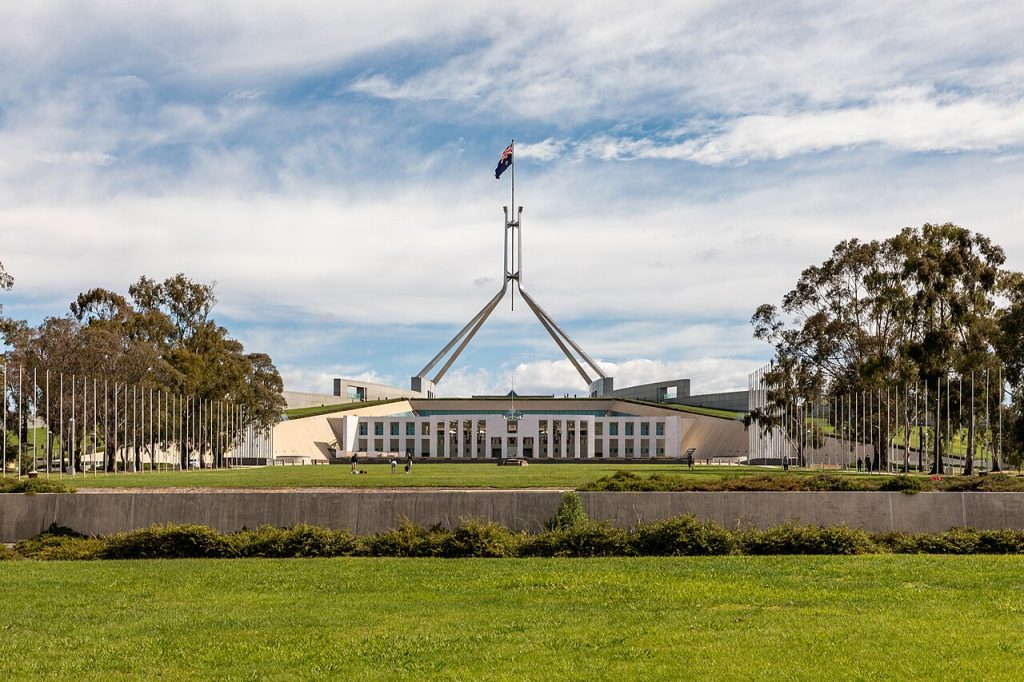
Australia puts every area of the budget under review as inflation hits 4.3 per cent
Australia’s government has put every part of the federal budget under review, after new figures showed inflation rising faster than expected and the Reserve Bank looked set to raise interest rates again on Tuesday.
Finance Minister Katy Gallagher said on Sunday that no area of spending would be protected from the search for savings, as the Labor government prepares its mid-year budget update for December. Her comments came on the Insiders program, days after official figures showed prices rising by 4.3 per cent in the year to September.
The message was careful but clear. The government will look for cuts across departments and programs, but it has not promised that the cuts will be bigger than new spending.
At a glance
What happened: Finance Minister Katy Gallagher said on 1 November 2026 that no area of federal spending is exempt from the government’s search for savings, ahead of the mid-year budget update in December.
Why it matters: Inflation rose to 4.3 per cent in the year to September, well above the Reserve Bank’s 2 to 3 per cent target, and markets expect another interest rate rise on Tuesday, 3 November.
What happens next: The Reserve Bank announces its decision on Tuesday, 3 November, and Gallagher and Treasurer Jim Chalmers will hold meetings over the coming weeks to find savings before the December budget update.
What Gallagher actually said
Gallagher’s most quoted line was a short one. Asked whether any part of the budget would be safe from cuts, she told the Insiders program on Sunday: “I would not say that any area is exempt.”
She said the pressures on the Commonwealth budget were real and growing, and that a lot of work was going into the savings side. “I’m not saying it’s too difficult, but I am saying that there should be some acknowledgement of the world in which we are living and the pressures on the Commonwealth budget,” she said. “They are real, they are increasing and we have to deal with them.”
Gallagher said earlier governments had not faced the same demands. “If you go back to … the start of that, the Howard era, they were not dealing with AUKUS. They were not dealing with aged care, with all of the demographics we’re dealing with. They weren’t dealing with Medicare falling over.” AUKUS is the defence and security partnership between Australia, the United Kingdom and the United States.
Gallagher named the National Disability Insurance Scheme, Medicare, aged care, defence and interest payments on government debt as the biggest sources of pressure on the budget. She said she and Treasurer Jim Chalmers would hold a series of meetings over the coming weeks to identify cuts. “The pressures on the budget are increasing, not decreasing,” she said.
At the same time, Gallagher refused to give the promise the opposition wanted. She would not guarantee that the government will cut more than it spends in the December update. Pressed on the question, she said she did not want to pre-empt the work of the expenditure review committee, the powerful group of senior ministers that decides what gets funded and what gets cut. “I don’t want to pre-empt the ERC process,” she said. “There is enormous effort being placed, particularly by Jim and myself, on the saving side.”
Why inflation is back at the top of the agenda
The trigger for the debate was the inflation data released on Wednesday, 28 October, by the Australian Bureau of Statistics. The consumer price index, the standard measure of what households pay for goods and services, rose by 4.3 per cent in the 12 months to September. That was up from 4.0 per cent in the 12 months to August, a rise of 0.3 percentage points in a single month.
The figure was higher than many economists had expected, and it moved financial markets at once. Before the figures were released, money markets put the chance of a rate rise in November at 69 per cent. Afterwards, that chance jumped to about 85 per cent.
Housing was the largest contributor to the annual rise, up 5.2 per cent over the year, reflecting rising costs for both new dwellings and electricity. Transport was the second largest contributor, rising 8.7 per cent over the year because of higher automotive fuel prices.
The measure the Reserve Bank watches most closely is underlying inflation, which strips out the most extreme price moves to show the trend underneath. The quarterly trimmed mean, the bank’s preferred measure, rose 1.0 per cent in the September quarter, above the bank’s own forecast of 0.8 per cent.
Both headline and underlying inflation have now been above the Reserve Bank’s target band of 2 to 3 per cent for 14 months. The bank’s deputy governor, Andrew Hauser, told a Senate committee after the figures were released that inflation remained “too high”.
The cost of living has been building for years. Consumer prices have risen by a cumulative 30 per cent since the start of the Covid pandemic.
The rate rise expected on Tuesday
The Reserve Bank’s board meets on Monday and Tuesday, 2 and 3 November, and announces its decision on Tuesday afternoon. The bank has announced its November decision on Melbourne Cup Day for decades.
Markets now expect the bank to lift the official cash rate by 0.25 percentage points, which would take it to 4.85 per cent. That would be the highest level for Australian interest rates in 18 years, and the fifth rate rise of 2026. The bank has already raised rates four times this year, by a full percentage point in total.
Not every economist agrees that a rise is certain. Some point out that the bank raised rates pre-emptively in September, so it may feel it has a little more time to assess the economy and could wait until December. But the balance of opinion has moved firmly towards a rise, with forecasters expecting a 25-basis-point rise on 3 November rather than a wait until December, taking the cash rate to 4.85 per cent.
For mortgage holders, the numbers are concrete. Holders of an average loan of around $731,000 are already paying about $464 more a month on repayments after the four rate rises this year. A fifth rise of 0.25 percentage points would add another $114 a month, bringing the cumulative monthly increase to $578. That is nearly $7,000 more over the course of a year.
Where the money is going
Federal government spending reached 26.9 per cent of gross domestic product in the 2025-26 financial year, the highest share in four decades outside the Covid-19 pandemic. Gross domestic product, or GDP, is the total value of everything a country produces.
Gallagher said more than 80 per cent of spending goes to social security and welfare, defence, payments to the states and Medicare.
Federal debt is forecast to climb beyond $1.2 trillion by 2030, and cumulative budget deficits of $150.5 billion are projected over five years. A deficit is the gap between what the government spends and what it collects in a year, and it has to be covered by borrowing.
The disability scheme, known as the NDIS, supports Australians with a disability. It has grown rapidly since it was rolled out, and Gallagher said spending on disability had grown by 2 percentage points of GDP since the Howard government left office. She argued that if disability assistance were excluded, government spending as a share of GDP in the current financial year would be lower than it was under the Howard, Abbott and Morrison governments.
Electric vehicles and home batteries under the microscope
One area already in the spotlight is the government’s support for electric vehicles and home batteries. Gallagher confirmed that no portfolio would be protected from examination, including Labor’s tax concessions for electric vehicles and its subsidies for household batteries.
Both schemes have cost far more than expected because demand was much higher than forecast. Labor has capped the value of electric vehicles eligible for tax breaks and tightened the battery rebate program, but the cost of the battery scheme has still blown out to $7.2 billion over four years, more than three times its originally forecast cost.
The schemes have also faced criticism that they mainly benefit wealthier Australians, who are more likely to be able to afford an electric car or a home battery. That has led to calls for the support to be means-tested, so that it goes only to households below a certain income. Gallagher defended both schemes, saying they supported other government priorities, such as the shift to renewable energy and the electrification of the economy. “Some of the data is showing that this is helping people on the outskirts of cities and in regional areas with some of those cost-of-living pressures and bringing their energy bills down,” she said.
The politics: Albanese, Chalmers and the opposition
Gallagher’s appearance on Insiders also dealt with reports of tension inside the government. In recent days, newspapers reported disagreement between Prime Minister Anthony Albanese and Treasurer Jim Chalmers over how much spending restraint was needed. Gallagher described those reports as “overblown”, and said the treasurer and the prime minister had “a very professional and respectful relationship”.
The opposition has seized on the inflation figures. Shadow treasurer Tim Wilson said it was clear the government could not break its spending habit. “For every $2 it saves, it goes on and spends an additional $3, and kicks on inflation and higher interest rates,” he said.
Opposition leader Angus Taylor has announced plans for more than $30 billion in proposed cuts under a Coalition government. The plan includes cutting subsidies for firms and tax credits for critical minerals, scrapping Labor’s housing schemes, and blocking disability and welfare payments for permanent residents. The government has answered that the opposition’s sums do not add up. Gallagher told the Sydney Morning Herald that calls for spending cuts did not “confront the reality of what the Commonwealth budget now funds”.
One measure Gallagher did defend was Labor’s planned $250 working tax offset, due to take effect in July. Treasurer Jim Chalmers has said the mid-year budget update, due in December, will include spending cuts. Prime Minister Anthony Albanese said on Thursday that the update would not see billions of dollars ripped out of health, education and essential services.
What this means for households
For most Australians, the budget debate will be felt in three places: the supermarket, the petrol station and the mortgage. Prices have already risen by about 30 per cent since the start of the Covid pandemic. Housing costs rose 5.2 per cent in the year to September, and transport costs rose 8.7 per cent, driven by higher fuel prices.
Borrowers face the most direct hit. If the Reserve Bank raises rates on Tuesday as expected, a household with an average mortgage of about $731,000 would pay about $114 more a month, on top of the $464 a month already added by this year’s four rises. That would take the total extra cost to $578 a month, or nearly $7,000 a year.
What happens next
The first test comes on Tuesday, 3 November, when the Reserve Bank announces its decision. A rise to 4.85 per cent would take rates to their highest level in 18 years, and would confirm that the bank believes inflation is still too high to leave alone. A decision to hold would surprise markets.
The second test comes in December, when Chalmers hands down the mid-year budget update. Gallagher and Chalmers will spend the coming weeks in meetings with ministers, working through the expenditure review committee process to find savings. The update will show whether the promise that no area is exempt turns into real cuts, and whether those cuts are bigger than new spending.
The third test is political. In one poll, 32 per cent of people named government spending as the most responsible for the rising cost of living. That is a large share of voters who already blame Canberra, and it gives the opposition a clear line of attack.
Frequently asked questions
What did Katy Gallagher announce on 1 November 2026?
Gallagher, Australia’s finance minister, said on the Insiders program that no area of federal spending is exempt from the government’s search for savings, ahead of the mid-year budget update in December.
Why is the Australian government looking for budget cuts now?
Inflation rose to 4.3 per cent in the year to September 2026, up from 4.0 per cent in the year to August, and well above the Reserve Bank’s target of 2 to 3 per cent.
What is the Reserve Bank expected to do on 3 November 2026?
Financial markets expect the bank to raise the official cash rate by 0.25 percentage points to 4.85 per cent, which would be the highest level in 18 years and the fifth rise of 2026. Markets put the chance of a rise at about 85 per cent.
How much would another rate rise cost mortgage holders?
A household with an average mortgage of about $731,000 would pay about $114 more a month after a 0.25-point rise, according to figures reported by API Magazine. That would bring the extra cost from this year’s rises to $578 a month, or nearly $7,000 a year.
Which parts of the budget are under the most pressure?
Gallagher named the National Disability Insurance Scheme, Medicare, aged care, defence and interest payments on government debt as the biggest pressures. Federal spending reached 26.9 per cent of GDP in 2025-26, the highest share in four decades outside the Covid pandemic.
Will the December budget update cut health and education?
Prime Minister Anthony Albanese said the update will not see billions of dollars ripped out of health, education and essential services. Treasurer Jim Chalmers has said the update will include spending cuts, but the details will only be known when it is handed down in December.
Conclusion
The promise that no area is exempt will now be tested twice, first by the Reserve Bank on Tuesday, and then by the mid-year budget update in December. If the review produces real savings, the government can argue it is doing its part to bring inflation down. If it does not, the opposition’s charge that Labor cannot control spending will be harder to answer, and borrowers will keep paying the price through higher interest rates.
This article is for general information and education only. It is not legal or financial advice.
Sources
- https://aapnews.aap.com.au/news/no-area-exempt-budget-wide-cuts-to-fight-inflation (AAP, 1 November 2026)
- https://www.europesays.com/australia/134758/ (The Sydney Morning Herald, via EuropeSays, 1 November 2026)
- https://www.financialstandard.com.au/news/inflation-hits-4-3-rba-says-it-remains-too-high-179814409 (Financial Standard, 28 October 2026)
- https://www.thebrief.news/en/standard/article/38382/inflation-rises-to-43-per-cent-as-spending-cuts-enter-the-political-debate (The Brief, 30 October 2026)
- https://www.apimagazine.com.au/news/article/inflation-horror-show-means-fifth-2026-rate-rise-almost-inevitable (API Magazine, 29 October 2026)

Pingback: Halloween candy costs more than ever — and shoppers are still buying it - Findivoza
Pingback: Thousands fill Lisbon's Rossio Square again as Portugal's housing protests refuse to fade - Findivoza