
Canada and China Agree New Tariff Cuts as Carney and Xi Meet in Shenzhen
Canada and China have agreed to cut more tariffs on each other’s goods, taking another step towards ending a trade war that has cost farmers, fishers and carmakers on both sides of the Pacific for two years.
Canadian Prime Minister Mark Carney and Chinese President Xi Jinping reached the deal on Tuesday, 17 November 2026, during a meeting in Shenzhen, the southern Chinese technology and manufacturing hub, on the sidelines of the Asia-Pacific Economic Cooperation (APEC) summit.
China will cut tariffs on Canadian exports including frozen pork and fish and seafood, giving about C$400 million (around US$280 million) of extra tariff relief to Canadian exporters. In exchange, Canada will extend by two years measures that ease tariffs on some Chinese steel and aluminium products, which were due to expire at the end of 2026.
Carney hailed “greater predictability and stability” in the relationship between the two countries, and said Canada was well ahead of schedule in its goal of boosting exports to China by 50 per cent by the end of this decade.
The deal is the latest sign of how quickly the two countries are rebuilding a relationship that was badly damaged by tariffs, arrests and diplomatic rows — and of how Canada is trying to depend less on the United States for its trade.
What the two leaders agreed in Shenzhen
The agreement builds on a preliminary arrangement the two countries reached in January, which improved access to the Chinese market for Canada’s farmers and seafood harvesters. Tuesday’s deal extends that arrangement and widens it.
China’s new tariff relief covers around C$400 million in Canadian exports. That includes about C$116 million in frozen pork cuts and about C$285 million in fish and seafood, according to the statement from Carney’s office.
For Canadian pork producers and fishing communities, the cuts matter a great deal. China is one of the biggest buyers of Canadian pork and seafood, and tariffs had made their products more expensive and harder to sell there. Lower tariffs mean Canadian exporters can compete more easily — and sell more.
In return, Canada agreed to extend by two years the existing remission measures for certain Chinese steel and aluminium products. These measures reduce the tariffs Canada charges on those goods, and they were set to expire at the end of 2026. Extending them gives Chinese steel and aluminium exporters two more years of easier access to the Canadian market.
Xi said that since the two countries agreed in January to advance the China-Canada strategic partnership, “exchanges and cooperation across various fields have fully resumed”.
“Stronger communication and cooperation between China and Canada will benefit not only our two countries but also Asia-Pacific and the world,” Xi told Carney during their meeting.
Tuesday’s talks were the third meeting between Carney and Xi since Carney became prime minister. The two also met on the sidelines of last year’s APEC summit in South Korea.
Why this matters for Canadian farmers and fishers
To understand why Tuesday’s deal matters, it helps to know what is at stake for the people who grow and catch the food Canada sells to China.
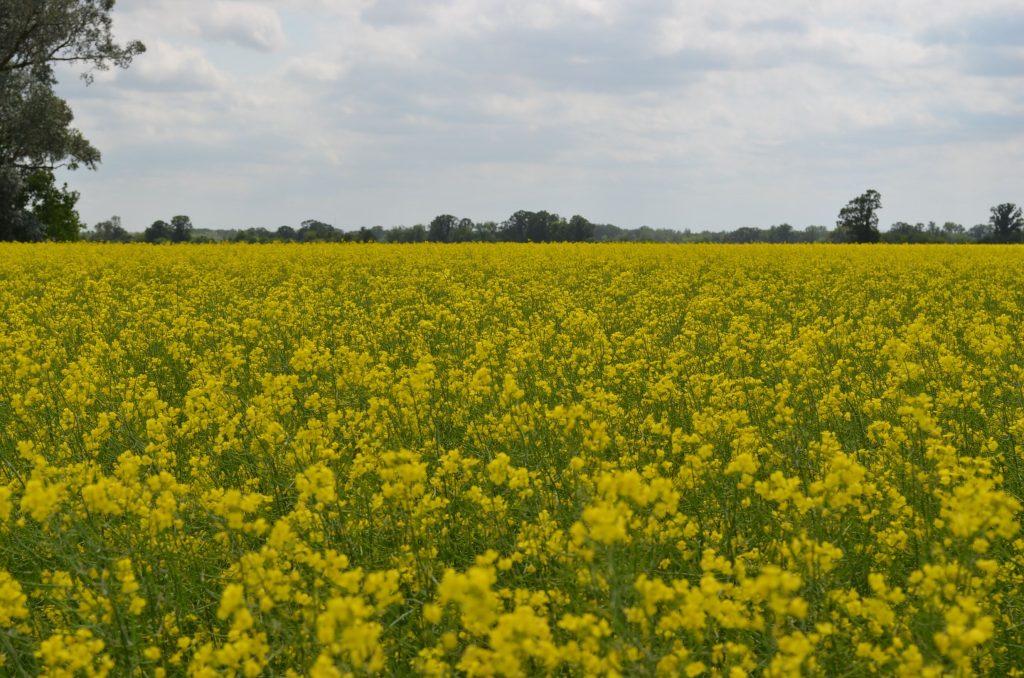
Canola is Canada’s most important farm export to China. The yellow-flowering crop is grown across the prairies of Manitoba, Saskatchewan and Alberta, and its seed is crushed to make cooking oil and animal feed. China is one of the biggest buyers of Canadian canola, and the trade was worth about C$5 billion in 2024, according to the Canola Council of Canada.
Pork and seafood are also major exports. Canadian pork producers sell frozen cuts to China, while Atlantic Canada’s lobster, crab and fish harvesters depend heavily on Chinese buyers. When China imposed retaliatory tariffs on these products, many producers lost their biggest market almost overnight.
That is why the tariff relief announced on Tuesday is aimed squarely at farmers and fishers. The preliminary arrangement agreed in January was designed to improve access to the Chinese market for exactly these groups, and the new deal extends it and adds more products.
The results are already showing. Canada’s exports to China rose 39.3 per cent in the first eight months of 2026 compared with a year earlier, according to Global Affairs Canada. China bought 2.58 million tonnes of Canadian canola seed between January and August — about 37 per cent of all the canola Canada shipped in that period.
Energy is also part of the story. Shipments of Canadian crude oil to China have risen about 37 per cent in 2026, according to a Reuters calculation based on shipping data.
How the Canada-China trade war started
The deal in Shenzhen is the latest chapter in a trade dispute that began in October 2024, when Canada imposed a 100 per cent tariff on electric vehicles imported from China, along with a 25 per cent tariff on Chinese steel and aluminium.
Canada’s then-government, led by Justin Trudeau, argued that cheap Chinese electric cars, backed by heavy government subsidies, were a threat to North America’s car industry. Canada was following the United States and the European Union, which had imposed similar measures.
China hit back in March 2025. It imposed a 100 per cent tariff on Canadian canola oil, canola meal and peas, and a 25 per cent tariff on Canadian pork and seafood. The measures were aimed squarely at the farm exports of western Canada, where the political cost for the Canadian government would be highest.
In August 2025, China added a 75.8 per cent anti-dumping duty on Canadian canola seed. The tariffs all but shut down a trade that had been worth billions of dollars a year, and Canadian farmers and fishers were among the worst hit.
The dispute was not only about tariffs. Relations between the two countries had been strained for years, following the arrest of Huawei executive Meng Wanzhou in Vancouver in 2018 and China’s detention of two Canadians, Michael Kovrig and Michael Spavor, in what became known as the “two Michaels” case. The two men were freed in 2021, but trust between the two governments remained low.
The January deal that started the thaw
The turning point came in January 2026, when Carney visited Beijing — the first visit by a Canadian prime minister to China since 2017. On 16 January, the two countries announced a preliminary agreement that began to undo the damage.
Under that deal, Canada cut its tariff on Chinese electric vehicles from 100 per cent to 6.1 per cent, allowing up to 49,000 Chinese-made electric cars a year into the country. The quota is set to rise to 70,000 cars over five years. Chinese carmakers BYD, Geely and Chery have since taken steps to enter the Canadian market.
In exchange, China cut its tariff on Canadian canola seed from about 85 per cent to about 15 per cent from 1 March, and suspended extra tariffs on canola meal, lobsters, crabs and peas until the end of 2026. It also restored access for Canadian beef. China has since extended the tariff relief for canola meal, lobsters, crabs and peas for two more years.
The January deal was controversial in Canada. Supporters said it reopened a $4 billion canola market and gave Canadian consumers access to cheaper electric cars. Critics worried about the effect on Canadian car industry jobs, and about rewarding a country accused of unfair trade practices.
It also angered Washington. US President Donald Trump threatened 100 per cent tariffs on Canadian goods in response to the deal, according to trade reporting at the time. Canada kept the deal anyway.
Why Carney wants to depend less on the United States
A major reason for Carney’s push to rebuild ties with China is his drive to reduce Canada’s heavy reliance on the United States.
The United States is by far Canada’s biggest trading partner, buying the large majority of Canadian exports. But the relationship has become strained, with Washington imposing hefty tariffs on many Canadian products. That leaves Canada exposed: when the US raises tariffs, Canadian exporters have few other places to sell.
Carney has made diversifying Canada’s trade a central part of his economic strategy. The goal is to boost exports to China by 50 per cent by the end of this decade, and Carney said on Tuesday that Canada is already well ahead of schedule.
China is an obvious place to look. It is the world’s second-biggest economy, it buys huge amounts of food and energy, and its demand for Canadian canola, pork, seafood and oil has already bounced back strongly since the January deal.
The strategy is not without risk. Closer ties with China are controversial in Canada, and the United States — Canada’s closest ally and biggest customer — has made clear it does not like the direction. Balancing the two relationships will be one of the hardest tasks of Carney’s time as prime minister.
The critics and the risks
Not everyone in Canada is happy about the warming relationship with Beijing. Security analysts and human rights groups have warned that closer ties could compromise Canadian security and values.
Critics have pointed to the imprisonment of Hong Kong media owner Jimmy Lai, the execution of four Canadians in China last year, and Canadian intelligence findings that Beijing interfered in at least two federal elections. China has said it has no interest in interfering in Canada’s internal affairs.
There are also economic risks. Canada’s tariffs on Chinese steel remain in effect, and the steel and aluminium industries worry about competition from cheaper Chinese products. Auto workers and their unions have raised concerns about Chinese electric cars entering the Canadian market, even in limited numbers.
Carney’s government argues that the deals are carefully limited. The electric vehicle quota is capped, the tariff relief is targeted at farm and seafood exports, and the government says it will protect Canadian jobs and security. The debate is likely to continue as the relationship deepens.
What happens next
The Shenzhen meeting comes at a busy moment in Asian diplomacy. The APEC leaders’ summit brings together the leaders of 21 Pacific economies, and the same city will host a first-ever three-way meeting between Donald Trump, Xi Jinping and Vladimir Putin later this week, as Findivoza reported. Trade, nuclear weapons and the war in Ukraine are all expected to be on the agenda.
For Canada and China, the next steps are practical ones. The new tariff relief for pork and seafood will need to be put into effect, and exporters will be watching to see how quickly the benefits reach them. The two-year extension of the steel and aluminium remission measures gives both sides time to negotiate a longer-term arrangement.
Other questions remain open. The January deal did not cover canola oil, and China has taken almost none of it this year. Canadian canola oil producers will be hoping the next round of talks addresses that gap. The electric vehicle quota will grow over the coming years, and whether Chinese carmakers build factories in Canada — and under what conditions — is still to be decided.
For now, though, the direction is clear. Two countries that were locked in a trade war two years ago are now cutting tariffs, expanding trade and talking about a strategic partnership. For Canadian farmers, fishers and exporters, Tuesday’s deal in Shenzhen is another step towards a market they thought they had lost.
Frequently asked questions
What did Canada and China agree on 17 November 2026?
China agreed to cut tariffs on Canadian exports including frozen pork and fish and seafood, giving about C$400 million (US$280 million) of extra tariff relief. Canada agreed to extend by two years measures that ease tariffs on some Chinese steel and aluminium products, which were due to expire at the end of 2026.
How much is the tariff relief worth?
About C$400 million in Canadian exports will benefit, including about C$116 million in frozen pork cuts and about C$285 million in fish and seafood, according to the statement from Prime Minister Mark Carney’s office.
Why are Canada and China cutting tariffs now?
The two countries are rebuilding a trade relationship that was damaged by a tariff war that began in October 2024. A preliminary deal in January 2026 started the thaw, and Tuesday’s agreement in Shenzhen extends and expands it. Canada also wants to reduce its heavy reliance on the United States for trade.
What happened in the Canada-China trade war?
In October 2024, Canada imposed a 100 per cent tariff on Chinese electric vehicles and a 25 per cent tariff on Chinese steel and aluminium. China retaliated in March 2025 with a 100 per cent tariff on Canadian canola oil, canola meal and peas, and a 25 per cent tariff on pork and seafood. The January 2026 deal began to reverse those measures.
What is APEC?
APEC is the Asia-Pacific Economic Cooperation forum, a group of 21 Pacific economies that meets each year to discuss trade and economic cooperation. This year’s leaders’ meeting is being held in Shenzhen, China.
Has Canadian trade with China recovered?
Yes, sharply. Canada’s exports to China rose 39.3 per cent in the first eight months of 2026 compared with a year earlier, according to Global Affairs Canada. China bought 2.58 million tonnes of Canadian canola seed between January and August, and shipments of Canadian crude oil to China have risen about 37 per cent in 2026.
Conclusion
The deal struck in Shenzhen is small in dollar terms — C$400 million of tariff relief — but it matters for what it represents. Canada and China have moved from a damaging trade war to a working partnership in less than a year, and the benefits are already reaching the farmers, fishers and exporters who were hit hardest.
For Mark Carney, the agreement is also part of a bigger bet: that Canada can build a more balanced trade future, selling more to China and depending less on the United States. Whether that bet pays off will depend on how the relationship is managed — and on whether the tariff cuts agreed in Shenzhen are followed by more.
For now, Canadian pork producers, seafood harvesters and canola farmers have something they did not have two years ago: a growing market in China, and a government in Ottawa that is working to keep it open.
Sources
- “Canada and China extend trade deals as Xi meets Carney ahead of APEC summit” — Channel News Asia (Reuters)
- “Canada, China agree further tariff cuts: PM Carney at APEC” — AFP (via Ekkow)
- “Canada and China extend trade deals ahead of APEC” — The Straits Times
- “Xi and Carney call for deeper ties as Canada looks beyond US for trade” — The Korea Times
- “Canada Exports to China Up 39% as Canola Shipments Return” — Capital Times
This article is for general information and education only. It is not legal or financial advice.

Pingback: Quad Leaders Meet in Manila: Trump Calls Modi a 'Very Tough Man' as Four Nations Push Back on Economic Coercion - Findivoza
Pingback: Pentagon Moves to Restrict US–Canada Defence Ties: What the Hegseth Memo Means — and What It Doesn't - Findivoza