
Colombia and Venezuela Join Forces on Border Security After Two Kidnappings
Colombia and Venezuela have agreed to work together on security along their shared border after two high-profile kidnappings in less than ten days. It is a rare moment of cooperation between two neighbours with a long history of mistrust — and it comes as Colombian soldiers search for a mayor’s wife who may already have been taken across the border.
On Thursday, 12 November 2026, both governments said they were willing to coordinate their efforts against transnational crime along the 2,219-kilometre border. Colombia is asking Venezuela for help finding two people: Nancy Gomez, the wife of a Colombian mayor, and a Colombian army officer. Both are believed to have been kidnapped by the ELN, a Colombian rebel group.
The announcement matters because, for years, Colombia has accused Venezuela of sheltering the very armed groups now blamed for these kidnappings. If the two countries really do work together this time, it could change how one of South America’s most troubled borders is policed.
What happened
The latest kidnapping took place on Wednesday, 11 November, in the town of Uribia, in the department of La Guajira in northern Colombia. Nancy Gomez, 43, the wife of Uribia’s mayor, Jaime Luis Buitrago Garcia, was taken by armed men while she was outside a gym, according to reports.
Uribia sits about 30 kilometres from the Venezuelan border. Colombian authorities believe the kidnappers took Gomez towards Venezuela in an attempt to escape Colombian police. Her husband later said that, by road, the kidnappers could reach the neighbouring country in half an hour to an hour at most.
President Abelardo De La Espriella moved quickly. He sent military troops to the area to help search for Gomez and ordered what he called a “padlock plan” — a security operation designed to seal off the routes to the border and stop the kidnappers from taking her into Venezuela. He said early information pointed to the possible involvement of the National Liberation Army, known as the ELN, and that the authorities were checking that lead.
The government of La Guajira has offered a reward of 300 million Colombian pesos — about £70,000 — for information leading to Gomez’s rescue, according to The Sun. Helicopters and military units have joined the search.
This was not the first kidnapping in the area. On 4 November, a Colombian army officer was kidnapped by the ELN in the town of Saravena, in the border department of Arauca, according to Colombian authorities. Colombia is still looking for him too.
Why the two governments are talking
On Thursday, Colombia’s foreign ministry said it had spoken with Venezuela’s government “to coordinate efforts to rescue” Gomez. Venezuela’s foreign ministry said in a statement that it was “fully willing to carry out all necessary coordination” with the Colombian authorities on security matters.
Colombia’s defence minister, Jorge Eduardo Mora, said on Wednesday that Colombia had also asked the United States to work with Venezuela to help find the kidnapped army officer.
“We are hoping that with this transition happening in Venezuela, there will be cooperation,” Mora said.
That word — “transition” — points to a big change in Venezuela. Earlier this year, Delcy Rodriguez became Venezuela’s interim president and began governing the country under US oversight, after a US military raid captured the then-leader, Nicolas Maduro, and took him to New York to face trial. Colombia appears to hope that the new leadership in Caracas will be more willing to cooperate than the old one was.
Why this border is so hard to police
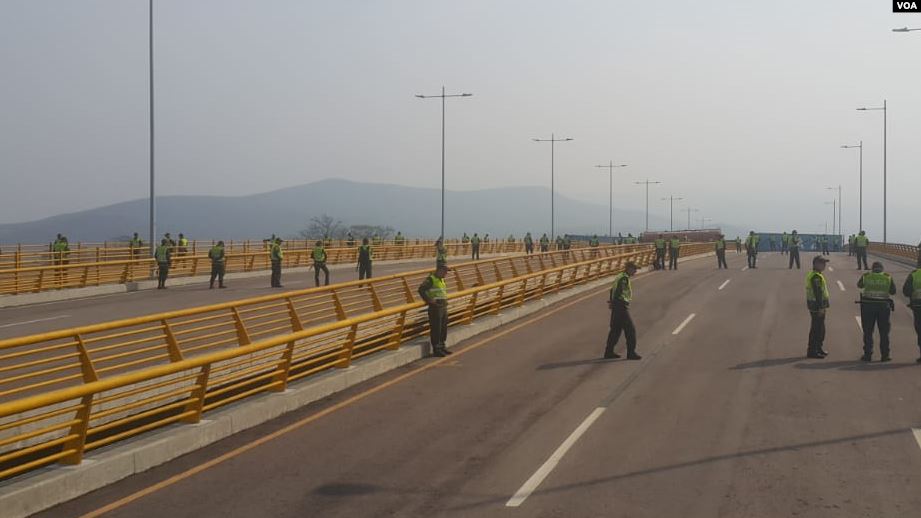
The Colombia–Venezuela border stretches 2,219 kilometres, running from the Caribbean coast in the north down through mountains, rivers and jungle. It is one of the longest borders in South America, and much of it is remote, with few roads and even fewer police posts.
Armed groups, including leftist guerrillas, have operated along the border for decades. Drug trafficking and smuggling are common there. For criminal groups, the border is useful: they can commit a crime in one country and slip across into the other before the police can react. That is exactly what Colombian officials fear happened with Nancy Gomez.
The ELN, the group blamed for both kidnappings, is Colombia’s largest remaining rebel group. It has fought the Colombian state for decades, and it funds itself through activities including drug trafficking, extortion and kidnapping. The group has long used the border region as a refuge.
Colombia has previously accused Venezuela of harbouring FARC and ELN rebels on its territory — charges that Caracas has repeatedly denied. That history of accusations is one reason why the two countries have rarely cooperated on border security, even when both sides faced the same threat.
A history of mistrust
To understand why Thursday’s announcement is unusual, it helps to know the background.
For years, relations between Bogota and Caracas have been strained. Colombia’s governments have accused Venezuela of giving safe haven to Colombian rebels. Venezuela has denied the accusations and, in turn, has accused Colombia of plotting against it.
The border itself has been closed and reopened several times over the years. At times of tension, both governments have shut crossings, stranding traders, families and migrants. Millions of Venezuelans have crossed into Colombia in recent years, fleeing economic crisis at home, and Colombia now hosts one of the largest Venezuelan migrant populations in the world.
Against that background, a joint statement about coordinating security is a real shift — at least on paper. Whether it turns into real action on the ground is the question that matters now.
What happens next
Several things will show whether the cooperation is real:
The search for Gomez.
The first test is whether she is found, and found alive. Every hour matters, and the search is now a race against the kidnappers moving her deeper into Venezuelan territory, where Colombian forces cannot follow without permission.
The search for the army officer.
The officer kidnapped on 4 November in Saravena has now been missing for more than a week. Colombia has asked the US to help work with Venezuela on his case, which shows how complicated the diplomacy has become: three governments are now involved in finding one man.
Information sharing.
Real cooperation would mean the two countries sharing intelligence about where armed groups are operating, and warning each other about planned attacks. In the past, that kind of sharing has been rare.
Joint patrols and checkpoints.
If the “padlock plan” works, it would mean checkpoints and patrols on both sides of the border, so that kidnappers cannot simply drive across. That would need agreement at a high level — and trust between officers on the ground.
The US role.
The US is already involved, both through its oversight of Venezuela’s interim government and through Colombia’s request for help. Washington’s attitude will shape how far the cooperation goes.
For now, the two kidnappings remain unsolved, and the families of both victims are waiting. Gomez’s husband has spoken publicly about his wife’s disappearance. She had previously backed the families of kidnapping victims and demanded action against the criminal gangs responsible, according to reports — which makes her own kidnapping all the more painful for her family and her town.
Why this story matters
Kidnapping has long been one of Colombia’s most painful problems. In the worst years of the country’s conflict, thousands of people were kidnapped by rebel groups and criminal gangs. The numbers have fallen since then, but kidnapping never disappeared — and the border regions, where the state’s reach is weakest, remain the most dangerous places.
This case also shows how crime, politics and diplomacy are tangled together on this border. A kidnapping in a small town in La Guajira has become a test of whether two governments that have mistrusted each other for years can work together — and whether a political change in Caracas can make the border safer for ordinary people.
If the cooperation works, it could bring relief to the communities that live along the border, who have suffered from armed groups, smuggling and violence for decades. If it fails, it will be one more reminder that statements are easier than action.
Frequently asked questions
Who is Nancy Gomez?
Nancy Gomez, 43, is the wife of Jaime Luis Buitrago Garcia, the mayor of Uribia, a town in the Colombian department of La Guajira, near the border with Venezuela. She was kidnapped on 11 November 2026. She is a mother of two.
Who is believed to be behind the kidnappings?
Colombian authorities believe the National Liberation Army (ELN), a Colombian rebel group, is behind both kidnappings — Gomez’s and that of the army officer taken in Saravena on 4 November. The ELN’s involvement in Gomez’s case is still being checked, according to the president.
What is the ELN?
The ELN, or National Liberation Army, is Colombia’s largest remaining rebel group. It has been fighting the Colombian state for decades and funds itself through drug trafficking, extortion and kidnapping, among other activities.
What is the “padlock plan”?
It is the security operation ordered by President De La Espriella to block the kidnappers from taking Gomez across the border into Venezuela. It involves deploying troops and sealing off the routes out of the area.
How long is the Colombia–Venezuela border?
The border is 2,219 kilometres long, running from the Caribbean coast in the north to the Amazon region in the south.
What has Venezuela said?
Venezuela’s foreign ministry said it is “fully willing to carry out all necessary coordination” with Colombian authorities on security matters.
Why is the US involved?
Earlier this year, Delcy Rodriguez became Venezuela’s interim president, governing under US oversight after a US military raid captured Nicolas Maduro. Colombia’s defence minister said Colombia had asked the US to work with Venezuela to help find the kidnapped army officer.
Conclusion
Two kidnappings in nine days have forced Colombia and Venezuela to talk about security — something they have rarely managed to do. The governments have both said they are willing to coordinate, Venezuela has promised its full cooperation, and Colombian troops are searching the border region for Nancy Gomez.
But words are not results. The real test will be whether the two victims are found safe, and whether the two countries keep working together once the headlines fade. For the people who live along the 2,219-kilometre border, that answer matters far more than any statement.
Sources
- Reuters, “Venezuela, Colombia to collaborate on border security following kidnappings”, 12 November 2026
- EconoTimes (reporting Anadolu Agency), “Colombia Moves to Block Kidnappers From Taking Mayor’s Wife to Venezuela”, 12 November 2026
- The Sun, “Urgent hunt for mayor’s wife kidnapped outside gym as £70k reward offered & helicopters deployed in nationwide search”, 12 November 2026
This article is for general information and education only. It is not legal or financial advice.
