
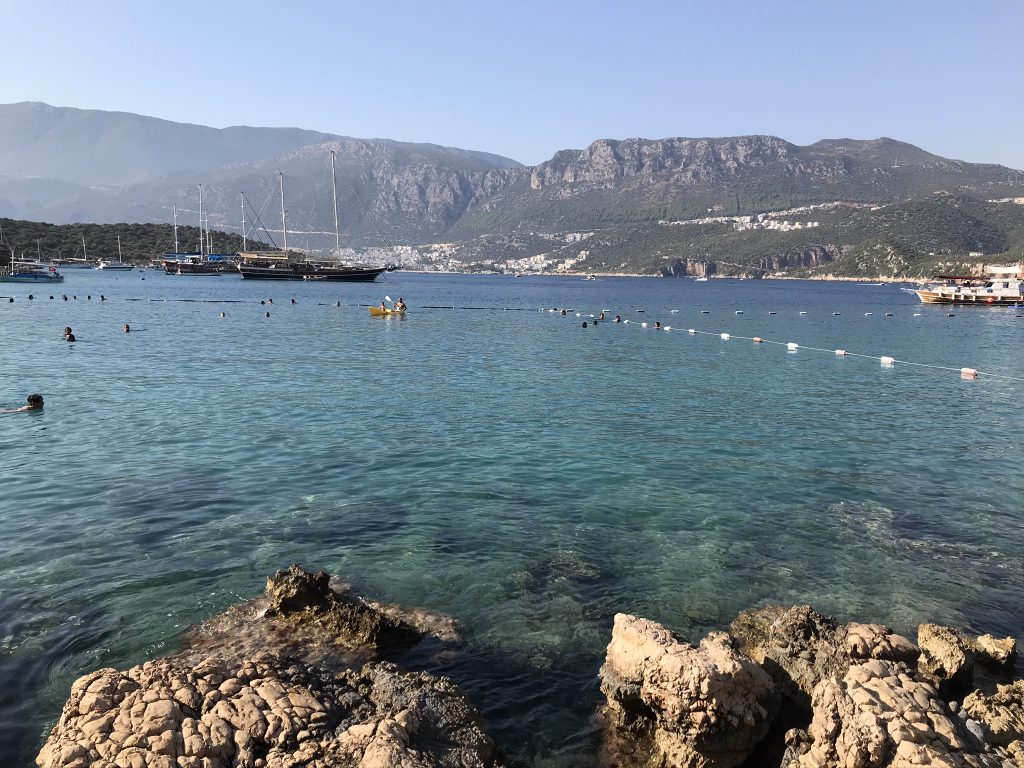
COP31 Opens in Antalya on Monday: What the Climate Summit Will Decide — and Why Pakistan Is Watching
COP31, the world’s biggest annual climate meeting, opens in Antalya, Türkiye, on Monday, 9 November 2026. For two weeks, negotiators from nearly every country on Earth will argue over one question above all others: who pays for the damage climate change is already causing, and who pays to stop it getting worse?
The summit comes at a tense moment. The Paris Agreement, the landmark deal that set the world’s climate goals, entered into force ten years ago this week. Yet global temperatures keep rising, floods and droughts keep hitting harder, and the money promised to poorer countries has still not arrived in full. For Pakistan, one of the countries most exposed to climate disasters despite producing less than one percent of global emissions, the stakes in Antalya could hardly be higher.
This is what COP31 is, what is on the table, and why the outcome matters far beyond the conference halls.
What is COP31?
COP stands for “Conference of the Parties”. It is the annual meeting of the countries that signed the United Nations Framework Convention on Climate Change (UNFCCC), the climate treaty agreed in Rio de Janeiro in 1992. COP31 is the 31st such meeting, and it has grown from small working sessions in the 1990s into the largest conference the United Nations holds each year.
The 2015 Paris Agreement, the most famous product of these talks, committed nearly 200 countries to keeping global warming well below 2 degrees Celsius, and to trying to limit it to 1.5 degrees. The UN’s climate body says negotiations so far have already brought projected warming down from over 4 degrees to about 2.6 degrees. That is real progress — but it is still far above the 1.5-degree goal, and scientists warn that every fraction of a degree means more heatwaves, floods and crop failures.
This year’s conference runs from 9 to 20 November at the Antalya Expo Center, on Türkiye’s Mediterranean coast. A World Leaders’ Summit, bringing together heads of state and government, will be held on 11 and 12 November, in the first days of the talks.
Who is running the summit?
COP31 has an unusual leadership arrangement. Türkiye is hosting the conference, and its environment minister, Murat Kurum, will serve as COP31 President, chairing the formal sessions and overseeing the Action Agenda. But the actual negotiations will be led by Chris Bowen, Australia’s climate minister, as President of Negotiations.
The job-share was agreed at last year’s COP30 in Belém, Brazil, and formally confirmed on 23 November 2025. It is the first time a COP presidency has been split this way. Türkiye is a country that is both seeking to join the European Union and still a significant producer of fossil fuels, which makes its role as host one that many observers will watch closely.
As for who is coming, Kurum said on 31 October that 91 heads of state and government had confirmed their attendance, along with nearly 300 ministers. Reuters had reported a lower figure of 77 confirmed leaders the day before, so the final number is likely to move before the summit opens. Among the senior figures already confirmed is Chinese Vice President Han Zheng, who will attend the Antalya Leaders’ Summit from 6 to 12 November as the special representative of President Xi Jinping, according to China’s foreign ministry.
What is on the agenda?
The COP31 presidency has set out five priorities: speeding up electrification, turning climate promises into bankable projects, mobilising public and private finance, strengthening adaptation to climate impacts, and protecting the oceans.
Behind those headings sit three big fights.
1. The money: climate finance
Money is the centre of COP31. Developing countries say they cannot cut emissions or protect their people without it. Rich countries say their budgets are tight.
At COP29 in Baku, countries agreed a new climate finance goal: at least 300 billion US dollars a year for developing countries by 2035, as part of a wider call to reach 1.3 trillion dollars a year from all sources. At COP30 in Belém, they endorsed a roadmap for getting to that larger figure. But a roadmap is not money in the bank, and the talks in Antalya are expected to focus on how the 300-billion-dollar goal is actually delivered — and how much of it arrives as grants rather than loans.
That distinction matters enormously. The UNFCCC’s Standing Committee on Finance reported in October 2026 that 57 percent of bilateral public climate finance in 2023 and 2024 was provided as loans, and 91 percent of finance from multilateral development banks took the form of loans. For countries already carrying heavy debts, loans to deal with a crisis they did little to cause can make the problem worse.
2. Adaptation: preparing for impacts that are already here
Even if emissions stopped tomorrow, the warming already locked in means more floods, droughts and heatwaves. Adaptation — building flood defences, early warning systems, drought-resistant crops and heat-proof cities — is therefore as important as cutting emissions.
The gap is stark. UNEP’s Adaptation Gap Report 2025 says developing countries will need about 310 billion dollars a year for adaptation by 2035. Actual international public adaptation flows were only about 26 billion dollars in 2023. Closing that gap is one of the central demands vulnerable countries will bring to Antalya.
3. Loss and damage: paying for disasters after they happen
The Loss and Damage Fund was created to help countries recover after climate disasters strike. It was a landmark victory for developing countries at COP27 in 2022. But the fund is small compared with the need. Total pledges stood at roughly 822 million dollars as of March 2026, while its first call for funding drew 176 requests from 119 countries totalling 2.8 billion dollars. Its own leadership has warned it could run out of money by the end of 2027.
There is also the question of energy. The UNFCCC says COP31 will discuss transitioning away from planet-heating fossil fuels, alongside the 1.5-degree goal and support for workers and communities affected by the shift. How strongly the final text commits countries to that transition will be one of the clearest measures of whether the summit succeeded.
Why Pakistan is watching closely
For Pakistan, COP31 is not an abstract diplomatic event. It is about floods, debt and survival.
The 2022 floods remain the clearest example. A post-disaster assessment led by Pakistan’s planning ministry, together with the World Bank, the Asian Development Bank, the European Union and UN agencies, found about 14.9 billion dollars in damage and 15.2 billion dollars in economic losses — a total of roughly 30 billion dollars. Some 33 million people were affected and more than 1,730 died. The floods submerged more than a tenth of the country. And Pakistan is responsible for less than one percent of global greenhouse gas emissions.
Pakistan also has a strong diplomatic record on this issue. As chair of the Group of 77 and China in 2022, it put loss and damage on the COP27 agenda for the first time after thirty years of demands from developing countries, and helped drive the consensus that created the Loss and Damage Fund. Severe floods returned in 2025, underlining that the threat has not gone away.
The numbers Pakistan faces are daunting. The United Nations estimates the country has a climate financing gap of about 348 billion dollars by 2030, covering both cutting emissions and adapting to impacts. Meanwhile the country’s total public debt stood near 81 percent of GDP in 2024, with debt servicing consuming over half the government budget. Pakistan is also in an IMF programme, including the Resilience and Sustainability Facility designed to support climate resilience — but fiscal targets may leave limited room for it.
That is why Pakistani negotiators in Antalya will be pushing for finance that arrives as grants, not loans, and for support that reaches affected communities rather than being absorbed by institutions.
Pakistan has also been preparing directly with the host country. Pakistan and Türkiye have agreed to deepen cooperation on climate resilience, flood management and water security ahead of COP31, according to a statement from Pakistan’s Ministry of Climate Change. Talks between a Turkish delegation led by Maruf Aras and Pakistani officials headed by Aisha Humera Moriani covered integrated flood and river basin management, glacier and avalanche risk reduction, multi-hazard early warning systems, combating desertification and climate-resilient infrastructure. Both sides agreed to coordinate closely in the run-up to the summit, with a focus on adaptation finance, disaster risk reduction and climate-resilient development.
What would success look like?
No single COP can solve the climate crisis. Each one builds on the last. But there are clear tests for Antalya:
- A credible finance plan. A clear path to the 300-billion-dollar-a-year goal by 2035, with more of it as grants and a real share for adaptation.
- New money for loss and damage. Fresh pledges that stop the fund running dry, and faster ways to get money to countries after disasters.
- A stronger energy signal. Language that keeps the transition away from fossil fuels on track, rather than watering it down.
- Adaptation that reaches people. Commitments on early warning systems, water security and resilient infrastructure — the things that save lives when the next flood or heatwave comes.
If the summit ends with vague promises and no new money, it will be judged a failure by the countries that need help most. If it delivers concrete finance and a clear plan, it could mark the point where climate talks moved from setting targets to actually paying for them.
What happens next
The summit opens on Monday, 9 November. The first week will be dominated by technical negotiations, while the World Leaders’ Summit on 11 and 12 November sets the political tone. The real bargaining usually happens in the second week, and COPs often run past their scheduled finish — this one is due to end on Friday, 20 November.
Pakistanis should watch three dates in particular: the leaders’ summit on 11–12 November, when the big political speeches are made; the middle of the second week, when draft texts on finance begin to circulate; and the final days, when ministers take over the negotiations and the final deal is struck — or not.
Whatever the outcome, the decisions made in Antalya will shape how much help reaches countries like Pakistan when the next flood comes. For a country that has already paid a heavy price for a crisis it barely caused, that is what COP31 is really about.
Frequently asked questions
When and where is COP31?
COP31 runs from 9 to 20 November 2026 at the Antalya Expo Center in Antalya, Türkiye. The World Leaders’ Summit is on 11 and 12 November.
Who is in charge of COP31?
Türkiye hosts the conference and its environment minister, Murat Kurum, is COP31 President. Australia’s climate minister, Chris Bowen, leads the negotiations as President of Negotiations.
What is the main issue at COP31?
Climate finance — how rich countries will deliver the 300 billion dollars a year promised to developing countries by 2035, how much of it will be grants rather than loans, and how much will go to adaptation and to loss and damage after disasters.
Why does COP31 matter for Pakistan?
Pakistan is among the countries most vulnerable to climate change. The 2022 floods caused about 30 billion dollars in damage and losses and affected 33 million people, while the country produces less than one percent of global emissions. What is agreed on finance in Antalya will shape how much support Pakistan can access for flood defences, early warning systems and recovery.
What is the Loss and Damage Fund?
A fund created at COP27 in 2022 to help countries recover after climate disasters. It has received about 822 million dollars in pledges, far less than the 2.8 billion dollars requested in its first funding call alone.
Sources
- UNFCCC, “About COP31”: https://unfccc.int/cop31/about
- Diplo, “COP31: who holds the pen, who holds the gavel”: https://www.diplomacy.edu/blog/cop31-turkiye-australia-shared-presidency/
- BBVA, “Countdown to COP31 in Antalya: The Stakes Are Not Abstract”: https://www.bbva.com/en/sustainability/countdown-to-cop31-in-antalya-the-stakes-are-not-abstract/
- People’s Daily Online, “Xi’s special representative Han Zheng to attend COP31 leaders’ summit, visit Georgia”: https://peoplesdaily.pdnews.cn/china/er/30053490748
- The Diplomatic Insight, “Who Controls Green Transition? Climate Finance & Sovereignty Gap Facing Vulnerable States”: https://thediplomaticinsight.com/green-transition-climate-finance-vulnerable-states/
- Climate Global News, “Paris Agreement Anniversary: EASAC Warns on Water Security”: https://climateglobalnews.com/easac-water-security-cop31-paris-agreement-anniversary/
- PID (Press Information Department, Government of Pakistan), “Pakistan and Turkiye pledge deeper climate partnership ahead of COP31”: https://pid.gov.pk/site/press_detail/32676
- WE News English, “Pakistan, Turkiye Launch Climate Partnership Ahead Of COP31 In Antalya”: https://wenewsenglish.com/pakistan-turkiye-launch-climate-partnership-ahead-of-cop31-in-antalya/
This article is for general information and education only. It is not legal or financial advice.

Pingback: Typhoons Batter East Asia as El Niño Makes the Pacific 'Burn With Fever' - Findivoza
Pingback: 90 Million Displaced People Live in Climate Danger Zones, UN Warns Ahead of COP31 - Findivoza
Pingback: UN Chief Guterres Issues Final "Moment of Truth" Climate Warning Before COP31 in Antalya - Findivoza