
Court Orders Sindh Government to Finish Anti-Snake Venom Lab After 20 Years of Delay
A laboratory that could save thousands of lives in Sindh has been waiting to be finished for nearly 20 years. Now the Sindh High Court has had enough. In a firm order issued on Monday, the court told the provincial government to stop making excuses and finish the anti-snake venom and anti-rabies laboratory — and to report back within eight weeks with a clear plan and a final deadline.
The case is about more than a building. Every year, around 54,000 snakebite cases are reported in Sindh, according to figures shared with the Public Accounts Committee of the Sindh Assembly. Yet the province still cannot make its own anti-snake venom. It depends on a single supplier in Islamabad, which sends only a few thousand doses a year. For people bitten in villages far from a big hospital, that shortage can be the difference between life and death.
What the court ordered
A two-judge bench of the Sindh High Court, made up of Justice Adnan-ul-Karim Memon and Justice Muhammad Jaffer Raza, heard the case in Hyderabad. In a detailed four-page order written by Justice Memon, the court ordered the provincial government to take immediate steps to complete the long-delayed laboratory.
The court directed the chief secretary and the health secretary to sit down with the director of the Pir Syed Abdul Qadir Shah Jeelani Institute of Medical Sciences in Gambat, along with other officials, to review where the project stands, work out what is still needed, and prepare a plan with fixed deadlines for finishing it.
The health secretary was also told to submit a full report to the court within eight weeks. That report must spell out how much money has been released, how far the purchase of equipment has gone, what money and technical help is still missing, and when exactly the laboratory will finally start working.
The judges made their thinking clear. This is not an ordinary development project, they said. It is directly linked to protecting human lives — especially in rural and snakebite-prone areas, where getting anti-snake venom quickly can prevent deaths and permanent disability. Administrative hurdles, the court warned, cannot be used as an excuse for inaction on a life-saving public health project.
A project approved in 2006 — and still unfinished
The laboratory was approved in 2006. Twenty years later, it is still not operational.
The court noted that the project has survived successive administrative approvals and large increases in its estimated cost, and that responsibility for it has been passed from one government institution to another — yet it has never been completed.
That history is not new to the province’s own watchdogs. In November 2025, the Public Accounts Committee of the Sindh Assembly was told that the provincial health department had spent Rs1.7 billion between 2012 and 2023 on developing an anti-snake venom vaccine — and had nothing to show for it.
The committee was told that the project was handed over to the livestock department in 2024, and that Rs350 million was released to that department. But not a single dose of vaccine was prepared in 2024 or 2025.
The livestock department told the committee it had approved a tender worth Rs300 million to buy machinery and equipment from Germany, Switzerland and the United States, and that it could prepare a vaccine within a year. It also told the committee that horses and snakes had been bought for the work, because anti-snake venom is made using snake venom and blood samples from horses.
54,000 snakebites a year — and only 4,000 doses
The numbers behind the case show why the delay matters so much.
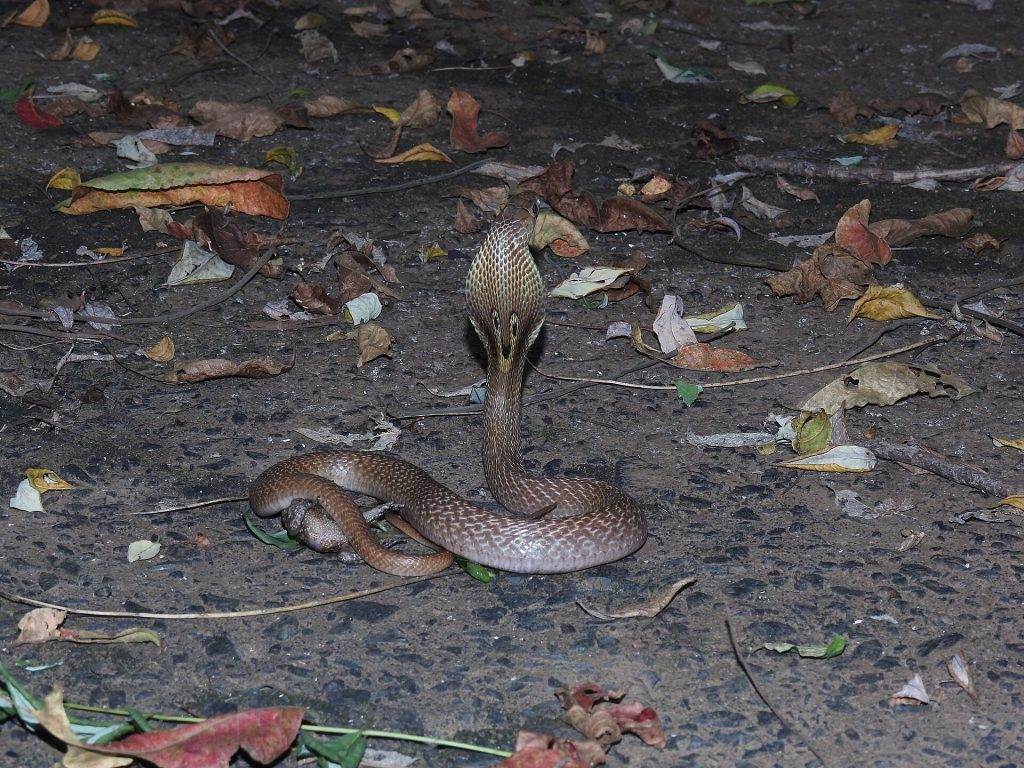
Around 54,000 cases of snakebite are reported in Sindh every year, the livestock department told the Public Accounts Committee. Sindh has about 55 types of snakes, of which 13 are poisonous and seven are deadly — including cobras and the two-mouthed snake, as officials described them.
Yet the only anti-venom available to the province comes from the National Institute of Health (NIH) in Islamabad. The committee was told that the NIH provided only 4,000 doses to the Sindh Health Department — an amount officials themselves described as very low against the scale of the problem.
That gap is the heart of the story. Snakebite is a race against time. Anti-snake venom works best when it is given quickly after a bite. When supplies are short, or when a patient must travel a long way to find a hospital that has the medicine in stock, the delay can lead to death or to lasting damage — including kidney failure, loss of a limb, or permanent disability.
Rural Sindh is where the risk is highest. Farm workers, people walking through fields, and children playing outdoors are the most exposed. They are also the people who live furthest from the large hospitals where anti-venom is most likely to be available.
The court has stepped in before
This is not the first time the Sindh High Court has had to push the government on this laboratory.
In 2019, the court ordered the Sindh Health Department to provide funds to complete the Sakrand Laboratory of Anti Snake Venom and Anti Rabies Vaccine in Nawabshah. The petitioner in that case, Muhammad Yaqoob Mangrio, told the court that the laboratory had been set up more than a decade earlier but had still not produced any vaccines, which were instead being supplied by the National Institute of Health in Islamabad.
He pointed to a severe shortage of anti-snake venom and anti-rabies vaccines in public hospitals across the province. The court ordered the government to supply the laboratory’s vaccines to public hospitals within a month of their approval by the Drug Regulatory Authority of Pakistan (DRAP) and the start of production.
Around the same time, the Sindh chief secretary visited the Sakrand laboratory and ordered the early registration of its locally produced anti-snake venom vaccine with DRAP. The head of the laboratory said at the time that the vaccine had been approved by the World Health Organization but was not registered with DRAP, and that production had stopped because of the missing registration, a shortage of technical staff, a lack of funds and incomplete paperwork. He said that if funds were provided on time, the laboratory could start bulk production within a year.
Seven years later, the province is still waiting.
Why Sindh still depends on Islamabad
Part of the problem is that making anti-snake venom is not simple. It needs live snakes kept in controlled conditions, horses that are given small, increasing doses of venom so their blood produces antibodies, laboratories that can purify those antibodies safely, and strict quality checks before the medicine can be given to patients.
That is why the project has needed machinery from abroad, trained staff, and registration with the drug regulator. Each of those steps has stalled at some point — money released late, equipment not bought, staff not hired, paperwork not finished.
The other part of the problem is that the project has never had one owner for long enough. It began under the health department, was later moved to the livestock department, and has been passed between institutions as governments and officials changed. Each transfer meant fresh approvals, fresh budgets, and fresh delays.
The court’s order tries to fix that by putting named officials — the chief secretary and the health secretary — in charge of a single, time-bound plan, and by demanding a written report within eight weeks.
What happens next
The next eight weeks will show whether this order is different from the ones before it.
The health secretary must report back to the court with the money released so far, the state of equipment purchases, the financial and technical gaps that remain, and a final timeline for making the laboratory operational. The meeting with the Gambat institute’s director is meant to produce that plan.
If the plan is followed, Sindh could finally have its own supply of anti-snake venom and anti-rabies serum — produced in the province, for the province’s own hospitals, without waiting for limited supplies from Islamabad.
If it is not followed, the court has made it clear that it sees the delay as a failure to protect human life. The judges have already said that administrative hurdles are not an acceptable excuse. The government now has a deadline, in writing, from the province’s highest court.
Why this matters beyond Sindh
Snakebite is one of the most neglected health problems in South Asia. It kills and disables mainly poor, rural people — farm workers, children, and families who live far from hospitals. Because its victims are often poor, it rarely gets the attention or the funding that other diseases receive.
The same is true of rabies. The laboratory is meant to produce anti-rabies serum as well as anti-snake venom. Rabies is almost always fatal once symptoms appear, which is why treatment must start quickly after a bite from an infected animal. A local supply of the serum would make that treatment available sooner, closer to where people live.
Pakistan is not the only country struggling with this. Across South Asia, countries face the same shortage of locally made anti-venom. But Sindh’s case is striking because of how long the problem has been known — and how much money has already been spent without a single dose reaching a patient.
The court’s intervention turns a long-running story of delay into a test of whether the provincial government can deliver on a promise it made in 2006. For the tens of thousands of people bitten by snakes in Sindh every year, the answer cannot come soon enough.
FAQ
What did the Sindh High Court order?
The court ordered the Sindh government to take immediate steps to finish the anti-snake venom and anti-rabies laboratory. The chief secretary and health secretary must meet the director of the Pir Syed Abdul Qadir Shah Jeelani Institute of Medical Sciences in Gambat and prepare a time-bound completion plan. The health secretary must submit a full implementation report to the court within eight weeks.
When was the laboratory project approved?
The project was approved in 2006. Nearly 20 years later, it is still not operational, despite successive approvals, large increases in cost, and the transfer of responsibility between government institutions.
How many snakebite cases are reported in Sindh each year?
Around 54,000 cases of snakebite are reported in the province every year, according to figures shared with the Public Accounts Committee of the Sindh Assembly in November 2025. Sindh has about 55 types of snakes, of which 13 are poisonous and seven are deadly.
How much money has been spent on the project?
The provincial health department spent Rs1.7 billion between 2012 and 2023 on developing an anti-snake venom vaccine, without producing a single dose. After the project moved to the livestock department in 2024, Rs350 million more was released, and a Rs300 million tender was approved for machinery from Germany, Switzerland and the United States.
Where does Sindh get its anti-snake venom now?
At present, only the National Institute of Health (NIH) in Islamabad produces anti-snake venom for the province. It provided only 4,000 doses to the Sindh Health Department — far fewer than the province needs.
What is the eight-week deadline for?
Within eight weeks, the health secretary must submit a report to the court covering the funds released, procurement progress, outstanding financial and technical requirements, and a final timeline for making the laboratory operational.
Conclusion
For nearly 20 years, Sindh has promised its people a laboratory that can produce the medicine that saves snakebite victims — and for nearly 20 years, it has failed to deliver. Billions of rupees have been spent, responsibility has been passed between departments, and court orders have come and gone. Meanwhile, around 54,000 people are bitten by snakes in the province every year, and only a few thousand doses of anti-venom arrive from Islamabad.
The Sindh High Court’s latest order gives the government a clear task and a clear deadline: a time-bound plan, a meeting of the officials responsible, and a full report within eight weeks. The question now is whether this time will be different. For the farm workers, children and families of rural Sindh, it has to be.
Sources
- SHC pulls up govt over 20-year delay in setting up life-saving lab — The Express Tribune
- 13 years on, Sindh yet to produce anti-snakebite vaccine, PAC told — Dawn
- Wasteful billions — The Express Tribune
- SHC directs health dept to provide funds for anti-snake venom, anti-rabies vaccine laboratory — The Express Tribune
- Sindh CS orders early registration of locally-produced ASV vaccine — The News
This article is for general information and education only. It is not legal or financial advice.

Pingback: Pakistan to Launch Mehfooz Dawa App on 24 November: Scan a Barcode to Check If Your Medicine Is Real - Findivoza