
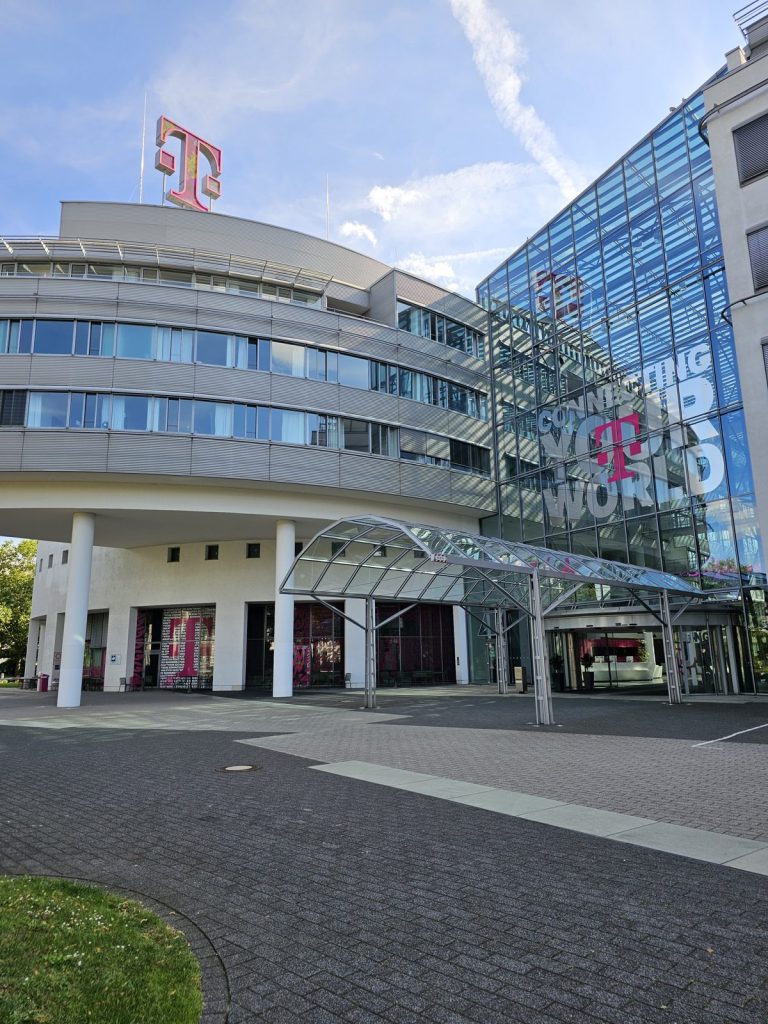
Deutsche Telekom puts its giant T-Mobile US merger on hold after works council and investor pushback
One of the biggest deals in telecom history has been put on ice, at least for now. Deutsche Telekom, the German telecom group, has decided against making a formal offer to fully combine with its American subsidiary T-Mobile US, according to reports from Bloomberg and Reuters in the last days of October 2026.
The decision is a pause, not a cancellation. People familiar with the matter told both news agencies that Deutsche Telekom could still return with an offer later. Neither Deutsche Telekom nor T-Mobile US has commented publicly on the reports, and Deutsche Telekom described the matter as speculation in the capital markets.
That distinction matters. What has been shelved is the next formal step, not necessarily the idea itself. But the reasons behind the pause — resistance from employee representatives, pressure from an activist investor, and worries about the German state’s influence — will still be there if the idea comes back.
At a glance
What happened: Deutsche Telekom decided against submitting a formal bid for now to fully combine with T-Mobile US, according to Bloomberg and Reuters reports on 28 and 29 October 2026.
Why it matters: A full combination was described by Bloomberg as potentially the largest-ever public merger, and it would have created the world’s biggest phone company.
What happens next: Deutsche Telekom reports its own third-quarter results on 5 November 2026, when investors will look for signs of whether the deal idea returns or fades.
What was reported
Bloomberg first reported on Wednesday that Deutsche Telekom had opted against submitting a formal bid for the time being. The report, citing people familiar with the matter, said the decision was in part due to pushback from Deutsche Telekom’s works council, the body that represents employee interests.
Reuters followed a day later with a similar account, reporting that the group had shelved a formal offer for now, with opposition from the works council cited as one factor among several. Reuters also reported that a later attempt had not been ruled out.
Both companies declined to comment on the reports, according to the coverage. That is normal for a deal that has never been formally announced: there is no offer document, no agreed price, and no timetable to confirm or deny. Everything the public knows comes from the reporting, and it should be read that way.
The idea itself is not new. Bloomberg first reported in April 2026 that Deutsche Telekom was weighing a full combination with T-Mobile US. One version of the plan under discussion involved creating a new holding company and making a stock offer for shares of both companies.
How big the deal would have been
To understand why this story moved markets, it helps to understand the scale. Deutsche Telekom already owns most of T-Mobile US. It became the majority shareholder in the American carrier and now holds close to a 53 per cent stake, according to Mobile World Live’s reporting of the Bloomberg story.
Buying the rest would therefore not have been about taking control — Deutsche Telekom already has that. It would have been about bringing the two companies under one roof, simplifying the structure, and creating a single telecom group spanning Germany, the rest of Europe, and the United States.
Bloomberg described the possible combination as what would be the largest-ever public merger. Fierce Network, a telecom trade publication, called it one of the largest mergers of all time. Either way, it would have been a deal on a scale rarely seen in any industry, which is why investors, employees, and governments all had a view on it.
For Deutsche Telekom, the logic was straightforward. T-Mobile US is the engine of the group’s growth. It is the largest part of the business by revenue and profit, and its results regularly outshine the European operations. Bringing it fully inside the group would have given Deutsche Telekom cleaner control of that cash flow and a simpler story to tell investors.
Why the deal stalled
Three separate sources of opposition came together, and together they were enough to stop a formal offer.
The first was labour. In Germany, employee representatives hold half the seats on the supervisory board of a large company like Deutsche Telekom, and the works council is a powerful voice inside the business. Bloomberg reported that the works council pushed back against the plan, and trade unions, which also hold board seats, were part of that opposition.
That matters more than it might sound to readers outside Germany. A merger of this size would need approval inside the company’s own governing bodies, not just a compelling business case. With employee representatives holding half the supervisory board, a plan that does not have their support faces a very difficult path.
The second source of opposition was the German state. The German government controls about 28 per cent of Deutsche Telekom, according to reporting in September cited by Fierce Network. Bloomberg’s reporting on the pause also pointed to concerns about diluting the German federal government’s influence over any combined company. A large all-stock deal would have shrunk the state’s share of the enlarged group, and that was a political problem as well as a financial one.
The third was an activist investor. Elliott Investment Management, which built a sizeable stake in Deutsche Telekom, pressed the company in September to drop the merger plan, according to Bloomberg. Elliott argued instead for other ways to unlock shareholder value, including larger share buybacks — returning cash to shareholders by buying back the company’s own shares rather than spending it on a giant deal.
That put Elliott directly against Deutsche Telekom’s chief executive, Tim Hoettges, who has reportedly pushed for a full combination to create the world’s biggest phone company. It is a classic boardroom disagreement: one side wants a transformational deal, the other wants cash returned to shareholders and a simpler strategy.
There was also opposition from inside T-Mobile US itself. A July report from Semafor said that T-Mobile’s American executives no longer supported the proposed combination, citing shareholder and potential regulatory concerns. A deal that the subsidiary’s own management does not want is much harder to push through, especially when that subsidiary is a separately listed company with its own shareholders.
T-Mobile’s strong quarter changed the mood
The merger news arrived in the same week as T-Mobile US reported strong third-quarter results, and the timing matters. On 28 October, the day before Bloomberg’s report, T-Mobile said its service revenue had risen 6 per cent from a year earlier to 19.4 billion dollars, while postpaid service revenue — the money from customers on monthly contracts — rose 9 per cent to 16.3 billion dollars.
Total revenue reached 23.58 billion dollars, up 7.4 per cent on the year. Net income rose 27 per cent to 3.5 billion dollars, and diluted earnings per share climbed 34 per cent to 3.22 dollars. The company added 274,000 postpaid customer accounts in the quarter, ahead of the roughly 252,000 additions analysts had expected, and it now has 35 million postpaid accounts.
T-Mobile also raised its guidance for the rest of the year, lifting its expected adjusted free cash flow — the cash left over after running the business and investing in the network — to between 18.7 and 18.8 billion dollars for 2026, up from a previous range of 18.4 to 18.8 billion dollars. It raised its expected core adjusted earnings before interest, tax, depreciation and amortisation to between 37.35 and 37.45 billion dollars.
Chief executive Srini Gopalan called it “another strong quarter” and said the results were “further proof that our winning formula of the best network, best value, and best experiences drives durable and profitable growth.”
Gopalan himself is part of the Deutsche Telekom story. He was chief executive of Deutsche Telekom Germany before joining T-Mobile as chief operating officer in March 2025, and he succeeded Mike Sievert as T-Mobile’s chief executive in November 2025.
The strong results helped the mood in the market. Deutsche Telekom shares rose after the reports of the merger pause, with investors appearing to read the delay as relief from the dilution risk that a large all-stock deal would have brought. T-Mobile shares also rose after the earnings beat. The share price move cannot be pinned on the merger news alone, because the strong quarterly results landed at almost the same time.
What analysts made of it
JPMorgan kept its “Overweight” rating on Deutsche Telekom, with a price target of 38 euros, while continuing to describe the uncertainty over a possible combination as a drag on the shares. That is a fair summary of the situation: the pause removes an immediate risk, but it does not remove the question.
As long as a later offer remains possible, investors have to weigh two stories at once. One is the operating business, which in the United States at least is performing well. The other is the open question of whether Deutsche Telekom will one day try again to bring T-Mobile fully inside the group, and on what terms.
Deutsche Telekom’s own third-quarter results, due on 5 November 2026, will be the next real test. They will show whether the European business is keeping up with the American one, and whether the group can make its case to investors without a transformational deal to talk about.
What it means for customers
For customers, nothing changes for now. T-Mobile US will keep operating as a separate, publicly traded American company, and Deutsche Telekom will remain its majority owner, just as it is today. Phone plans, prices, and networks are not affected by a merger that was never formally proposed.
That is the practical point that often gets lost in deal reporting. A paused merger is not a cancelled service or a change of ownership. It is a decision not to take the next formal step, and the companies carry on as before while the question stays open.
There was one related piece of news in the same week. Mike Sievert, the former T-Mobile chief executive, notified the company’s board that he would resign from the board and its Transaction Committee, effective 1 November 2026, and step down as vice chair. T-Mobile said his role as vice chair was always structured as a one-year term, and that he had informed the board he was not planning to renew it. The company said in a securities filing that the departure was “not the result of any disagreement with the company on any matter relating to its operations, policies or practices.”
What happens next
The story is not over, and the next chapter is likely to be written in stages rather than in a single announcement.
The first date to watch is 5 November 2026, when Deutsche Telekom publishes its third-quarter results. Investors will be listening for any comment from management on the merger question, and for whether the European business can match the momentum of the American one.
The second is whether the obstacles that stopped the deal begin to move. A renewed attempt would still have to win over employee representatives on the supervisory board, satisfy an activist investor that wants buybacks instead, and address the German state’s concerns about its influence. None of those has been resolved by the pause.
The third is the price. If Deutsche Telekom does return, the terms would be the deciding factor: how much of the combined company existing shareholders would own, how much debt the deal would involve, and whether American regulators and shareholders would accept it.
For now, the message from Bonn is that the biggest deal in telecom history can wait. The business underneath it, led by a fast-growing American subsidiary, carries on — and for the moment, that is enough for the market.
Frequently asked questions
What did Deutsche Telekom decide?
According to Bloomberg and Reuters, Deutsche Telekom decided against submitting a formal bid for now to fully combine with T-Mobile US. The plan is paused rather than abandoned, and a later attempt has not been ruled out.
Does Deutsche Telekom already own T-Mobile US?
Not entirely. Deutsche Telekom is the majority owner, holding close to a 53 per cent stake in T-Mobile US. A full combination would have meant buying the remaining shares and bringing the two companies under one structure.
Why did the works council oppose the plan?
Bloomberg reported that Deutsche Telekom’s works council pushed back against the plan. Employee representatives hold half the seats on the company’s supervisory board, giving labour a powerful voice in major strategic decisions. The reports did not give a detailed public statement of the works council’s reasons.
Who is Elliott Investment Management and what did it want?
Elliott is an activist investor that built a sizeable stake in Deutsche Telekom. In September, Bloomberg reported that Elliott was pressing the company to drop the merger plan and consider other ways to unlock shareholder value, including larger share buybacks.
How is T-Mobile US performing?
T-Mobile reported strong third-quarter 2026 results on 28 October. Service revenue rose 6 per cent to 19.4 billion dollars, net income rose 27 per cent to 3.5 billion dollars, and the company added 274,000 postpaid customer accounts. It also raised its full-year guidance for free cash flow and core earnings.
Will the merger happen later?
Nobody outside the companies knows. Both Bloomberg and Reuters reported that a later attempt remains possible, but the obstacles that stopped the deal — labour opposition, the German state’s influence, Elliott’s preference for buybacks, and coolness from T-Mobile’s own executives — would still need to be addressed.
What should investors watch next?
Deutsche Telekom’s third-quarter results on 5 November 2026 are the next scheduled event. Any comment from management on the merger question, and the strength of the European business compared with the American one, will shape how the market reads the pause.
Conclusion
Deutsche Telekom’s decision to hold off on a formal offer for T-Mobile US is a reminder that the biggest deals are not decided by arithmetic alone. The numbers pointed one way: a fast-growing American subsidiary, a parent company that already owns most of it, and a combination that could have created the world’s largest phone company.
But the people around the table pointed the other way. Employee representatives with half the supervisory board, a government with about 28 per cent of the parent company, an activist investor with a sizeable stake, and executives at the subsidiary itself all had reasons to say not yet. Together, they were enough to stop a formal bid.
The pause is good news for investors who feared dilution, and it leaves Deutsche Telekom free to focus on its own results on 5 November. Whether it is also the end of the story will depend on whether those objections soften — or whether the next attempt simply meets the same wall.
This article is for general information and education only. It is not legal or financial advice.
Sources
- https://www.mobileworldlive.com/deutsche-telekom/deutsche-telekom-cools-t-mobile-us-merger-talk/ (Mobile World Live, 29 October 2026)
- https://www.fierce-network.com/wireless/deutsche-telekom-shelves-plan-merge-t-mobile-us-report (Fierce Network, 29 October 2026)
- https://www.europesays.com/germany/118486/ (Investing.com, 29 October 2026)
- https://www.ad-hoc-news.de/boerse/news/corporate-news/deutsche-telekom-stock-gains-as-t-mobile-merger-plans-pause/70433898 (ad-hoc-news, citing heise and Bloomberg, 30 October 2026)
- http://www.t-mobile.com/news/business/t-mobile-q3-2026-earnings (T-Mobile, 28 October 2026)
